The party is ending.
For the second-generation Super Series.
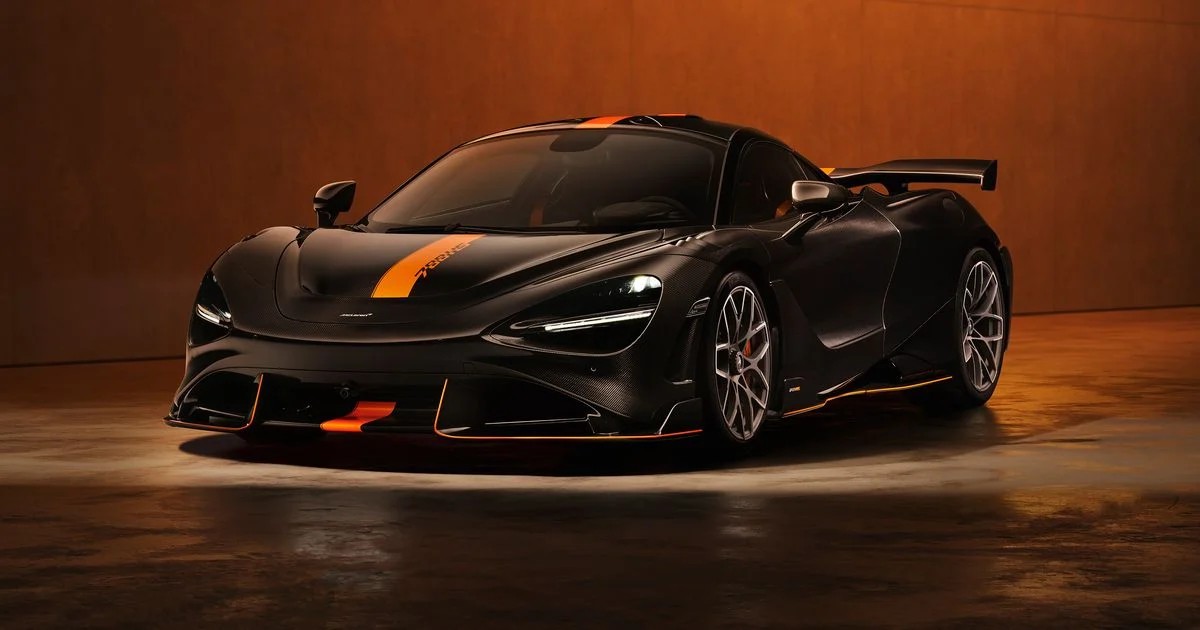
The 2026 McLaren 788HS drops the curtain on a lineage that started with the 720S in 2017. It’s faster. Heavier. Expensive. A whole lot of expensive. We’re talking over $1 million AUD for the Aussie models. That’s roughly 1.2 million USD depending on the day and the exchange rate. It puts this car squarely in the company of top-tier Ferraris and Rolls-Royce sedans.
Not that it needs help finding competitors.
Rare Badging
HS.
High Sport.
You’ve likely seen it before, but rarely. Just two other McLarens carried this badge. The 2012 MP4-12C HS. Five units built. Then the 2016 MSO HS. Twenty-five units. This new kid on the block gets a run of two hundred. A split. Fifty percent Coupe. Fifty percent Spider. All handmade at McLaren Special Operations in Woking.
First local deliveries? Don’t hold your breath until 2027.
Raw Numbers
The name isn’t just flair. 788 means 788 PS. That’s about 580 kW.
It dethrones the 765LT as the most potent Super Series machine ever assembled. Under the hood sits the twin-turbo 4.0-liter V8. Known as the M840T. Forged pistons. Low-inertia turbos. Twin fuel pumps feeding the beast.
It spins. Fast.
800 Nm of torque hits the rear wheels via a seven-speed transmission. The weight creeps up slightly—to 1265 kg. Sixteen kgs more than the stripped-back LT. But the power-to-weight ratio improves. 458 kW per tonne. The best in the family tree.
Claimed zero to one hundred km/h in 2.8 seconds. To 200 km/h? Seven seconds. Top speed sits at a mundane 330 km/h for these numbers, but who cares. You’ll never hit it legally.
“Better body control. Precision. Responsiveness.”
McLaren’s pitch. It’s backed by Proactive Chassis Control III suspension and adaptive dampers. The car sits 5mm lower. Forged 19-inch and 20-inch alloys grip the road. Centre-locks too. A first for the platform.
Style Over Substance? No.
Carbon fiber eats everything.
A new S-Duct hood. Active rear spoiler. Gloss-black roof intake. The diffuser surrounds four titanium exhaust pipes. It sounds better too—revised symposers make the high-end howl richer. More intense.
You pick the finish. Gloss or Satin. Your choice.
Inside? Same cockpit. The instrument binnacle mounts on the column. The center console is light carbon. Brakes borrow six-piston calipers and aluminum rotors straight from the 2018 Senna. It stops. Hard.
What Comes Next?
The Super Series dies here.
But McLaren isn’t dying.
Successors? Probably. Rumors point to a plug-in hybrid V8 model. Expected later this year. Deliveries in 2027 again. Wait time remains consistent.
Then there’s the shadow. The SUV.
Ferrari did it. Aston Martin did it (DBX ). Lamborghini did it (Urus —their bestseller). Now CYVN Holdings, who bought McLaren in April 2025, are signaling expansion. They want a broader portfolio. Faster pace.
Maybe an SUV follows. Maybe an EV.
Forseven (which merged into the CYVN structure) once teased electric ambitions online. British design meets world-class EV engineering. A nice sentence. Empty now? Perhaps. Or just patient.
The Purosangue is Ferrari’s high-volume model. The DBX sells for Aston. The Urus keeps Lamborghini’s stock high.
McLaren is next.
The question isn’t if. It’s what it looks like when Lewis Hamilton ‘s team starts building off-roaders.