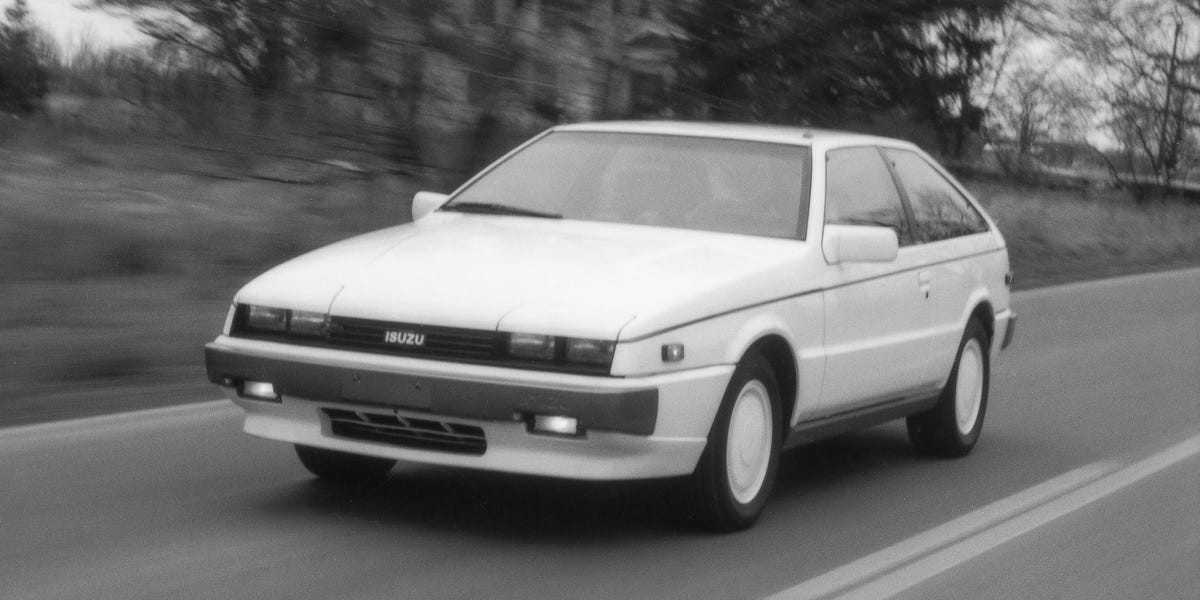
June 1987. Car and Driver. The world stage of automotive press usually belongs to the usual suspects. Ferraris. Porsches. Mercedes. Hondas. Maybe a Pontiac making a comeback. The little guys, like the Yugo? They exist only to make the big cars look glamorous. Comic relief. But Isuzu? Isuzu keeps getting relegated to the chorus line despite having real star power. Until now.
The Impulse launched in 1983. Giorgio Giugiaro designed the body. Everyone gasped at the styling. It was sleek. Modern. Sharp. But the car itself? It drove like a midweight chassis struggling to lift a lightweight engine. Based on the Chevy Chevette platform. Live axle in the rear. It had great looks, reviewers said, but nothing else. No curtain calls there.
Then 1985 hit. Isuzu fixed the box-office problem. They bolted on a turbo and intercooler. A 2.0-liter inline-four went from 90 horsepower to 140. The suspension got tweaked. Suddenly the reviews improved.
1987 brings the RS Turbo. It’s the new package. And it’s different. Mostly in the paint. White on white, except for the gray bumpers, rocker panels, and a matching rear spoiler. Decals on the side windows finish the look. Under the hood? It’s still that 2.0L turbo. But the rest is different. Limited-slip differential. Thicker anti-roll bars. Stiffer springs. Better tires. Standard Impulses wear Bridgestone Regno. The RS gets directional Bridgestone Potenza RE-71s. Wider too. 205-series versus 195. There is no automatic option here. A five-speed manual only.
Inside? Euro-gray cloth seats. Everything else mirrors the base Turbo. Standard kit is generous. AC. Power windows. Leather steering wheel. Driver’s seat adjusts in seven ways. Rear seats fold down individually. Four-position recliners. AM/FM stereo with a cassette and equalizer. Power mirrors. Rear wiper. Defogger. All of it standard.
But the real trick is the interior design. Artful details everywhere. Adjustable control pods near the instruments. Pop-up air vent on the driver’s side. Sculpted armrests. Individual ashtrays and lighters. Even rubber grommets for the headrest posts. It looks like a show car. It feels like a show car. The catch? It’s tight. Really tight. Adults in the back? Forget it. Only children. Also, no boost gauge. Weird omission.
So how does it drive?
We strapped on the onboard computer. 7.7 seconds to 60 mph. That’s respectable. Up there with the Saab 9-3, Pontiac Fiero, Mitsubishi Starion, even the Maserati. Quarter-mile in 15.9 seconds. Top speed around 130 mph. Lateral grip sits at a solid 0.80g. Matches a Mercedes 190E or a Toyota Supra. Braking from 70 is average. 196 feet to stop.
Driving it though? You need to pay attention. Most drivers expect front-drive mannerisms these days. The Impulse doesn’t do that. It has a live rear axle. It is… well, it is alive.
Drive it hard. Throw some throttle mid-corner. The rear axle winds up. The tail steps out. It’s oversteer. Brake too late into a bend, and the back slides. Smooth is key. The RS demands smooth inputs. It wants to flow, not be jerked. If the road is perfect? You can carve clean apexes for hours. It’s exhilarating. Maybe terrifying if you lack confidence. On broken pavement though? The rear bounces around. The live axle struggles to keep the tires flat. It wallows. You start dreaming about independent suspension immediately.
It doesn’t make the Impulse a superstar. Not quite. But it pushes the coupe out of the backup singers and closer to center stage. Isuzu has built a better package here. It has what it needs. With one more tweak—perhaps to that rear suspension—it might just headline the show.