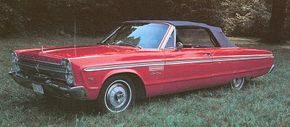
Chrysler learned a painful lesson in the early 1960s. The brand tried to stand out by shrinking down. It failed. So they did the opposite. They went full size. Again.
Plymouth’s 1962 strategy was a disaster. Sales couldn’t match the full-size Chevys and Fords. The styling was weird. Nobody bought it. By 1963 and 1964, the design became more normal. But the damage was done.
A new management team saw the mistake. They decided to put Plymouth back in the mainstream. With a vengeance.
The result was the “Roaring ’65s.”
This was the broadest lineup in Plymouth history. True full-size cars returned for the first time in four years. They called them Furys. The name was familiar. It came from recent top-line models.
Motor Trend got it right. They noted that executives worried about lost market penetration. They blamed the previous awkward styling. The new designers fixed it. They used the clichés that made their rivals successful.
“[T]here’s a veritable kaleidoscope of four separate trim combinations (Fury 1, II, III, and Sport Fury) . . . plus last year’s basic body with a neat new face to fill the intermediate-size (Belvedere) need. . . .”
The reborn big Plymouth matched the Chevy Impala and Ford Galaxie. In size and appearance, it was identical. The wheelbase was 119 inches. The Fury wagons stretched to 121 inches. Other dimensions were within fractions of an inch of the competition.
Model choices followed the same logic.
- Fury I and II : Two-door and four-door sedans. Four-door wagons.
- Fury III : No two-door sedan. Added hardtop sedan. Hardtop coupe. Convertible.
- Sport Fury : The hardtop coupe and convertible repeated with bucket seats.
This wasn’t just a redesign. It was a return to form. Plymouth stopped trying to be different. It started trying to be better.
The styling would get closer attention next. But the foundation was laid. The machinery was ready. The market was waiting.
And it bought in.
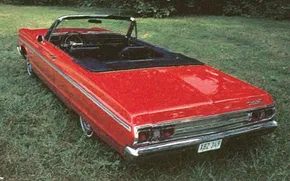
The styling cues were unmistakable. Elwood Engel’s team at Highland Park didn’t need to see the competition to copy them. The 1965 Plymouth Fury just happened to land with stacked quad headlights, mirroring the new Ford face. The rear end? Pure Chevy influence. Single taillights on the base models and doubles on the Sport Fury. It looked like a cross-generational mashup of Detroit’s biggest rivals.
Yet, the result was surprisingly cohesive. The cars were inoffensive but sharp. More importantly, they didn’t cannibalize sales from the 1965 Chrysler or senior Dodges. They all shared the new C-body platform, but differentiation was key.
The C-Body Platform and Powertrain Shifts
Underneath the sheet metal, the engineering told a different story. The Fury retained its unibody construction. Plymouth brought back the front subframe from the 1960-1961 era. This wasn’t for structural rigidity alone. It was for noise and vibration control. Full-unit construction, used in the 1962-1964 “standards,” was out. The subframe isolator was back in.
The engine bay held the usual corporate lineup. You could start with the 225-cid Slant Six. Move up to the 318. Then came the “Commando” 383 V-8. At the top of the heap sat the 426 wedge. It pushed out 365 horsepower.
Gear selection changed, too. Three-on-the-tree manual transmissions were standard issue. But buyers didn’t want to wrestle with a shifter. They wanted the TorqueFlite automatic. And in 1965, they lost something iconic. The pushbuttons.
Motor Trend was not happy about the switch.
“We’ve never talked to anyone who’s driven with buttons who’d care to go back to the column-mounted lever. Floor-mounted, yes — but column, no! At least the TorqueFlite hasn’t been changed. It’s still the most positive shifting of any automatic on the market.”
Marketing studies killed the pushbuttons. The data said consumers preferred a column lever. The engineers probably disagreed.
1965: The Year of the Sport Fury
The Sport Fury remained Plymouth’s flashy flagship. Standard equipment included a 318 V-8 and a bucket-seat interior with a console. But 1965 was different. Sales exploded.
The $3,209 convertible was the priciest Plymouth in the lineup. Sales nearly doubled compared to 1964. The $2,960 hardtop saw a 160 percent increase. It became the fifth best-selling Fury model.
The ragtop wasn’t just selling well. It was leading. A Sport Fury convertible paced the 1965 Indy 500. First time a Plymouth had earned that honor.
Plymouth also hit a production milestone. More than 720,000 units rolled off the line in the model year. The Fury line accounted for almost half of that total. It was a massive volume play.
1966 saw a dip. Industry-wide sales cooled after the 1965 boom. Plymouth dropped to just under 684,000 units. Not a collapse, but a clear slowdown.
The 1966 Facelift and the VIP Introduction
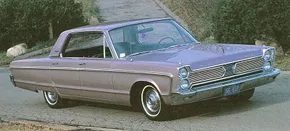
For 1966, the Fury got a minor update. The grille split into a fussier theme. The back panel changed slightly. Otherwise, the body stayed the same.
Safety features were forced into the build. Washington demanded front and rear seatbelts. Padded dashboards became mandatory. Inside door handles were redesigned to be “safer” in a crash.
The engine lineup shifted slightly. The 440 wedge replaced the 426 as the top power option. Rated power stayed at 365 horses. The big block was now the big block.
But the real story was the new Fury VIP.
Targeted directly at the Chevy Caprice and Ford LTD, the VIP was a prestige play. Hardtop coupe and sedan bodies. Woodgrain dashboard trim. Bodyside moldings. Cloth or tufted-vinyl upholstery. Swiveling rear reading lamps. It was luxury for the masses.
Sales didn’t match the Caprice. The Chevy moved about 25 times more units. But the numbers were sufficient. The VIP stayed in production for a few years. Not as long as the Sport Fury, but long enough to matter.
1965-1966 Plymouth Sport Fury and VIP Specifications
The Fury Lineup and Powertrain Options
The 1965 and 1966 Plymouth Fury broke ground by reintroducing true full-size sedans to the company’s roster. It wasn’t just a minor update. The automaker rolled out the widest variety of trim levels and body styles in the brand’s history up to that point. Enthusiasts often hunt for these specific years because they represent a peak era of muscle car evolution before emissions rules tightened the screws.
Under the hood, every engine was an OHV V-8. Chrysler didn’t mess with six-cylinders for the performance-minded buyer. The base option was the 318 cubic-inch unit. It measured 3.91 inches by 3.31 inches in bore and stroke. Output sat at a modest 230 horsepower. For those needing more torque, the 383 cubic-inch engine offered three distinct power bands. You could spec it for 270, 325, or 330 horsepower depending on the carburetor and compression ratio.
The big news for 1965 was the return of the legendary 426 Hemi. It displaced 426 cubic inches with a 4.25 x 3.75 bore and stroke. It made 365 horsepower. Chrysler dropped the Hemi after that single year. In its place for 1966 and beyond came the 440 cubic-inch engine. It shared the same bore as the 426 but used a longer 3.75-inch stroke. It also produced 365 horsepower, though it offered better low-end grunt due to the longer stroke.
Drivetrain and Chassis Details
Transmission choices were straightforward. Buyers could opt for a three-speed or four-speed manual gearbox. Most buyers went with the TorqueFlite three-speed automatic. It was robust and handled the torque of the big-block V-8s without breaking a sweat.
The suspension setup was traditional for a full-size American car of this era. Up front, Plymouth used upper and lower A-arms paired with longitudinal torsion bars. This setup allowed for a comfortable ride while keeping the heavy body controlled. At the rear, a live axle hung on semi-elliptic leaf springs. It was a simple, durable arrangement.
Braking duties were handled by front and rear drum brakes. There were no disc brakes on the base models. Stopping power was adequate for the times, but don’t expect modern performance. The wheelbase stretched to 119 inches. That long track helped with straight-line stability.
Performance Figures and Weight
Curb weight for the Fury ranged from 3,715 to 3,780 pounds. Heavily optioned models could push past that, but the base figures give you a good baseline.
How fast did these big sedans go? Top speed estimates sit between 105 and 120 mph, depending on the gearing and engine choice.
Acceleration from 0 to 60 mph took between 8.5 and 10.5 seconds. That might not sound quick by modern standards. In 1965, that was respectable. A 426 Hemi model would hit the lower end of that 0-60 range.