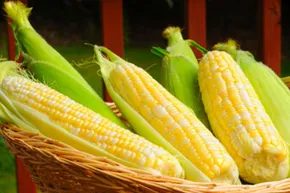
Biofuels look good on paper. You produce them at home. They slot into existing diesel and gasoline engines without modification. They burn cleaner than the black soot of fossil fuels. It sounds like a perfect union of energy independence and environmental stewardship.
There is one catch that keeps analysts up at night. Food security.
This isn’t just about filling tanks. It is about whether a nation can feed its people. The crops we turn into fuel—corn, soybeans, sugarcane—are also the crops that fill our plates. The argument against mass production is blunt: if we send staple food out the tailpipe, who eats it? Critics warn that spiking demand for biofuel crops could overwhelm agricultural capacity. They see a future where some regions go hungry while others burn dinner.
Is this a real threat? Or just panic?
The answer refuses to be binary. It is messy. It depends on how we change our habits.
The Price of Corn and Cereal
Commodity prices move on supply and demand. Simple rules. But when demand shifts, prices follow.
Researchers attribute slightly less than two percent of recent food price hikes to biofuel demand. That sounds small. It is. But small shifts in bulk commodities ripple outward. Analysts do not see wild, chaotic spikes. They see steady increases for cereal, bread, milk, and meat.
Why meat?
Because livestock eat biofuel crops. When corn prices climb, pig farmers pay more for feed. They cannot absorb that cost. They raise the price of pork. Grocers raise it again. Restaurateurs raise it once more. By the time you buy bacon or eggs, the price has passed through several hands. The math is basic economics. Input costs rise. Output costs rise.
Supply vs. Demand Speculation
The fear comes from speculation. Look at 2006. Ethanol producers bought one-fifth of the US corn market. The worry was simple: if regulations force demand higher, ethanol could consume half the nation’s corn. Other users would be priced out. Hunger would follow scarcity.
But there is a counterargument. One that is often ignored because it requires patience.
Increased demand for biofuels does not behave like demand for oil. Oil is finite. You drill it up. It is gone. Biofuel crops are renewable. High prices signal farmers to plant more. The supply expands.
This is not immediate. It takes seasons. It takes land. It takes capital. But the mechanism exists. Unlike fossil fuels, biofuel demand can actually drive increased supply.
The question is not whether biofuels affect food prices. They do. The question is whether the market can adjust fast enough to prevent the adjustment from becoming a crisis.
We are watching the balance. It is delicate. And it is changing.
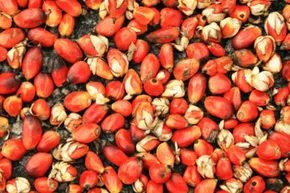
Think about the land itself. Roughly 13 percent of the Earth’s surface is dedicated to growing food. It’s a finite resource. Biofuel advocates love to paint a picture where plant-based fuels solve everything. They argue that as demand for these alternative fuels skyrockets, farmers will simply plant more acreage. Total supply goes up. Both food and fuel needs get met. It sounds logical.
The U.S. market seemed to prove this theory at one point. When demand spiked in 2006, American farmers responded by planting roughly 10 million additional acres of corn the following season. They scaled up. They met the quota. But not every producer plays by the same rules. Some regions have increased resource production in ways that completely outweigh the supposed benefits of plant-based fuels. In fact, the environmental damage can be catastrophic.
The Palm Oil Paradox
Palm oil is efficient. It produces one of the most energy-dense biofuels available. That makes it a prime candidate for large-scale industrial producers looking for high yield. But efficiency has a price tag.
Demand for palm oil-based biofuel in Europe surged in the mid-2000s. That surge didn’t happen in a vacuum. It spurred the growth of massive palm oil plantations in Southeast Asia. The result? Rainforests were leveled to make room for the farms. The scale of destruction is hard to ignore. By some estimates, more than 80 percent of the deforestation in Malaysia in the 15 years before 2000 was due to palm oil plantation expansion.
This isn’t just about trees. It’s about carbon sinks. It’s about biodiversity. When you replace a rainforest with a monoculture plantation for fuel, you aren’t just swapping one energy source for another. You are potentially accelerating climate change faster than the fossil fuels you intended to replace.
Water Stress in the American Midwest
The problem isn’t unique to international markets. The U.S. has its own internal contradictions. Corn producers can place a major load on water infrastructure as they scale up to meet biofuel demands. This is a logistical nightmare waiting to happen.
Ethanol produced from corn grown in the Great Plains and Western states demands much more irrigation than the equivalent amount of ethanol produced in wetter states like the Midwest’s humid pockets. You’re taking a crop that requires significant water input and processing it into fuel. That water often comes from dwindling aquifers.
A biofuel that is environmentally sound in one part of the world may be a disaster in another region. In a water-scarce area, using precious irrigation water to grow fuel instead of food or natural vegetation is a bad trade. It’s a logistical and environmental hurdle that makes biofuel a worse option than fossil fuels in those specific contexts.
There Is No Single Answer
The myriad of factors that go into the food-versus-biofuel equation are complex. They vary from situation to situation. You can’t apply a one-size-fits-all policy to global agriculture.
While one region’s farming infrastructure, climate, and fuel use may make it an ideal place to switch to plant-based fuel, another region may face a nightmare of logistic, environmental, and economic hurdles. In places like Southeast Asia or arid parts of the American West, the local conditions make biofuel production problematic. The “green” label doesn’t always stick.
There are likely parts of the world that run the risk of losing food security in the rush to produce biofuel for foreign consumers. This is the core tension. We want renewable energy, but we also need to eat.
Can we solve it? Maybe. Careful crop selection, smart farming policy, and wise energy