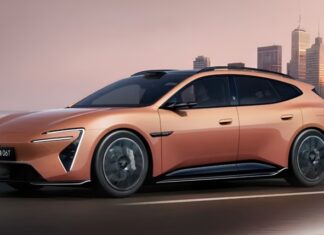
The 1991 Ford Explorer didn’t just enter the market. It conquered it.
Despite well-documented teething troubles in its debut year, the vehicle quickly claimed the title of America’s top-selling sport-utility vehicle. How did a car with hiccups become a bestseller? The answer lies in timing, positioning, and a complete misreading of the competition by rivals who were stuck in the past.
Outdating the Competition with Refinement
The primary driver of the Explorer’s success was its sheer novelty. When Ford launched the Explorer, its main competitors were already aging dinosaurs. The Chevrolet S10 Blazer and the GMC S15 Jimmy were nearly a decade old by 1991. They were relics of the early eighties, struggling to compete with a fresh design.
All three brands introduced first-time four-door versions that year. But the Explorer stood out. It was the most refined. It felt the most carlike. It didn’t require a degree in off-road mechanics to drive comfortably on the pavement.
This strategy aligned with Ford’s broader vision. They split their audience using two distinct body styles. The four-door Explorer was designed for families. It prioritized on-road comfort. It was a modern evolution of the station wagon, just taller. The shorter two-door model replaced the Bronco II. That version targeted a younger demographic. It courted buyers who wanted sport over utility.
The Midsize Sweet Spot
Size mattered. A lot.
During this era, most SUVs were body-on-frame vehicles. They were essentially lifted pickup trucks. The Explorer showed less kinship with Ford’s compact Ranger pickup than the Chevy or GMC models did with their truck ancestors.
The four-door Explorer established a new category. It was a midsize SUV. It wasn’t compact. It offered more space and a smoother ride than the truck-derived alternatives. This “just-right size” appealed to suburban buyers who didn’t need a full-size hauler but wanted more capability than a crossover.
Foreign Rivals Had the Wrong Setup
External factors also favored Ford. Foreign competition was weak in the midsize segment in 1991. The contenders were limited.
Isuzu offered the Rodeo and Trooper. Jeep had the Cherokee. Nissan brought the Pathfinder. Mitsubishi supplied the Montero. Toyota marketed the 4Runner.
None of them matched the Explorer’s balance. They had much truckier ride and handling. They felt stiff on the highway. They were also somewhat less spacious inside. The Explorer felt like a living room on wheels. The others felt like work vehicles that happened to have seats.
Sales Supremacy
The result was immediate. The Ford Explorer became the sales champion of its class. It wasn’t always the best SUV for design. It wasn’t always the peak for raw performance. But it was good enough for everyone.
It regularly finished in the top-10 sellers through 2000. Often, it broke the top five. This sustained dominance made the Explorer vital to Ford Motor Company’s bottom line. It sat alongside the full-size F-Series pickup truck. The F-Series had been America’s top-selling vehicle of any kind since 1980. The Explorer became its partner in crime.
Together, they defined an era. The rest is history, or at least, the part of history that fits in the rearview
The shine is gone. The Explorer used to be the king of the suburban driveway. Now? It’s a liability. Sales have cratered because the market has turned. Truck-based SUVs are suddenly viewed as social pariahs. Climate change anxiety. Gas prices that hurt. Energy insecurity. All of it weighed down on Ford’s biggest money maker.
The result? A sales freefall.
This decline wasn’t just a dip. It contributed to Ford’s record $12.8 billion loss in North America in 2006. The company was fighting for survival. The Explorer, once a profit engine, became a drag anchor.
This isn’t a love letter to a bygone era. It’s an autopsy of a vehicle that defined a segment before the segment collapsed. We’re tracing the Explorer from its 1991 debut through the 2007 models. We’re breaking it down by the three design generations that exist today.
Each section starts with the engineering. The major design shifts. Then we get into the weeds of model-year changes. And because buying a used Explorer is a gamble, we have to look at where it breaks.
First Generation (1991–1994): The Pioneer
The original Explorer arrived in 1991. It was small. It was unibody. It used front-wheel-drive architecture with a rear-drive optional setup. This wasn’t a body-on-frame truck pretending to be an SUV. It was a car with a roof rack.
The 1991 model came with a 4.0L V6. It was the only engine. It produced 155 horsepower. Torque was 225 lb-ft. Transmission options were a five-speed manual or a four-speed automatic.
In 1992, Ford added the 5.0L V8. This was the high-performance option. It pushed 205 horsepower. It came with a five-speed manual or the four-speed automatic. You could also get the four-wheel-drive system as an option.
The 1993 model year brought minor styling tweaks. The grille changed. The headlights were restyled. The interior got better materials. But the engine lineup stayed the same.
The 1994 model was the last of the first generation. It introduced a sporty ST model. This was the high-performance version. It had a unique suspension. It had sport seats. It had 16-inch alloy wheels. The ST still used the 5.0L V8. It made 205 horsepower.
Ford Explorer Reliability: First Generation
The first-gen Explorer was generally solid. But there were trouble spots.
- Rust: The most common issue. The wheel wells and rocker panels rotted out quickly in the Midwest.
- Suspension Bushings: The rear bushings wore out prematurely. This caused clunking noises.
- Engine Mounts: The engine mounts failed on high-mileage vehicles. This caused excessive vibration.
- Transmission: The four-speed automatic was durable but slow. It shifted harshly when cold.
Ford Explorer Safety Recalls: First Generation
The National Highway Traffic Safety Administration (NHTSA) issued several recalls for the 1991-1994 Explorer.
- **