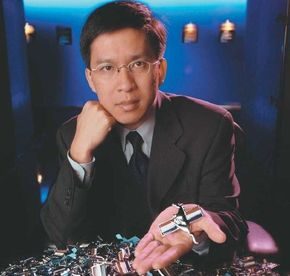
Hau Thai-Tang wasn’t just managing a car project. He was living it.
As the chief engineer for the fifth-generation Mustang launched in 2005, Thai-Tang sat at the chaotic intersection of engineering, styling, and production costs. He didn’t just oversee the mechanical specs. He reconciled them. He made sure the V-8 could fit under the hood while keeping the assembly line moving and the price tag reasonable.
His path to the heart of American high performance was anything but linear. Born in Saigon, Vietnam, he moved to New York City as a child refugee. That journey shaped his perspective on what a car could mean to a person.
From Saigon to the American Dream
Thai-Tang’s family had a specific kind of luck. Both parents were college-educated. His mother worked for Chase Manhattan Bank in Saigon. His father taught school.
When the Vietnam War ended and the U.S. pulled out, the stakes were life-or-death.
Chase Manhattan Bank initiated an emigration program for some of its employees. Thai-Tang’s family qualified. Why? They were educated. They were fluent in French, the colonial language of the region. They were a small family. The bank’s selection committee likely viewed them as low-risk assimilation candidates.
They were given a strange, surreal instruction.
Listen to a radio broadcast of Bing Crosby’s “White Christmas.” When the song played, you had one hour to reach the airlift destination.
He was nine years old.
That moment of chaos preceded a new life in America. It preceded an engineering career that would take him from Ford’s CART racing team to the Lincoln LS, the Thunderbird, and finally, the Mustang.
The Engineering Resume
Thai-Tang holds degrees from Carnegie-Mellon University and the University of Michigan. Standard credentials for a top-tier automotive engineer.
But his real education came on the ground.
He spent time on Ford’s CART racing crew. That’s where you learn about fast, unreliable things. Then he moved into management. He was engineering manager for the Lincoln LS. Later, he became chief engineer for the Thunderbird.
He also led the development and launch of key Mustang models. The 2001 GT. The V-6. The Cobra. The Bullitt.
He knew the platform. He knew its limits. He knew where the compromises were buried.
Fifth-Generation Privilege
For Thai-Tang, the 2005 Mustang wasn’t just another product launch.
“It’s a great privilege for me to work on this fifth-generation Mustang.”
The statement sounds simple. It’s loaded with context.
For a kid who grew up in Vietnam with aspirations as basic as simply owning a car, leading the redesign of one of America’s most iconic muscle cars was profound. It wasn’t about horsepower figures or drag strip times initially. It was about the symbol of the machine itself.
In 2006, he was named Director of Advanced Product Creation & SVT (Special Vehicle Team). SVT is Ford’s performance division. The Shelby GT500. The Mach 1. The high-performance halo cars that justify the brand’s racing pedigree.
The journey from Saigon to SVT is a study in precision. You don’t get there by accident. You get there by managing chaos. By balancing the demands
April 1975. One carry-on per person. Four suitcases lined by the door. Then came the song. “White Christmas.” My parents didn’t hesitate. They loaded us into the car, sped to my grandparents’ house for a hurried goodbye, and drove us to a meeting point. From there, a bus took us to the airport. We boarded an American military plane. The flight ended in Guam. The next day, Saigon fell.
The trauma of that departure stayed with Hau Thai-Tang. It shaped his worldview. But it also shaped his career. He found his anchor in steel and horsepower. Specifically, the Ford Mustang.
The Mustang Connection
For Thai-Tang, the Mustang wasn’t just a car. It was inspiration. His first encounter with one sparked an automotive passion that would define his life. He looked back at that memory as the turning point. It led him toward a path he couldn’t have predicted in the chaos of April 1975.
How did a simple car become so pivotal? For Thai-Tang, it was about identity. Stability. A sense of home in a moving machine. That early memory of the Mustang fueled his desire to work in the industry. To understand the engineering. To be part of the story.
Why the Mustang Matters
The Ford Mustang holds a unique place in American automotive history. It created the pony car segment. It changed how manufacturers approached sporty, affordable vehicles. For enthusiasts, it’s a legend. For Thai-Tang, it was personal.
His story connects the personal to the mechanical. The fall of Saigon. The escape. The Mustang. These aren’t separate threads. They’re woven together. The car represented freedom. Escape. A new beginning.
Digging Deeper
If you want to understand the Mustang’s evolution, look at the numbers. Look at the specs. Look at the heritage. The early 1960s models set the tone. The 2005 redesign paid homage to those roots. It learned from the past while pushing forward.
The muscle car era produced some of the quickest vehicles ever built. Ford’s contributions were significant. Profiles of these machines reveal more than speed. They reveal culture. Engineering. Ambition.
Thai-Tang’s journey started with a glance at a Mustang. It ended up defining his career. It’s a reminder of how small moments shape big lives. The car remains. The history continues.
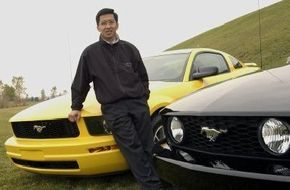
The image of the Ford Mustang is tied to one specific man who fled Vietnam as a child. Hau Thai-Tang’s journey from a war-torn refugee to an executive at Ford Motor Company is the real story behind the Blue Oval’s most iconic symbol. He didn’t just design a car; he helped realize the version of America that stood out to him most.
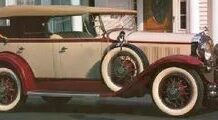
It started with exposure. In Vietnam, owning a car was a sign of status. His family had a Citroën Deux Chevaux. His grandfather also drove a French vehicle and an old Jeep. The family was comfortable enough to rent rooms to American military officers. The kids hung around them. They got ice cream. They got car magazines.
Those magazines showed American cars in their prime. Then came the USO tours. The military brought Mustang race cars for morale building. That was the first time Hau saw one. It was fast. It was American. The connection to cars and the US was forged in those early years.
His parents pushed for education. Vietnamese culture favored traditional paths. They wanted a doctor or a dentist. Hau was good at math. He chose engineering. He couldn’t stand the sight of blood.
He entered the auto industry. The attraction was clear. He loved cars. The field is dynamic. It changes constantly. It is competitive.
“You can work for NASA, but they’re not going to let you try the space shuttle. Here, you can bring it home.”
The tangible nature of the job was the main draw. With NASA, you build things you can’t touch. With cars, you can show it to friends. You can show it to your spouse. You can show it to your parents. You can say you helped build an element of it. That was the pull.
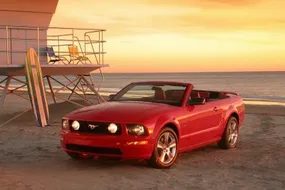
There is a specific energy that comes with pulling up to a stoplight in a Mustang. It is big. It is loud. It takes up space in a way that demands attention. For me, that car isn’t just steel and rubber. It is an abstraction of everything I think works in this country. It is accessible power. It is the feeling of an open road with no tickets in your pocket.
I see it as the ultimate success story packaged in a convertible.
But I know my view isn’t the only one. Take the kid from Nebraska. He grew up with his hands in the dirt, fixing tractors with his dad. To him, a Mustang isn’t a symbol of urban freedom. It is a piece of machinery that reminds him of horsepower and torque. The context is different. The origin story is miles away. Yet, we both feel the same pull. We both want to get behind the wheel. Why? Because the connection runs deeper than marketing.
A Horse Born In ’66
I was born in 1966. In Vietnam, where my family is from, we follow the Chinese zodiac. That year was the Year of the Horse. My mother still brings this up at Thanksgiving. She insists it is destiny.
“You were born in the year of the horse,” she says. “Now you are working on the Horse Car.”
She thinks the timeline is woven together by fate. I tell her to stop. I tell her that tomorrow I could be working on the Ford Freestar. I could be designing minivans. The universe doesn’t care about my job title. But she likes the symmetry. It makes for a good story at the dinner table.
The Legacy Continues
The journey from that first 1965 model to the modern pony car is not just about engineering. It is about culture. If you want to dig into how the Mustang shaped American automotive history, you have to look at the details.
- The Full Origin Story : How the Ford Mustang Works breaks down the mechanics and the magic. It traces the lineage from the early 1960s to the latest generation. It explains why a simple name became a brand.
- The 2005 Revival : After forty years, Ford brought back the original styling cues. The 2005 Mustang didn’t just copy the past. It learned from it. Read about the specific nods to the heritage models that kept the spirit alive.
- Muscle Car Dominance : The Mustang is central to the muscle car era. Profiles of over 100 muscle cars show where the Mustang stands in terms of speed and power. It is not just about looks. It is about raw performance.
- Ford’s Muscle Legacy : Ford muscle cars were top performers in their time. Check out the specifications and photos of the toughest models. These cars defined an era of high-compression engines and straight-line speed.
The appeal hasn’t changed. It just gets louder.