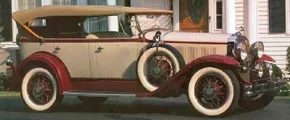
The Great Depression was just getting started. But looking back, 1930 wasn’t just a bad year—it was the calm before the storm that swallowed the economy whole in ’31 and ’32. This was the year the 1930 Buick Series 40 Phaeton hit the streets. And it was a disaster.
The team in Flint, Michigan, rolled out the new Buicks on July 28, 1929. They did it before the stock market crash. The model year started with genuine optimism. That hope died by Christmas.
The cars were good. They deserved to sell. But timing is everything in the auto business. The timing here was wrong.
Dealers watched sales tank. They could move two cars for every three they sold the previous year. By the end of the calendar year, production had plummeted to 119,265 units. That figure included about 12,000 Marquettes. The junior edition—the Marquette—was a bitter disappointment. It was discontinued immediately after the 1930 model year.
So what did Buick do? They tried to fix the styling. The public had been calling the previous designs “pregnant.” The new look aimed to cure that label. How did they change it? They dropped the height by two inches. They added a handsome beltline molding that ran from front to rear and wrapped around the back. It looked better. It didn’t sell better.
Better Comfort, Smarter Brakes
Chief engineer “Dutch” Bower didn’t just tweak the suspension; he put a major effort into improving ride comfort. He knew that a stiff chassis meant nothing if the occupants were bouncing around like pinballs. Alongside the suspension tweaks, he made vacuum-servo brakes standard. This wasn’t just a luxury add-on. It meant reliable stopping power without the foot fatigue of older systems. Thermostatically controlled radiator shutters were also made standard. This kept the engine at the right temperature automatically. No more guessing if the car was running too hot or too cold.
New Designations, Lower Stance
The naming scheme got a complete overhaul. The old Series 116 was gone. In its place came the Series 40. It sat on a new chassis. This frame was lower. It had a 118-inch wheelbase. That is significantly shorter than previous iterations. The look was distinct. Wooden-spoke artillery wheels were the standard fitment. They were paired with 19 x 5.00 tires. This setup was not just for show. It lowered the center of gravity. It gave the car a more planted feel on the road.
Why It Mattered
The shift to the Series 40 was about more than just aesthetics. The lower chassis improved handling stability. The vacuum-servo brakes provided consistent stopping power. This was a big deal in an era where brake fade was a real concern. The thermostatic shutters meant the engine ran efficiently. It reduced wear on components. It also meant fewer trips to the radiator. Drivers could focus on the road. They didn’t have to constantly check gauges.
The Ride Difference
Putting “Dutch” Bower’s work into practice made a noticeable difference. The ride was smoother. The cabin felt more isolated from the road. This was a step up from the jarring experiences of earlier models. The vacuum-servo brakes responded better to pedal input. There was less travel before the brakes engaged. This gave drivers more confidence. They knew they could stop when needed. The thermostatic shutters prevented overheating during long drives. This reduced the risk of breakdowns. It made long-distance travel more reliable.
Legacy of the Series 40
The Series 40 set a new standard. It combined comfort with performance. The lower wheelbase improved agility. The wooden-spoke wheels added a classic touch. The 19 x 5.00 tires provided good traction. This combination was hard to beat. It influenced future designs. Other manufacturers took note. They started focusing on ride comfort and braking efficiency. The Series 40 was a benchmark. It showed that engineering mattered. It wasn’t just about speed. It was about the whole driving experience.
Engine Tweaks and Model Lineup Shifts
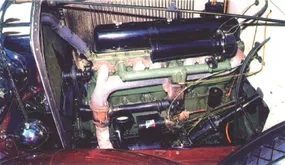
Under the hood, things got slightly bigger. The small overhead-valve six was bored out to 257.5 cubic inches. That displacement bump pushed output to 80.5 horsepower at 2,800 rpm. It was a modest gain but kept the small models competitive.
Pricing stayed tight. Among the six available body styles, the four-door sedan carried a sticker price of $1,330.
Stretched Wheelbases and Power Upgrades
Series 121 didn’t just get a name change. It became Series 50. The chassis stretched. The wheelbase grew to 124 inches.
Power came from the big six. Displacement jumped to 331.5 cubic inches. That meant 98 horsepower at 2,800 rpm. Not a lot by modern standards, but respectable for the era. Prices for these models sat between $1,510 and $1,540.
The Long-Wheelbase Option
Series 129 didn’t disappear. It lived on as Series 60. This model featured a 132-inch wheelbase. It shared the same six-cylinder engine as the Series 50.
Who needed the extra space? Those looking for luxury or cargo room. Prices reflected that utility. The range started at $1,595 and climbed to $2,070. A significant jump from the base model.
Why pay more for length? You got room. That was the trade-off. The engine was identical. The ride was just longer.
Why the Series 40 Sedan Dominated Sales
The numbers don’t lie. The Series 40 didn’t just exist; it moved metal. Specifically, the four-door sedan was the volume king. It wasn’t just a car; it was the reason the factory stayed in business that year.
But if you wanted to stand out? You went open-top.
The two open models—the two-passenger sport roadster and the four-passenger phaeton—carried a sticker price of $1,310. That was serious money in the early days of motoring. Premium? Absolutely. Practical? Debatable.
The sport roadster sold 3,639 units. Solid numbers for a niche performance model.
The phaeton? Not so much.
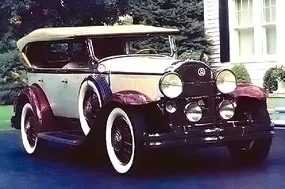
Only 1,100 were built. It was the second-least popular body style, trailing only the limousine. But style doesn’t care about volume. The phaeton was dashing. It looked fast even when sitting still.
Customization Defined the Phaeton
This wasn’t a base-model runaround. The phaeton was built for flair.
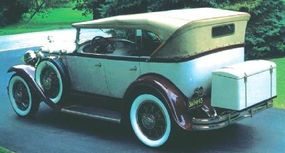
Options transformed it into a rolling showcase. Adjustable wire-spoke wheels. Dual sidemounts for spare tires. A luggage rack for the weekend getaway. Wind wings to keep the cabin manageable at speed. Chrome hubcaps that caught every bit of sunlight.
Then came the details that separated the enthusiasts from the casual buyers. Exterior chrome horns. Pilot Ray lights for night driving. A stone guard to protect the paint from debris.
These weren’t just add-ons. They were declarations.
“The phaeton was a dashing car for its day, and looked even better with options…”
It wasn’t about efficiency. It was about presence.
The Roadster vs. The Phaeton
Why did the roadster outsell the phaeton by more than three to one?
Maybe it was the price. Maybe it was the seats. Or maybe people just didn’t want to look like they were trying too hard.
The roadster was simpler. Two seats. No roof. Pure driving.
The phaeton offered four seats. More space. More complexity. More potential for rain.
Yet the roadster still couldn’t match the sedan’s sheer volume. The sedan was the safe bet. The phaeton was the dream.
And dreams are expensive.
Legacy of the Open Models
Today, finding a surviving phaeton feels like finding a needle in a haystack. 1,100 units is a drop in the bucket compared to the sedans.
But those 1,100 cars? They’re icons.
They represent a time when cars were built by hand, ordered by catalog, and customized by the owner. When a stone guard was a status symbol. When wire-spoke wheels meant you cared about weight and aesthetics.
The Series 40 sedan kept the lights on.
The phaeton kept the imagination alive.
Neither would have worked without the other.
But only one of them was a showstopper.
The Super Bowl Spotlight
You don’t get that kind of stage time unless the machine is right. The phaeton made its grand entrance in New Orleans, not just parked outside, but front and center during Super Bowl pre-game festivities. It was hauling Roger Staubach, the Dallas Cowboys legend, around the festivities. That’s not a casual commute. That’s a statement.
This isn’t just any old Buick. The Buick Club of America has stamped it with the “senior” classification, a nod to its pedigree and age. It’s walked away with numerous awards for its condition and authenticity. While Staubach was busy being a hometown hero, this classic was busy proving why it belongs in the same breath as the biggest moments in American sports.
Why It Matters
Enthusiasts know the difference between a project car and a show-car. This one crossed the line decades ago. The “senior” tag isn’t just paperwork; it’s a hierarchy within the club. It separates the heavy hitters from the rest. When you see a car like this, you’re looking at hours of obsessive restoration. Every chrome piece. Every stitch in the upholstery. It’s been vetted by people who don’t take no for an answer.
The Super Bowl setting adds a layer of cultural weight. It wasn’t just sitting there. It was part of the spectacle. Staubach riding in a classic Buick? That’s a specific kind of Texas cool meeting Detroit steel. It ties together sports history and automotive history in a way that feels earned, not forced.
The Details
We’re talking about a vehicle that has stood the test of time. Not just physically, but culturally. The awards it has collected are proof that the effort put into keeping it running and looking sharp wasn’t wasted. In a world of disposable tech and planned obsolescence, a senior-class Buick phaeton is a relic of permanence.
It’s the kind of car that stops traffic, even when traffic is moving at Super Bowl speeds. You see it, you remember it. That’s the goal. That’s the result.
Where to Look Next
If this kind of engineering and history gets your blood moving, the rabbit hole goes deep. The community around these machines is vast. You can trace the lineage of muscle cars that challenged these classics. You can dig into the sports cars that borrowed their styling cues. The lineage is continuous.
For those of us who live in the details, the search never really ends. Whether you’re hunting for a pristine example or just appreciating the ones that survive the decades, the curiosity drives the passion. The next great find is out there. You just have to look for it.