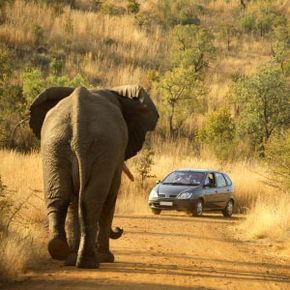
You are driving. The radio is low. The road is empty. Then, a deer steps out. Or a car in front of you slams on the brakes. Your heart drops. Your foot hits the pedal. Hard.
Everyone hopes they never have to slam the brakes. But when you do, your car’s braking system goes from background noise to center stage. It is the only thing standing between you and a crumpled fender, a hospital visit, or worse. Most people ignore their brakes until they squeak, grind, or fail. But how does that pressure in your foot actually stop a two-ton metal box moving at sixty miles per hour?
It starts with force. It ends with friction. The bridge between the two is hydraulic pressure. And the pipes carrying that pressure are your brake lines.
The Hydraulic Bridge
Most cars and light trucks use a hydraulic braking system. This is not an internet connection. It is physics. You push the pedal, and fluid moves. That fluid does not compress. It pushes.
Here is the basic chain of events:
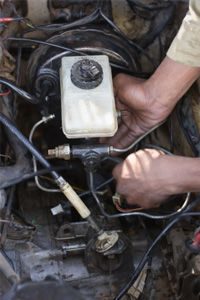
- The Master Cylinder: This is the brain of the system. It holds the brake fluid. When you press the pedal, a piston inside the master cylinder pushes fluid into the lines.
- The Lines: These are the veins of your braking system. They carry the high-pressure fluid from the master cylinder to the wheels.
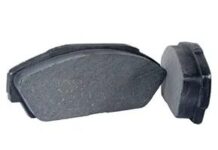
- The Calipers and Rotors: At each wheel, the fluid hits a caliper. The caliper squeezes brake pads against a spinning rotor. Friction slows the wheel.
If any part of this chain breaks, you lose stopping power. And the brake lines are the most vulnerable link. They run along the frame, under the car, exposed to road debris, salt, and moisture. If a line bursts, fluid leaks out. Pressure drops. The pedal goes to the floor. You do not stop.
Why Brake Lines Matter
Brake lines are not just tubes. They are pressurized conduits carrying fluid at hundreds of pounds per square inch. They must handle extreme heat, vibration, and corrosion. A failure here is catastrophic.
There are two main types of brake lines:
- Steel Lines: These are rigid. They run along the frame rails. They are durable but prone to rust.
- Flexible Hoses: These connect the steel lines to the wheels. Wheels move up and down with suspension travel. Steel cannot bend. Rubber or reinforced rubber hoses allow for that movement.
Both are critical. Both can fail. And both require specific tools and knowledge to replace.
The Tools You Will Need
Before you crack a wrench, gather your gear. Brake work is messy and precise. You need the right tools to do it safely.
- Brake Line Flaring Tool: This is the most important tool. You cannot just crimp a line. You must flare the end to create a seal that holds pressure. There are different flares (bubble, double, triple) depending on your vehicle.
- Brake Line Wrench: These are small, often 8mm or 10mm. They have an open end and a closed end. They fit tightly to the fitting to prevent rounding off the nut. Standard
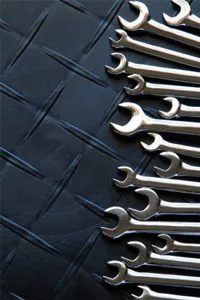
Brake lines are the arteries of your stopping power. They carry fluid from the master cylinder out to the calipers and wheel cylinders. When they fail, you don’t drive. Period.
You need to inspect these lines regularly. Look for fraying. Check for cracks. Brittle steel is a death sentence. Corrosion eats through the metal until you hear a hiss or feel the pedal go to the floor. Pay close attention to where the lines rub against chassis components or other brake parts. Metal-on-metal friction creates weak spots.
If you see a leak, stop immediately. Do not drive the car. If you can’t patch it right there, have it towed. A malfunctioning brake system is not a “fix it later” problem. It is a “fix it now or don’t drive” problem.
Essential Brake Line Tools
Good news: you probably already own most of what you need.
For basic replacement, you need two wrenches. Yes, two. Brake line fittings are hexagonal. You need one wrench to hold the fitting on the component and another to turn the line fitting. If you only use one, you’ll strip the nut or bend the line.
A tube cutter is non-negotiable. It cuts cleanly through the steel tubing. A hacksaw is messy. It leaves burrs. It takes twice as long. A tube cutter gives you a straight, clean edge with minimal fraying. If you do get a rough edge, a small metal file smooths it out in seconds.
Brake Line Flaring Explained
So you’ve cut the line. Now what?
Brake lines don’t just bolt on. They flare. A flare widens the end of the tube so it seats deeper into the fitting. Think of it like the cuff on jeans. It creates a wider surface area for a leak-proof seal. Without a proper flare, fluid leaks. Without fluid, brakes don’t work.
Most pre-bought lines come flared. But they are rarely the exact length you need. You’ll likely cut them and have to flare at least one end yourself.
Why Flare Matters
A proper flare ensures the connection is tight. It prevents leaks under pressure. It ensures the fitting slips in deep enough to create a metal-to-metal seal.
The Flaring Process
You can buy flaring kits at any auto parts store. They come with everything you need. The critical detail? The angle.
Different manufacturers use different flare angles. 45-degree flares are common, but some older or specific models use different specs. Check your car’s requirements. Getting the wrong angle means the fitting won’t seat correctly. It means leaks. It means danger.
Here is how you do it:
1. Clamp the tube with a tubing clamp to hold it steady.
2. Slide the brake line fitting over the end of the tube. Do this before you flare. It’s much harder to do after.
3. Insert the flaring tool into the tube end. It looks like a pitchfork with three prongs.
4. Two prongs lock into the clamp. The center prong is the actual flarer.
5. Screw the center prong into the tube. This widens the end, creating the flare.
A good flare is even. It’s centered on the opening. It doesn’t look jagged. Take your time. Rushing this step compromises the entire system.
Practice Makes Perfect
This isn’t guesswork. It’s muscle memory.
Experts recommend buying cheap lengths of brake line to practice. Get a few feet of scrap steel. Cut it. Clamp it. Flare it. Check it. Do it again.
If you’ve never flared a brake line before, your first attempt will likely be bad. That’s fine. Do it on the scrap. Once you can make a consistent, even flare, then you move to your car.
Pre-Bent Brake Lines
Brake lines aren’t just straight tubes. They have bends. Lots of them.
You might think you can just bend a new line to fit. You can’t. Not easily. Cold bending steel work-hardens it. It weakens the metal. It creates kinks that restrict fluid flow. A kink is a blockage. A blockage is a brake failure.
Most replacement lines come pre-bent by the manufacturer. They use precise angles and smooth radii. Trying to bend your own line to match a complex routing is risky unless you have professional bending tools and experience. For the average enthusiast, buying the pre-bent line is safer. It’s more expensive. It’s faster. And it works.
If you must bend a line, use a proper brake line bender. Not a vice. Not a hammer. A dedicated tool. But again, pre-bent is the standard for a reason. It ensures consistent internal diameter and smooth fluid flow.
The difference between a safe stop and a slide is often a millimeter of flare angle and a clean cut. Don’t cut corners. Or lines.
Straight lines are efficient for travel, but terrible for brake systems.
You might think three feet of line between the master cylinder and a caliper is enough. It isn’t.
Brake lines need flex. Without it, chassis movement stresses the fittings. They snap. You lose braking power. You stop. Badly.
But there’s a limit. Too much slack drags on the undercarriage. It catches on rocks or debris. That’s just as dangerous as a burst line.
Routing isn’t just about length. It’s about clearance.
Lines must weave around suspension components, exhaust pipes, and frame rails. A logical path keeps them tucked away from damage.
DIY vs. Pre-Bent Lines
Bending lines yourself is possible.
You need a proper tube bender. That’s the hard part.
Figuring out the angles? The tricky part.
One wrong bend and the line doesn’t reach. Or it kinks. Kinks restrict fluid flow. Soft pedal. No stop.
It takes patience. And measuring. And redoing the work.
Most people skip this headache.
They buy pre-bent lines.
These come specific to your car’s make and model. They’re flared and bent correctly out of the box.
Installation is faster. Less guesswork.
But you can’t grab them off the shelf.
Auto parts stores stock straight steel tubing. Pre-bent lines are special order. You wait. You pay a bit more.
The Case for Steel Lines
Rubber lines soften over time.
Heat cycles them. Ozone cracks them. They expand under pressure. That spongy pedal feel? Rubber’s fault.
Steel lines don’t expand.
They provide a rigid path for brake fluid.
pedal feel tight.
Stopping power consistent.
Why do some drivers upgrade to steel?
Because rubber degrades. Steel doesn’t. Not easily.
Street-rod builders and track enthusiasts prefer steel.
It handles heat better. It lasts longer.
But it’s not always the right choice.
Street cars vibrate. Steel can fatigue at connection points if not installed with proper loops.
Rubber absorbs that vibration.
So you have a trade-off.
Performance vs. comfort.
Longevity vs. ease of installation.
Next, we’ll look at stainless braided lines—the middle ground that offers steel rigidity with rubber-like flexibility.
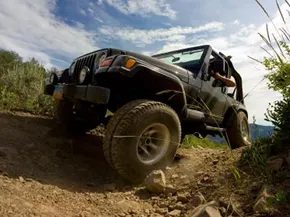
Hard lines rule the off-road trail for a reason. When you’re crawling over rocks, a soft rubber hose is a liability. A stray stone or a sharp branch can pierce it instantly. That’s catastrophic. Steel lines solve that problem. They are rigid. They don’t bend. They don’t give.
But there’s a second, quieter reason to go steel. Brake line swelling.
Rubber lines expand under pressure. You press the pedal, fluid rushes through, and the line balloons slightly. It’s subtle. You might not notice it on a daily commute. But in performance driving or hard braking, that expansion eats up pedal travel. Pressure drops. Braking power weakens. Do it enough times, and you’re left with spongy brakes when you need them most. Steel doesn’t swell. Period. Your pedal stays firm. Your stopping power stays consistent.
There’s a catch, though. Steel isn’t invincible.
Corrosion kills steel lines. Rust forms. The metal weakens. Eventually, it breaks. Just like any other part on your chassis. And because steel lacks flexibility, those connection points are stress points. You need to check them more often. Vibration can loosen fittings. If a fitting leaks, you’re done.
That’s where braided lines come in.
The Best of Both Worlds
Braided steel lines are the evolution. They look like a hose. They feel like a hose. But they’re built differently.
A stainless steel braid wraps around a Teflon core. Teflon is chemically inert. It doesn’t react with brake fluid. It doesn’t swell. The braid provides the strength. It resists punctures. It handles the heat. But unlike rigid hard lines, the braid allows for some movement. You can route these lines around suspension components. You can fit them into tight spaces where a steel pipe would rub and fail.
“Braided lines offer the flexibility of rubber with the non-swell properties of steel.”
This matters for modern suspension setups. Lifted trucks, lowered sport compacts, modified off-roaders—all of them move. A rigid steel line might crack at a fitting if the suspension compresses too far. A rubber line might stretch and fade under heavy use. A braided line bridges the gap.
Which is Right for You?
The choice isn’t just about material. It’s about intent.
If you’re building a trail rig, hard steel lines are standard. They’re cheap. They’re tough. You can fabricate them yourself with a flaring tool and some patience. Just keep an eye on the finish. Chromed steel looks good but chips. Bare steel rusts if you don’t seal it.
If you’re on the track or driving a daily driver with a performance setup, braided lines are worth the extra cost. The flexibility simplifies installation. The Teflon core ensures zero expansion. You get a firmer pedal feel without sacrificing routing options.
One thing to remember: fitting compatibility.
Steel lines use standard double-flare or bubble-flare fittings. Braided lines typically come with AN fittings or specific brake line adapters. Mixing them up can lead to leaks. Check your thread pitch. Match your flare type. Don’t guess.
Brake lines are a safety system
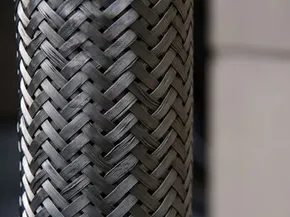
Think of a braided steel brake line as a soft hose living inside a steel mesh cage. It’s the same construction you might find under a kitchen sink, connecting a flexible supply line to a rigid pipe. In the automotive world, this design serves a dual purpose: it protects the inner rubber or nylon tube from crushing and swelling, while also taking the stress off the connection points. Hard steel tubing is unforgiving. It doesn’t flex. When you connect a rigid pipe to a moving suspension or a tight engine bay, you risk fatigue at the joints. Braided lines have “give.” They absorb vibration. The steel braid keeps the inner line from expanding under pressure, which theoretically maintains a firmer pedal feel.
Then there is the aesthetic factor. If you have chrome air filters, polished valve covers, and exposed headers in your engine bay, plain rubber lines look out of place. Braided stainless steel fits the hot-rod vibe. It’s a staple for classic car buffs who dress up their engine compartments. The visual appeal is undeniable.
But there is a major trade-off. You cannot see inside the braid.
Motorcycle Brake Lines
The core problem with braided steel lines is hidden degradation. Since the inner tubing is completely encased in a steel mesh, you can’t visually inspect it for cracks, leaks, or corrosion. This is acceptable for racecars or off-road vehicles that get their brake systems torn down and rebuilt frequently. It’s a problem for daily drivers.
You might not know you have a failing brake line until the brake fluid leaks onto your brakes or the pedal goes to the floor. Regular maintenance becomes critical when using these lines. You have to rely on scheduled inspections rather than visual cues.
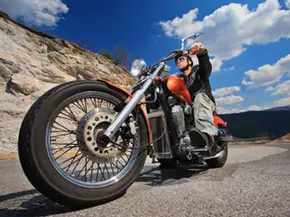
Motorcycle applications face similar constraints. Space is tight. Vibration is high. But the risk of hidden failure remains. If you are building a track bike or a custom streetfighter, braided lines offer a clean look and slightly reduced flex. However, you must commit to replacing them on a strict schedule. You can’t just look and see. You have to assume they are aging from the inside out.
For most street cars, the lack of visibility is a liability. If you install braided lines, you are trading visual inspection capability for aesthetic appeal and minor stress relief at the fittings. That’s a choice to make. And once you make it, you’re locked into a maintenance routine that requires more vigilance than a standard steel or rubber setup.
Manual Brake Bias vs. Proportioning Valves
Cars rely on hardware to manage stopping power. A proportioning valve sits in the system, dialing back pressure to the rear axle so you don’t flip the car or lock up the tires too early. It’s a set-and-forget solution. Motorcycles have no such luxury.
You are the valve.
There is no mechanical bias controller to fall back on. The front brake is a lever on the right hand. The rear is a pedal on the right foot. You have to modulate both simultaneously. Squeeze the lever too hard without feathering the pedal? The rear wheel locks, and you’re sliding out. Pump the rear too hard without the front? You waste distance and lose stability. It requires a specific tactile skill. You’re balancing physics with muscle memory in real-time.
Aesthetic Lines in Plain Sight
Here is where the rubber meets the road, or rather, where the steel meets the aluminum. On a car, brake lines are tucked away, hidden inside wheel wells or underbody panels. Nobody sees them.
Motorcycles? They are on display.
Most factory bikes route brake lines along the frame in full view. This visibility changes how riders think about their components. It’s not just about stopping; it’s about looking good doing it. Braided stainless steel lines are the go-to upgrade. They look technical. They feel premium.
The connectors matter, too. The fittings that thread into calipers and master cylinders often feature knurling or custom engravings. It’s a small detail, but on a stripped-down machine, every surface tells a story. You can also run hard steel lines, rigid and clean, but the braided aesthetic has become a standard for the sporty look.
Performance Brake Lines
When most people think of performance, they think of horsepower. They think of 0-60 times. They rarely think about the brakes.
“Performance brake lines can take your car to the next level”
But if you want to carry speed into a corner, you need confidence in the stop. This is where the discussion shifts from maintenance to modification.
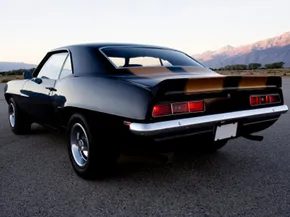
You just bolted on a turbo. Or maybe a cam swap. Your engine breathes better, makes more torque, and launches harder. Naturally, you want to stop faster.
Here’s the hard truth. More power means more kinetic energy. Your stock brakes have to fight that energy. If you ignore the stopping side of the equation, you’re playing with fire.
Most people jump straight to big brake kits. Multi-piston calipers. Two-piece rotors. Ceramic pads. These are great. But they are expensive. And they are only half the story.
The hidden bottleneck is often the brake lines.
The Physics of Brake Line Swell
Let’s talk about rubber. Stock brake lines are made of reinforced rubber. They are cheap. They are flexible. They are also a liability under high pressure.
When you slam the pedal, hydraulic pressure spikes. Rubber expands. It swells. Like an overstuffed balloon.
“A swollen line decreases the brake fluid pressure, which will compromise the vehicle’s overall braking power.”
This isn’t just theory. It’s physics. The fluid has to move. If the line expands, it absorbs that energy. The pressure at the caliper drops. The pads don’t clamp down as hard.
The result? Squishy pedal feel. Sloppy modulation. You press the pedal, and instead of immediate bite, you get travel. On a street car, this is annoying. On a track, it’s dangerous.
Braided steel brake lines solve this. They have a stainless steel braid. It’s tight. It’s rigid. It doesn’t swell.
When you push fluid through steel, the pressure stays consistent. The pedal feels firm. Direct. You can modulate braking force precisely. You know exactly how much grip you have.
Durability Beyond Pressure
There’s another reason to ditch rubber. Road debris.
Your brakes are low to the ground. Rocks. Dirt. Salt. They attack rubber lines. Over time, rubber cracks. It dries out. It tears.
Steel braided lines resist this. They still have flexibility. They don’t rattle loose. But they are tough. They protect against nicks. They last longer.
The connection point also matters. Steel lines often have better fittings. A firm grip on the brake part. No leaks. No weakness.
Material Choices and Price Tags
Braided steel is the standard upgrade. It’s affordable. It’s effective.
But you can go further.
Carbon fiber lines exist. They are exotic. They are very expensive. They add strength. They look cool. Do you need them? Probably not.
Kevlar lines are another option. Strong. Durable. Light.
Teflon-lined lines are also available. They reduce friction inside the line. Smooth flow.
Each step up in material adds cost. A lot of it. A set of carbon fiber lines can cost hundreds of dollars. Steel lines are a fraction of that.
For most enthusiasts, steel is the sweet spot. It gives you the performance benefit. It fixes the swell issue. It doesn’t bankrupt you.
Is It Worth It for You?
Stop. Think.
What do you actually do with your car?
If you take your sedan to the track on weekends. If you lift your truck for off-road crawling. Then yes. Upgrade the lines. The performance gain is real. The safety benefit is real.
But if you just commute? If you drive to work. Pick up groceries. Drive home.
Stock rubber lines are fine. They are easier to maintain. They are cheaper. You don’t need the marginal gain from a firm pedal feel if you are merging onto I-95 at 55 mph.
Don’t waste money on performance parts for a lifestyle that doesn’t demand it.
But if you push the machine…
Look at the lines. They are small. They are easy to miss. But they matter.
The Bigger Picture
Braking is a system. You can’t optimize one part and ignore the rest.
Calipers. Rotors. Pads. Lines. Fluid.
They all work together. Upgrade the engine. Upgrade the brakes. Upgrade the lines.
It’s not just about going faster. It’s about stopping safely.
The next part of this series dives deeper into disc brake mechanics. And drum brakes. And ABS.
Brakes are complex. They are critical.
Respect them.