Not all grip is created equal. A daily driver needs to survive a rainy Tuesday commute. A Formula 1 car needs to stick to asphalt at 200 mph. The physics involved are different. The rubber compounds are different. The expectations for longevity are completely opposite.
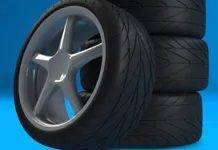
Think about your family sedan. It has to handle everything from freezing rain to hot summer asphalt. To manage this chaos, manufacturers add tread patterns. These are the deep grooves carved into the tire’s circumference. They aren’t just for looks. They serve a critical mechanical function.
Water, oil, sand, and gravel destroy traction. When these elements sit between the rubber and the road, the wheel spins uselessly. Friction drops to near zero. You lose control. Good tread patterns solve this by acting as channels. They push water and debris to the sides, away from the contact patch. This keeps the rubber biting into the pavement.
In snow or thick mud, the tread pattern changes behavior entirely. It acts like a gear. The deep grooves lock into loose material. The tire grips rather than sliding over the surface. A smooth tire would just spin its wheels and dig a hole. Tread prevents that.
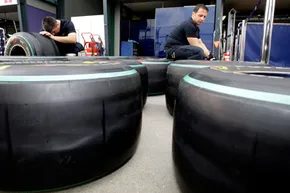
Race cars don’t need to deal with mud or standing water. They use slicks. These tires have zero tread. The surface is perfectly smooth. This maximizes the contact patch. More rubber on the ground means more grip.
The trade-off is brutal. Slicks use a soft, sticky rubber compound. It adheres to the track surface intensely. It also wears out incredibly fast. You might replace them after a single race. Or multiple times in a single day for drag racing. Consumer tires last years. Race slicks last hours.
Is there a visual cue to tell which tire fits your needs? Yes. Look for the grooves. No grooves mean maximum grip for dry, controlled environments. Deep grooves mean versatility for variable weather and loose surfaces.
Understanding this distinction helps you choose the right setup for your vehicle. It also explains why your daily driver feels different on a wet road compared to a track day car. The engineering priorities are worlds apart.
“A good tread pattern, suited for the purpose, acts to channel water off to the sides, away from the tire center.”
The next step in understanding tires involves how they are rated. But first, recognize that traction is not a one-size-fits-all metric. It is a compromise between durability and raw performance.
Some enthusiasts argue that street-legal slicks are the holy grail. They offer extreme grip. They also wear out in a week. For most drivers, that’s not a viable solution. The grooves on a standard tire might feel like wasted surface area. In reality, they are essential safety features. Without them, hydroplaning becomes a constant risk.
Consider the Top Fuel Dragster. It uses specialized rubber that isn’t treaded. It relies on chemical adhesives and extreme heat to stick. It doesn’t need to handle rain. It needs to accelerate from zero to 300 mph in three seconds. The traction demands are singular and extreme.
Your car doesn’t have that luxury. It needs to turn left and right. It needs to stop suddenly. It needs to go through a car wash.