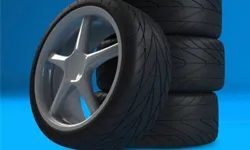
Buying tires is usually the automotive equivalent of doing your taxes. It’s necessary, it’s tedious, and it rarely sparks joy. But before you just grab the cheapest round rubber off the shelf, consider this: your choice of footwear for your car directly impacts your wallet and your safety in ways you probably haven’t calculated.
We’re talking about fuel efficiency. Certain tire compounds are engineered to reduce rolling resistance, which means your engine doesn’t have to work as hard to keep the car moving. That’s free money back in your pocket, assuming you drive enough to notice the difference. Then there’s the speed factor. While most daily drivers are capped well below legal limits, some high-performance rubber is rated for sustained speeds exceeding 150 mph (241.4 km/h). That’s not just marketing fluff; it’s a structural certification that the tire can handle extreme heat and centrifugal force without disintegrating.
Most tires fall into the “get you from A to B” category. Safe. Adequate. Boring. But the ones that matter? They handle the “in between” with vastly different capabilities. We are going to strip away the sales pitch and look at the actual features that define performance. No fluff. Just the mechanics.
Understanding Tire Features and Ratings
When you are standing in a shop or staring at a spec sheet online, you aren’t just looking at size. You are looking at a complex matrix of materials and engineering. The primary keyword for any serious buyer should be understanding tire performance features that match their actual driving habits, not just the ones that look good on a brochure.
Speed Ratings: More Than Just a Letter
You’ve seen the letters on the sidewall. Z, V, W, Y. These aren’t random. They are the speed rating, a standardized measure of the maximum speed a tire can sustain for a specific period under defined load conditions.
- S and T ratings: Common on standard passenger cars. Safe up to 112-118 mph.
- H and V ratings: Found on sport sedans and coupes. Handles 130-149 mph.
- W, Y, and (Y) ratings: Reserved for high-performance machines. These tires are constructed to withstand the heat and stress of speeds over 168 mph, with some certified for over 186 mph.
Why does this matter if you never drive that fast? Because higher speed ratings usually indicate stiffer sidewalls and better heat dissipation. This translates to sharper handling and more precise steering response, even at legal speeds. If you take corners with any enthusiasm, a higher speed rating tire is often a better choice than a basic touring tire, regardless of the speed limit.
Fuel Efficiency and Rolling Resistance
Here is where the rubber meets the road—and your bank account. Low rolling resistance tires are designed to minimize the energy lost as the tire deforms and rebounds while rolling. Less energy loss means less fuel burned.
Manufacturers achieve this through specialized silica compounds in the tread and optimized casing constructions. The trade-off? Sometimes grip. In wet or dry conditions, ultra-low resistance tires might not offer the same peak traction as a high-performance summer tire. It’s a balance. If you commute 50 miles a day
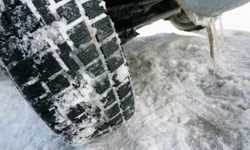
Tires aren’t just rubber circles anymore. They’re engineered systems. Manufacturers are stacking features into the tread compound and casing. Some promise shorter braking distances. Others claim to squeeze extra miles out of your tank. A few can seal themselves after a puncture. Even if you’re just swapping for stock-spec replacements, knowing what’s under the tread matters.
Most drivers default to all-season tires. They won’t boost your fuel economy. But they grip well in dry conditions. They handle most weather without panic. If you need more, there are wet-weather tires. There are winter-specific options. Snow tires often bear the three-peak mountain snowflake symbol. That icon means they meet stricter traction standards than standard all-seasons. They bite harder on ice.
But which tire type is best for your climate? How does treadwear rating affect longevity? Where should you buy tires to get the best warranty? These aren’t just trivia. They dictate safety and cost.
How Treadwear Ratings Predict Tire Longevity
The Uniform Tire Quality Grading System (UTQG) includes a treadwear number. It’s a relative comparison. A tire rated 200 lasts twice as long as one rated 100. Under controlled government testing. Real-world results vary. Driving habits change things. Aggressive acceleration kills tread faster. Poor alignment eats rubber unevenly. Tire pressure matters. Check it monthly.
“Treadwear is a guide, not a guarantee.” — Tire Industry Association
Winter vs. All-Season: Which Offers Better Ice Traction?
All-season tires use harder compounds. They resist wear in heat. Winter tires use softer rubber. It stays flexible below 45°F (7°C). That flexibility grips snow. Sipes — tiny slits in the tread — bite into ice. If you live where snow piles up, winter tires are non-negotiable. All-seasons slip when temps drop. Braking distances double or triple on ice with wrong tires.
Does Tire Pressure Affect Fuel Economy?
Underinflated tires increase rolling resistance. Your engine works harder. You burn more fuel. NHTSA estimates a 0.2% drop in MPG for every 1 PSI drop. That adds up. Check pressure when tires are cold. Use the door jamb sticker, not the sidewall max. Sidewall numbers are for maximum load, not daily driving.
Why Puncture-Sealing Tires Are Gaining Traction
Run-flat tires let you drive 50 miles after a blowout. No spare needed. But they ride harsher. Expensive to replace. Newer sealant-infused tires offer a middle ground. Liquid inside seals small punctures automatically. You keep driving. No immediate roadside stop. Some brands use foam inserts to reduce noise too.
How to Determine the Best Tire Features for Your Needs
Start with your climate. Wet roads? Look for high hydroplaning resistance. Snow? Seek the three-peak symbol. Highway miles? Prioritize comfort and noise reduction. Track days? Soft compounds wear fast but grip hard. Balance your priorities. No tire is perfect.
Up next: how to spot when tires need replacing.
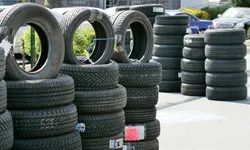
The mileage numbers stamped on sidewalls are more like optimistic projections than guarantees. You can expect all-season rubber to last between 40,000 and 100,000 miles. That’s a wide range for a reason. Elevation changes the game. Curvy backroads chew through tread faster than straight highways. Hot climates bake the rubber. Cold weather makes it brittle. The environment dictates the wear rate.
High-performance all-seasons sit in the middle. They target 40,000 to 70,000 miles. They’re stiffer. They grip harder. That grip costs tread life. Top-tier performance tires don’t even bother with warranties. They rarely make it past 25,000 miles. You buy them for the cornering grip. You accept the rapid wear as the tax.
Your daily commute matters too. Stop-and-go traffic heats up the tires. Aggressive launches tear at the contact patch. If you know your driving style, you can match it to a tire’s expected longevity. Don’t just look at the price. Look at how long the tread is supposed to stick around before you’re changing them again.
Wheel Diameter and Fitment
Size isn’t just about getting the rubber to mount. It’s about geometry. The diameter has to match the hub. The width has to fit the rim. Get this wrong and you’re looking at rubbing, speedometer errors, or ABS glitches.
Larger wheels look aggressive. They fill the wheel wells. But they often come with lower profile sidewalls. Lower profiles mean less cushioning. You feel every pothole. You sacrifice ride comfort for style. Smaller wheels with taller sidewalls absorb bumps better. They’re more forgiving on bad roads. But they might look tucked in or dated.
The aspect ratio is the height of the sidewall as a percentage of the width. A 255/40R18 tire has a 40% aspect ratio. The sidewall height is 40% of the 255mm width. It’s roughly 102mm. Change the aspect ratio and you change the overall diameter. Change the diameter and you change the gear ratio effectively. You change the speedometer reading. You might even touch the suspension.
Width is the other variable. Wider tires offer more contact patch. More grip. But they also create more rolling resistance. More resistance means more fuel consumption. They also hydroplane easier if the tread doesn’t channel water away quickly. Narrower tires roll easier. They save gas. But they slip more in wet conditions.
Load Rating and Speed Index
Beyond size, you need to check the load index and speed rating. These are the codes molded into the sidewall. The load index is a number. It tells you how much weight each tire can carry. A 91 might mean 1,356 pounds. A 100 might mean 1,764 pounds. Don’t go lower than the manufacturer’s specification. Exceeding the load rating causes overheating. Overheating causes failure.
The speed rating is a letter. It indicates the maximum sustained speed the tire can handle. Q is up to 99 mph. H is up to 131 mph. V

2: Speed Rating
You might think speed ratings are just marketing fluff for track day junkies, but they are actually structural specs. Every tire has a letter at the end of its size code—Z, W, Y. That letter tells you the maximum speed the tire can sustain under load. It’s not a suggestion. If you put a tire rated for 100 mph on a car meant to do 150 mph, you risk a catastrophic failure.
Most modern sports cars come with W-rated or Y-rated tires. These are built to handle extreme heat and stress. Lower-rated tires, like H or V, are fine for daily drivers. They offer comfort and fuel efficiency. They just can’t take the abuse of sustained high speeds.
Why does this matter? Heat. Friction builds up inside the tire as you go faster. The rubber compounds and internal belts are engineered to dissipate that heat. A lower-rated tire doesn’t have the same cooling capacity. Push it too hard, and the structure starts to break down. You might see bulges. Or worse, a blowout.
Check your sidewall. Look for the last letter in the size designation.
- Q : 99 mph
- S : 112 mph
- T : 118 mph
- H : 130 mph
- V : 149 mph
- W : 168 mph
- Y : 186+ mph
If your manufacturer specifies a certain rating, stick to it. Going up is usually safe. Going down? That’s a gamble with your safety margin.
“A speed rating isn’t a speed limit. It’s a structural limit.”
Some people swap to cheaper, lower-rated tires to save cash. On paper, it looks like a deal. In practice, you’re trading longevity and safety for a few bucks. Is it worth risking a tire failure on the highway? Probably not.
Next up, we’ll talk about treadwear grades and what that number on the sidewall actually means for your wallet.
Tires aren’t just rubber circles. They have a specific ceiling for how fast they can safely go. Your car’s factory specs usually dictate the baseline, but if you’re looking to dial in handling without sacrificing winter safety, there is a middle ground.
Look for all-season performance tires. These sit in the H to V rating range. You get better grip and sharper handling compared to standard touring tires. You don’t lose the ability to drive in rain or light snow. It’s a practical compromise for most drivers who want a bit more flair in their daily commute.
The High-Performance Tier
High-performance tires tell a different story. They drop the ice and snow capability. In exchange, they offer superior grip in wet and dry conditions. These carry a V, W, Y, or Z rating. They can sustain speeds ranging from 149 to 186 miles per hour (239.8 to 299.3 kilometers per hour), depending on the specific letter.
Driving on these at city speeds is fine. But expect shorter tread life. The softer compounds that provide that high-speed grip wear out faster. You’re trading longevity for latency-lowering performance.
Price Considerations
Before you commit to a specific speed rating, you have to look at the cost. This is often the most significant factor when replacing tires.
1: Price
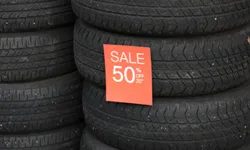
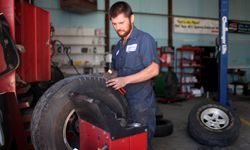
Price dictates everything when you’re shopping for rubber, from the sidewall height to the specific compound. You have a mountain of options online, but the sticker price is only half the equation. Before you click “buy,” you need to know what your local shop will charge for the mounting and balancing. And don’t assume that’s a flat rate.
Many local tire shops tack on extra fees for disposal, valve stems, or road hazard warranties that aren’t immediately obvious. They might also charge a premium just to install tires you bought elsewhere. This is standard industry practice. They aren’t being difficult; they are protecting their margin.
If you’re set on going online for a better deal, do the legwork first. Call around your neighborhood shops. Ask if they will install customer-supplied tires. Ask for a detailed quote. Some places will refuse outright. Others might charge a steep labor fee that eats up your savings. You need the total number, not just the tire price.
If you prefer the brick-and-mortar experience, remember that inventory varies wildly. A big box store might not stock the specific ultra-high-performance compound you want. A specialized shop might. Shop around until you find the exact model and the price you’re willing to pay. Don’t settle for the first shelf you see.
related reading
For more information about tires and other related topics, follow the links on the next page.