The stunt was impossible. Or it should have been.
In a commercial for the Toyota Tundra CrewMax, engineers staged a scene at the Sierra Rock Quarry in Placerville, California. The setting was dramatic. A 180-foot drop-off. A shipping container, weighing exactly 6,400 pounds, dangling from a crane like a heavy pendulum. A metal cable ran from the container’s hitch to the truck’s tow point.
For a moment, the crane held the weight. Then, it released.
The container dropped. The cable went taut. The Tundra was dragged toward the cliff’s edge. You’d expect it to slip. Instead, the tires bit into the asphalt. The rear suspension squatted under the sudden load. The truck held its ground and pulled the 6,400-pound mass back up the slope.
It looked like magic. It wasn’t.
It was physics. Specifically, it was drawbar pull.
What Is Drawbar Pull?
We see this force every day, though we rarely name it.
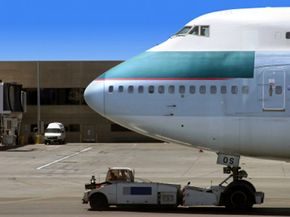
Think about a freight train. The locomotive doesn’t just move itself; it drags dozens of tons of cars behind it. That’s drawbar pull. Watch the tugs at an airport. Those low-profile vehicles pushing or pulling jetliners are generating massive amounts of force at a hitch point. Even the tractor on a hayride is using drawbar pull to drag a wagon full of people.
The term refers to the pulling force a vehicle exerts at its coupler. It is the tension generated in the direction of motion. Engineers measure it in pounds or Newtons. It is distinct from horsepower. Horsepower is about speed and energy over time. Drawbar pull is about brute force at a specific point.
Why the Tundra Didn’t Slide
The commercial stunt highlights a common misunderstanding. People confuse towing capacity with static holding power. Towing capacity is a rating. It tells you what the manufacturer says the truck can handle safely on a highway. Drawbar pull is a physical reality. It depends on traction, weight distribution, and engine torque.
When the container dropped, the Tundra didn’t just rely on its engine. It relied on gravity itself. The truck’s weight pressed down on the rear wheels. More weight means more friction. Friction keeps the tires from spinning. If the tires don’t spin, the truck doesn’t slip.
The rear end squatted because the force of the pull lifted the front slightly, shifting weight to the back. This increased the normal force on the drive wheels. The tires gripped harder. The engine provided the torque. The friction provided the anchor. The result was a 6,400-pound load being dragged uphill.
How to Calculate It
You don’t need a cliff to test this. You can calculate the drawbar pull of your own vehicle if you know three things:
- Weight on the drive wheels.
- Coefficient of friction between the tires and the surface.
- Engine torque and gear ratios.
The basic equation involves multiplying the weight on the drive axle by the coefficient of friction. That gives you the maximum static friction force. If the engine can produce enough torque to exceed the load’s resistance, the vehicle moves. If the load’s weight exceeds the friction limit, the wheels spin.
In the Tundra’s case, the coefficient of friction on dry asphalt is high. The truck’s curb weight provided ample downward force. The diesel or gasoline engine delivered torque through a geared reduction system that multiplied force. The result was a net positive pull.
Beyond the Stunt
The quarry scene was designed to sell trucks. But the principle applies to everything from tractors to tankers.
When you buy a tow vehicle, you look at the towing capacity rating. That number assumes ideal conditions. It assumes perfect weight distribution. It assumes good tires. It assumes you aren’t on a 15-degree incline while pulling a load that’s sliding toward a cliff.
Real-world drawbar pull is messier. Mud reduces friction. Ice eliminates it. Poor tire pressure changes the contact patch. But the core concept remains the same. Force at

Stop guessing how much weight your rig can actually haul. The math behind drawbar pull is straightforward once you strip away the engineering jargon. It’s not about magic numbers; it’s about torque, gears, and friction.
You need the drawbar pull (DP) in pounds. This tells you the net force available to move a load. Start with the gross tractive effort. Take your engine’s torque in inch-pounds ($T$). Multiply that by the total gear reduction ratio ($R$). This includes the transmission and the axle. Then divide by the radius of the drive tire ($r$) in inches.
$$DP_{gross} = \frac{T \times R}{r}$$
This result is your raw pulling power. But you aren’t pulling a sled on ice. You are fighting the ground. That brings us to the second half of the equation: rolling resistance ($RR$).
Rolling Resistance Calculations
Rolling resistance is the force required to keep the vehicle moving over a surface. You calculate it by taking the gross vehicle weight ($GVW$) in pounds. Multiply that by the rolling resistance coefficient of the surface ($R$). This coefficient is typically expressed as pounds per 1,000 pounds of weight. Divide the total by 1,000 to get the actual force in pounds.
$$RR = \frac{GVW \times R}{1000}$$
Finding the right coefficient is where most people get stuck. You need surface-specific data. Good concrete usually runs around 15 pounds per 1,000 lbs. Soft dirt? That number skyrockets. Look up tables for your specific terrain.
Here is a concrete example to make it stick. Imagine a forklift or industrial truck weighing 8,000 pounds driving on good concrete. The coefficient is 15.
$$8,000 \times 15 = 120,000$$
$$120,000 / 1,000 = 120 \text{ lbs of rolling resistance}$$
Now you have your friction cost. It’s 120 pounds. You need to subtract this from your gross tractive effort to get the real drawbar pull.
Net Drawbar Pull Formula
Combine the two parts into one master equation.
$$DP = \frac{T \times R}{r} – RR$$
Let’s run the numbers on a hypothetical machine. The motor produces 4,800 inch-pounds of torque. That’s 400 pound-feet. The overall gear reduction is 10:1. The drive tire radius is 18 inches.
First, find the gross tractive effort:
$$4,800 \times 10 = 48,000$$
$$48,000 / 18 = 2,667 \text{ lbs (gross)}$$
Now subtract the rolling resistance we calculated earlier (120 lbs):
$$2,667 – 120 = 2,547 \text{ lbs}$$
Your net drawbar pull is 2,547 pounds. That is what you actually have to push with. Everything else is just friction.
Why does this matter? Because if you try to pull a 3,000-pound load, you’re already underwater. The math doesn’t lie. Gear ratios multiply torque but reduce speed. Larger tires reduce the force at the contact patch. Surface conditions eat up your efficiency.
You don’t need a degree in mechanical engineering to figure this out. You just need the specs of your vehicle and the conditions of the road. Check your tire radius. Verify your axle ratio. Look up your surface coefficient. Plug the numbers in.
The result tells you if you’re going to move the load or just spin your tires. Keep the equations handy. They save you from lifting the wrong weight.