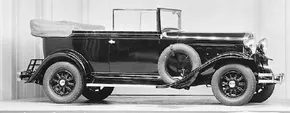
The Hudson Essex arrived in 1919 and immediately became a dominant force in the affordable car market. It wasn’t just about price. For the first time, mass-produced vehicles offered closed bodies alongside a peppy four-cylinder engine. Sales soared for two years. Then came 1924. Hudson swapped the reliable four for a six-cylinder unit that lacked durability. The public noticed. Popularity plummeted.
By 1930, Hudson tried to fix the issue. They enlarged the engine and made improvements, but the damage to the brand’s reputation for ruggedness had already taken hold. The Essex line was sinking. Then Roy D. Chapin stepped back in.
Chapin was one of Hudson’s founders. He had left to serve in the Hoover administration, but once Hoover lost the election, Chapin returned to Detroit with a clear mission: fix the Essex lineup before it died completely.
The 1932 Powertrain Overhaul
For the 1932 model year, Chapin didn’t just tweak the Essex. He made a strategic pivot. He took the existing six-cylinder engine and bored it out from 160 to 193 cubic inches. Horsepower jumped from 58 to 70. This powerplant initially stayed in the Pacemaker and Challenger models, which rode on a 113-inch wheelbase that had remained unchanged since 1930.
Mid-year, however, Chapin made a counter-intuitive move. He took that stronger 193-cid six and dropped it into a brand-new, shorter chassis. The wheelbase was shrunk to 106 inches. The result was the Terraplane.
The marketing was aggressive. Ads promised performance that felt like “aeroplaning” and “hydroplaning,” culminating in the tagline: “hot diggety dog, that’s Terraplaning!”
Why the Terraplane Succeeded
The Essex Terraplane didn’t just improve sales; it reversed Hudson’s fortunes in 1932 and 1933. The car delivered on three fronts: speed, efficiency, and cost.
Top speed reached 80 mph. Fuel economy hit 25 mpg. Starting price sat at a compelling $425.
But the real secret weapon was flexibility. In 1933, buyers could opt for a 243.9-cid straight-eight engine producing 94 horsepower. This option added prestige without breaking the bank.
Enthusiasts flocked to the Terraplane. It set over 100 stock-car speed records. The public response was overwhelming. Hudson recognized the shift in momentum. After the 1933 model year, the Essex name was retired. Terraplane became its own marque.
Legacy of a Defunct Brand
The Terraplane story highlights a pivotal moment in automotive history. It showed how chassis dynamics and engine tuning could revive a struggling brand. Hudson didn’t just sell cars; they sold performance at a price point that mattered.
For those interested in the broader context of these defunct American marques, the legacy extends beyond Hudson.
- AMC
- Duesenberg
- Old