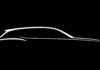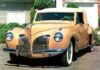
Alfred P. Sloan didn’t just want to build cars. He wanted to build a ladder. The legendary GM president spotted a glaring hole in the market between the mid-tier Buick and the luxury-heavy Cadillac. It was a price gap that screamed opportunity. So, he told Cadillac to fix it. The result was LaSalle.
Named after the French explorer René-Robert Cavelier, Sieur de La Salle, the brand launched in 1927. It sat on a shorter wheelbase than its Cadillac siblings. This was the era of aggressive expansion. Sloan’s strategy was simple: a car for every pocketbook. It worked. LaSalle filled that gap perfectly.
Harley Earl designed the bodies. Sloan had hired this young West Coast guy specifically for the job. Earl came from the carriage trade background. He knew what looked good. The first LaSalles were stunning. They accounted for 25 percent of Cadillac’s sales in year one. By 1929, LaSalle was outselling the main Cadillac line.
How LaSalle Saved Cadillac During the Great Depression
The crash of 1929 changed everything. Sales plummeted. But LaSalle kept the lights on. While Cadillac’s total production never quite beat Packard, LaSalle provided the volume that mattered. It was critical.
Look at 1933. The economy was dead in the water. Cadillac’s total output dropped to just 6,700 units. LaSalle made up fully half of that number. Then came 1937. Cadillac built 46,000 cars. 32,000 of them were LaSalles. GM managers still wanted more. They were never truly satisfied. But without LaSalle, Cadillac might not have survived the decade.
1930 LaSalle Series 340 Specs and Pricing Breakdown
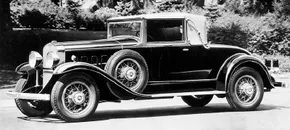
The 1930 model year introduced the Series 340. The industry trend was bigger. Heavier. More expensive. LaSalle followed suit. GM dropped the old 125-inch wheelbase. Every 1930 LaSalle sat on a 134-inch “long” chassis.
Fisher Brothers built the mainstay bodies. GM had acquired them years prior. The lineup included two coupes, two four-door sedans, a convertible coupe, and a pair of seven-passenger sedans. Prices ranged from $2,500 to $3,000.
If you wanted something fancier, you looked to Fleetwood. Another GM-acquired coachbuilder. Their semi-custom styles sat in the $2,400 to $4,000 range. That included a roadster, two phaetons, a seven-seat touring car, and two five-passenger sedans. Compare that to the 1930 Cadillac. Prices started at $3,295. They went over $10,800 for the top trims. LaSalle was the accessible luxury option.
Engine Power and Displacement Upgrades
It’s a Cadillac product. So, it came with a V-8. The original 1927 engine was a 303-cubic-inch unit. It made close to 80 horsepower. Not fast by today’s standards. Respectable then.
GM bored it out for 1928. That pushed displacement to 328 cid and power to 86 bhp. The 1930 models were heavier. Longer. They needed more juice. So, engineers enlarged the V-8 again. The final spec for the Series 340 was 340 cid. It produced 90 bhp. A modest gain, but necessary for the extra weight.
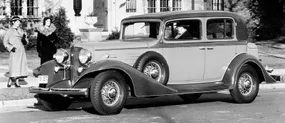
LaSalle styling evolution in 1930: how Earl’s 1927 concepts survived the crash
Harley Earl’s original vision didn’t exactly vanish. By 1930, the LaSalle still wore the hallmarks of those 1927 sketches. Low silhouette. Long, sweeping clamshell fenders. That tall, round-shouldered radiator borrowing heavily from the Hispano-Suiza. Two-tone paint was still a novelty back then, and LaSalle leaned into it.
The biggest tweak? A taller radiator. It stretched the profile, making an already sharp package look even more imposing.
People kept buying them.
Production hit roughly 15,000 units for that model year. Consider the context. The Wall Street crash had just torn through the economy. That volume was about 75 percent of Cadillac’s total output. Not bad. Respectable, even. For a brand launched as a Cadillac alternative, holding that much ground during a depression showed the design still resonated.
Why did LaSalle sales hold up in the early 1930s?
It wasn’t just the looks. It was the positioning. LaSalle offered Cadillac’s prestige without the Cadillac price tag. When money got tight, buyers didn’t abandon luxury; they just got smarter about it. LaSalle fit that niche.
The public continued to buy, and LaSalle recorded model-year production of some 15,000.
That number tells the story. In a market collapsing under its own weight, LaSalle didn’t just survive. It thrived relative to its parent brand. The styling cues—those Hispano-Suiza nods, the clamshell fenders—provided enough visual distinction to justify the choice.
How LaSalle compared to other defunct American marques
LaSalle isn’t the only ghost in the automotive graveyard. AMC, Duesenberg, Oldsmobile, Plymouth, Studebaker, Tucker. All had their moments. All had their reasons for fading.
LaSalle’s case is different. It didn’t fail on engineering. It didn’t fail on demand, initially. It failed because GM decided to cannibalize it to boost Cadillac sales. But that’s a later story. In 1930, the car was doing exactly what it was supposed to do. Selling. Looking good. Proving Earl’s design philosophy had legs.
The clamshell fenders stayed. The two-tone paint stuck. The radiator grew taller. And the buyers came.
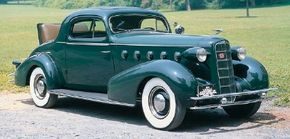
LaSalle’s Great Depression Pivot: Sharing Platforms with Cadillac and Oldsmobile
The Great Depression didn’t just hit the economy; it gutted Cadillac’s margins. By 1931, the brand had to slash costs or risk irrelevance. The result? The 1931 Series 345A got upgraded to Cadillac’s senior 353-cid V-8, pushing 95 bhp. Meanwhile, the actual Cadillac Eights were shoved onto LaSalle chassis. It was a hierarchy inversion that confused buyers. Power bumped to 115 bhp for 1932-33, but the model lineup shrank. Seven-passenger sedans moved to a 136-inch wheelbase while standard models dropped to 130 inches.
LaSalle prices followed suit, sliding to $2,200-$2,800. Still $500 cheaper than Cadillac Eights, right? You’d think that would be the sweet spot. It wasn’t. Cadillac Eights outsold LaSalle in 1931. Volume for the junior marque collapsed from 10,000 units to under 3,400 in 1932. 1933 was barely better.
The 1934 LaSalle Series 350: Oldsmobile Engines and GM’s First IFS
Desperate for a turnaround, Cadillac launched the all-new 1934 Series 350. This wasn’t just a facelift. It was a radical cost-cutting exercise. Prices dropped another $1,000 below Cadillac Eights. The model range was axed down to four bodies: a coupe, a four-door sedan, a club sedan, and a convertible coupe.
Here is the kicker. They shared a 119-inch wheelbase with Oldsmobile. Same basic bodyshells, too. To save money on casting, LaSalle ditched the V-8. It got a 240.3-cid Oldsmobile L-head straight-eight. Yes, an Olds motor in a Cadillac-badged car. They did add Cadillac-supplied aluminum pistons, but output still withered to 95 bhp.
What did you get for that power drop? “Knee-Action” independent front suspension. It was a first for GM, shared with Olds. Styling shifted from the transitional 1933 look to full streamlining. Rounded grille. Curious portholes on the hood sides.
Why LaSalle Sales Struggled Despite Streamlined Design
That formula stuck for two more years. It didn’t work well enough. Sales remained below rival junior brands. But there was a slight uptick. From just under 7,200 in 1934, volume climbed to over 8,600 in 1935. By 1936, it hit 13,000.
Prices in 1936 were rock bottom. A two-passenger coupe cost $1,175. The convertible coupe was $1,255. For 1935, a 105-bhp 248-cid engine option appeared. By 1936, that larger engine became standard. Body styles evolved too. Trunkless designs were out. “Trunkback” sedans were in. All LaSalles from 1935 to 1939 were designated Series 50.
The 1937 LaSalle Revival: Monobloc V-8 and Record Sales
1937 changed everything. Cadillac tried a new formula. LaSalle became much like the 1936 Cadillac Series 60. Why? Because the low-priced senior line was a smash hit.
LaSalle got the same new 322-cid “monobloc” V-8. It made 125 bhp. Styling was deftly revised on a unique 124-inch wheelbase. Many argue these looked better than the actual Caddys that year. Buyers agreed. Sales hit a record 32,000 units.
1938 saw few major changes. A four-door sedan with a sliding-steel “Sunshine Turret Roof” joined the lineup. You also had two-door and four-door sedans, a convertible sedan, and rumble-seat coupe and convertible options.
Then reality hit. A short, sharp recession slashed sales by half. GM accountants hated it. LaSalle was floundering again. But the cars were still bargains. Prices ranged from $1,300 to $1,900 in 1938. You could buy a near-luxury V-8 car for less than many competitors charged for six-cylinders.
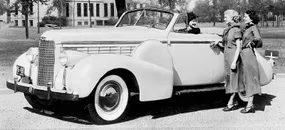
LaSalle Cars of the 1940s
Cadillac didn’t quit. They wanted LaSalle to survive the late 30s slump, so they gutted the old formula and rebuilt it for 1939. The engine? Left alone. That V-8 stayed exactly as it was. The rest of the car, however, got a serious makeover.
They slapped the LaSalle onto General Motors’ new midrange B-body platform. It looked sharper. More glass. Fewer blind spots. And those running boards? Gone. Unless you bought a convertible, then you could get them if you really wanted to. The wheelbase dropped to 120 inches, matching the senior Oldsmobiles. It was a tighter package.
Sales didn’t care.
Output hit around 21,000 units for the year. Disappointing. Again. The market wasn’t buying into the rebrand. It was the final hurrah before the brand vanished.
Why did LaSalle disappear after 1940?
War changed everything. Production halted. But before the dust settled on WWII, Cadillac tried one last thing. They wanted to bring LaSalle back as a distinct brand. A new model. A fresh start.
They worked on it. Designs existed. Prototypes likely rolled on test tracks. But the economics made no sense. The automotive landscape had shifted. Consumers wanted utility, durability, and value. Not another luxury subdivision of a luxury brand.
Cadillac itself was struggling to define its place post-war. Adding a sibling brand on top of that chaos? Suicide.
The LaSalle nameplate was killed off. Not with a bang, but with a spreadsheet.
What replaced LaSalle?
Nothing directly. Cadillac absorbed the aspirational gap. If you wanted something under Cadillac but above Oldsmobile, you were out of luck. The B-body platform lived on, but under the Olds badge. The technology migrated down. The prestige didn’t.
LaSalle became a footnote. A “what if.” Enthusiasts still hunt for the rare 1939s. They’re sleek. Underappreciated. But for the most part, history forgot it.
“The LaSalle was a victim of its own ambition.”
Too much change, too little time. The 1939 model was actually good. Better than the first batch. But the momentum was lost.
Where to find a real LaSalle today
You won’t see them at every car show. They’re rare. Especially the late ones. The early V-8 models from the mid-30s get more attention, but the 1939 redesign has a cleaner look. No running boards. Lower stance.
Restoration is hard. Parts are scarce. Many were scrapped in the war effort or simply rusted away. If you find one, keep it. It’s a piece of GM’s failed experiment in brand segmentation.
Why do car historians still talk about LaSalle?
Because it represents a specific moment in American auto history. The transition from distinct brand identities to platform sharing. The beginning of the end for luxury subdivisions that didn’t fit the mass-market mold.
It also shows Cadillac’s desperation to expand its reach. They wanted more customers. LaS
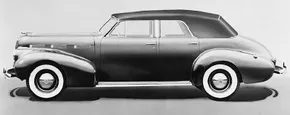
LaSalle’s final bow: The 1940 Series 52 and the end of an era
The 1940 model year was the peak. For LaSalle, a brand that had survived 14 years in Cadillac’s shadow, this was the high-water mark of design and engineering. GM finally gave it a two-series lineup for the first time in a decade. The headline act? The Series 52 Special.
Harley Earl’s influence was everywhere. He slapped his latest “torpedo” styling on the hood. It was sleek. Clean. The old bullet-pod headlamps that sat awkwardly on the Cadillac hoods were gone. On the 52, sealed beams dropped down into the fenders. A move every other Detroit automaker made in ’40, but on the LaSalle, it flowed better.
The wheelbase grew three inches. That meant more legroom, bigger windows, and a cabin that actually felt spacious. The lines were rounded, softening the boxy edges of previous years. But the real star was the grille. It stayed narrower than Cadillac’s—keeping that distinct LaSalle identity—but the shape was artful. Refined. The “catwalk” vertical brightwork between the grille and lamps? Still there. An Earl signature. But wider now. Fully integrated into the fender skin. It looked less like an add-on and more like part of the metal.
“The trademark LaSalle grille arguably reached its pinnacle.”
The Series 50 sat alongside the 52. It kept the ’39 look. Boxy? Yes. Attractive? Still. It got the longer wheelbase and a smoother front end, but it lacked the torpedo flair. You had coupe or four-door sedan options for both. The 50 even added a two-door sedan to the mix. Then, mid-year, the specials arrived. The convertible coupe and sedan. These were the elegant ones. The ones people stopped to look at.
Under the hood, the 322 L-head V-8 got a tweak. Five horsepower more. That pushed output to 130. Not a massive jump, but enough to keep it punchy.
So why did it die?
Price.
LaSalle was squeezed out of its niche. The ’40 spread ran from $1,240 for a basic Series 50 coupe up to $1,895 for the Special convertible sedan. That’s a wide range. But look at the competition. A genuine Series 62 Cadillac started at just $1,685. Buick? Their range stretched from $895 to $2,199. LaSalle was trapped in the middle. No longer exclusive. No longer distinct enough in price to justify the separate badge.
Sales told the story. LaSalle moved 24,130 units in ’40. That’s nearly two-thirds of Cadillac’s total volume of 37,000. Respectable. But it trailed Packard. It only slightly edged out Lincoln. The prestige gap was closing. The logic shifted. Why keep a junior line with fading glory? Why not just sell a cheaper Cadillac?
GM agreed. For 1941, LaSalle vanished. In its place? The Series 61. An entry-level Cadillac.
The Series 61 replacement strategy
The move worked. The Series 61 spanned $1,350 to $1,535. It sold 29,250 units in its first year. That beat LaSalle’s output. But the 61 was always second fiddle to the 62s. It stayed in the premium lane, never dipping low enough to cheapen the Cadillac name. Post-war prosperity made the split unnecessary. By 1951, Cadillac was the undisputed luxury king in America. The 61 retired. The strategy held.
The ghost of the 1941 prototype
Here is the kicker. Before GM pulled the plug on the LaSalle nameplate, their stylists had already built a ’41 prototype.
It was a fastback four-door sedan. Torpedo style. It had the slim grille. The “catwalk” fender trim. Thin horizontal parking lights. Spinner hubcaps. And a revival of the early LaSalle radiator badge—an “LaS” monogram inside a circle.
It was a pretty car. A coherent design. A worthy successor.
But it never made it to production. The corporate decision had already been made. The prototype sits in history as a “what if.”
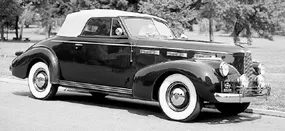
The Ghost in the Machine: LaSalle’s Post-War Echoes
GM Design didn’t just forget LaSalle. They fetishized it.
Long after the war ended, the name carried weight. Magic, even. It wasn’t dead weight; it was aspirational. Designers kept pulling the brand back from the brink, convinced the public still missed that specific flavor of upscale restraint.
First came the Motorama spectacles. 1955. Two show cars. A hardtop sedan and a two-seat roadster, both labeled “LaSalle II.” Strictly for show, yes. But look closer. Vertical slat grilles. Direct nods to the 1940 catwalk designs. Traditional heraldry plastered on the metal. GM wanted you to feel the lineage.
The 1955 LaSalle II concepts weren’t just cars. They were eulogies in chrome.
The name kept surfacing. It hovered over the 1963 Buick Riviera. That sleek GT could have been a LaSalle. It was close. Then there was the mid-1975 Cadillac Seville. Compact sedan. Premium feel. The name LaSalle was on the shortlist. Right up until the final seconds. Then they chose Seville.
Why do we keep asking if LaSalle will return?
Probably not. The market doesn’t need another division. GM doesn’t have the bandwidth. But the idea? It persists. A nice thought to hold onto while the industry chases EVs.
Other Dead Brands You Might Miss
If you’re chasing ghosts, you’re not alone. The US auto industry shed a lot of skin.
- AMC : The underdog that went hard on the Eagle.
- Duesenberg : When money was no object.
- Oldsmobile : The innovator that stagnated.
- Plymouth : The people’s car, gone too soon.
- Studebaker : The engineer’s last stand.
- Tucker : The legend that never really was.
LaSalle sits with them. Quiet. Distinct. Gone.