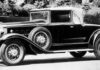
Edsel Ford is usually a punchline. You mention his name, and people think of the badge that became the automotive synonym for failure. It’s an easy association. The 1958 sedan was a disaster, a marketing mess that haunted Ford Motor Company for decades. But that narrative erases the man’s actual taste. Edsel didn’t just hand-pick failures. He gave the world the 1940 Lincoln Continental.
It is arguably the most revered car design in history.
How a European Vision Created an American Icon
Edsel wanted Lincoln to be the best car on the planet. Not just reliable. Not just powerful. Best. He looked across the Atlantic and saw what the Europeans were doing. They had long hoods. Slender fenders. Narrow grilles that looked like they belonged on a race car, not a luxury cruiser. He called those elements “continental.”
He didn’t just like them. He was obsessed.
The result appeared in 1940. When it rolled out, it didn’t just turn heads. It stopped traffic. People were eager to write checks for it immediately. Even today, more than 80 years later, the car commands respect. And money. A lot of it.
Which Design Elements Defined the Original Continental?
You want to know what made it special? It wasn’t the engine. It was the proportions.
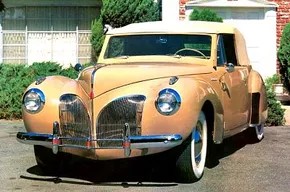
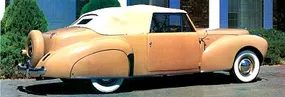
Edsel had an unerring sense of style. He saw a gap in the market for a car that looked fast when it was parked. The 1940-1941 Lincoln Continental combined American bulk with European elegance. It had that distinctive long hood. The fenders were narrow, tapering back like fins before they were even a thing. The grille was slim, aggressive.
The car was a dream made of steel and leather, a direct result of a president who knew exactly what he wanted.
It wasn’t just a car. It was a statement. And it proved that while the brand named after him would become a joke, the man himself understood design better than almost anyone at Ford.
The Birth of the Lincoln Continental
It started with a whim. Or maybe just a desire to look good in Florida. In 1938, Edsel Ford didn’t want another boring sedan. He wanted something sharp. Something that screamed luxury without shouting it. So he commissioned a custom convertible. It was based on the production Lincoln Zephyr, but that’s where the similarities ended.
He didn’t do it alone. He pulled in E. T. “Bob” Gregorie. Young. Talented. Head of Ford’s design department. Together, they built a machine that turned heads immediately. Edsel took it to Palm Beach for his winter vacation. One look at it and the phones rang off the hook. Over 250 people asked when they could buy one.
“It immediately attracted inquiries from over 250 people as to when it might be offered for sale.”
That kind of demand doesn’t get ignored. Edsel gave the green light. A production version joined the 1940 Zephyr lineup. His personal car hit the showrooms with barely any changes. Same look. Same vibe. Just now available to anyone with enough money and taste.
Under the Hood: The 1940 Continental Specs
Power came from the Zephyr’s engine. A 292-cid V-12. It made 120 horsepower. Not fast by modern standards, but smooth. Very smooth. The car carried no badge. No “Continental” nameplate. Just silence and style.
Two body styles debuted. The four-seat cabriolet. The closed coupe. Production numbers were low. Intentionally so. Only 54 convertibles rolled out. The coupe saw 350 units. Scarcity was part of the package.
1941 Lincoln Continental: Distinct Identity and Rare Survival
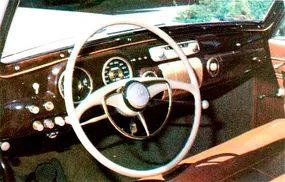
The 1941 model year brought a shift in identity. It was little changed mechanically, sure, but it finally broke free from the Zephyr umbrella. A distinct model now. With appropriate name script to match. That separation mattered. It signaled intent.
Weight wasn’t a concern for the engineers. Close to two tons sits on those wheels. Yet the Continental moved with agility that defied its mass. For its time, it was sharp. Highly refined. The beauty of the bodywork remains matchless. No other car looked quite like it.
Production numbers tell the story of exclusivity. Just 400 cabriolets rolled off the line. Coupes fared slightly better, with 850 units. Scarcity built in from day one.
The Harry Wynn Cabriolet
Take the specific example owned by Harry Wynn in Antioch, California. He picked it up in 1975. Original condition. Not a restoration project yet, just a survivor. Five years later, he committed to the work. Restored it properly.
Is it for sale? No.
Wynn’s car stands as proof of how these machines age. Not as museum pieces under glass, but as preserved machines. The originality of the acquisition matters. Buying it before it was chopped up or poorly restored added value. Now it’s just a piece of history that stays put.
Originality counts. Finding a car in its original state in the 70s was a different game than hunting one today.
The 1941 Continental didn’t need to shout. The design did the talking. And it still does.