The American fixation on vintage performance vehicles isn’t a new phenomenon. It started in earnest in the late 1960s, when high-end engineering and aggressive styling trickled down from luxury sedans into affordable packages. People wanted speed. They wanted style. And they wanted it cheap.
Today, scarcity drives value. The cars that once cost less than a new sofa now command fortunes. Why? Because nostalgia is powerful, and finding a pristine example is increasingly difficult. We are looking at the models that built the hobby. Specifically, two Plymouths that defined an era of raw horsepower and bizarre aerodynamics.
10: Plymouth Road Runner (1968-1970)
Plymouth saw the writing on the wall. The youth market was hungry for speed, and Plymouth decided to feed it. The Road Runner launched in 1968 with a strategy that was equal parts marketing genius and financial gamble.
The base price? A staggering $3,000. It was dirt cheap.
They didn’t just make it cheap; they made it fun. They licensed the WB cartoon character for a tie-in campaign. The horn honked “beep-beep.” It was irreverent. It was aimed directly at teenagers who had just gotten their licenses and very little money.
The base price was a lie, though. It was a starting point.
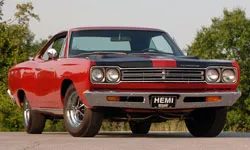
True muscle car buyers didn’t buy the base model. They bought options. The “six-pack” carburetor setup boosted the standard 383 cubic inch engine to 390 horsepower. Step up further, and you could spec a 426 Hemi. With the right combination, you could run a quarter-mile in 13.5 seconds. Top speed exceeded 140 mph.
For that price, you got a no-frills hardtop designed to break records.
Sales were explosive. In 1969 alone, Plymouth moved over 80,000 units. But here is the problem with cheap, fast cars: people drove them hard. They raced them. They crashed them.
Forty years later, the cars you see in garages are the survivors. The hardtop version, which lacks a central B-pillar for a sleeker roofline, is highly sought after. But the gold standard? The 1969 ragtop.
Only about 2,200 were built. They are rare. They are valuable. They are the holy grail for collectors who want a Road Runner that hasn’t been driven straight into the ground.
9: 1971 Plymouth Superbird 440
By 1971, the landscape had changed. NASCAR required homologation specials to compete in restricted racing classes. The rules demanded aerodynamic efficiency to cut through the air at 200+ mph. Plymouth responded with one of the most visually distinct cars ever built.
The Superbird wasn’t just a muscle car. It was a wedge-shaped missile.
It featured a massive nose cone, a fin that rose 18.5 inches above the hood, and a rear wing that defied the wind itself. The design was functional, not aesthetic. It generated downforce, keeping the rear tires planted when others would lift off.
Under the hood sat the legendary 440 cubic inch V8. This wasn’t the base engine. It was the high-performance variant, often paired with a four-barrel carburetor or even a six-pack setup in rare configurations. Horsepower figures fluctuated due to tightening emissions regulations, but the torque remained brutal.
Production numbers were low. Plymouth built roughly 1,920 Superbirds
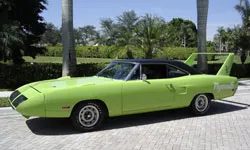
Plymouth Superbird: The NASCAR-Derived Muscle Legend
It sits at the top of “best of” lists, quietly overshadowing other Plymouth models despite its humble origins as a Road Runner variant. This wasn’t just a factory modification. It was a purpose-built response to NASCAR’s strict homologation rules. The goal? To create the ultimate expression of 1970s muscle car engineering. You knew this car represented the peak of driving skill and raw power, even if you were only experiencing it through fantasy or aspiration.
The standard setup featured the Magnum 440 cubic-inch V-8. Power output sat at a respectable 375 horsepower. But buyers had options. You could upgrade to a “six-pack” configuration, which swapped the stock 4-barrel carburetor for three dual-barrel units. Or you could go for the big money option: the 425-horsepower Hemi V-8. That Hemi version remains the most valuable configuration today.
Did these cars actually race in NASCAR? Probably not as much as the marketing suggested. Many never saw a track. But they inspired a generation. For enthusiasts who preferred the Superbird’s aggressive, aerodynamic body over the utilitarian Road Runner, it was purely about aesthetics. And those aesthetics are paying off. Over the last decade, the collector’s market for a well-preserved 440 Superbird has surged. If you could have bought one for $67,000 in 2001, expect to hand over $107,000 now. That’s a two-thirds increase. Dream cars don’t just keep their value; they compound it.
Dodge Charger R/T 440 (1968-1969): Hollywood’s Bad Boy
Even people who know nothing about cars recognize the Dodge Charger. It’s one of the most visually striking hardtops ever built. “The Dukes of Hazzard” gave it mainstream fame, but its Hollywood credentials go deeper. In the 1968 classic Bullitt, Steve McQueen’s villain drove a black Charger through one of cinema’s most famous chase scenes. It cemented the car’s place in history. More recently, The Fast and the Furious franchise reintroduced it to a new generation.
There’s something about the Charger’s lines. Combined with the power under the hood, it embodies danger, rebellion, and unchecked male power. No other vehicle captures that “bad-boy” energy quite like this Mopar.
The price appreciation here is staggering. A Charger R/T 440 would have cost you around $39,000 in 2001. Today, a mint example commands close to $170,000. Consider the context: the car launched with a base price of just $3,500. It sold 37,000 units in its first year. Scarcity and demand have turned a mass-market product into a blue-chip asset.
The styling screams confidence. The “Coke-bottle” body lines, the distinctive front grille, and the hidden headlights all suggest swagger. The R/T designation stood for “Road/Track,” signaling that this car was built for both street cruising and drag racing. Heavy-duty suspension provided the handling needed to pull off sharp tricks, but let’s be honest. It’s the look that drives collectors crazy. It’s the look that made it iconic.
Chevrolet Camaro ZL1/Z-28/SS Coupe (1967-1969)
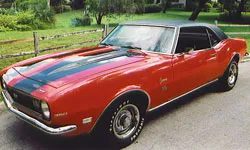
The 1969 Camaro ZL1: An Aluminum Monster
If you’re hunting for the holy grail of 1969 Camaro ZL1 values, you’re looking at a car that defies standard muscle car logic. We’re talking about a 500-horsepower aluminum V-8 that weighed almost nothing compared to its cast-iron rivals. Only 69 were ever built. Most disappeared into drag strips, their transmissions screaming as they launched down the quarter-mile in 13.16 seconds. Top speed was rated at 125 mph, but let’s be real—this car was built to go in a straight line until the wheels melted.
The price tag tells its own story. In 2001, a clean example might fetch $18,000. Today? You’re looking at $91,000 or more among serious collectors. It wasn’t a package offered again after 1969. The aluminum heads, forged internals, and massive carburetors made it too expensive and too fragile for mass production. It remains one of the most powerful and best-remembered muscle cars ever made. Not because it was fast, but because it was nearly indestructible yet incredibly rare.
6: Buick GSX (1970)
Buick took the mid-sized Skylark body and shoved a literal monster engine inside it. The result was the GSX. Sure, the Grand Sport nameplate had debuted in 1965, but it didn’t grab national headlines until later. The 1967 GSX was beefy, sure. But the 1970 launch changed everything. Why? Because Buick finally offered a 7.5-liter engine capable of 400 horsepower.
Here is the kicker: the Stage 1 GSX performance package claimed a conservative 360 horsepower on paper. But that was a lie. Testers knew the truth. With upgraded valves, heads, and a more aggressive camshaft, that engine topped 400. Real world. Not sticker numbers. It ran the quarter-mile in 13.38 seconds. That’s not slow. That’s serious.
And you could only get it in two colors: Apollo White or Saturn Yellow. No other options. If your car wasn’t one of those two colors, it wasn’t a true GSX. This limited configuration turned the Skylark into a collector’s item overnight. It wasn’t just a day driver anymore. It was a statement.
5: Plymouth Barracuda (1970-1971)
The Barracuda had been around since the 1960s, but 1970 and 1971 were different. Plymouth needed something sharper. Something meaner. They delivered.
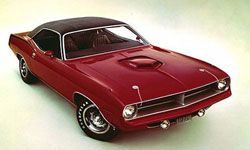
The Plymouth Barracuda isn’t just a car. It’s a financial anomaly wrapped in steel. Over the last decade, it has been the highest earner in the collector market. A pristine example that might have sold for $49,000 ten years ago now commands over $2 million. That’s a staggering jump. But the history behind the badge is just as tangled as the price tags are high.
The Barracuda launched in 1964. It didn’t become a hit for six years. The turning point arrived in 1970. Plymouth dropped a 7.2-liter engine capable of 390 horsepower. Suddenly, the Barracuda was central to the muscle car conversation.
Then came the heavy hitter. The 7-liter Hemi block version. It made 425 horsepower. Handling was… complicated. No matter how many times engineers tweaked the suspension, the car resisted the track. It was fast though. Unnervingly so. The “Hemi-Cuda” hit 60 mph in 5.6 seconds. It burned rubber with almost zero effort.
Supply was tight. The price tag scared off most buyers. Insurance premiums spiked. Only a few hundred were built. Each one was unique. Different trims. Different colors. Different transmissions. Collectibility was baked into the assembly line. Convertibles with the Hemi setup? Maybe a dozen existed. Maybe fewer.
The Pontiac GTO: The Goat That Started It All
The Pontiac GTO appeared in 1964. It really took off in 1965. Enthusiasts still call it the “Goat.” It remained a favorite even after newer, faster cars arrived. Why? Iconic status. You can argue with the stats, but you can’t argue with the cultural footprint.
The 0-60 time sat around 6.1 seconds. That was fast enough to help create the muscle car phenomenon across the United States. Pontiac marketed it directly to youth. Cheap. Fast. A 6.3-liter V-8 shoved into a mid-sized Tempest body. The split-grill design became instantly recognizable. It’s still one of the most distinct front ends in automotive history.
By 1967, Pontiac swapped the six-pack carburetors for a single 4-barrel. They also offered the “Ram Air” induction system. It raised peak RPM and boosted output to 360 horsepower. It was a niche option. Only 751 of the 82,000 units sold that year got it.
The 1969 “Judge” version changed the game again. A larger 6.5-liter engine. Luxury interior packages. An external redesign that sparked a new wave of popularity. The combination of rarity and nostalgia did the rest. Value jumped from around $36,000 in 2001 to nearly $200,000 today. The Goat didn’t just age well. It appreciated like fine wine.
Chevrolet Chevelle SS/LS
The story continues with the Chevy. The Chevelle SS and LS models from 1966 to 1970 represent a different kind of muscle. While the Plymouth screamed and the Pontiac posed, the Chevelle worked. It was robust. It was everywhere. And right now, it’s sitting at the top of the profit charts for the past ten years.
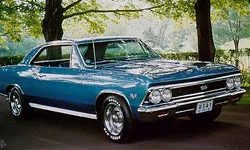
The Chevelle’s Bold Evolution
The Chevelle nameplate didn’t just appear; it evolved. Starting as a “Super Sport” package on the 1961 Impala, it waited until 1966 to shed its skin and become the distinct Chevelle SS. That debut year delivered the look. Forward-thrusting fenders. Special wheel covers. Red-line tires. A blacked-out grille. It screamed aggression.
Chevy didn’t hold back on the engines either. The 1966 Chevelle SS 396 was a rarity, with only about 100 units produced. Collectors treat these like museum pieces. Values haven’t just risen; they’ve skyrocketed. What sold for around $28,000 a decade ago now commands up to $369,000. That is a staggering return on investment for a car that was once considered common.
By 1969, the demand for raw power pushed dealers to create something special. They couldn’t move inventory fast enough. So, Chevy issued a Central Office Production Order (COPO). These weren’t regular showrooms models. They were special-order beasts. Only about 320 were made. Under the hood sat an L-72 427-cid V-8. It churned out 450 horsepower. Dealers knew their customers wanted speed, not luxury.
The final chapter of the classic SS era arrived in 1970. This 7.4-liter V-8 packed 450 horses. It hit 60 mph in six flat seconds. Racing stripes adorned the body. The interior was plush. It became the people’s choice. Not just for the stats, but for the vibe. It was accessible performance at its peak.
Shelby’s King of the Road
Then there is Shelby. The GT 500KR. “KR” stands for King of the Road. And collectors agree. This isn’t just a muscle car. It’s a statement. In 2001, you paid $64,000. Today? $100,000 is the baseline. Some special orders have crossed the $5.5 million mark. Why? Rarity. Prestige.
The original GT 500KR advertised a V-8 with 360 horsepower. By American standards of the mid-60s, that was respectable. But Shelby added something else. European handling. American heart. It remains the only non-American muscle car that holds serious weight in collector circles. Its popularity never wavered over its four-year run. Fans still whisper about it. It sits on these lists because it earned its place through consistency and exclusivity.
Shelby didn’t stop at the GT 500KR. The 1964 Cobra 289 roadster is another legend. Valued at $175,000 in 2000, it now ranges from $330,000 to $5.5 million for the unique “Super Snake” variant. This is the holy grail for the highest echelons of enthusiasts.
Then came the 1966 Shelby Cobra 427 S/C. It had too much power for its chassis. 480 horsepower in a lightweight roadster is a recipe for trouble. Or triumph. Take Bill Cosby’s example. He ordered a turbocharged version. He sold it. It ended up in a
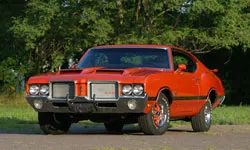
The Rare W-30 and the King L-69
By 1968, the 442 had graduated from an option package on the Oldsmobile Cutlass to its own distinct model line. The name still honored its mechanical roots: a four-barrel carburetor, a four-speed manual transmission, and dual exhausts. But if you are hunting for the peak of Oldsmobile muscle performance, the conversation centers on two specific configurations that defined the era’s horsepower wars.
The most coveted factory muscle option was the L-69. Available exclusively in 1971, this engine packed a hotter camshaft profile that pushed output to 360 horsepower. It achieved this through a tri-power arrangement featuring three two-barrel carburetors. The result was a car that slapped the quarter-mile in 14.8 seconds. To keep that power planted, Oldsmobile upgraded the springs, which noticeably improved handling dynamics without sacrificing ride comfort. For collectors with roughly $85,000 to spend, the L-69 remains the most sensible and rewarding purchase.
Then there is the ghost of the 1970 lineup: the W-30. This hardtop version is no longer available in its original format, making it a holy grail for serious restorers. Under the hood sat a 365-horsepower engine equipped with a six-pack setup—though in W-30 terms, this referred to the specialized air-induction system. Cold air was routed directly from the front bumper into the intake, a clever trick for denser air and better combustion.
Production numbers were brutally low. Oldsmobile only released 54 W-30s from the factory. Dealerships managed to install another 97 units post-production, bringing the total to 151. That scarcity drives the value, but it also makes the W-30 a niche pursuit. The L-69, with its slightly higher output and broader availability, tends to hold its value more reliably for the general enthusiast market.
If you are comparing which configuration offers the best blend of performance and collectibility, the L-69 usually wins on practicality. The W-30 wins on historical uniqueness, assuming you can find a survivor in good condition.
For more insights into classic muscle cars, visit the next page.