Hybrid cars are underpowered. At least, that is the story you have likely been told since the Prius first rolled onto the highway. The narrative goes that these vehicles are sluggish, tailgating nightmares designed for the slow lane. They save you money at the pump, sure, but you pay for it with a lack of pep.
That narrative is stale. And mostly wrong.
Judging a hybrid by its gas engine alone is a rookie mistake. You are measuring the horse, but ignoring the rider. Horsepower isn’t just a number on a spec sheet. It is the raw force the engine generates to move mass. In a standard internal combustion vehicle, that force comes from a large, hungry engine burning lots of fuel to turn the wheels.
Hybrids cheat the physics of weight.
They use smaller engines. A smaller engine is lighter. Less weight means less energy is required to accelerate the vehicle. The engine works less. Less work translates directly to less fuel burned. That efficiency is the entire point of the hybrid architecture. But there is a catch. Smaller engines naturally produce less peak horsepower on their own. If you only looked at the gasoline component, you would conclude the car is weak.
This is where the misconception dies.
The “trick” hidden in the chassis changes the equation entirely. You cannot evaluate hybrid performance by looking at a single number. You have to look at how that number is generated. The powertrain does not rely on one source. It relies on a combination of sources that work together.
How Hybrid Systems Generate Real Power
The gas engine in a hybrid is often modest. It might be a 2.0-liter four-cylinder or a smaller inline-four. On paper, it looks underwhelming compared to a V6 or a turbocharged inline-six found in traditional sedans. But that gas engine is not doing all the heavy lifting.
It shares the load.
An electric motor sits in the mix. It provides instant torque. Torque is the twisting force that gets a car moving from a standstill. Gas engines need to rev up to build torque. Electric motors are ready instantly. This means the initial acceleration feels sharp, even if the peak horsepower rating is lower than a sports car.
Hybrids don’t just save gas. They combine two power sources to create a driving experience that feels faster than the numbers suggest.
The battery plays a role too. It stores energy recovered from braking. It also provides a burst of power when you mash the gas pedal. This is often called “boost.” The electric motor assists the gas engine during acceleration. The result is more power than either system could produce alone.
Think of it like a tandem bicycle. One rider has high endurance but lower peak power. The other has explosive bursts but burns out quickly. Together, they go faster than either could on their own. The hybrid powertrain operates on the same principle. The gas engine handles highway cruising. The electric motor handles low-speed agility and acceleration bursts.
The Difference Between Peak Horsepower and Real-World Feel
When manufacturers list horsepower, they usually list the peak output of the gas engine. Or sometimes they list the combined system output. This is where confusion sets in. A standard car might list 300 horsepower. A hybrid might list 200 horsepower for the gas engine, but
A hybrid drivetrain is essentially a standard internal combustion engine paired with a small electric motor. The electric motor draws from a dedicated battery pack to propel the vehicle at low speeds. This allows the gasoline engine to shut off when not in use, cutting fuel consumption and emissions.
The electric motor does more than just idle support. In most hybrids, it works in tandem with the gas engine to send power to the wheels. This combination often yields more total power than comparable non-hybrid models.
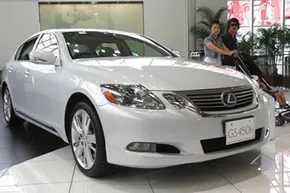
Consider the Lexus GS 350. It uses a 3.5-liter V6 producing 303 horsepower. The hybrid version, the GS 450h, also uses a V6. That specific engine alone makes 292 horsepower. When you add the electric motor’s contribution, total output rises to 339 horsepower.
Compare this to the gas-only Lexus GS 460. It has a larger 4.6-liter engine. Its maximum rating is 342 horsepower. The hybrid system nearly matches this. The non-hybrid makes only 3 more horsepower despite the displacement advantage.
This creates a debate. When evaluating a hybrid car horsepower rating, should you count the electric motor’s contribution?
Reviewers often translate this into real-world terms. You likely won’t notice when the electric motor engages. Consumer Guide Auto notes the GS 450h lacks the immediate kick of a V8. Yet it surges ahead efficiently. A test example hit 0-60 mph in 6.1 seconds. The system remains unobtrusive.
Technically, comparing hybrid vs standard car power should focus on the gas engine alone. On the road, the source of power rarely matters. Whether energy comes from electricity or fuel, the result is acceleration.
The gap between theory and practice closes once you start driving. The numbers on the spec sheet become less relevant than the feeling in the seat. You just know it moves.
Where does the power come from? It doesn’t really matter.