Apple’s electric vehicle project remains in the shadows. Like its VR headset, there is no release date. Yet, the company keeps filing patents. The latest batch reveals details about the exterior and interior layout of the rumored “Project Titan.” The data points to a radical departure from traditional automotive design.
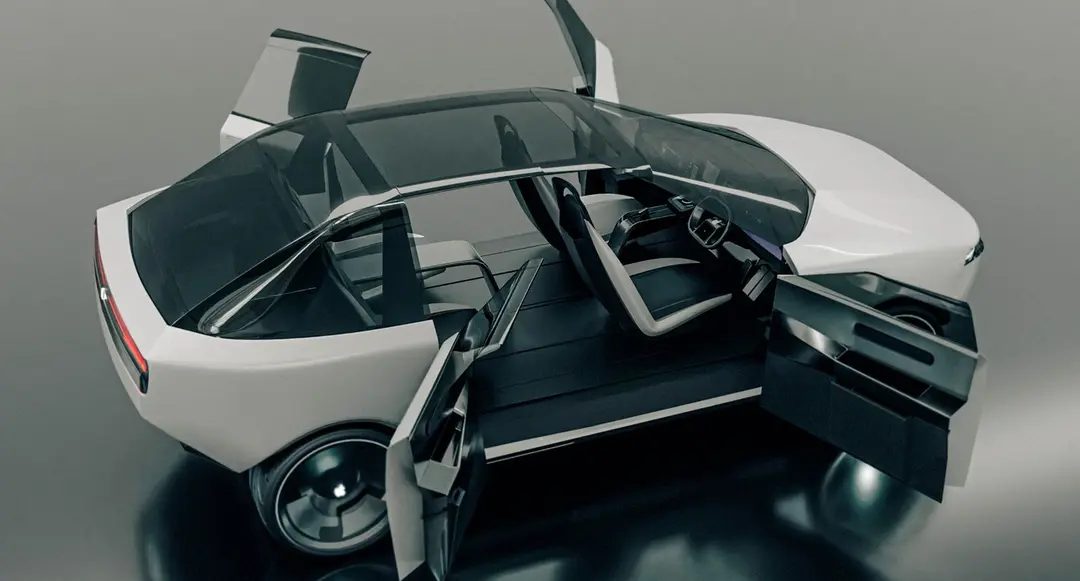
The core concept is an autonomous vehicle. Without a steering wheel or pedals, the cabin becomes the priority. The patents show a unique door configuration. Each side will feature four sliding doors. The design is nearly symmetrical. This symmetry raises a question: does the car even have a front and back?
Inside, the seating arrangement supports this ambiguity. The patents describe seats that can pivot. Passengers can turn to face each other directly. It resembles a rolling lounge more than a transport device. Apple appears to be testing various interior layouts. One variant might use just a single sliding door on one side. This mirrors the sliding door design found on many modern minivans and SUVs today.
The “Rolling Lounge” Concept
The shift toward face-to-face seating is significant. It signals a move away from driving-focused ergonomics. The absence of a driver means the front passenger seat is no longer a secondary position. It becomes part of the collective space.
This design philosophy aligns with the goals of autonomous technology. If the car drives itself, the interior can be optimized for comfort and social interaction. The sliding doors facilitate this by allowing easier access to any seat. They also enhance the vehicle’s profile, creating a boxy yet sleek silhouette.
Structural Ambiguity
The symmetrical door layout blurs the lines of direction. In a traditional car, the front houses the engine or battery pack and the driver. Here, those distinctions fade. The pivoting seats reinforce the idea of a neutral space.
Apple is exploring multiple configurations. The single sliding door option suggests versatility. It could cater to different market segments or usage patterns. The focus remains on maximizing interior utility.
This isn’t just about aesthetics. It’s about redefining what a car is. For Apple, the vehicle might be less about transportation and more about a mobile environment. The patents don’t show a cockpit. They show a room on wheels.
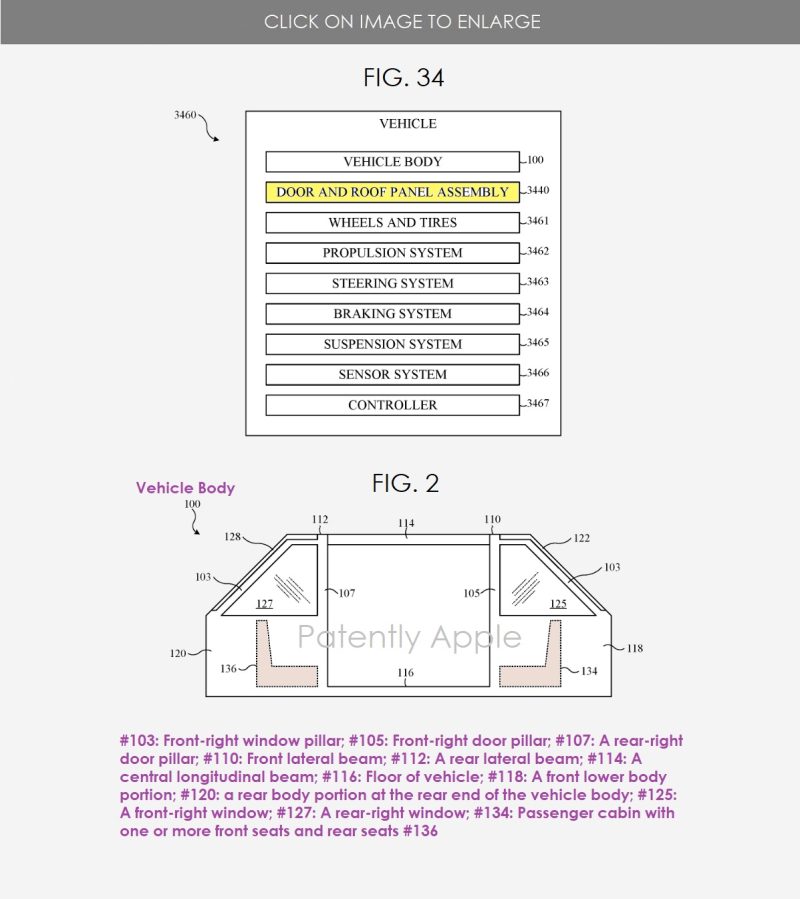
The patent language is dry, but the implications are loud. We’re talking about a “controller.” It’s a vague term, the kind you see in gaming specs or server architecture, not necessarily a steering wheel. It might be a joystick. It might be something else entirely. Its job? To direct and control the vehicle’s operation. It’s the switch that toggles between manual, semi-autonomous, and fully autonomous modes.
With this input device, you tweak settings. You change how the car behaves. Apple’s patents mention a “sensor system.” This isn’t just about reading the road. It’s about reading you.
The Data Problem
Here is where the rubber meets the road—and where privacy advocates get nervous. The documents explicitly discuss “personal data.” The vehicle records information specific to each user. Why? To control the automated systems. To ensure you get dropped off at the exact location you designated.
It sounds convenient. It also sounds like a massive data harvest. The system learns your habits. It memorizes your destinations. It adjusts the drive based on who is in the seat.
Vanarama’s Vision
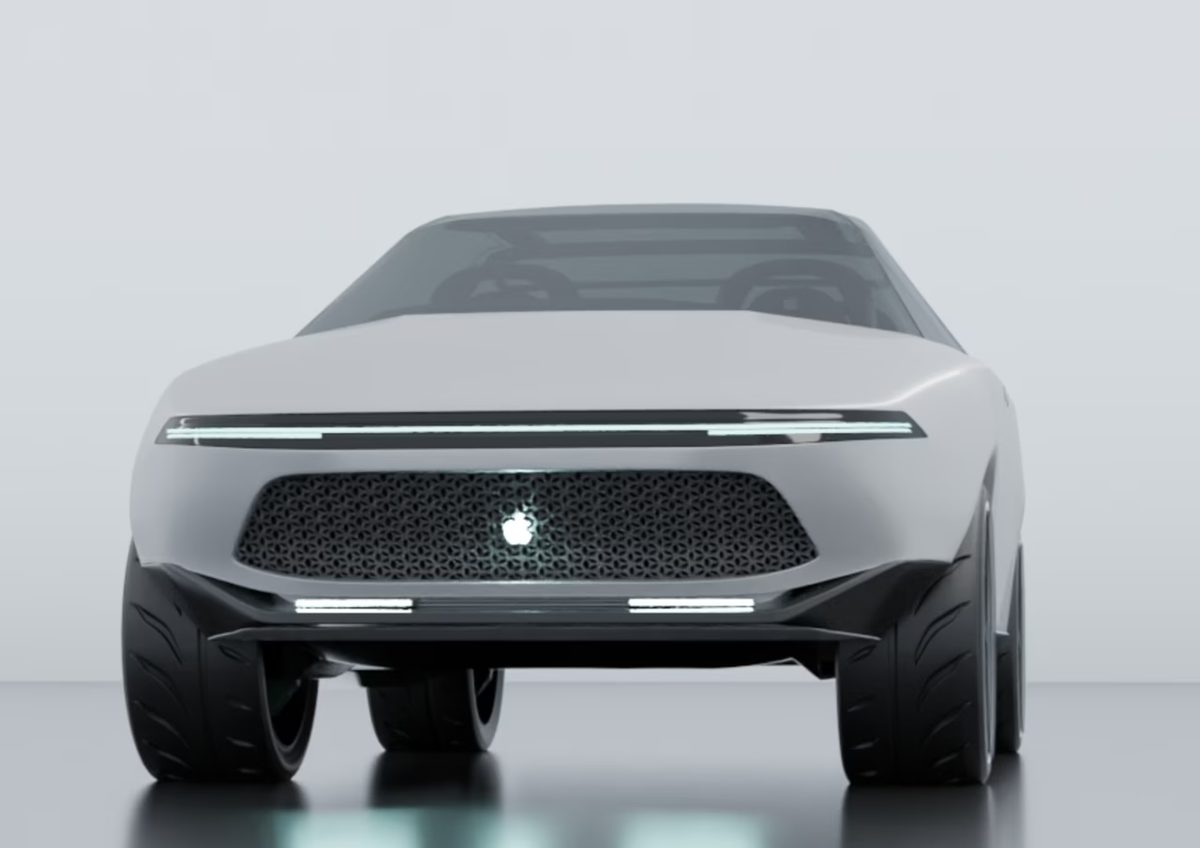
Project Titan is still a ghost story to most of the industry. But Vanarama, a UK-based leasing company, decided to stop waiting. They hired designers to build a concept car based strictly on Apple’s patent filings. The result dropped in November 2021, and it’s striking.
For over a decade, the Apple Car has been the most persistent rumor in tech. In 2021, with whispers of talks with Hyundai and battery talks with CATL, it felt tangible. Vanarama didn’t wait for confirmation. They looked at the legal docs and built the car they thought Apple would build.
The Glass Bubble
The 3D model they produced is radically different from anything on the lot today. The standout feature is the roof. It’s a fully glass canopy. No A-pillars. No B-pillars. Just one continuous sheet of transparency.
It looks fragile, sure. But it’s not just aesthetic. The design aligns with patents for easy entry and exit, specifically featuring antagonist doors. You don’t climb in; you step through.
The concept missed one key patent detail: smart tinted windows. Apple filed for technology that could adjust opacity dynamically. The Vanarama render got the shape right but skipped the glass tech. Still, the vision is clear. Apple isn’t building a car. They’re building a mobile lounge with a steering wheel option.
Apple’s secret project isn’t just a car. It’s a furniture piece with wheels.
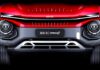
The exterior design defies easy categorization. You’re looking at a sedan that’s been inflated to SUV proportions. The lighting clusters are stripped back to their most basic elements. Think clean lines over complex geometry.
Every surface seems calculated. The front grille echoes the perforated aluminum of the Mac Pro. It’s a direct lift from Apple’s desktop lineup. Door handles mimic the tactile feedback of an iPhone button. It’s subtle. It’s recognizable.
The Cockpit as a Living Room
Inside, minimalism takes over. The seats are the weak point. They’re uncomfortably thin. But they pivot. You can rotate them to face each other. The goal is to turn the cabin into a lounge. A place to sit. Not just drive.
The dashboard is where the real innovation lives.
Apple’s patent reveals a single, massive screen. No separate clusters. No analog dials. Just one continuous pane of glass.
Customizable Interface Logic
This isn’t a fixed display. It’s dynamic. The layout shifts based on what you need.
Need navigation? It takes center stage. Want media controls? They expand. The system allows for complete customization of menus and functions. You dictate the hierarchy.
“The dashboard represents a leap into the future, defined by a giant, single-block screen.”
This approach removes physical buttons entirely. If it’s not on the screen, it doesn’t exist.
Siri integration is baked into this interface. Voice commands aren’t an afterthought. They’re the primary input method for complex tasks.
The result is a cabin that feels more like a high-end tablet than a vehicle.
It’s risky. Thin seats might not appeal to everyone. But the focus on flexibility suggests Apple wants to change how we use the time spent in transit.
You’re not commuting. You’re lounging.
And the screen is watching. Waiting for your command.
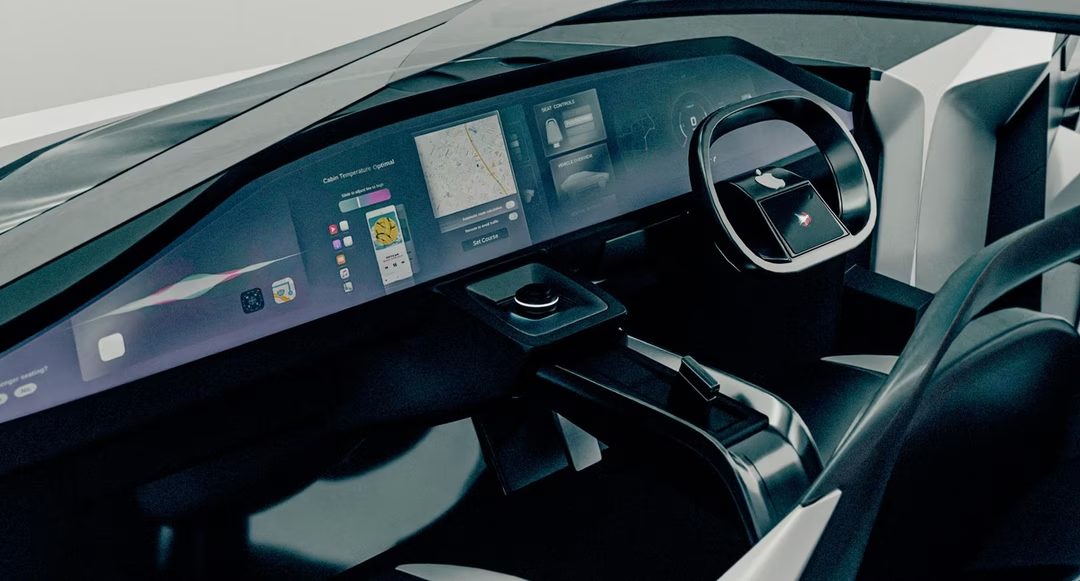
Voice Control Meets Siri Integration
The screen isn’t just a glass slab. It reacts to touch. It also listens.
Apple is reportedly building a voice assistant directly into the car’s ecosystem. It runs on Siri. This isn’t just a hands-free dialer. It provides active suggestions. Think driving routes. Think ambient lighting changes based on your mood or the time of day.
The interface adapts to the driver before the driver even asks.
This level of integration suggests a deeper software layer than any third-party head unit offers today. But there are no specs.
The Missing Numbers
For all the talk about user experience and voice commands, Apple has stayed silent on the hardware.
There are no official details about the battery pack.
No word on motor configuration.
No confirmed range figures.
No data on autonomous driving capabilities.
This is typical for Apple during early development. They hoard specs until launch. Or until cancellation.
The Risk of Cancellation
Project Titan has survived for years. It has shifted goals multiple times. It has fired hundreds of engineers.
History shows these projects can die.
Dyson tried to build a car. They quit.
Google’s autonomous division spun off into Waymo but abandoned the full consumer vehicle dream for now.
Apple’s car project is still alive. But it is far from finished.
What We Can Confirm
We know the screen works.
We know Siri is in the cabin.
We know suggestions are real.
We do not know if this will be a car.
We do not know if it will be a robot.
We do not know if it will ever hit the road.
Wait for the official announcement. Until then, it is just noise.