Self-driving car training has big blind spots. The industry has relied on data collected from human drivers for years. Ideal for everyday life, such as commuting and traffic jams. But when things go wrong, it fails catastrophically. You can’t ask a human to drive through a near miss just to teach the machine. We’re not asking people to risk their lives to get data points. This leaves a gap. The ultimate edge case. This is the moment when reflexes become more important than daily life.
Simulation fills this gap. It creates an infinitely variable and dangerous situation that would never happen in reality. There’s just one problem. Until now, systems trained entirely on simulators have failed to drive real cars on real roads. This is a theoretical traffic bridge.
The situation has changed recently. A team of researchers from the Massachusetts Institute of Technology (MIT) has built a realistic simulator called Vista (Virtual Image Synthesis and Transformation for Autonomy ). They drove it.
How Vista creates an infinite reality
Vista does more than just draw graphics. Rebuild the physics. The group started with real world footage. This is the anchor. But the magic happens during processing.
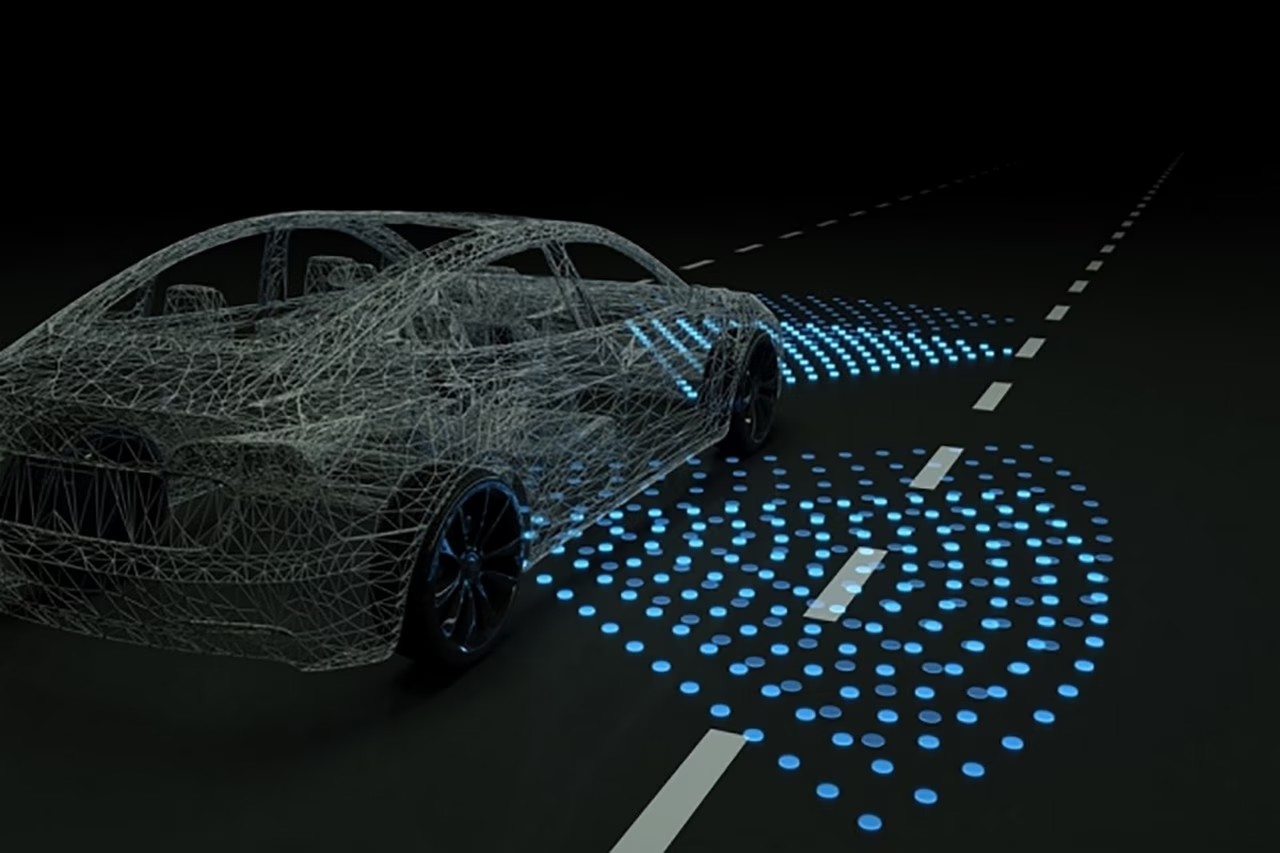
The rendering engine renders each pixel as a 3D point cloud. Map depth. Map distance. It maps motion. Then drop your virtual vehicle into this digital space.
This is where neural networks take over. Convolutional neural networks processing scene. Calculate the depth of field. Predict how each object will move relative to the car. The system synthesizes new flight paths based on this information. It’s not just about playing videos. Create a new path in 3D space.
The controller is not attached to the actual car. It has never seen the road. It has zero knowledge of how humans drive.
This process repeats itself. The system creates realistic scenes based on calculated flight paths. It is not a pre-recorded asset. Generated immediately. This allows for endless variations. You can change the weather. You can change the lighting. You can change the behavior of other virtual agents. All from the original recordings.
Blind education
The goal of AI drivers is simple. Stay in the lane. Don’t crash.
that’s it.
At first, the AI doesn’t know anything about driving. It doesn’t know what a wheel does. It doesn’t know what a traffic light means. Work within basic constraints. If you crash, you get a penalty signal. This is reinforcement learning in action.
The system learns through trial and error. After each failure, the emulator changes the environment. A new variable is introduced. Force AI to adapt. A rule book is not provided. It gives feedback.
The model is completed after 10,000 kilometers of simulated driving. The team installed a trained driver in a real self-driving car.
From pixels to pavement
Testing is not a controlled track. This is the right path. Cars drive in unprecedented environments. The AI does not know certain streets in advance. There are no geometric patterns. It is based entirely on skills learned in the void.
It worked.
This is a groundbreaking event. This is the first time that AI trained through reinforcement learning in a 100% virtual environment has been implemented in a physical vehicle. The controller was blind of the real world until the critical moment.
The MIT team has built more than just a tool. They presented a method. The gap between simulation and reality is closing. It’s not about adding human data. But by letting the machine learn in the digital sandbox.
What happens next?
The next step is obvious. Current simulations require consideration of several variables. Sky. night. sun. rain. snow. The team would like to generate these conditions from a single trajectory file. No new footage required.
There are also plans to introduce complex interactions. Other vehicles are not just static obstacles. Their behavior becomes unpredictable. They will react.
This research was published in IEEE Robotics and Automation Letters. The MIT team plans to open source Vista soon.
This is important for hobbyists who understand the difference between convolutional layers and transformer models. It’s beyond the “what if” phase. We are seeing the first concrete evidence that synthetic training can survive a chaotic reality.
This car passes the test. It adapted.
Will other manufacturers follow suit? The code is coming. The methodology is proven. The era of purely synthetic training is no longer a hypothesis. It’s on the road.