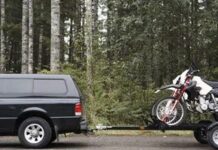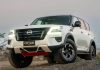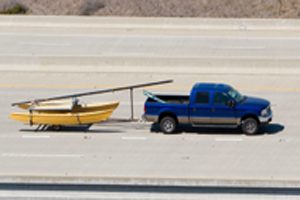
Towing capacity is the hard limit. It’s the maximum weight the manufacturer says your rig can haul without breaking something expensive. You’ll find this number in your owner’s manual. Always trust the maker’s specs, not the hitch’s rating. Hitches are universal. They fit on everything. Your vehicle’s drivetrain, cooling systems, and frame are not. Exceed that limit and you risk handling failure, brake fade, or a destroyed transmission.
When you’re loading up, remember the math. Passenger weight over 150 lbs counts. Optional equipment counts. Cargo in the back counts. Everything goes into the equation. Never ignore it.
Here is the data for 2006 through 2009. Browse by make.
Acura Towing Capacity
The Acura lineup varies wildly. The MDX pulls serious weight. The TL? Barely anything.
| Year | Model | Max Towing Capacity (lbs) |
|---|---|---|
| 2006 | MDX | 3500 |
| 2006 | RL | 1000 |
| 2006 | RSX | 1500 |
| 2006 | TL | 1000 |
| 2006 | TSX | – |
| 2007 | MDX | 5000 |
| 2007 | RL | 1000 |
| 2007 | RDX | 1500 |
| 2007 | TL | 1000 |
| 2007 | TSX | 1000 |
| 2008 | MDX | 5000 |
| 2008 | RL | 1000 |
| 2008 | RSX | 1500 |
| 2008 | TL | 1000 |
| 2008 | TSX | 1000 |
| 2009 | MDX | 5000 |
| 2009 | RL | 1000 |
| 2009 | RSX | 1500 |
| 2009 | TSX | 1000 |
More Acura Specs: GVWR, GAWR, GCWR, Cargo Carrying Capacity, Curb Weight, Payload.
Audi Towing Capacity
Audi was shy about towing in this era. Most models just don’t do it. The Q7 is the exception. It’s the only one with a real rating.
| Year | Model | Max Towing Capacity (lbs) |
|---|---|---|
| 2006 | A3 | – |
| 2006 | A4 | – |
| 2006 | A6 | – |
| 2006 | A8 | – |
| 2006 | S4 | – |
| 2006 | TT | – |
| 2007 | A3 | – |
| 2007 | A4 | – |
| 2007 | A6 | – |
| 2007 | A8 | – |
| 2007 | Q7 | 5500 |
| 2007 | RS4 | – |
| 2007 | S4 | – |
| 2007 | S6 | – |
| 2007 | S8 | – |
| 2008 | A3 | – |
| 2008 | A4 | – |
| 2008 | A5 | – |
| 2008 | A6 | – |
| 2008 | A8 | – |
| 2008 | Q7 | 5500 |
| 2008 | R8 | – |
| 2008 | RS4 | – |
| 2008 | S4 | – |
| 2008 | S5 | – |
| 2008 | S6 | – |
| 2008 | S8 | – |
| 2008 | TT | – |
| 2009 | A3 | – |
| 2009 | A4 | – |
| 2009 | A5 | – |
| 2009 | A8 | – |
| 2009 | Q7 | 5500 |
| 2009 | R8 | – |
| 2009 | S4 | – |
| 2009 | S5 | – |
| 2009 | S8 | – |
| 2009 | TT | – |
More Audi Specs: GVWR, GAWR, GCWR, Cargo Carrying Capacity, Curb Weight, Payload.
BMW Towing Capacity
BMW didn’t advertise towing. But if you look at the SUVs, there’s real capability here. The X5 and X6 are the workhorses. The sedans? Not so much.
| Year | Model | Max Towing Capacity (lbs) |
|---|---|---|
| 2006 | 325 | – |
| 2006 | 330 | – |
| 2006 | 525 | – |
| 2006 | 530 | – |
| 2006 | 550 | – |
| 2006 | 650 | – |
| 2006 | 750 | – |
| 2006 | 760 | – |
| 2006 | M3 | – |
| 2006 | M5 | – |
| 2006 | M6 | – |
| 2006 | X3 | 3500 |
| 2006 | X5 | 6000 |
| 2006 | Z4 | – |
| 2006 | Z4M | – |
| 2007 | 328 | – |
| 2007 | 335 | – |
| 2007 | 52 |
Chevy, Chrysler, and Dodge Towing Limits (2006-2009)
The mid-2000s were a weird time for American trucks. You had manufacturers stretching capabilities in some areas while leaving others at a crawl. If you are looking for Chevrolet towing capacity figures for these specific years, the data is messy. It depends entirely on whether you are hauling a small trailer or a house on wheels.
Let’s start with Chevy.
In 2006, the Avalanche 1500 could pull 7,300 lbs. The 2500 version? 10,200 lbs. That’s a huge gap. But then look at the Silverado 1500 HD. It maxed out at 8,300 lbs. Wait. The regular 1500 Hybrid did 6,700 lbs. The SS? 7,500 lbs. The numbers don’t follow a clean linear progression because engine configs and wheelbases changed so often.
By 2007, things shifted. The Silverado 1500 dropped to 4,600 lbs for the standard model. Why? Probably emissions or a chassis tweak. The Classic versions kept their old ratings though. The 2500 HD stayed strong at 10,000 lbs. The 3500 HD hit 9,600 lbs.
2008 was quiet. The Tahoe Hybrid appeared with a 6,200 lb rating. That’s respectable for a V8 hybrid when most competitors were struggling to hit 3,000 on smaller SUVs. The Silverado 2500 HD held firm at 10,000 lbs.
2009 saw a strange dip for the Avalanche 1500. It dropped to 5,000 lbs. The Tahoe stayed at 4,500 lbs. But the Silverado 2500 HD remained a workhorse at 10,000 lbs. The 3500 HD crept up to 9,700 lbs.
Chrysler didn’t offer much variety here. The 300C consistently towed 2,000 lbs. The 300 sedan? Just 1,000 lbs. The Aspen was the heavy lifter. 8,950 lbs every year from 2007 to 2009. The PT Cruiser started at 3,500 lbs in 2006, then dropped to 1,000 lbs in 2007, then back up to 2,600 lbs in 2008. Then down to 1,000 in 2009. What happened to the PT Cruiser’s confidence?
The Town & Country improved. From 1,700 lbs in 2006/2007 to 3,600 lbs by 2008/2009. That’s a significant upgrade for family haulers.
Dodge tells a different story. The Ram 1500 was weak. 2,900 lbs in 2006. 2,950 in 2008. Then 3,800 in 2009. Still low for a half-ton. The Ram 2500 was better. 9,050 lbs in 2006, up to 9,300 in 2009. The Ram 3500 was the beast. 10,500 lbs in 2006. 10,650 in 2007. 10,700 in 2008. Then a massive jump to 12,300 lbs in 2009. That’s the kind of spec that makes you buy a fifth-wheel hitch.
The Sprinter vans were consistent. 5,000 lbs for the 2500. 7,500 lbs for the 3500 starting in 2007. The 2006 3500 was only 5,000 lbs. The upgrade came later.
Ford Towing Limits and Shifts (2006-2009)
Ford’s lineup was broader. You had the E-Series vans, the F-Series trucks, and the Explorer.
The Crown Victoria was stuck at 1,500 lbs. Police cars aren’t built for boat trailers. The E 350 Super Duty could pull 7,500 lbs in 2006 and 2007. Then it dropped slightly to 7,400 lbs in 2008/2009. The F 250 and F 350 were the stars. In 2006, both hit 8,600 lbs. In 2007, they jumped to 10,600 lbs. That’s a massive year-over-year gain. Then in 2008, the F 250 dropped back to 8,700 lbs, while the F 350 went up to 10,700 lbs. The F 450 appeared in 2008 with a staggering 16,000 lbs rating. That’s for commercial use.
The F 150 was interesting. 6,400 lbs in 2006. 6,500 in 2007/2008. Then a huge jump to 8,700 lbs in 2009. What changed? Likely the new engine options or chassis reinforcement.
The Explorer hovered around 3,110 lbs in 2006, then 3,500 in 2007/2008/2009. Stable. The Expedition pulled 9,200 lbs. The EL (extended) was 9,000 lbs. Consistent.
The Ranger dropped significantly. 6,000 lbs in 2006. Then 2,460 lbs from 2007 onwards. Why? Maybe they downgraded the suspension or added emissions equipment. It’s a sharp decline.
The Mustang started with no rating in 2006/2007. Then 1,000 lbs in 2008/2009. Not meant for towing.
The Escape was stuck at 1,500 lbs. The Hybrid version? 1,000 lbs. Small SUVs just couldn’t compete with the trucks.
The Focus had no rating in 2006/2009. 1,000 lbs in 2007/2008. Then gone again.
The Taurus? No rating in 2006/2007. 1,000 lbs in 2008/2009.
The Freestar minivan pulled 3,500 lbs consistently. The Freestyle and Edge were 2,000 lbs. The Five Hundred was 1,000 lbs.
The numbers tell a story of experimentation. Manufacturers were trying to figure out where the balance was between payload, towing, and fuel economy. The results were inconsistent. A 2009 Ram 3500 can pull 12,300 lbs. A 2009 Chevy Silverado 1500 pulls 4,700 lbs. Don’t mix them up.
Heavy Lifters: GMC, Hummer, and Honda
If you are looking for raw pulling power in a late-2000s American truck, GMC holds the cards. The Sierra 2500 was the king of the hill here, offering a max towing capacity that hovered between 10,400 and 10,500 lbs depending on the year. It didn’t blink. The Sierra 3500 was close behind, sticking to a solid 10,000 to 10,100 lb range.
For those wanting a bit more luxury with their heavy hauling, the Yukon XL was the smart buy. It could tow up to 7,500 lbs in 2006, settling at 7,100 lbs for 2007 and 2008. The standard Yukon was respectable too, generally capped at 5,700 lbs in 2006, though it dipped to 4,500 lbs in 2007 before climbing back to 4,800 lbs in 2009. Did the hybrid powertrain help or hurt? The Yukon Hybrid managed a steady 6,200 lbs in both 2008 and 2009, which is actually better than the standard gas Yukon in those same years.
GMC’s smaller trucks told a different story. The Canyon started weak at 1,800 lbs in 2006 but improved to 2,400 lbs by 2008. The Envoy was a consistent workhorse, holding its ground at 5,300 lbs from 2006 through 2009. The Savana vans were the unsung heroes. The 2500 model reliably towed 6,300 lbs across all four years. The 1500 stayed flat at 4,300 lbs. The 3500 hovered around 6,200 to 6,300 lbs.
Honda played a different game. They weren’t building monsters. The Ridgeline was their top dog, hitting 5,000 lbs in 2006 and 2008. The Odyssey and Pilot were tied at 3,500 lbs, a standard for midsize SUVs of that era. The Civic was surprisingly versatile, offering 1,500 lbs in 2006 and 2007, though it dropped to 1,000 lbs in 2009. The Accord was consistently low, capped at 1,000 lbs in the years listed. Honda hybrids like the Civic Hybrid offered a modest 1,000 lbs.
American Muscle and Luxury SUVs
Hummer didn’t do anything by halves. The H2 was the poster child for excess. In 2006 and 2007, it towed 6,500 and 6,600 lbs respectively. By 2008 and 2009, that number jumped to 8,200 lbs. The H3 was more manageable at 3,000 lbs for the SUV version. But if you needed utility, the H3T pickup arrived in 2009 with a 4,400 lb rating. The H1 Alpha was a niche beast, rated for 7,887 lbs in 2006.
Infiniti offered luxury towing, but it was limited. The QX56 was the only real hauler, rated at a massive 9,000 lbs in 2006, 2007, and 2009. The FX series (FX35 and FX45) could pull 3,500 lbs, which was decent for a crossover. The sedans (G35, M35, M45) were strictly limited to 1,000 lbs. The QX56 lost its rating in 2008, likely due to model year transitions.
Jeep’s lineup was inconsistent. The Commander and Grand Cherokee were reliable at 3,500 lbs from 2006 to 2009. The Liberty dropped from 3,500 lbs in 2006 and 2007 to 2,000 lbs in 2008 and 2009. The Wrangler, both standard and Unlimited, was stuck at 1,000 lbs. That’s it. If you were towing a boat with a Wrangler, you were likely overthinking it. The Compass and Patriot were also capped at 1,000 lbs.
Jaguar essentially did not tow anything. Every single model listed—S-Type, X-Type, XJ8, XKR, XF, XK Coupe—showed a dash or no rating. They were built for speed, not for hauling campers.
Global Contenders: Hyundai, Kia, Isuzu, Land Rover
Hyundai was cautious. The Santa Fe was their strongest asset, starting at 2,700 lbs in 2006 and dropping to 1,650 lbs from 2007 through 2009. Most other models, like the Accent, Sonata, and Tucson, were capped at 1,000 lbs. The Elantra was surprisingly light at just 750 lbs in 2007 and 2008. The Azera held steady at 1,000 lbs. Hyundai didn’t really push into the heavy towing market during this period.
Kia started the decade with almost no towing options. The Sportage was limited to 1,500 lbs. Then came the Sorento, which appeared in 2007 with a 5,000 lb rating. That rating held through 2008. The Sedona minivan hit 3,500 lbs in 2007 but disappeared from the towing list by 2008. The Borreo arrived in 2009 with 5,000 lbs. Kia was catching up, but they were playing catch-up to Toyota and Honda.
Isuzu’s Ascender was a hidden gem. It held a steady 5,300 lb towing capacity from 2006 to 2008. The i-series trucks were lighter. The i-280 pulled 1,700 lbs. The i-290 improved from 2,100 lbs in 2007 to 2,200 lbs in 2008. The i-350 and i-370 were solid at 4,000 lbs, with the i-370 jumping to 5,500 lbs in 2008.
Land Rover was the premium choice for heavy towing. The LR3 and Range Rover were locked at 7,700 lbs in 2006 and 2007. In 2008, the Range Rover Sport hit 7,716 lbs. By 2009, the LR2 appeared with a modest 3,500 lb rating. The rest of the Land Rover lineup (LR3, Range Rover, Range Rover Sport) maintained that 7,716 lb rating. It was consistent, expensive, and capable.
The Details That Matter
These numbers are maximums. They assume ideal conditions. Proper equipment matters. You need the right hitch, wiring, and often a weight-distribution system for anything over 3,000 lbs. The GVC (Gross Vehicle Capacity) and GCWR (Gross Combination Weight Rating) are the real limits. If you exceed them, you’re looking at brake failure, transmission damage, or a legal nightmare.
Always check the door jamb sticker. Factory ratings can vary by engine, axle ratio, and package. The tables here give you the baseline. They show what the manufacturers promised. They don’t account for the weight of your passengers, your gear, or your tongue weight. That’s on you.
Towing isn’t just about the number. It’s about the drivetrain. The Sierra 2500 with the Duramax diesel felt different than the Yukon with the V8. The Ridgeline’s unibody construction handled weight differently than the body-on-frame Hummer. Understanding how the vehicle handles the load is just as important as what the sticker says.
You can look at the specs forever. But the road tells the real story. Does the vehicle sway? Does the transmission hunt for gears? That’s the data that counts when you’re downhill at 60 mph with 8,000 lbs behind you.
Lexus towing specs by model year
Lexus doesn’t slap a tow rating on every sedan. If you’re looking at an ES 330 from 2006 or an IS 350, the answer is a hard no. The dash means it isn’t rated. Period. You stick to the trucks and large SUVs if you need to haul anything heavier than a bike rack.
The GX 470 is the workhorse here. It holds steady at 6500 lbs from 2006 through 2009. The LX 470 matches that figure until the 570 replaces it in 2008. And the 570? It jumps to 8500 lbs. That’s a significant upgrade.
The RX series sits in the middle. The 330 and 400h variants from 2006 pull 3500 lbs. Then 2008 arrives. The RX 350 and 400h drop to 2000 lbs. Why? Probably chassis tuning or cooling capacity changes. Check the manual. Don’t guess.
The LS 430 does 2000 lbs. The rest of the sedans—GS, ES, SC—do nothing. Not even a kayak.
“Check the manual. Don’t guess.”
Lincoln towing capacity guide
Lincoln plays in the heavy bracket. The Mark LT is the outlier here. It pulls 8900 lbs straight through 2006 to 2008. That’s nearly a ton more than the Navigator.
The Navigator itself is rated for 6000 lbs consistently from 2006 to 2009. Solid. Predictable.
The Town Car? It’s a land yacht, but it only does 2000 lbs. The new MKX, which replaced the Aviator in spirit, also tops out at 2000 lbs. The MKS, introduced in 2009, manages a modest 1000 lbs. The MKZ and Zephyr don’t do it. Zero.
Mazda towing limits 2006-2009
Mazda’s trucks were rebadged Ford Rangers. You see the numbers, you recognize the lineage.
The B-Series trucks vary slightly by year. The B2300 hits 1600 lbs in 2006, dips to 1580 in 2007, then back to 1600. The B4000 is the heavy hitter. It pulls 3140 lbs in 2006, drops to 3100 in 2007, then holds 3140 again in 2008 and 2009. The B3000 sits at 2500 lbs initially, then 2480 in 2007.
The crossovers are simpler. The Tribute pulls 1500 lbs. The Tribute Hybrid adds a 2000 lb rating in 2008. The CX-7 and CX-9 both pull 2000 lbs.
Cars like the Mazda3, 6, MX-5, and RX-8? No towing. Save the rubber.
Mercedes-Benz towing capacity by year
Mercedes draws a hard line. Sedans? No. Coupes? No. The C-Class, E-Class, S-Class, and CLK do nothing. They are for driving, not dragging.
The SUVs tell a different story. The ML series is the bread and butter. In 2006, the ML350 and ML500 pull 2000 lbs. By 2007, that jumps to 7200 lbs across the board for the ML320, ML350, ML500, and even the ML63 AMG. That’s a massive leap.
The GL series starts in 2007. The GL320 pulls 7500 lbs. The GL450 and GL550 match it. The G-Class (G500, G55) holds steady at 7000 lbs from 2007 to 2008.
The R-Class enters the fray in 2009 with a 3500 lb rating. Earlier years show no rating.
Mercury towing capacity explained
Mercury shared platforms with Ford. The numbers reflect that reality.
The Grand Marquis and Mariner both pull 1500 lbs. Consistent from 2006 to 2009. The Mariner Hybrid drops to 1000 lbs. Less power? Less tow. Makes sense.
The Monterey and Mountaineer are the big ones. They haul 3500 lbs every year listed. The Mountaineer drops the Sable from the lineup in 2008, replacing it with a 1000 lb rating for the Sable sedan.
The Montego does 1000 lbs. The Milan and other compact models do nothing.
MINI towing capacity check
MINI is tiny. The towing capacity is non-existent.
From 2006’s Cooper Convertible and Hardtop to 2009’s John Cooper Works models, the answer is always a dash. No rating. You are not towing a trailer with a Mini. The suspension isn’t built for it. The chassis isn’t built for it.
If you need to tow, look elsewhere. The Clubman and Convertible variants share this fate. Zero.
Mitsubishi towing capacity summary
Mitsubishi’s SUVs and trucks vary. The Endeavor pulls 3500 lbs in 2006 and 2008, but drops to 2000 lbs in 2007. Inconsistent, but usable.
The Outlander starts at 1500 lbs in 2006, jumps to 2000 lbs in 2007, then back to 1500 lbs in 2008. The 2009 lineup lists no models, so the data stops there.
The Raider is a pickup. It pulls 4050 lbs in 2006, then 4000 lbs in 2007 and 2008. The Montero does 5000 lbs in 2006.
The Lancer and Galant? 1000 lbs in 2006. Then nothing. Cars again.
Nissan towing capacity breakdown
Nissan offers a wide range. The small cars pull little. The trucks pull a lot.
The Altima, Maxima, Sentra, and Versa all cap out at 1000 lbs. The Altima Hybrid matches that. The Rogue, introduced in 2008, also pulls 1000 lbs.
The crossover/MUV segment is stronger. The Murano and Quest do 3500 lbs. The Pathfinder hits 6000 lbs consistently from 2006 to 2009.
The trucks are the headline. The Frontier pulls 6300 lbs. The Armada and Titan both pull 6500 lbs. The Xterra sits in the middle at 5000 lbs.
The 350Z and GT-R? No towing. They are for the track. Leave the trailer at home.
Why towing capacity matters more than you think
People see the number and think it’s a suggestion. It’s not. It’s a limit. Exceed it and you risk brake failure. You risk transmission overheating. You risk structural damage.
The numbers here are static. Real-world conditions change everything. Weight distribution. Trailer brakes. Terrain. Altitude. The listed max capacity is the absolute ceiling under ideal conditions.
“The listed max capacity is the absolute ceiling under ideal conditions.”
Check your GVWR. Check your GCWR. The tow rating is just one piece of the puzzle. If your payload limit is full, you can’t tow the max weight even if the hitch allows it.
The dash means no towing. Respect it. The number means test it. Respect it more.
Pontiac Towing Capacity
Pontiac’s final years were a bit of a cleanup crew operation. The G6, GTO, Grand Prix, G5, G8, and Torrent were the heavy lifters here. If you’re looking for Pontiac towing capacity specs, stick to the trucks. The Montana SV6, Torrent, and the G8 sedan could pull 3500, 3500, and 2000 lbs respectively. The smaller sedans and coupes like the G6, G5, Grand Prix, and GTO? They maxed out at 1000 lbs. That’s light-duty towing. Think small utility trailers or jet skis, not campers. The Solstice had zero towing capability. It was a roadster, not a hauler. The Vibe was a bit of an outlier, starting at 1500 lbs in 2006-2008, then dropping to 1000 lbs in 2009. Why the drop? GM likely recalculated payload limits or safety margins. Either way, don’t push it.
Porsche Towing Capacity
Porsche didn’t really do towing until the Cayenne showed up. Before that, the 911, Boxster, and Cayman were strictly for driving. For 2006, 2008, and 2009, the Cayenne was the only option. It could handle 7716 lbs. That number jumps out. Most SUVs in this era cap around 5000-7000 lbs. Porsche engineering the suspension and chassis to handle that load while maintaining sporty handling is the real story here. If you’re towing a boat or a horse trailer in a 911, stop. You can’t. The data is clear: no towing for the sports cars.
Saab Towing Capacity
Saab’s lineup was consistent if a bit sparse. The 9-3, regardless of year from 2006 to 2009, handled 2000 lbs. That’s respectable for a compact sedan. The 9-5 stepped up to 3500 lbs. That puts it in the mid-size segment territory. The heavy hitter was the 9-7X. It shared the platform with the GMC Envoy. Consequently, it matched the Envoy’s 5500 lb towing capacity. If you needed to tow a large camper or a heavy boat in a Saab, the 9-7X was your only real bet. The 9-3 and 9-5 were more for light loads.
Saturn Towing Capacity
Saturn was winding down. The Ion and Aura were light pullers at 1000 lbs max. The VUE and VUE Hybrid sat at 1500 lbs. The Outlook, which was essentially a rebadged Buick Enclave, doubled that to 2000 lbs. The Relay minivan was the workhorse at 3500 lbs. The Sky and Astra had no towing capability. The Aura Hybrid also had zero towing specs listed. Saturn’s strategy was clear: if it was small or hybrid-heavy, it wasn’t for towing. If it was big and boxy, it could haul.
Scion Towing Capacity
Scion didn’t bother with towing. The tC, xA, xB, and xD all had zero towing capacity listed for 2006 through 2009. These were subcompacts and compact cars designed for urban efficiency and customization, not utility. If you needed to tow anything, you went elsewhere. The data is black and white: no towing.
smart Towing Capacity
The smart fortwo, in 2008, had zero towing capacity. It’s a two-seater city car. Its entire existence is predicated on being small and easy to park. Towing is not in its DNA. Don’t try it.
Subaru Towing Capacity
Subaru’s AWD systems are legendary for grip, but that doesn’t always translate to raw towing power. The Impreza WRX STI had zero towing capacity. The WRX sedan was also out. The standard Impreza Wagon and Outback Sport could pull 2000 lbs. The Legacy and Outback sedans/wagons bumped that to 2700 lbs. The Forester sat at 2400 lbs. The B9 Tribeca was the king of the hill here, handling 3500 lbs. Note the year-by-year variations: the 2008 Forester lost towing capability in some listings, likely due to trim-specific changes. By 2009, the Forester again shows no towing capacity in this dataset, while the Tribeca and Outback/Legacy held steady at 2700-3500 lbs. It’s a reminder that model years matter. Check your specific VIN.
Suzuki Towing Capacity
Suzuki had a mix. The Grand Vitara could tow 3000 lbs in 2006-2008. The XL7 jumped from 3000 lbs in 2006 to 3500 lbs in 2007-2008. The smaller cars, like the Forenza, Reno, and Verona, maxed out at 1000 lbs. The Aerio, SX4, and Equator had no towing capacity. The 2009 data is sparse, showing no towing specs for the Grand Vitara, SX4, or XL7. This might reflect a shift in certification or simply missing data. For the active years, the XL7 was the clear choice for heavier loads.
Toyota Towing Capacity
Toyota’s range is vast. The Land Cruiser is the standout. It started at 6500 lbs in 2006, jumped to 8500 in 2008, and hit 9935 lbs in 2009. That’s serious towing power. The Tundra peaked at 6800 lbs in 2006, then dropped to 4800 lbs for 2007-2009. Why the drop? Likely due to emissions or engine tuning changes for newer standards. The Sequoia climbed from 6500 to 7800 lbs between 2006 and 2008. The 4Runner and FJ Cruiser held steady at 5000 lbs. The Tacoma and Sienna sat at 3500 lbs. The Highlander Hybrid improved significantly, going from 2000 lbs in 2006 to 3500 lbs in 2007-2009. The non-hybrid Highlander stayed at 1500-2000 lbs. Smaller cars like the Camry, Avalon, and Corolla were limited to 1000-1500 lbs. The Prius, Yaris, and Matrix had no towing capability. The Venza in 2009 also had zero towing specs. Toyota’s hierarchy is clear: trucks and large SUVs do the heavy lifting. Mid-size SUVs are light to mid-duty. Sedans and crossovers are for light loads or nothing.
Volkswagen Towing Capacity
VW’s lineup was straightforward. The Touareg was the only serious tow vehicle. It handled 7716 lbs in 2006, 2007, and 2009. The 2008 Touareg 2 entry also shows 7716 lbs, though some sources might vary by engine. The rest of the lineup—Golf, GTI, Jetta, Passat, Beetle, R32, Rabbit—had zero towing capacity. The Routan minivan could pull 2000 lbs. The Tiguan could handle 2200 lbs. If you’re not driving a Touareg, Routan, or Tiguan, you’re not towing anything in a 2006-2009 VW. The brand was focused on driving dynamics, not utility, except for those few exceptions.
Volvo Towing Capacity by Model and Year
If you are looking to haul a trailer, the data gets sparse very quickly. For most of the mid-2000s, Volvo simply didn’t publish official towing ratings for the majority of its lineup. The table below reflects what was actually available to consumers who needed to know how much can a Volvo tow during this era. Note that a dash means the manufacturer provided no public specification, which usually implies the vehicle was not recommended for towing at all.
| Year | Model | Max Towing Capacity (lbs) |
|---|---|---|
| 2006 | C70 | – |
| S40 | – | |
| S60 | 3,300 | |
| S80 | – | |
| V50 | – | |
| V70 | – | |
| XC70 | – | |
| XC90 | – | |
| 2007 | C70 | – |
| S40 | – | |
| S60 | – | |
| S80 | – | |
| V50 | – | |
| V70 | – | |
| XC70 | – | |
| XC90 | – | |
| 2008 | C30 | – |
| C70 | – | |
| S40 | – | |
| S60 | – | |
| S80 | – | |
| V50 | – | |
| V70 | – | |
| XC70 | – | |
| XC90 | – | |
| 2009 | C30 | – |
| C70 | – | |
| S40 | – | |
| S60 | – | |
| S80 | – | |
| V50 | – | |
| V70 | – | |
| XC70 | – | |
| XC90 | – |
Note: The 2006 S60 is the only model in this dataset with a listed figure. For the others, assuming a capacity without verification is dangerous.
Why the Numbers Are Missing
You might wonder why Volvo left so many blanks. It wasn’t just an oversight. Towing requires specific engineering: a reinforced frame, a heavy-duty cooling system for the radiator and transmission, and a hitch receiver rated for the load. Most of these sedans and wagons were built on front-wheel-drive or all-wheel-drive unibody platforms not designed for the stress of pulling a trailer.
When a manufacturer doesn’t list a weight, they are essentially saying “don’t do it.” Even if you weld a hitch onto an S40, the transmission fluid might boil on a long hill. The lack of data is a safety warning.
Related Specs to Check
Before you hook up anything, you need to look beyond just the tongue weight. These metrics define the hard limits of the vehicle’s structural integrity.
- Volvo GVWR : Gross Vehicle Weight Rating. The max weight of the car plus passengers, fuel, and