First impressions are tricky. The cabin is loud. Visually, anyway. Giant screens everywhere. Metallic flashes. It screams premium EV to some people. To others, it looks like a server rack crashed into a living room.
Look past the initial visual assault though. This car is extremely roomy. It makes sense for families. The tech is integrated well, not just pasted on. Power is plenty, maybe too much, but nobody asked for track performance. The GLC electric is built for comfort. Ride is smooth. Noise is low. Driving is easy. If you want sharp dynamics? Walk away. Buy something else. This one isn’t built to embarrass the tires. It’s built to hug them gently.
Context: A Crossroads Car
Mercedes knows SUVs are gold. Electric cars are urgent. This thing sits right at that intersection. The combustion GLC sells like hotcakes. Diesel. Petrol. Hybrids. Massive volumes.
Now they have to convert those buyers. This electric version rides the new MB.EA platform. It has to work. Fail here, and they lose face. Compete there. Lose the war.
The field is crowded. BMW iX3 is out there. Volvo EX60. Porsche Macan. Expensive toys waiting to pounce. To beat them, Mercedes piled on tech. Style is present. Price is kept… manageable? At least for this tier. They kept half an eye on value. The other half is watching the competition sweat.
“The focus is on comfort, but it remains fluent enough to make wrong turns enjoyable rather than stressful.”
We drove it in Germany first. Smooth highways. Adaptive Airmatic suspension humming along. Then back in the UK. Surrey Hills. Rough British B-roads with potholes big enough to swallow a small cat. Both suspensions—air and coil—got tested. Survived both. Mostly.
Pricing the Pain
Starts at £60,000. That gets you the Sport trim. Climb the ladder: AMG Line, Premium, Premier Edition. Lots of trims. Too many? Maybe.
Wait for the single motor later. Probably cheaper. Better range? Possibly. Right now, dual motor is the only game.
The Refinement Package costs £2,500. Adds Airmatic air suspension. Rear-wheel steering. Take it. Seriously. We’ll explain why soon, but short answer: it saves your sanity.
Driving Experience
Let’s get the boring specs out of the way first. All models have two motors. One per axle. Four wheels spinning. A weird two-speed gearbox (unusual for EVs, where single-speed is king). And a brake system Mercedes calls “One-Box”.
What’s One-Box? Brake-by-wire. No physical cable connecting the pedal to the caliper. Just code. Sensors. A computer decides how to blend regeneration and friction. The goal: consistent pedal feel.
Does it work? Mostly. Strong. Confidence-inspiring, slowing a 2.6-ton brick of metal. Regeneration is controlled via paddles behind the wheel. Strongest mode? Enough for one-pedal city crawling. Almost. Sometimes too grabby. You want to roll forward into a tight parking spot. Slam! Too soon. Aggressive at low speeds.
The fix? D Auto mode. The computer thinks for you. It monitors parameters, adjusts regen automatically. It feels natural. Most drivers will live in D Auto. Forget the paddles.
- Pros: Power is massive but usable. Regen braking feels mostly good. Ride quality is top-tier.
- Cons: Body lean. Air suspension can get floaty in comfort mode. Brakes can be unpredictable at a stop.
0 to 62mph in 4.3 seconds. Fast? Yes. Surprising? Not anymore. EV family haulers do this like it’s Tuesday. Mercedes didn’t tune it to be scary, though. Pedal modulation is nice. Gentle cruise? Yes. Stomach-lurching lunge for TikTok clout? Also yes, if you press it. Grip holds up on dry roads. We didn’t fight traction here.
City and Country Roads
Town driving gets an upgrade if you got that £2,500 Refinement package. Air suspension eats bumps in Comfort mode. It actually looks ahead—Car-to-X tech shares speed bump data from cars in front or infrastructure. Smart. Google Maps adjusts ride height automatically too.
But the real magic is the rear wheels. They turn up to 4.5 degrees back. At low speeds. Turning circle shrinks. Parked it around a mini-roundabout tighter than many cars half its length. Agility surprise for a 4.8-meter SUV? Rare. Nice to see.
Rear view? Meh. Poor visibility through glass. Good news: cameras save you. Rear camera is standard. Sensors everywhere. 360-degree view on higher trims pops onto the screen when you turn wheels.
Country roads tell a different story. Comfort mode gets floaty. Floaty bad over rolling hills? Sometimes. Switch to Sport. Stiffer. Less bounce. Still not uncomfortable, just firmer.
On the steel spring cars? Balance feels better overall. Felt less bouncy, but also less forgiving over bumps. Corners expose the weight. Significant lean. Rapid direction changes feel heavy. Battery lowers the center of gravity, yes. But the mass is still there. Under hard braking or cornering, gravity wins.
Steering? Vague. Sport mode adds a tiny bit of weight. Not much. Not particularly direct. B-roads can be fluent if you drive nicely. But engaging? Don’t bet on it. Class isn’t dominated by boring cars, and this leans boring in terms of dynamic feedback.
High Speed
Get past 50mph. Silence dominates. Motors whisper. Then, slowly, wind and tires creep in. Noise builds with speed. Annoying? Mildly. Refined? Highly. Perfect companion for long distances. Easy-going nature comes out. Feet up. Cruise control on. World blurs.
Alastair Crooks put it best regarding that steering trick:
“That rear-axle steering is bit of a life-saver… System isn’t as aggressive as 10-degree EQS system, but 4.5 degree angle reduces turning circle by nearly a metre.”
Range Reality Check
Here’s where the math gets real. GLC is strong on charging speed. Weaker on actual miles per tank (battery).
Official WLTP Range: ~400 miles. From that 94kWh pack. BMW iX3 gets 500 miles (larger battery, though). Volvo EX60 gets 410. Close enough to Volvo. Beaten by BMW.
Real world test? Temperatures near 20C. We saw around 250 miles on a full charge. Why the gap? Heavy foot journalists driving press cars don’t maximize efficiency. Likely. Charge curve mattered. Range dropped as battery drained, roughly linearly. Not terrible. Just not optimistic WLTP numbers.
Charging? Fast. Hitting 330kW at a good hub. 10 to 80 percent charge? 22 minutes. Quick enough to grab coffee, stretch legs, check emails. Don’t need an hour-long break.
Standard heat pump included. Keeps efficiency up when cold hits. Bi-directional charging too? Car becomes battery. Powers house during outage? Grid interaction? Potential future money saver or bill buffer. Tech is there.
Costs that Bite
Insurance: Group 50. Highest possible. Ouch. Rivals BMW iX4 sits in Group 44. Volvo EX60 in Group 43. Mercedes penalties itself here, probably because of that powertrain performance. Tax implications for companies are favorable (BEIS benefits), so businesses won’t mind as much. Private buyers will.
Luxury Tax: Exceeds £50k threshold? Yes. Extra VED. £440 premium for years 2-6. Small drop in the ocean of total cost, but still tax.
Depreciation: Sport trims hold value. Up to 54% after three years and 3,600 miles (wait, article says 36,000). Let’s correct: 54% after three years and 36k miles. Premium Edition? Drops slightly to 51%. Better than the old petrol versions? Slightly. Similar to BMW. Residual values look decent for this sector.
Inside the Cabin
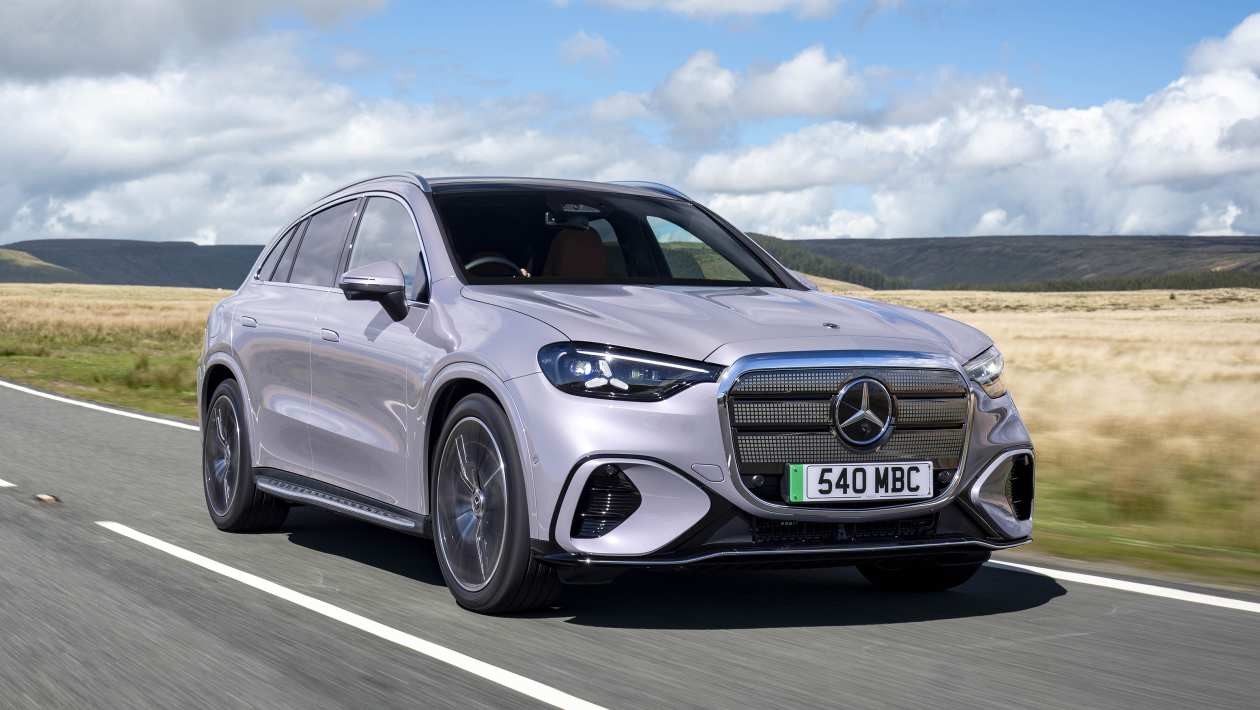
Design choices divide opinions. Chrome grille up front. Backlit LEDs. Huge bar connecting lights in rear. Classical SUV shape, but electric signage. Like wearing a tie to a rave.
What works? The cheaper Sport trim doesn’t feel cheap. Price difference top to bottom? £13,000. Huge gap. But interior baseline is strong. Base models get proper door handles. Real aluminum. Not pop-out nonsense found on higher trims (a design choice I hate). Base trim handles are actually nicer in execution, purely functional, robust feeling.
The dashboard is screens. All screens. Different functional levels up the range, but look? Identical. Wall of glass. Center console is high, thick. Two phone wireless charging pads underneath vents. Side vents look like jet turbine inlets. Aggressive styling cue inside too. Busy? Yes. Very.
Materials are solid though. Leather effect Artico seats even in Sport. Metal highlights everywhere. Plastics lower down near door pockets? Reasonable quality, not cheap scratchy stuff. Certified vegan interior available. Fits the eco-credential vibe slightly at odds with techno-modern flashy lights. Strange juxtaposition. Vegan leather inside a screen-filled cockpit.
Tech Specs:
Base cars look like one screen? It’s not. 10.3″ driver display. 14″ center touch. 14″ passenger screen. Static passenger view. Mid-range makes passenger screen interactive. Top-spec gets Hyperscreen. One massive 39.1 inch piece of glass across the dash. Scary? A bit. Impressive? Undeniably.
MBUX software runs fast. Clicky responses. Good graphics. Bottom bars keep essential controls pinned. Screen isn’t everything, luckily. Physical switches remain for seat movement on doors. Joystick on column for steering wheel position. Buttons on wheel for cruise/media.
Annoying bit: Standard wheel has buttons under your thumb position. Easy to press by mistake. Higher trims switch to double-spoke layout. More clearance. Better ergonomics. Why punish the budget buyers on ergonomics?
Driver monitoring camera watches your eyes. If