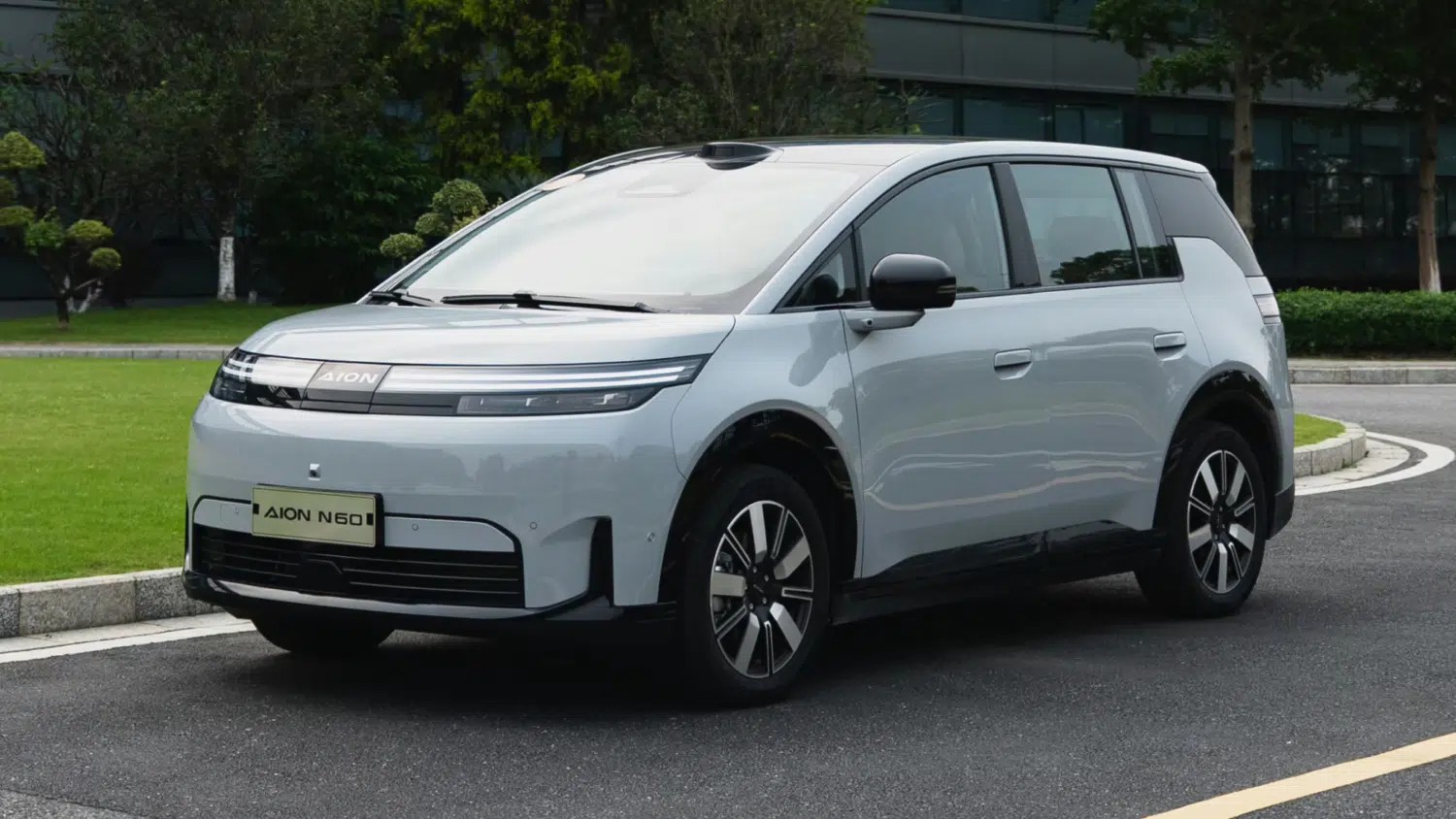
GAC Group has officially launched the Aion N60 in China, a new electric vehicle designed to bridge the gap between a compact SUV and a urban minivan. Positioned as a successor to the aging Aion Y Plus, the N60 enters a highly competitive market with a focus on high-tech features at a surprisingly low entry price.
Filling a Strategic Gap
The launch of the N60 comes at a critical time for the Aion brand. While the previous bestseller, the Aion Y Plus, has been a staple for both private owners and ride-hailing fleets, its momentum is slowing. Recent data indicates a significant decline in sales, with Q1 2026 figures showing a 30.4% year-over-year drop.
By introducing the N60, GAC is attempting to revitalize its urban mobility segment. While the older Y Plus will remain on sale for a period, the N60 represents the brand’s next step in offering modern software and advanced driver assistance systems (ADAS) to a mass-market audience.
Design and Smart Technology
Visually, the N60 adopts a “minivan-esque” silhouette characterized by a short bonnet, slanted A-pillars, and a curved roofline. Despite its boxy, space-efficient shape, GAC is marketing the vehicle as a compact SUV tailored for city driving.
The N60 distinguishes itself through its advanced sensor suite:
– LiDAR sensor and 4D millimeter-wave radar come as standard.
– These components enable Navigate On Autopilot (NOA), allowing the vehicle to navigate both urban streets and highways autonomously.
Inside, the cabin follows a minimalist design philosophy centered around a massive 15.6-inch infotainment screen running the Adigo 6.0 OS. To enhance passenger comfort, the vehicle includes a “zero-gravity” front passenger seat equipped with heating, ventilation, and massage functions. For those in the ride-hailing sector, optional add-ons like a built-in fridge, folding tables, and an 11-speaker sound system could turn the cabin into a mobile lounge.
Performance and Battery Options
The N60 is powered by a front-mounted electric motor delivering 165 kW (221 hp) and 205 Nm of torque. Customers can choose from three different Lithium Iron Phosphate (LFP) battery capacities, which directly dictate the vehicle’s range and price:
| Model Variant | Battery Capacity | CLTC Range | Price (CNY) | Price (USD approx.) |
|---|---|---|---|---|
| 410 Ultra | 45.58 kWh | 410 km | 109,800 ¥ | ~$16,090 |
| 510 Ultra | 57.43 kWh | 510 km | 119,800 ¥ | ~$17,560 |
| 610 Ultra | 69.75 kWh | 610 km | 129,800 ¥ | ~$19,025 |
The acceleration profiles vary slightly based on the battery weight, with 0–100 km/h times ranging between 7.9 and 8.5 seconds.
The Future of Fleet Integration
A notable detail in GAC’s strategy is the potential for battery swapping. Having previously partnered with CATL to implement swapping technology in the Aion RT sedan, GAC has already applied for a license to offer the N60 with swappable batteries. This move is specifically aimed at the ride-hailing industry, where minimizing downtime for charging is essential for profitability.
The Aion N60 represents a strategic pivot for GAC, combining high-end autonomous hardware like LiDAR with aggressive, entry-level pricing to capture both the private consumer and the professional driver markets.
Conclusion
The Aion N60 is a high-value proposition that brings advanced autonomous capabilities and premium interior comforts to the budget-friendly EV segment. Its success will likely depend on how effectively it can recapture the market share lost by the aging Y Plus model.