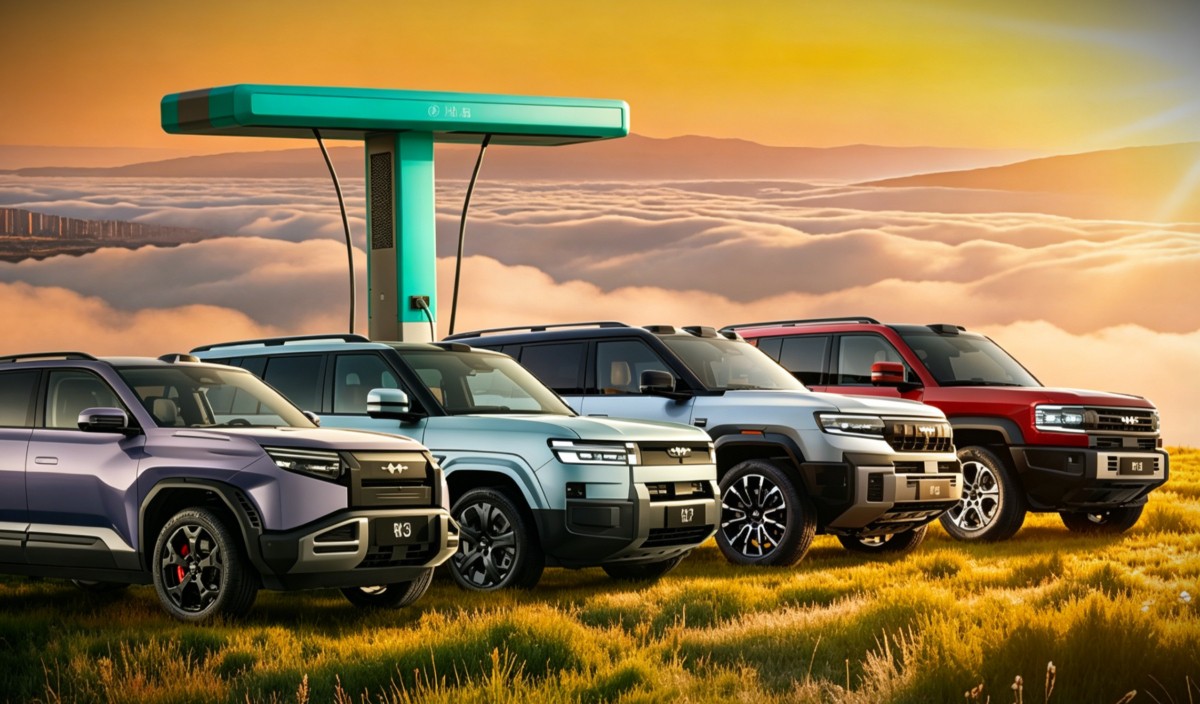
Production is speeding up. BYD is ramping up manufacturing for its Blade Battery 2.0 packs. They had no choice really. Supply shortages stalled deliveries for several flash-charge vehicle lines across the group including the Fang Cheng Bao sub-brand. It got messy.
Xiong Tianbo, the general manager for Fang Cheng Bao, made it clear on May 19. The Tai 3 SUV deliveries are normal now. He said teams were physically dispatched to factories in Shaanxi Anhui and Zhengzhou to force the bottleneck open. Staff were sent in. Output capacity was cranked.
The squeeze was real
Earlier this year BYD admitted their production fell behind demand. People wanted these new fast-charging EVs. They ordered them en masse.
The pressure cooker moment came when the BYD Great Tang SUV launch slipped. More than 100000 pre-sale orders flooded in. The volume strained the allocation of Blade Battery 0.0 packs across the expanding lineup. Simple math. Not enough cells.
But Xiong confirmed every variant of the Tai 3 is back on track. Rear-wheel drive. Four-wheel drive. Even the models with the God’s Eye B driver-assistance system are shipping. Regular delivery resumes.
More cars. Soon enough.
Things aren’t fully relaxed yet. Allocation remains tight.
If you ordered early you get your car. If you wait you wait.
Here is the upcoming rollout according to Xiong:
* The Tai 7 EV flash-charge version is already trickling out in some Chinese cities. Full scale starts early June.
* The Bao 8 and Bao 5 flash-charge versions follow in mid-June.
These aren’t cheap cars. Both SUVs start at 299800 yuan that’s roughly $44100. But they pack punch. They use that second-generation battery and new charging tech. Plus the DiSus-P Ultra system. It lets the car lift wheels for tire changes or low-speed three-wheeling. Up to 300mm of wheel lift clearance. It’s gimmicky maybe. It works though.
Sales numbers are impressive despite the chaos.
On May 20 Fang Cheng Bao passed 400000 cumulative sales. The Tai 7 alone passed 150000. April saw 21138 cars sold. That’s an 110.6-year-on-year jump.
Why do we keep trusting manufacturers to fix supply chains just before launch?
Under the hood
There’s noise around the battery tech too. A third-party teardown circulated online this month. Critics slammed the team’s methods but the defenders held firm. The pack underwent a 40-hour freeze test before they cracked it open. The disassembly took eight hours. Inside was a 170-cell configuration.
BYD hasn’t said how many batteries it can actually make per day. Capacity numbers stay quiet.
The market reacts anyway. December 2025 remains the high-water mark for monthly deliveries with 48161 units. April 2026 was solid at 21k but half that peak. The momentum is there. The bottlenecks are easing. For now.