
The heartbeat of any hybrid isn’t the gas tank. It’s the battery pack. You know the drill. Internal combustion engine? Check. Electric motor? Check. The ICE burns gasoline. The electric motor pulls its energy from a high-voltage chemical source. Without those specific reactions inside the battery housing, the whole “hybrid” concept falls apart. It’s not magic. It’s electrochemistry.
But the battery has a bad reputation. Skeptics have plenty of complaints. They say the packs are too heavy, dragging down fuel economy. They claim the power delivery is sluggish. They point to toxic materials like lead and call out the hypocrisy of “green” marketing. It’s easy to hate on something you don’t understand.
But manufacturers aren’t listening to the haters. They are busy fixing things. The technology is evolving. Fast. Here are five concrete ways the hybrid battery is getting better.
5: The Price of Entry Is Dropping
Fear is a great sales deterrent. For years, the sticker shock of a dead hybrid battery kept buyers away. A replacement pack used to cost around $3,000. That’s a chunk of change. It’s a significant portion of the vehicle’s total value. People were terrified of pulling the plug on their purchase just because the juice died.
That fear is fading. Prices have plummeted since the early 2000s. In 2001, swapping out a hybrid battery set you back roughly $10,000. Now? Honda dropped its replacement fee from $3,400 to $1,968. Toyota is planning to slash its own costs from the current $3,000 mark. Reliability is up, too. The failure rate for a first-generation Prius battery sat at about 1 percent. For the second generation? It dropped to 0.003 percent. That’s not just an improvement. That’s a statistical anomaly.
4: Lithium-Ion Batteries
We are moving away from older chemistries. The industry is shifting toward lithium-ion. This isn’t just a minor tweak. It’s a fundamental change in how energy is stored and delivered.
Older nickel-metal hydride packs were heavy. They suffered from memory effects. They leaked. Lithium-ion cells are denser. They hold more energy in less space. The power-to-weight ratio is significantly higher. This means less drag on the chassis. Better acceleration. And longer range between charges.
Enthusiasts have been waiting for this. The weight savings alone justify the switch. But there’s more. Lithium-ion batteries charge faster. They discharge more efficiently. They don’t degrade as quickly under high heat. This is the kind of tech that makes hybrid performance actually fun.
The question remains: will we ever see smartphone-style batteries in cars? Or is that a bridge too far? We’ll get to that next.
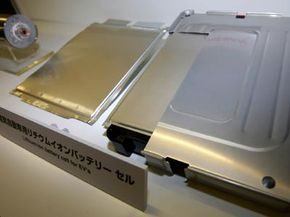

The Lithium-Ion Gamble
NiMH packs are the current workhorses. They last. They are cheap. A low-capacity unit might fetch you $600. But high-power demands drive costs up. Nickel prices are volatile. Cost reductions have stalled. Manufacturers are looking for exits.
Enter lithium-ion.
You know this chemistry. Your laptop runs on it. Your phone runs on it. It is small. It is light. For hybrid applications, the energy density wins. You get more power per pound. Efficiency beats NiMH.
It is early days for automotive Li-ion. Reliability data is sparse. Costs are still steep. If the investment holds, we will see smaller packs sooner than later. If it fails?
Look elsewhere.
UltraBattery: The Lead-Acid Revival
Lithium-ion might be too pricey for the mass market. NiMH isn’t getting cheaper. So where do you cut costs without sacrificing acceleration?
Lead-acid.
Yes. The same battery that jump-starts your grandma’s sedan. Invented in 1859 by Gaston Plante. It is heavy. Environmentalists hate it. But it is cheap. And researchers in Australia and Japan proved it could be improved.
They built the UltraBattery.
The UltraBattery uses supercapacitors to give hybrids large bursts of energy for acceleration without degrading the cell.
It combines lead-acid chemistry with supercapacitor technology. The capacitor handles the high-current spikes. The lead-acid cell handles storage. No degradation. No expensive rare metals.
The auto industry is hesitant. But the price tag is attractive. Under $1,000. Some Japanese manufacturers targeted 2010 for adoption.
Why Battery Longevity Matters More Than Peak Power
You picked up a hybrid because you want lower emissions and better fuel economy. You didn’t buy it to be a battery technician. Yet, the battery pack is the most expensive component in the vehicle. Replacing it mid-ownership is a financial blow.
Most hybrids use NiMH. These packs are robust. They handle deep cycling better than early lithium-ion prototypes. A NiMH pack can last 8 to 10 years. That covers the warranty period. It covers the expected life of the car.
Lithium-ion claims higher energy density. But cycle life? Early automotive Li-ion cells struggled with thermal management. Heat kills lithium batteries. Fast charging degrades them. If a Li-ion pack lasts only 5 years, the total cost of ownership jumps. The savings on fuel vanish against the replacement cost.
Lead-acid variants like the UltraBattery aim to bridge this gap. They offer the longevity of traditional automotive batteries with the power delivery needed for electric assist. If the technology matures, you get cheap. Long-lasting. And decent performance.
The race isn’t just about energy density. It is about survival. Which battery chemistry survives the road? We will see.

Fear of the battery pack has kept a lot of people on the fence. They worry about short lifespans. They worry about failure rates. The big question is always timing. Will the pack die in four years? Five? Seven?
Here is the reality. Manufacturers guarantee these packs for the life of the vehicle. We are talking 100,000 miles or more in recent years. Warranties often stretch to eight years or longer. If the battery fails while covered, the manufacturer pays for the replacement. Take the 2010 Toyota Prius. It comes with a 10-year, 150,000-mile warranty. That is concrete protection.
“The truth is, car companies guarantee their hybrid battery packs for the life of the car… the manufacturer would cover the replacement cost.”
Less Weight
Heavy batteries hurt fuel efficiency. More mass means more energy required to move the car. Drivers often unload their trunks to save gas. It is the same principle.
Researchers are working to slash battery weight. MIT scientists have developed a way to make lithium-ion packs both lighter and faster. The original issue was slow energy release. Scientists blamed slow-moving lithium atoms. MIT researchers argue it is actually the nano-scale structure hindering ion travel.
A lithium phosphate coating solves this. It speeds ions along, helping them reach the terminal quickly. This material also reduces degradation. Less degradation means manufacturers can shrink battery size. Smaller packs. Lighter cars.
Related Articles
- Top 10 Selling Hybrid Cars
- How the Honda Civic Hybrid Works
- How the Ford Fusion Hybrid Works
- How the Toyota Prius Works
- Hybrid Car Performance Comparison
- How Alternative Fuel Filling Stations Work
Sources
- Anderman, Menahem. “Status and Prospects of Battery Technology for Hybrid Electric Vehicles, Including Plug-in Hybrid Electric Vehicles.” Advanced Automotive Batteries. Jan. 26, 2007.
- Hamilton, Tyler. “A Cheaper Battery for Hybrid Cars.” Technology Review. Massachusetts Institute of Technology. Jan. 24, 2008.
- HybridCars.com. “Behind the Hidden Costs of Hybrids.” Sept. 28, 2008.
- HybridCars.com. “The Hybrid Car Battery: A Definitive Guide.” Nov. 6, 2008.
- Newsweek.com. “Assaulted Batteries.” 2008.
- Treacy, Megan. “A Lighter, Faster-Charging Battery Could Be on the Way.” EcoGeek.com. March 12, 2009.
- Valdes-Dapena, Peter. “Hybrids: seven worries, seven answers.” CNNMoney.com. March 1, 2007.
- Wert, Ray. “2010 Toyota Prius: At 50 MPG, Officially Highest-mileage Retail Vehicle.” Jalopnik.com. March 2, 2009.