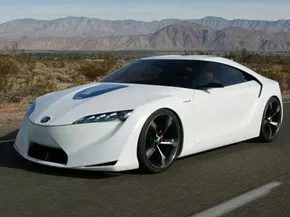
Hybrids have a reputation problem. They are efficient, sure. They save gas. But they are also boring. You sit behind the wheel and stare at a dashboard full of efficiency metrics. Miles per gallon. Battery percentage. It is a tech report, not a driving experience. Most buyers skip them because the packaging is usually cramped. Automakers slapped a small engine into a compact body and called it a day. The result? A car that looks like a grocery getter and drives like one too.
Power figures tell the story. A standard gas car hits zero to 60 mph in about six seconds. A typical hybrid takes ten. That is not a typo. The gas engine is smaller. The electric motor that helps push the wheels is smaller too. Less power means slower acceleration. It is a simple trade-off for low emissions.
But is efficiency the only metric that matters? Some drivers want speed. They want torque. They want a car that does not feel like a compromise.
Toyota has heard this. The company behind the Prius knows the market is shifting. They do not just want people to buy hybrids for the tax credits. They want people to buy them because they are fun. The answer is the Toyota FT-HS Hybrid Sports Concept.
Design Philosophy
The Toyota FT-HS is not a Prius with a spoiler. It is a complete reimagining of what a hybrid can look like. The name stands for “Future Hybrid Sport.” It looks like a race car that escaped the track. The proportions are wide. The stance is low. It does not look like a car designed for fuel economy. It looks like a car designed for cornering.
Some observers call it a “Prius on steroids.” That is not entirely accurate. The underlying architecture is different. The intent is different. This concept car challenges the idea that eco-friendly cars must be bland. It proves that hybrid technology can be aggressive. It can be flashy. It can be fast.
Of course, this is still a concept. There is no guarantee it will hit production lines. But the design language is clear. Toyota is signaling that the next generation of hybrids will not just save the planet. They will make you smile while doing it.

The design of the Toyota FT-HS Hybrid Sports Concept immediately separates itself from the bland eco-cars clogging up showrooms. This isn’t a Prius with a spoiler. It’s a statement piece. Calty Design Research, Toyota’s Newport Beach studio, unveiled the FT-HS at the 2007 North American International Auto Show in Detroit. Back then, it was just sketches and 3D renders. Now? Working models exist. Reports whisper that production is imminent.
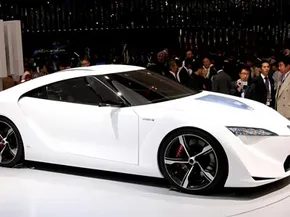
The name stands for Future Toyota Hybrid Sport, but the vibe is pure analog. The profile is triangular. Sharp. It channels the ghost of the Supra, that legendary sports car Toyota let die. Calty didn’t just streamline the body; they modeled it after a downhill skier. The logic is specific: emphasize individual aerodynamic components rather than one smooth, seamless shell. Look at the front. The area under the headlights dips inward aggressively. A ridge along the lower door edge climbs up toward the rear wheels. It’s functional drama.
Inside, you’re looking at a 2+2 layout. Two front seats are the focus. Two rear seats are an afterthought, there only if you’re desperate to squeeze four people into a machine built for two. The FT-HS is massive. It’s nearly as big as a Corvette. The dimensions are concrete: 170.3 inches long, 73.2 inches wide, 50.8 inches tall. That’s 432.6 by 186 by 129 centimeters for the metric purists.
To highlight the tech, Calty cut a hole in the hood. You can see the engine. It’s a visual cue that this isn’t just another appliance.
The Solo Space Interior
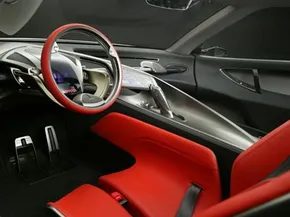
The interior is dubbed the “Solo Space.” The name tells you everything. The driver’s seat is a cockpit. The rest is secondary. The materials scream lightweight. The seats are thin pads, not plush cushions. The wheels are carbon fiber. It’s an attempt to mimic the stripped-down, high-rpm feel of Formula 1.
There’s talk of a retractable roof. It would slide back over the rear seats, effectively turning the 2+2 into a strict two-seater. This isn’t just aesthetic. It reduces weight. It changes the center of gravity. It turns a grand tourer into a track weapon.
Toyota FT-HS Specs
The Toyota FT-HS: A High-Horsepower Hybrid That Never Was
The design of the FT-HS concept was unexpected for a hybrid. But the real hook wasn’t styling. It was performance.
Consider the 2010 Prius. Its gas engine makes 98 horsepower. Barely enough to get groceries. The FT-HS was different. It promised a 400-horsepower hybrid powertrain. That is a massive jump. The core was a 3.5-liter V-6 engine. It looked similar to the DOHC 3.5-liter V-6 found in the Lexus GS 450h.
The electric motor told the other half of the story. Engineers planned for a water-cooled unit. It ran on 650 volts. Peak output hit 197 horsepower. That is serious torque for a concept car. The battery? Likely lithium-ion. This material weighs half as much as the nickel-metal hydride batteries standard in hybrids at the time.
Weight matters. So does layout. The FT-HS used rear-wheel-drive. That is rare for efficiency-focused hybrids.
The goal was brutal. Zero to 60 mph in 4 seconds. Less than half the time of a typical hybrid. We are talking about highway speeds here. This wasn’t about saving pennies on gas. It was about speed.
Toyota announced the FT-HS in 2007. They said it would be in production by 2009. It never happened. Why? Fluctuating fuel prices. The 2009 economy was terrible. Automotive News reported these factors likely killed the project.
Technical challenges existed too. Developing a hybrid sports car is hard. There was little information between the debut and now. We don’t know exactly where the engineering roadblocks stood.
If it ever launched, Toyota aimed for the middle $30,000 range. Not a luxury price. Not cheap. A sweet spot. A sporty, mid-range hybrid. It would have introduced unsure drivers to high-performance electric-assist.
Did we miss out? Probably. The market has evolved. But the FT-HS remains a ghost. A what-if.
For those still tracking hybrid tech, other models have filled the void. The Porsche Panamera Hybrid exists. The Ford Fusion Hybrid sold. The Honda Civic Hybrid turned heads. None match the FT-HS’s stated 400 horsepower target though.
The sources for this history are clear. AutoBlog covered the fuel cost shifts. Edmunds Inside Line detailed the Detroit Auto Show reveal. Toyota’s own site archived the concept specs. All accessed around May 2009.
The car died. The tech lived on. Somewhere in that gap lies a lot of “could have been.”
Related Hybrid Technology Deep Dives
- Top 10 Selling Hybrid Cars
- How the Toyota A-BAT Hybrid Truck Works
- How the Porsche Panamera Hybrid Works
- How the Toyota CS&S Works
- How the Ford Fusion Hybrid Works
- How the Honda Civic Hybrid Works
- How the Toyota Prius Works
- How the Venturi Astrolab Works