


Dacia has always played the long game on value. As Renault’s budget arm, the brand built its reputation on giving buyers the most car for the least money. That formula works. But electric vehicles? That’s a different ballgame. The company’s boss, Luca de Meo, has hinted that an electric Dacia is inevitable. The timeline pointed to around 2020, coinciding with the rollout of the CMF-EV platform shared across the Renault-Nissan-Mitsubishi alliance. For years, though, we heard nothing concrete. No names. No sketches. Just silence.
That silence might just be a decoy.
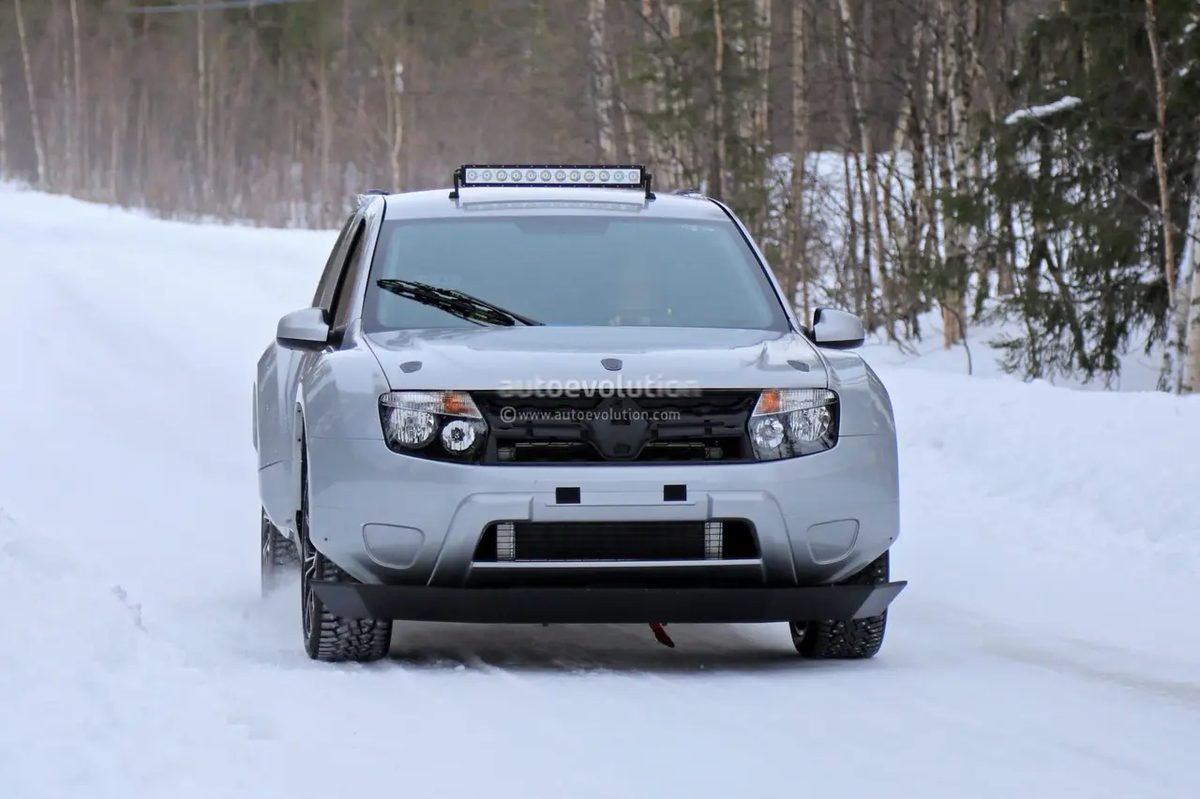
Images leaked by Autoevolution suggest Dacia is already testing hardware. We are looking at a first-generation Duster prototype. It’s not a finished consumer product. It’s a mule. A test bed. And it’s running on electricity.
Testing Grounds in the Arctic
The photos show the vehicle being driven on a frozen lake near the Arctic Circle. Why there? Because extreme cold stresses batteries and electric drivetrains more than any temperate climate. If your EV can handle sub-zero temps without losing range or power, it can handle a commute in London or New York.
Renault Sport is behind the wheel. That detail matters. It means this isn’t just some back-office engineering exercise. This is serious performance testing.
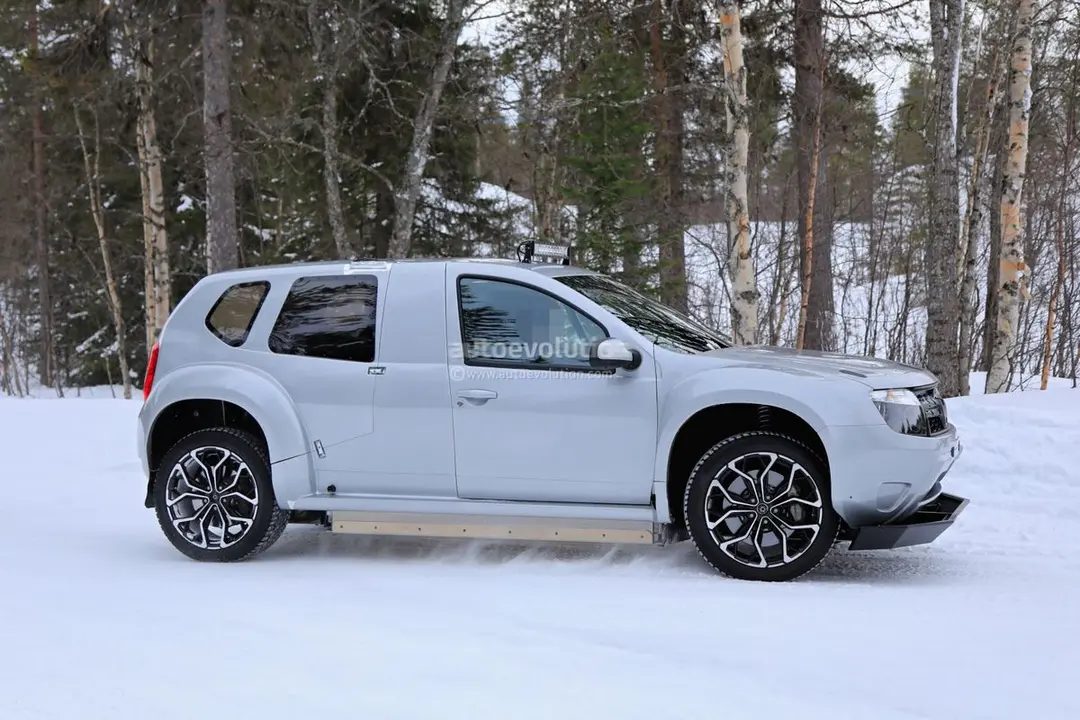
Underneath the bodywork lies the CMF-EV platform. You can see the battery pack mounted in the floor. The chassis is stiffened. The suspension is likely tuned for stability on ice. But the body is still the original Duster. Not the refreshed second generation. The first gen.
Is This the Real Deal?
So, is this the Dacia electric SUV we’ve been waiting for? Sort of. But not exactly.
This prototype isn’t a preview of a mass-market model. It’s a rolling laboratory. Dacia needs to validate the CMF-EV architecture under duress. If they can make this electric Duster survive the Arctic, they know the platform is robust. They know the battery management system works. They know the motors don’t fail when things get cold.
But don’t start shopping for one. This isn’t a consumer car. It’s a proof of concept. A way to shake down the components before they go into production vehicles from other brands in the group. Or maybe, just maybe, it’s a stepping stone.
Dacia hasn’t confirmed anything. They’re staying quiet. But the evidence is mounting. The wheels are turning. And they’re turning on ice.
“The silence around Dacia’s EV plans might just be a decoy.”
The question now is how long that silence will last. When the platform is proven, who gets the car? Dacia? Renault? Or does the budget brand finally get its own slice of the EV pie? We won’t know for sure until the next phase begins. But one thing is clear. Dacia isn’t just watching the electric revolution. They’re testing in the middle of it.

Electric Duster Gets Ice-Race Ready
Renault Sport, the performance division, has a Duster prototype in its garage. That is not a coincidence. It suggests the brand is building toward an electric entry for the Trophée Andros. Dacia has raced on ice there for years. Now, they might be ready to electrify the grid.
The images tell the story. This is not a showroom model. It has a full safety roll cage. Bucket seats keep the driver locked in during high-G slides. The hood uses quick-release latches for fast pit stops. Braking power is serious. You get big Brembo calipers up front. Alpine calipers handle the rear. This setup prioritizes consistency over pure stopping distance. Ice racing is about control.
Why Andros Matters for Electrification
Dacia plans to run an all-wheel-drive electric car in this series starting from the 2020 season. The Trophée Andros is perfect for showcasing EV torque. Electric motors deliver instant power. That is a massive advantage on slippery surfaces.
This prototype likely serves as a technology demonstrator. It previews features for a future production vehicle. The integration of high-performance brakes and AWD systems hints at what a street-legal EV Duster might offer. The race car is essentially a rolling lab.
The Future of Ice Racing
The shift to electric changes the dynamic. It is quieter. The acceleration curve is different. Yet, the skill required to slide a heavy SUV on ice remains unchanged. Dacia is betting on this transition. They are proving that electric powertrains can handle extreme conditions.
Watch this space. The full competition spec is coming.


