


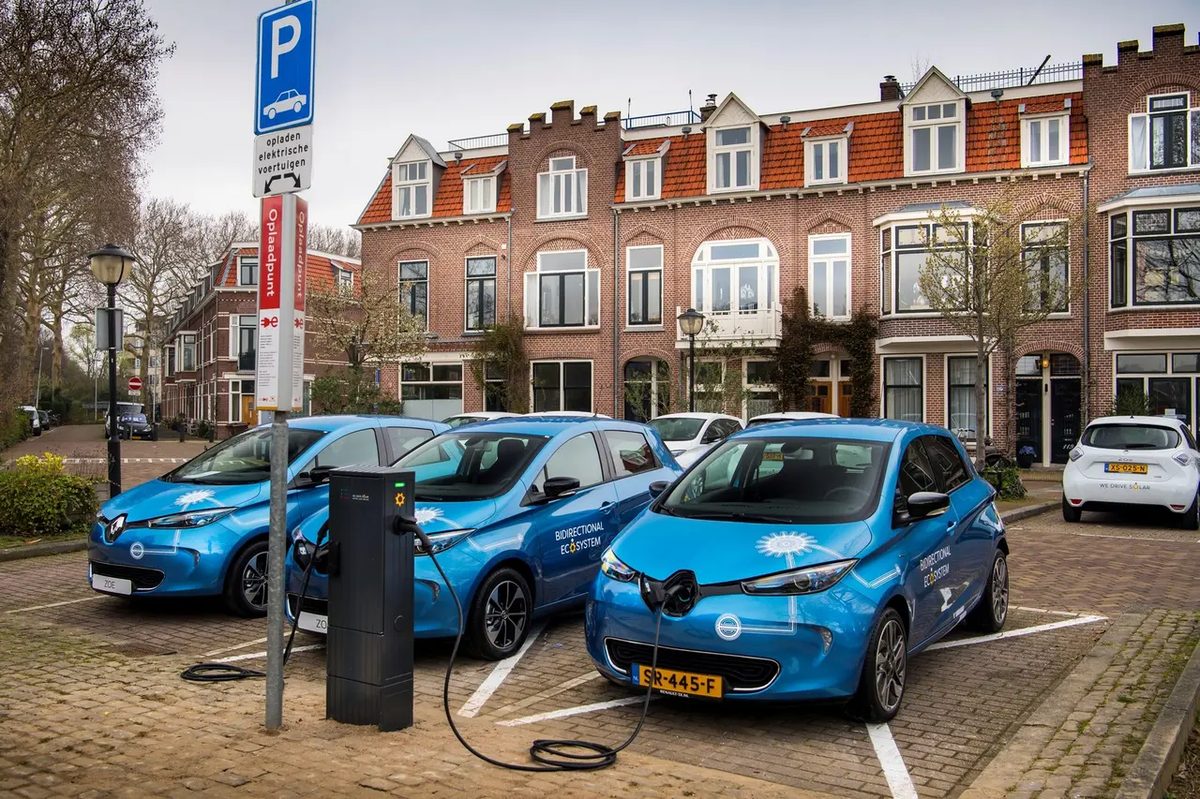
In the world of cars, there are rarely lasting “firsts”. There was concept car, a concept car that never made it to production, and a promise that it would be discontinued in the third quarter. So when Renault announced it was starting a large-scale vehicle-to-grid (V2G) trial in Utrecht, the Netherlands, the natural reaction was skepticism. But this isn’t a prototype. This is a pilot.
Renault is testing two-way charging in 15 Renault Zoe electric cars. The goal is to prove that electric cars consume more than just electricity. they can give it back.
The system, which is expected to roll out across Europe, including France, in 2019 is a big step towards vehicle-to-grid. The goal is clear. It’s about stabilizing the electricity grid and at the same time providing new income for car owners.
The logic behind V2G
This is the basic mechanism of the technology. Traditional electric car charging is unidirectional. Electricity flows from the network to the battery. V2G will reverse the flow.
Renault Zoe is equipped with V2G technology, which controls charging and discharging cycles. This is done based on two variables: user demand and network availability.
“When the demand is at its peak, the vehicles can autonomously supply power to the grid by discharging some of the stored energy in the battery.”
Think of a hot summer afternoon. The grid is tight. Everyone has air conditioning on. Local power grids can get electricity from parked electric cars instead of ramping up expensive, carbon-intensive peak power plants. These vehicles act as distributed energy storage units.
For Renault, it’s not just about selling cars. It means placing yourself in the middle of an energy transition.
Why Utrecht?
Utrecht is not just a random choice. This is a testing ground with the necessary infrastructure and regulatory framework to support such complex network interactions. These tests are designed to prove three things:
- Efficiency: Can the system really work without premature battery degradation?
- Cost: What is the real financial impact of two-way charging?
- Standards: How can we create a common protocol for this technology?
Without standards, V2G remains a novelty. With standards, it becomes a practical tool.
Who gets paid?
The economic model is the most interesting for drivers. Future Renault owners pay for electricity. They can also get paid for it.
Users can choose standard or two-way charging mode through a specific app. If you choose the latter, you will supply electricity to the grid during peak times. In return, the operator compensates them.
Of course there are pitfalls. This system ensures that the battery is fully charged before the owner leaves. If you can’t drive to work, you can’t deplete the battery and make a profit. But for those willing to plug in and let algorithms manage the charging, passive assets become active participants in the energy market.
Battery problems
Critics always ask, “Doesn’t the battery degrade faster if you use it every day?”
Renault pilots are trying to answer this question. Accelerated V2G degradation can offset user savings through battery degradation. This is why you should calculate costs and efficiency in Utrecht


