It happens every year. The days get longer. The lawnmowers start screaming at dawn. And then, inevitably, the pump prices climb.
Remember 2008? National averages cracked $4 a gallon. You didn’t just fill up; you checked your bank balance first. You did the mental math on whether to skip the trip to the store.
That pain is still fresh. New hikes are coming. So we look for alternatives. Not someday alternatives. Ones you can actually buy or drive right now.
Here are the top 10 alternative fuels currently on the road. Let’s start at the bottom.
10: Hydrogen
Hydrogen seems like the obvious answer. It’s the most abundant element in the universe. It burns clean. The only emission is water vapor.
But getting it into your tank is the hard part.
You can’t just pump it in at your average gas station. The infrastructure is sparse. Sparse enough that most drivers will never see a station within easy reach.
The technology exists. The fuel cell electric vehicles (FCEVs) are real. They offer ranges comparable to gas cars. Refueling takes minutes, not hours.
Yet, adoption remains niche. Why? Cost. Building the stations costs millions. Producing green hydrogen requires massive energy inputs.
It’s a promising technology stuck in a catch-22. We need stations to sell cars. We need cars to justify building stations.
Until that loop breaks, hydrogen stays in the lab or the enthusiast’s garage. It’s not for the mass market. Not yet.
“Hydrogen offers clean emissions and fast refueling, but lacks the infrastructure to support widespread adoption.”
So if you’re looking for a drop-in solution for your current commute, forget it. Stick with the pumps. Or wait for the infrastructure to catch up.
Meanwhile, the rest of the list offers options you can actually use. Options that don’t require a degree in chemical engineering to understand.
Next up: ethanol. Or rather, the lack of it. But more on that later.
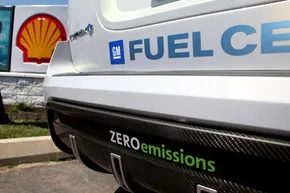

Forget the Hindenburg. The image of a massive airship bursting into flames is stuck in our collective memory, but it has nothing to do with why hydrogen is making a comeback in the automotive world. Modern hydrogen fueling is actually remarkably safe. We aren’t looking at a single path forward, either. There are two distinct ways to put hydrogen under the hood: fuel cell electric vehicles (FCEVs) and hydrogen internal combustion engine (H2ICE) cars.
How Fuel Cell Vehicles Work
In a fuel cell vehicle, the hydrogen doesn’t burn. It reacts. The hydrogen is fed into a fuel cell stack where it combines with oxygen from the air. This chemical reaction generates electricity. That electricity then powers electric motors that turn the wheels.
It’s not a battery-only setup. You aren’t charging a pack from a wall outlet. You are generating power on the fly. The only emission coming out of the tailpipe is water vapor. Pure H2O. Nothing else.
Honda has been testing this technology with the FCX Clarity. The company leased these units to drivers in Southern California, giving real-world data on how the tech holds up in daily use. The efficiency is high because you aren’t burning fuel to create heat, then trying to convert that heat into motion. You’re creating electricity directly.
The Combustion Alternative
Then there is the other route. Some engineers decided to stick with the familiar internal combustion engine but swap the gasoline for hydrogen. It sounds like a recipe for disaster, but hydrogen burns differently. It ignites easily and burns cleaner than traditional hydrocarbons.
The result? Again, water vapor. No carbon dioxide. No particulate matter.
BMW went all in with the Hydrogen 7. It was a limited-edition experiment, leased to select individuals in Germany and the US. The tests were revealing. In some cases, the car actually cleaned the air around it. The hydrogen combustion process can reduce certain pollutants that gasoline engines spew out, turning a traditional exhaust system into a surprisingly efficient air scrubber.
The Infrastructure Gap
If this tech is so clean, why isn’t it everywhere? It’s the same old story. Infrastructure.
There are barely any hydrogen fueling stations. Building them requires specialized equipment, safety protocols, and massive capital investment. Gas stations are everywhere. Electric chargers are popping up in parking lots. Hydrogen stations? You’ll have to drive to specific hubs to find them. That limitation keeps hydrogen cars niche, confined mostly to states like California and Hawaii where governments are subsidizing the build-out.
But hydrogen isn’t the only alternative fuel fighting for your attention. We’re moving on to the most ubiquitous energy source in the modern car.
9: Electricity

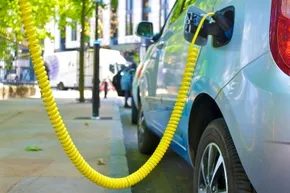
Electric cars didn’t just appear out of thin air in the 2010s. The earliest automobiles actually ran on electricity. They just vanished because the tech wasn’t there yet. Today, EVs are finally practical. The bottleneck? Batteries.
Moving a heavy metal box at highway speeds sucks energy fast. Old EVs had terrible range and took forever to refill. Enter lithium-ion batteries. You know them from your phone or laptop. They charge faster. They hold more charge. And they are lighter.
Automakers are using this tech to build real cars. The Tesla Roadster uses these packs for supercar-level acceleration. But not everyone is going full electric yet.
Extended-Range Electric Vehicles (EREVs)
Some cars bridge the gap. Take the Chevy Volt. It uses a lithium-ion battery pack paired with an internal combustion engine. This creates an extended-range electric vehicle.
Here is how it works. You plug the car into a standard wall outlet. The battery drains as you drive. When the charge dips, the gasoline generator kicks in. It doesn’t drive the wheels directly. It generates electricity to recharge the batteries. The car keeps moving. No range anxiety. Just a backup generator under the hood.
This hybrid approach lets drivers get electric-only miles for commuting while retaining the safety net of gas for long trips.
8: Biodiesel

You might think that what’s good for your gut is good for your engine. It isn’t. While cutting out fried foods helps your arteries, dumping unprocessed cooking grease into a fuel tank is a fast track to a ruined injection system. There is a middle ground, though. It’s called biodiesel.
Biodiesel is a renewable fuel created from fats and oils. If you drive a diesel vehicle, you technically have the hardware to run it. But please, do not start straining your last batch of McDonald’s nugget oil directly into the tank. Engine blocks don’t care about your savings account if the fuel isn’t processed correctly.
The raw oil must undergo a chemical reaction. Usually, this involves methanol and a catalyst. The result is a cleaner-burning fuel.
Can You Make It Yourself?
Some enthusiasts do. They collect used vegetable oil from local eateries and process it at home. It’s cheap. It’s sustainable. It’s also dangerous.
If the chemical process fails, the results are messy. You could wreck your fuel injectors. You could damage your fuel lines. You might even set your garage on fire. The reaction involves methanol, which is toxic. Improper handling can lead to serious injury.
Before you buy a converter and start brewing, find a mentor. Learn from someone who has done it right. Don’t experiment with your only daily driver.
The Trade-offs
When done correctly, the payoff is sweet. Biodiesel costs less than petroleum diesel. It emits fewer particulates. It’s a greener alternative. There is a weird perk, too. Your car might smell like french fries. It’s a novelty that wears off quickly, but it’s real.
Just verify your vehicle can handle it. Older diesels might need seal replacements. Modern engines usually don’t care. But the risk of DIY failure is real. If you can’t afford to lose an engine, stick to store-bought blends.
7: Ethanol


Smell is the first compromise when you fuel up with used cooking oil. If you’re trying to save the planet but keep your olfactory senses intact, you might want to look elsewhere. Your car doesn’t just eat fat. It can chew on vegetables too.
The Rise of Ethanol
Ethanol is everywhere. You probably see it in the summer mix at the pump already. It’s an alcohol derived from biomass. Don’t drink it. It’s not for human consumption.
In the US, the source is mostly corn. Brazil uses sugar cane. It’s a domestic product. That’s the main selling point. It reduces reliance on foreign oil. It’s renewable. Or so the argument goes.
Most modern manufacturers offer flex-fuel vehicles. These engines are built to handle a wide range of alcohol concentrations. They run on standard gasoline or E85. That’s eighty-five percent ethanol. Fifteen percent gasoline. The difference in price can be significant. The difference in energy density is not. You’ll get fewer miles per gallon. But the cost per mile might still be lower.
The Hidden Costs of Corn Fuel
There are downsides. Big ones.
Making ethanol takes a lot of energy. You have to grow the corn. Harvest it. Transport it. Process it. The net energy gain is debated. Some studies say it’s barely positive. Others say it’s negligible.
Then there’s the food vs. fuel debate. Farmers are rational actors. If ethanol pays better than food crops, they switch. Supply drops. Prices rise. It’s simple economics. You compete with your dinner for a tank of gas.
Despite this, the infrastructure is growing. Finding an E85 pump is easier than it was a decade ago. The benefits are there. The carbon footprint is lower than pure gasoline. The emissions are cleaner. It’s not a perfect solution. But it’s a step away from crude oil.
Liquefied Natural Gas
6: Liquefied Natural Gas
Let’s keep the kitchen metaphor rolling for a second, because the next alternative fuel sitting in your garage (or rather, in a semi-truck’s tank) is just as common in the culinary world. But skip the ethanol and biodiesel. Those are made from eatables. This one? It’s what top chefs swear by for high-heat searing: natural gas.
Natural gas is a fossil fuel trapped between layers of underground rock. We drill for it just like we do for crude oil, but here in the United States, the supply is massive. It burns cleaner than gasoline or diesel, which is the main selling point. The stuff flowing through the pipe to your stove or water heater is natural gas in a low-pressure state. It stays gaseous. It releases a relatively small punch of energy when it ignites. Perfect for simmering soup. Useless for moving a 40-ton rig.
But there’s a trick. Cool that gas down, and it liquefies.
Suddenly, you have liquefied natural gas (LNG). The energy density skyrockets. Burn LNG, and you get a massive release of power. It’s not just heating soup anymore. It’s moving heavy metal over long distances. That’s the niche. Heavy-duty trucks. Long-haul logistics. Places where diesel is getting expensive or regulated into oblivion.
The Shift from Gas to Liquid
The physics here are simple but critical for anyone tracking fleet efficiency. Low-pressure natural gas is voluminous but weak. Liquefied natural gas packs that volume into a fraction of the space with significantly higher energy output per gallon.
This isn’t theoretical. It’s already on the road.
“Liquefied natural gas can power large equipment, like a truck.”
Fleets are switching because the economics are starting to make sense, especially with stricter emissions standards. LNG trucks offer longer ranges than their battery-electric counterparts in cold weather and refuel faster than charging. The infrastructure is sparse, sure. You won’t find an LNG pump at every corner store. But on major interstate corridors, the network is growing.
It’s not a silver bullet. The cryogenic storage tanks are heavy and expensive. The fueling stations are capital-intensive. But for carriers running consistent, high-mileage routes, LNG is becoming a viable alternative to diesel. It’s cleaner. It’s denser. And it’s not going away anytime soon.
5: Liquefied Petroleum Gas
3: Liquefied Petroleum Gas (LPG)
If you’ve ever fired up a backyard grill, you already know LPG. We call it propane most of the time. Technically speaking, propane is just the main ingredient in liquefied petroleum gas. The fuel mix contains other hydrocarbons too. The key is pressure. You keep it pressurized so it stays liquid. Liquid takes up less space. That makes it dense. And dense fuel is useful for engines.
It’s a lot like LNG but with heavier molecules.
Cars running on LPG need specific hardware. You can’t just swap nozzles. The injection system and compression ratios have to match the fuel’s properties. It burns clean. It burns steady.
Adoption varies wildly by region. In the US, you rarely see an LPG sedan. But look at the Netherlands. There, LPG holds about 10 percent of the automotive fuel market. Other countries have dipped their toes in the water too. It’s not a mainstream option here. But it works.
4: Compressed Natural Gas
Natural gas is abundant. That’s the selling point. We pull it right out of the ground. But it’s a gas. You need to compress it to store it in a tank.
The process is simple physics. Squeeze the molecules together.
CNG vehicles use internal combustion engines. Some are modified gasoline engines. Others are built from scratch for methane. The tanks are thick steel or carbon fiber. They hold gas at roughly 3,000 to 3,600 psi. That’s high pressure. Dangerous if you mess up.
Range is the big drawback. A CNG car usually gets fewer miles per “gallon” than a petrol equivalent. The energy density is lower. You fill up more often. But fuel costs stay low. Municipal fleets love it. Buses use it. Garbage trucks use it.
You don’t see many CNG convertibles. The tanks eat up trunk space. But for high-mileage driving, the math works out.

Imagine pulling into your driveway and plugging your car into the same line that feeds your gas stove. It sounds like the ultimate convenience, a seamless integration of home infrastructure and transport. With compressed natural gas (CNG) vehicles, this isn’t just fantasy. It’s a logistical reality that requires more than just a hose.
CNG is the same methane-based fuel heating your home in winter. The infrastructure already exists in many neighborhoods. But unlike plugging in an electric vehicle or filling a gas tank, powering a CNG car at home demands significant hardware. You aren’t just connecting to a line. You need a specialized compressor unit. This machine takes ambient-pressure natural gas and crushes it into high-pressure storage cylinders. The car’s fuel tanks are built to handle this pressure, storing enough energy to drive meaningful distances. The trade-off is density. CNG takes up much more space than gasoline, requiring larger, heavier tanks.
Honda saw the potential for this clean-burning, low-cost alternative early on. They introduced the Honda Civic GX in 1998. It was essentially a standard Civic chassis and body, repurposed to run on compressed natural gas. The economics were clear on paper. Natural gas burns cleaner than gasoline. It is also significantly cheaper per gallon-equivalent. If the cost of installing a home refueling station could be amortized over years of fuel savings, the math worked for eco-conscious drivers.
The Infrastructure Gap
There is a major hurdle. The home refueling solution only solves part of the problem. You still need to get the gas into your home’s supply line. More importantly, you need access to fuel if you travel beyond your local grid. There is no nationwide network of public CNG stations. If you run out of compressed natural gas on a road trip, you are stranded. The sparse infrastructure limits these cars to local commuters with dedicated home setups. This is why the Civic GX remained a niche vehicle rather than a mass-market replacement.
3: Compressed Air
“Compressed air systems offer zero emissions at the tailpipe, but the energy density is so low that range anxiety becomes a permanent fixture.”
The concept of storing energy in a tank of pressurized air is not new. It predates internal combustion engines. Early steam cars used compressed air for auxiliary functions. Today, it represents a theoretical path toward zero-emission propulsion. The physics are simple. Compress air. Store it. Release it through an expansion turbine or piston to generate mechanical work. No combustion. No exhaust.
But the thermodynamics are unforgiving. Air has low energy density. A tank of compressed air holds far less energy than a battery or a tank of gasoline. The result is limited range. Most compressed air vehicles struggle to exceed a few dozen miles on a full charge. Refilling also takes time. You cannot simply siphon energy from a grid line instantly. You need large compressors to fill the tanks quickly, or you wait for slow fills.
The technology appeals to urban planners interested in reducing local pollution. It offers a quiet, clean drivetrain. But the energy losses during compression and expansion make it inefficient compared to electric batteries. For now, it remains a curiosity. A footnote in the history of alternative fuels. The Honda Civic GX struggled with infrastructure.

Air is omnipresent. It’s in the room you’re sitting in right now. So it makes sense to ask why we don’t just harness that abundance to move metal boxes on rubber tires. Compressed air vehicles offer a literal interpretation of the question.
The mechanics are simple, almost deceptively so. In a standard internal combustion engine, air mixes with fuel. You spark it. The explosion pushes pistons. Power. A compressed air engine skips the explosion part entirely. Instead, it relies on the rapid expansion of air released from high-pressure storage tubes. That expansion drives the pistons. No fire. No gasoline. Just physics doing the heavy lifting.
The Hybrid Reality
Here is where the definition gets fuzzy. These cars don’t run entirely on ambient air. They need to compress that air first. Onboard electric motors handle the compression into the high-pressure tubes.
But calling them electric vehicles is misleading. The onboard motors don’t send power directly to the wheels. They do one thing: compress air. The motors are significantly smaller than the traction motors in a Tesla or a Nissan Leaf. You aren’t plugging in to drive. You’re plugging in to store potential energy in the form of pressure.
The trade-off is efficiency vs. complexity. The energy required to compress the air is far less than what an electric motor consumes to spin wheels directly. Consequently, charging times drop. You aren’t waiting hours for a full tank of pressure. It’s faster. More practical for daily use.
2: Liquid Nitrogen
Nitrogen behaves differently than compressed air. It’s colder. It expands more violently. Some prototypes explored using liquid nitrogen as the working fluid. The idea was simple. Liquid nitrogen boils at -196°C. When it vaporizes, it expands by a factor of roughly 700.
That expansion is powerful. Too powerful for some components. Seals failed. Insulation became a nightmare. The cold caused brittleness in metals that weren’t designed for cryogenic temperatures.
It worked on paper. It failed in practice.

The Liquid Nitrogen Hurdle
You already know the drill with alternative fuels. They’re clean, sure. But they’re also a logistical nightmare. Liquid nitrogen fits that bill perfectly. Like hydrogen, it’s everywhere. The atmosphere is basically a giant nitrogen tank. And just like its cousin hydrogen, burning or using nitrogen produces far fewer toxic emissions than chugging unleaded. But the mechanics? Totally different. Hydrogen plays nice in fuel cells and combustion engines. Liquid nitrogen demands a whole new setup.
How It Actually Works
Forget pistons. If you’re driving a liquid nitrogen car, you aren’t looking at a traditional internal combustion engine. It’s closer to a compressed-air system. The secret is temperature. The nitrogen has to stay cold. Liquid, not gas. Once it hits the engine bay, things change fast. It gets heated. It expands. That expansion creates the energy you need to move.
Gasoline engines burn fuel to push pistons. Liquid nitrogen engines use expanding gas to spin turbines. It’s a clean cycle. Efficient, too. So why don’t we see these things everywhere?
Same old problem. Infrastructure. There is no nationwide network. No stations lining the interstate pumping liquid nitrogen into your tank. Without that delivery system, the tech sits on the shelf. It’s a clean idea. Stuck in place.
1: Coal
The Hidden Coal Engine in Your Electric Vehicle
You might not expect a pile of black rock to be the final entry on an alternative fuel list. But if you look past the tailpipe and follow the electrons, coal is already powering a massive chunk of the automotive world. It is an indirect fuel, sure. You aren’t shoveling anthracite into a furnace. Yet, as electric vehicles, plug-in hybrids, and extended-range EVs take over the roads, coal’s role expands.
The mechanism is simple but brutal. EVs do not generate their own power. They store it. That energy sits in lithium-ion batteries until you plug into a standard wall outlet. That outlet draws from the grid. And on the grid, coal remains king.
In the United States, coal-fired plants generate roughly 50 percent of all electricity. Do the math. If you charge your car in Ohio or West Virginia, you are effectively driving a coal-powered car. The chain is long, but the connection is solid.
“When you go all the way down the energy chain, a lot of electric cars are actually coal-powered cars.”
This isn’t necessarily a death sentence for electrification. Coal has quirks. It is dirty. But per mile, electricity derived from coal often costs less than gasoline. It is also domestic. The US has mountains of it. International oil politics? Irrelevant when you are burning stone you dug up from your own backyard.
There is a caveat, of course. Not every grid is brown. Drivers in states with heavy hydro-electric or nuclear infrastructure can charge their EVs without triggering more coal emissions. The source matters. The grid mix determines the carbon footprint.
Still, the irony is palpable. The cleanest cars heading to dealership lots often rely on the dirtiest fuel source in the energy mix. It proves that in the energy sector, there is no such thing as a free lunch. You just pay for it further upstream.
For more insights on hybrids, alternative fuels, and the mechanics behind modern powertrains, keep exploring the technical deep ends of the web. The rabbit hole is deeper than most realize.