The world was made for right-handed people. The default settings apply for the most part, from the door handles to the transmission of your car. For left-handers, this is more than just an inconvenience. This is a structural flaw that goes far beyond the difficulty of using scissors. It affects how they survive on the streets.
History is full of left-handed giants. Mozart, Beethoven, Michelangelo, Bill Gates, Barack Obama. They proved that handedness does not determine ability. But force alone cannot stop the laws of physics or bad design.
There is a reason to call our trusted allies “left-hand man”. However, people with “two left feet” can also be said to be “all thumbs””. Language itself reveals instincts. Left-handed people are often seen as deviant. And on the road, this outlier status can become dangerous.
Accident data and dominant hand
An old study from 25 years ago claimed that left-handed people die earlier. These findings were later dismissed by researchers. They are incorrect. But the latest data points to another problem. This is not death. This is the accident rate.
Left-handed drivers are more likely to have an accident. This also applies to public roads and other environments. A study by British insurance companies last year highlighted the difference. The results showed that left-handed drivers had more serious accidents. They also tend to accelerate more often.
Does this study stand up to rigorous scientific scrutiny? Probably not exactly. Sample sizes vary. Self-reports cannot be trusted. However, this trend is consistent with anecdotal evidence. It is in accordance with physiological theory.
Defense reflex theory
Howard Kushner, a historian of medicine and neuroscience, offers a simple explanation.
“Because the world is right-handed, left-handed people probably have more accidents. That’s probably the biggest part.”
Mr. Kushner is right. But psychologist Stanley Coren took a closer look. In his 1993 book “The Left-Hander Syndrome,” he identified special neural reflexes that work in right-hand traffic countries where people drive on the right.
Most people around the world drive on the right. Your car is designed for that. The steering wheel is positioned so that it can be grabbed with the right hand in an emergency. Coren confirmed this with a simple experiment. He threw foam rubber balls at the participants. Most people try to block the ball with their non-dominant hand.
Think about it. The brain’s automatic response to a threat is to raise the weaker hand.
For cars, this reflex can have deadly consequences. Coren described this mechanism in the August 1992 issue of the American Journal of Public Health.
“To relate this reflex to a traffic accident, imagine that both hands are on the steering wheel and an unexpected event triggers the driver’s protective reflex.”
For right-handed people, the left hand is higher. The right hand is low. When startled, the left hand jerks up. The wheel rotates clockwise. The car turned to the right. Off the road. Or into slower traffic. This is not good. However, it is usually avoidable.
If you’re left-handed, it’s the other way around. The left hand is dominant. It is low. The right hand is high. When startled, the left hand jerks up. The wheel rotates counterclockwise. The car turned left. Go straight into oncoming traffic.
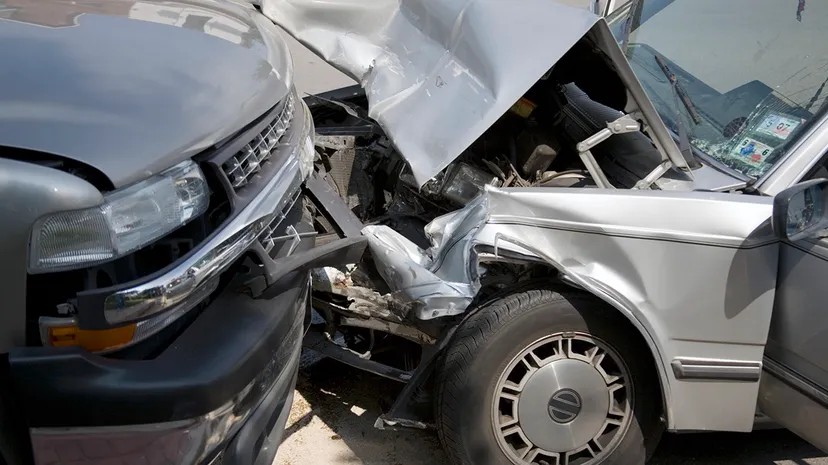
This is a nightmare scenario. Head-on collision. No time to correct.
Approach and avoidance in the brain
Cornell University psychologist Daniel Casasanto finds this explanation plausible. He linked this to emotional mapping in the brain.
There are two types of actions: approach and avoidance.
Approach emotions, we move in the direction of happiness, desire, etc. Avoidance emotions keep us away from disgust and fear. Scientists have long believed that these are physically mapped in the brain. Happiness is controlled by the right brain. Fear was left-brain dominant.
This neural arrangement affects reflexes. When a threat occurs, avoidance mechanisms are activated. Right-handed people can avoid danger if their hands are strong (right). If you are left-handed, your strong hand is in a dangerous position (on the left).
The design of the car assumes right-handed reflexes. The driver’s biology is often left-handed. The two don’t go together.
The Reality of Driving Left
Does this mean that left-handed people shouldn’t drive? No.
This means there is less room for error. Right-handers have more leeway. Their natural reaction is to stay on the shoulder or in the slow lane. The left’s natural reflexes push them into the fast lane. Move into the path of other vehicles.
Most left-handers adapt. They learn to hold the handle differently. They learn to suppress their reflexes. But in a moment of panic, muscle memory wins.
The world was not made for you. Your car was not made for you. And the brain’s emergency response can have a negative effect on you.
So drive carefully. Keep both hands on the wheel. And be careful. Because in a right-handed world, left-handed reflexes can be the difference between scare and a crash.
Handedness and the neuroscience of driving
The emotional structure of the brain is not fixed. It flips depending on which hand you prefer.
For a long time, we have thought that right-handedness is the default setting for human emotion. However, studies show that left-handed people experience the exact opposite wiring. In right-handed people, the left hemisphere is responsible for processing “good” emotions such as desire and engagement. The right side is responsible for avoiding “bad” things like fear and disgust. This is consistent with our cultural bias. We associate the left side with negative things and the right side with positive things.
Left-handers break this rule. For them, emotional poles are reversed. The left hemisphere controls approach. The right brain controls avoidance.
“How we conceptualize emotions is determined by how we interact with the world at hand,” says researcher Dimitris Casasanto. “We know this to be true because the saying ‘right is good and left is bad’ is found across languages and across cultures and in the unconscious minds of right-handed people. But despite everything language and culture tell us, the exact opposite is true in the minds of left-handed people.”
Why Left-Handed Drivers May Struggle with Avoidance
This neurological twist directly affects how lefties drive. In particular, it affects how they handle sudden hazards on the road.
When a left-handed driver sees an obstacle, the brain triggers an avoidance response. In a right-hander, this usually means using your dominant hand to pulling the steering wheel to the right (away from the threat). However, for left-handed people, the avoidance mechanisms are wired to the right side of the brain. This often causes involuntary movements of the right (non-dominant) hand.
The result? The response of the dominant left hand to signals from the right hemisphere can push the wheel to the left or pull it counterclockwise. This can be dangerous if you are trying to avoid objects on the right side of your lane.
It seems counterintuitive that someone would use their weak hand to block a threat. Think of it as a duel. His dominant hand is a sword that he uses to attack or dominate. The dominant hand and the opposite hand are the shield. Use for bending. A panic shield wearer can pull back on the steering wheel in a way that is instinctive to the driver, but has serious consequences for the flow of traffic.
The Limits of Handedness Theory
Of course, we haven’t staged crash tests to prove this in real time. It remains a hypothesis. An intriguing one, but it has yet to be proven in the chaos of rush hour.
We tend to overthink handedness. Just like the color of your eyes or skin, the hand you throw with doesn’t define your humanity. Historian Kushner cautions against assigning too much weight to these physical traits.
Kushner said: “Different characteristics like handedness, eye color and other things that make people look different … we shouldn’t overly burden them with having some kind of deeper meaning than they actually do.”
But the meaning is there. It’s not mystical. This is mechanical. How we interact with our environment determines how we learn. Our hands are the most important interface between us and the world.
The Evolutionary Puzzle of Left-Handers
Why are left-handers so rare? They make up only about 10 percent of the world’s population.
A 2012 study from Northwestern University offers a biological explanation rooted in social evolution. Mathematician Daniel Abrams suggests that cooperation is the key. The efficiency of highly social animals depends on everyone moving in sync. If you’re in a herd or a team, having everyone hold tools and weapons in their right hand will reduce conflict and improve coordination.
“Social animals, animals that value cooperation, tend to be more one-sided,” Abrams explains. “The most important element of a productive society is high cooperation. In humans, this leads to more right-handed people.”
In other words, right-handed people win not because they are biologically superior, but because they are socially comfortable. Left-handedness exists because there are always individual differences. These are anomalies in a system built for uniformity.
Here’s the thrill. We build roads, cars and culture for the most people. However, some work on different discs.