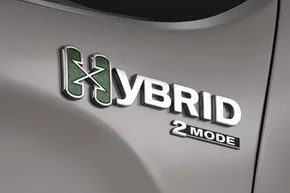
It’s a mystery that leaves you staring at an empty spot on your trunk. The badge is gone. You didn’t lose it. It wasn’t a prank. Someone reached over, peeled it off, and took it. Without a confession, we’re guessing blind. But we can look at the motives. We can look at the mechanics. And we can look at the weird culture of car badging.
The Rational Theory: Free Parking and HOV Lanes
People love a shortcut. Especially if it saves money. Some cities offer free parking for electric or hybrid vehicles. That’s a real perk. A thief might steal your badge to slap it on their gas-guzzler. They want to park for free. They want to cut through HOV lanes with just the driver.
This is where logic hits a wall. Most states require a special sticker or plate for those lanes. New Jersey is an exception. The state police say they can spot a hybrid without a sticker. So the risk is high. The reward is low. You’re not getting free parking if the cop pulls you over and sees a 2005 Camry wearing a Prius badge. It looks foolish. It draws attention.
The Economic Angle: Is There a Market?
Could the thief sell it? Maybe. But the market for used badges is thin. A quick check of online auction sites shows almost no demand. Two listings. Zero bids. These are likely legitimate sellers, not criminals. Economic crimes usually follow demand. There isn’t much demand for a plastic or chrome emblem from a green car.
Unless, of course, it’s a government-issued HOV permit. Those have value. But a generic badge? Not so much. It’s unlikely someone stole your emblem to buy groceries.
The Irrational Angle: Teenagers and Collecting
Here’s the uncomfortable truth. Statistics are scarce. But anecdotal evidence points to one group: teenagers. It’s a global phenomenon. India. Sweden. South America. In Peru, rental contracts even include “Car Emblem Theft Protection.” It’s that common.
In England, it’s endemic. The youth treat it like a sport. America has its own history. Remember the Simpsons episode? Nelson swiped the hood ornament from Superintendent Chalmers’ Honda. It’s classic. It’s petty. It’s funny until it happens to you.
Why do they do it? We don’t know. Some might make necklaces. Some might just want the prestige of a “green” car on their own beat-up pickup. It’s a joke. It’s a status symbol they can’t afford to buy. The irony? You can buy a generic hybrid badge online for under $8. The thief is being silly. Or stupid. Or both.
The Mechanics of Removal
How do they get it off? Fast. They’re in a hurry. Most side badges are flat. They use strong, moisture-resistant adhesive. Hood emblems sometimes use studs. Thieves don’t care about your paint. They use screwdrivers. They pry. Hard. This scratches the clear coat. It damages the body panel. It leaves a mess you’ll have to fix.
Legitimate owners? They take their time. They use heat. A hair dryer or heat gun softens the adhesive. Then comes the careful part. They use fishing line or dental floss to saw through the glue. They protect the paint. Thieves don’t. They just want the trophy.
Debadging vs. Theft
Imagine this. You’re driving. You see a kid prying a badge off a Honda in a driveway. Your instinct says call 911. Stop. Think.
Maybe they’re debadging their own car. Removing emblems is a customization trend. It’s old school. Go back to the 1940s and ’50s. Customizers loved to “dechrome” their rides. Remove the badges. Clean up the lines. The “nosed and decked” 1950 Mercury in Rebel Without a Cause is a famous example. James Dean drove it. It looked aggressive. Minimalist.
So is that kid a thief or a fan? Hard to say from the street. But it’s a distinction that matters. One is a crime. The other is car culture.
The Verdict
Most badge thefts aren’t rational. They’re impulsive. They’re about the thrill. Or the collection. Or the prank. The hybrid badge is just a shiny target. It represents something people want but can’t have. Or something people hate. Either way, the badge ends up in a pocket. Or a trash can. Or a necklace chain.
You’re left with the scratch. And the question. Who took it? And why? The answer probably doesn’t matter. But the repair bill does.
How to Replace a Stolen Hybrid Badge Without Insurance
If the thief was clean about it, your paint might be untouched. In those cases, you can skip the insurance claim and handle the replacement yourself. Most hybrid owners deal with this because their cars are recent models. That works in your favor. You can order a direct replacement from the dealership or hunt down aftermarket options from specialists who catalog late-model badges.
A simple online search for your specific model usually reveals the parts counter. Pricing is generally reasonable. A Ford Escape hybrid emblem runs about $35. You can grab a pair of Toyota Prius badges for roughly $37. Before you buy, ask the parts manager if special primers are needed for the adhesive. Some surfaces require specific chemicals to ensure the bond holds.
The real headache isn’t the badge. It’s getting it back in the exact same spot. Don’t scrub the car yet. The old adhesive residue and grime act as a map. They show you exactly where the emblem lived. Use blue painter’s tape to mask off the area. This frames the footprint and protects the surrounding paint. It gives you a precise target. If you have a reference vehicle, take photos. Measure the distance from the centerline or taillight.
Make a paper template. Trace the badge shape and cut it out. Hold it up with masking tape to test the fit. Once you are satisfied, mark the position with a grease pencil. Remove the template. Now you can clean the surface. Use a hair dryer to warm the old adhesive so it peels off easier. Follow up with a tar remover or paint-safe cleaner. When the area is clean, wipe it with rubbing alcohol. But don’t wax the car yet.
Practice the placement a few times. Align the new badge without peeling the backing. Get a feel for the angle. Then, go for it. Apply it firmly. Wait for the adhesive to cure before waxing over it.
“The best approach is to use the old residue as a guide rather than cleaning the area immediately.”
The Black Market for Stolen HOV Decals
The theft problem went deeper than just badges. Between mid-2005 and early 2007, California handed out 85,000 stickers. These allowed single-occupant use of HOV lanes through 2010. The eligible vehicles included clean alternative fuel cars and full-electric models. The Toyota Prius, Honda Civic Hybrid, and Honda Insight were popular targets.
Once the government ran out of stickers, a black market emerged. Thieves didn’t just want the plastic decal. They couldn’t peel them off without damaging the paint. So they stole the entire rear bumper fascia. The whole assembly went missing.
Victims could apply for a replacement sticker from the state. But the black market value for the stolen part was huge. A California Toyota dealership parts manager, speaking anonymously, reported rumors of stolen Prius fascias with HOV stickers selling for around $2,000. That is a steep price for a piece of plastic and sheet metal.
The market for used stickers kept the theft ring profitable. It wasn’t just about vanity. It was about saving money on tolls and time in the carpool lane. The demand drove the price of the bumper up. And the cycle continued until the allocation ended.
If you own one of these older hybrids, check your bumper. Look for mismatched paint or fresh sealant. It might be a sign the fascia was swapped out illegally. Or it might just be a repair from a minor fender bender. Hard to say for sure. The black market for HOV stickers was a fleeting but expensive problem for California hybrid owners.