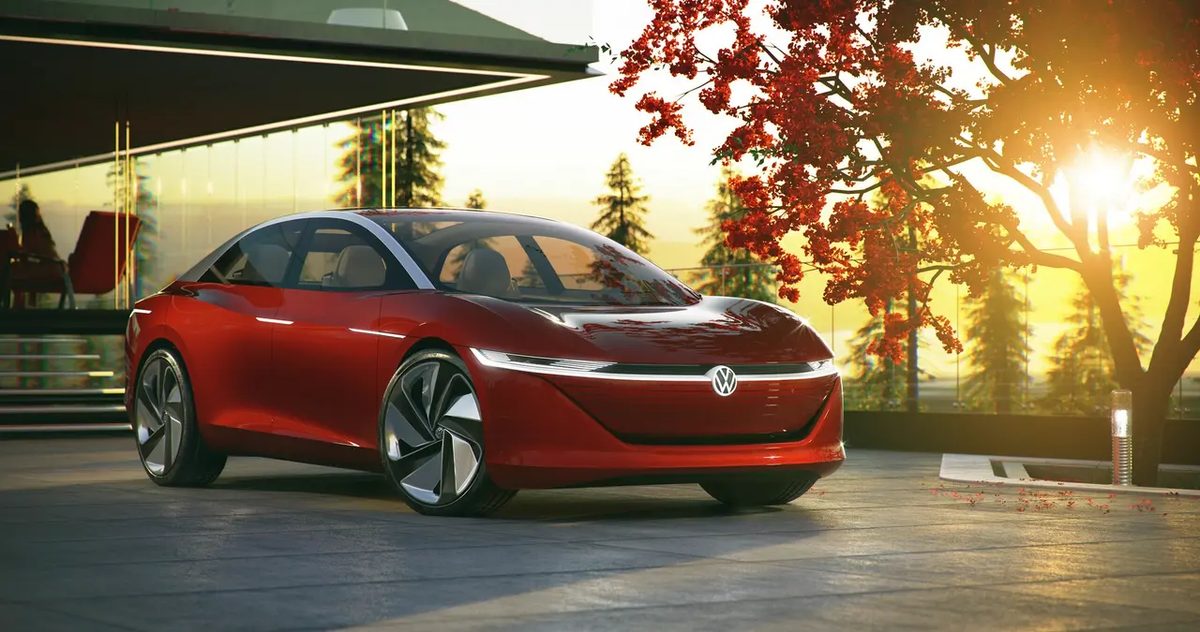
Volkswagen has been constantly releasing its upcoming electric lineup, and the latest release is the ID Vizzion. This concept car is more than just a preview. This sedan will define the brand’s premium electric lineup by 2020. The sedan joins three other concepts: the compact ID city car, the ID Crozz SUV (both due for release in 2020) and the retro-style ID Buzz minibus (scheduled for 2022).
Vizzion pushes the timeline even further, all the way to 2030. Under the hood (or better, under the floor) is a powerful transmission. This is an all-wheel drive electric sedan that produces 302 horsepower. Energy is produced by a large 111 kWh battery pack, which is built directly into the floor between the axles. This is the same architecture used by Porsche in the Mission E.
Real-World Range vs. The Competition
Volkswagen claims this setting, which takes brake energy regeneration into account, yields a range of 665km on the WLTP cycle. Looking at the matter, it can be stated that the range of the Tesla Model S 100D is approximately 540 kilometers. Vizzion has a significant lead on paper.
But the numbers only tell half the story. What’s really amazing is how the car interacts with you.
The Death of the Steering Wheel
Enter the ID Vizzion and the traditional cockpit disappears. There is no dashboard. No steering wheel. There are no pedals. Human-computer interfaces are completely dependent on voice commands and gestures.
ID Vizzion is a level 5 autonomous vehicle. It requires no driver intervention other than setting the destination.
Volkswagen describes this as a true “robot taxi” experience. Artificial intelligence is responsible for driving, navigation and even the cockpit environment. Facial recognition technology scans passengers and automatically adjusts seat position, lighting and screen settings to individual preferences.
Augmented reality and health monitoring
Technology is getting weirder. Passengers can also use Microsoft HoloLens augmented reality headsets. These project virtual interfaces onto physical cabin elements, connecting digital information to the real world.
Volkswagen says the headsets can also monitor vital signs. If the system detects that a passenger is overheating, it can adjust the local climate control to specifically cool the passenger. This is a vision of the future of personal comfort.
However, don’t expect to buy this version tomorrow. Volkswagen has confirmed that this fully driverless, VR-integrated concept is a long-term goal. They plan to later release a more “traditional” version of the Vizzion with a steering wheel and pedals. A release date for this iteration remains unspecified.
For now, Vizzion is stands as a bold statement. It’s not just an electric car. This is a sign that the interior of the car is becoming bigger than the power system. Whether people voluntarily let go of the wheel is a different matter.