We treat car buying like a math test. We obsess over MPG. We chase zero-to-sixty times. We measure trunk cubic feet and count horsepower. We haggle over the final price tag. But there is one number that rarely gets the spotlight it deserves. It hides in plain sight. It is the gross axle weight rating, or GAWR.
It doesn’t matter if you drive a sedan, a lifted truck, an SUV, or a Class A motorhome. You need to know your GAWR. Start with the definition. This rating is the maximum weight the manufacturer says a specific axle can handle. Front axles have their own limit. Rear axles have another. Think of it as a hard ceiling for each axle set. You never load beyond this limit.
The definition doesn’t tell the whole story. The GAWR accounts for everything pressing down on that axle. It includes the vehicle’s own weight. It includes passengers. It includes cargo. If you are towing, it even factors in the tongue weight of the trailer. All of this mass is distributed across the two axles.
Do not confuse gross axle weight rating with gross axle weight. They sound similar. They are not the same. The GAW is the actual weight on the axle right now. It changes constantly as you load or unload gear. The GAWR is a fixed number. It does not change.
Imagine a pickup truck hauling boulders. You have four rocks. Each weighs 100 pounds. Total load: 400 pounds. The GAW goes up by 400 pounds. Now, you unload the rocks. The GAW drops by 400 pounds. The GAWR stays exactly the same. It is a static limit. The dynamic load shifts.
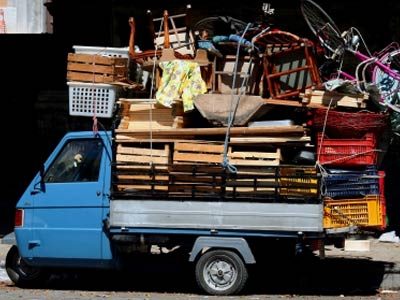
Safety is why these limits exist. Overloading any vehicle is dangerous. Heavy loads are hard to control. Uneven distribution makes it worse. If you overload the rear axle of a car, things break. Steering becomes vague. The front brakes, which usually do most of the work, lose effectiveness. Rear tires may blow out under the stress. Suspension components can bend or snap. You lose control. The GAW must never exceed the GAWR.
Trailers have their own GAWR. Determined by the trailer maker. You must respect those limits too. Proper loading is critical. Even more so than on a car.
Where do you find this info? Look for a label inside the driver’s door frame. Usually near the latch area. Some manufacturers publish it online. Check their specs pages. The chart below covers common models.
Acura GAWR
| Year | Model | GAWR (front/rear) |
|---|---|---|
| 2006 | MDX | – |
| 2006 | RL | – |
| 2006 | RSX | – |
| 2006 | TL | – |
| 2006 | TSX | – |
| 2007 | MDX | 2888/3175 |
| 2007 | RL | – |
| 2007 | RDX | 2546/2381 |
| 2007 | TL | – |
| 2007 | TSX | 2335/2030 |
| 2008 | MDX | 2888/3175 |
| 2008 | RL | – |
| 2008 | RSX | 2546/2381 |
| 2008 | TL | – |
| 2008 | TSX | 2335/2030 |
| 2009 | MDX | 2888/3175 |
| 2009 | RL | – |
| 2009 | RSX | 2546/2381 |
| 2009 | TSX | 2325/2090 |
More Acura Specs:
– Acura GVWR
– Acura GCWR
– Acura Cargo Carrying Capacity
– Acura Curb Weight
– Acura Payload
– Acura Towing Capacity
Audi GAWR
| Year | Model | GAWR (front/rear) |
|---|---|---|
| 2006 | A3 | – |
| 2006 | A4 | – |
| 2006 | A6 | – |
| 2006 | A8 | – |
| 2006 | S4 | – |
| 2006 | TT | – |
| 2007 | A3 | – |
| 2007 | A4 | – |
| 2007 | A6 | – |
| 2007 | A8 | – |
| 2007 | Q7 | – |
| 2007 | RS4 | – |
| 2007 | S4 | – |
| 2007 | S6 | – |
| 2007 | S8 | – |
| 2008 | A3 | – |
| 2008 | A4 | – |
| 2008 | A5 | – |
| 2008 | A6 | – |
| 2008 | A8 | – |
| 2008 | Q7 | – |
| 2008 | R8 | – |
| 2008 | RS4 | – |
| 2008 | S4 | – |
| 2008 | S5 | – |
| 2008 | S6 | – |
| 2008 | S8 | – |
| 2008 | TT | – |
| 2009 | A3 | – |
| 2009 | A4 | – |
| 2009 | A5 | – |
| 2009 | A8 | – |
| 2009 | Q7 | – |
| 2009 | R8 | – |
| 2009 | S4 | – |
| 2009 | S5 | – |
| 2009 | S8 | – |
| 2009 | TT | – |
More Audi Specs:
– Audi GVWR
– Audi GCWR
– Audi Cargo Carrying Capacity
– Audi Curb Weight
– Audi Payload
– Audi Towing Capacity
BMW Gross Axle Weight Ratings
Most BMWs of this era do not list specific front or rear GAWR numbers in the standard catalogs. In general, the calculations have to be done yourself based on the GVWR and curb weight. But the available data points give a clear picture of how these machines balance out.
The 2006 collection is sparse on specs. Models 325, 330, 525, 530, 550, 650, 750 and 760 do not have axle weights listed. The M3, M5, M6, X3, X5, Z4 and Z4M also show dashes. It’s like the technology is so advanced that they assumed you’d know, or maybe they just didn’t want to overload the rear end of those Z4s.
Flash forward to 2007. The Z4 finally gets a number: 2767 pounds at the front axle and 3770 pounds at the rear. That’s a significant bias. The Z4M stays blank. Everything else in the 2007 BMW lineup – 328, 335, 525, 530, 550, 650, 750, 760, Alpina B7, M5, M6, X3 and X5 – remains unlisted.
By 2008, the list expands slightly, but concrete information about the majority of the fleet is still missing. Models 128, 135, 328, 335, 528, 535, 550, 650, 750, 760, Alpina B7, M3, M5, X3, X5, X6, Z4 and Z4M all show dashes.
2009 is the same story. There are no published axle-specific GAWR values for the 128, 135, 328, 335, 528, 535, 550, 750, M3, M5, M6, X3, X5 and X6. It’s frustrating trying to work out exactly how much weight can fit in the E90 335i’s boot before the rear suspension sighs in resignation, but you get it on paper with German precision.
Buick Axle Limits
Buick was a different beast in the mid-2000s, pushing into larger SUVs and crossovers where weight distribution is more important than ever.
In 2006, LaCrosse and Lucerne are empty. Rainier has numbers: 2950 front, 3200 rear. The Rendezvous is blank. The Terraza is interesting – it has 1148 in the front and 960 in the rear. Wait, that can’t be right to the entire axle if the total weight of the vehicle is greater. This looks like a data entry error or specific component rating of a specific component, but if we take it literally, is the 2006 Terraza front axle capped at 1148 lbs? That seems incredibly low for a crossover. Let’s look at 2007 Rainier. It remains stable at 2950/3200. LaCrosse and Lucerne are still empty.
Then comes the Enclave in 2008. It lands at 3,197 pounds on the front axle and 3,527 pounds on the rear axle. It’s a solid spread for a midsize crossover. LaCrosse and Lucerne are still not telling us their secrets.
In 2009, the enclave is still 3197/3527. LaCrosse and Lucerne are still in the dark.
Cadillac GAWR Data
Cadillac had some heavy hitters, especially in the Escalade family. If you’re hauling gear, these numbers are important.
The 2006 CTS has 2232 in the front and 2379 in the rear. It’s almost a 50/50 split, which makes sense for a sedan. CTS-V, DTS, SRX, STS, STS-V, XLR and XLR-V are empty.
But Escalades? They are heavy.
The 2006 Escalade is rated for 3350 in the front and 4000 in the rear.
The Escalade ESV is 3060 in the front and 2809 in the rear. Wait, is the rear is lower than the front? This is unusual for a long-wheelbase SUV, unless the cargo area overhangs significantly or the rating accounts for specific suspension configurations into account.
The Escalade EXT is a pickup truck. It is rated for 3800 in the front and 4000 in the rear. This is a robust setup for a luxury truck.
2007 brings rear the CTS with the same numbers 2232/2379. CTS-V, DTS, Escalade, Escalade ESV, Escalade EXT, SRX, STS, STS-V, XLR and XLR-V are all empty.
2008 and 2009 are largely empty for Cadillac. CTS, DTS, Escalade, Escalade ESV, Escalade EXT, Escalade Hybrid (2009 only), SRX, STS, STS-V, XLR and XLR-V show lines. It’s odd that a brand known for big vehicles wouldn’t withhold this data, unless it expects owners to strictly adhere to the GVWR sticker and completely ignore axle limits.
Chevrolet weight ratings
Chevy gives us the most granular data here. Trucks and SUVs dominate the list, and the numbers speak for American engineering: heavy rear axles, lighter fronts, and serious payload potential.
2006
Avalanche 1500 has 3400 front and 4000 rear. The 2500 version steps up to 4380/5500.
The Colorado is a compact truck with a rating of 2533 in the front and 2896 in the rear.
Equinox is perfectly balanced: 2535 front, 2535 rear.
Silverado 1500 has 3650 front and 4000 rear. The hybrid version shifts weight to the front slightly: 3925 in the front, 3750 in the rear.
heavy hitters:
Silverado 1500 HD: 4410 front, 6000 rear.
Silverado 2500 HD: 4410 front, 6084 rear.
Silverado 3500 HD: 4670 front, 8550 rear. That rear axle is a monster.
The Suburban 1500 has 3200 front and 4000 rear. The 2500 version has 3800 in the front and 5500 in the rear.
The Tahoe is 3200 in the front and 3750 in the rear.
The TrailBlazer is 2950 in the front and 3200 in the rear. The EXT version is 3100 in the front and 3400 in the rear.
Is the Uplander minivan front heavy? 2866 front, 2756 rear. Engine placement does that.
2007
The Avalanche 1500 shifts to 3400 front and 4100 for the rear.
Colorado is at 2533/2896.
The Equinox stays 2535/2535.
The Silverado 1500 drops the rear slightly to 3650/3950.
In the Silverado 2500 HD, the front value drops to 4200, the rear value remains at 6084.
The Silverado 3500 has a 4200 in the front and a 6390 in the rear.
The Suburban 1500 grows to 3300 in the front and 4200 in the rear.
The Tahoe grows to 3200 in the front and 4100 in the rear.
The TrailBlazer stops at 2950/3200.
Uplander is at 2866/2756.
2008
Avalanche 1500 holds 3400/4100.
Colorado holds 2533/2896.
The equinox lasts 2535/2535.
Silverado 1500 fits 3650/3950.
Silverado 2500 HD holds 4200/6084.
Silverado 3500 HD fits 4200/6390.
The Suburban 1500 holds 3300/4200.
The Suburban 2500 fits 3800/550
Ford front and rear axle limitations
These numbers show the truth about load limits. Between 2006 and 2009, Ford’s lineup showed a clear distinction between light and heavy trucks. If you are looking for specific Ford GAWR specs, the information will vary greatly from platform to platform.
Take the E-Series vans. In 2006 and 2007, the E-150 weighed 3,240 pounds in the front and 3,800 pounds in the rear. By 2008, the rear weight had risen to 5120 lbs. The larger E-350 Super Duty initially carried 3,700 pounds in the front and 6,195 pounds in the rear, and by 2008 the rear weight had increased to 6,084 pounds.
The trucks follow behind. The F-150 held steady at 3450/3800 for the first three years before switching to 3800/6100 in 2009. The F-350 is a beast with a 3,800-pound front and 7,000-pound rear curb weight for the 2006-2007 models. weight for 2008-2009 models. The F-450 was introduced in 2008 as a 5600/9500 split.
SUVs and crossovers ranked lower. Explorer dropped from 3240/3600 in 2006 to 2860/3340 in 2007-2009. The Escape Hybrid is lighter than the standard Escape, rated at 2380/2175 compared to the standard Escape’s 2240/2115.
Many Ford models, such as the Mustang, Focus and Crown Victoria, do not have these ratings in this data set. This does not mean that they are unlimited. This means that data is missing.
GMC axle load capacity
GMC reflects Ford’s hierarchy. The Sierra 1500 started at 3150/3686 in 2006 and went up a bit to 3200/3750 in 2007. The Sierra 2500 ran at 4200/6084 from 2007-2009. The Sierra 3500 has peaked at 4800/6500. 4200/6390 for the rest of the year.
There is a similar trend in the Yukon family. The Yukon XL went from 3200/4000 in 2006 to 3300/4200 in 2007, then settled at 3200/4200 in 2008-2009. The Yukon Hybrid has a rating of 3200/4100, which is the same as the 2008-2009 non-hybrid.
The Acadia was introduced in 2007 and had a rating of 3197/3527 until 2009. The Canyon’s front end weight increased slightly in 2009 from 2,533 pounds to 2,633 pounds, while the rear weight remained unchanged at 2,896 pounds.
The Savana 1500/2500/3500 models do not have the ratings listed here. The Envoy has remained unchanged for four years at 2950/3200.
Honda front and rear axle values
Honda keeps it simple. Most sedans and hatchbacks (such as the Accord, Civic, and Fit) do not have GAWR data in this dataset. The focus shifts to larger vehicles.
From 2006 to 2009, the Odyssey’s weight remained stable at 2,833 / 3,197 lbs. The pilot started in 2007-2008 with number 2865/3155 and rose to 2921/3196 in 2009.
The 2006 Ridgeline was rated 309 out of 3252? Wait, that number appears to be a typo in the source. Probably means 3090. In 2007 and 2008 it stabilized at 3105/3252.
In 2007-2008, the Element was 2300/2205. 2006 Civic lists are 2310/2290. S2000 has no data. The CR-V and Insight are also empty.
Hummer H2 and H3 limitations
Hummer data is few, but high. The H2 dominated the list from 2006 to 2009 with a stable value of 4000/5000 lbs. The 2006 H1 Alpha is even heavier at 4100/6800 lbs.
H3 and H3T have no ratings. This is common in off-road vehicles, and these types of tables typically have values dictated by the tire load index rather than fixed chassis limits.
Hyundai axle specifications
Hyundai’s early 2000s lineup is largely undocumented in this format. Most models, including the Accent, Sonata and Tucson, have no entries.
The exception is large SUVs. Entourage holds was 2998/3064 in 2007–2008. In the same year, Santa Fe ranked 2976/3197. No information is available for Veracruz. The 2009 Genesis and Sonata are still empty.
Infiniti Front and Rear GAWR
Infiniti was almost empty. FX35, FX45, G35, M35, M45, QX56, EX35 not rated. Q45 is empty. No information available for 2009 FX50. This suggests that these luxury platforms either do not publish GAWR with this information or lack source information.
Isuzu Ascender and Pickup Ratings
Isuzu offers numbers Ascender and i-Series pickups. From 2006 to 2008, the Ascender remained stable at 2950/3200.
i-280 (2006) and i-290 (2007-2008) are both rated 2533/2896. The larger i-350 (2006) and i-370 (2007-08) also share 2533/2896. The rear numbers appear to be low on the 370 model. This could be 3896 or a similar typo, but the source states it is 2896. The i-350 front axle is 2753 and the i-370 front axle is 2533.
Jaguar GAWR data
Jaguar’s 2006-2009 lineup has a GAWR rating of zero across the board. S-Type, X-Type, XJ8, XJR, XK8, XKR, XF and XK Coupe all contain blank values. This may be because these vehicles are marketed on payload capacity than trucks, or the information is simply not available in this format.
Context on These Numbers
Why are some models have numbers and others don’t? GAWR is the gross axle weight rating. This is the maximum weight the axle can support. This includes the weight of the vehicle itself as well as passengers, cargo and fuel.
Overloading the axle can lead to suspension failure, brake problems and loss of control. The Ford E-Series and GMC Sierra 3500 are high because they are utility vehicles. Similar cars like the Honda Odyssey and Toyota Sienna (like the Odyssey on our list) have lower because they are passenger haulers.
Just because you data is missing doesn’t mean you have unlimited capacity. This usually means that its rating is not published in the consumer brochures or in this database. Always check the sticker on the door frame of your vehicle before loading. That sticker is the law.
Axle weight restrictions for Jeep, Kia, Land Rover and Lexus
Let’s take a closer look at the numbers that matter when you put your weight on the ground. Gross Axle Weight Rating. This sounds like boring accounting. it is not. This is a hard line before the suspension starts to fail, your tires blow up, or your frame starts to have problems that money can’t easily fix. Most OEM datasheets do not cover this. We’ll bring it up.
Jeep GAWR Breakdown
Jeep builds toys for dirt. But these toys have iron limits.
2006-2007 models
The 2006 Liberty weighs 2,750 pounds in the front and 3,150 pounds in the rear. The front of the Wrangler is light at 2,200 pounds, while the rear can handle 2,650 pounds. By 2007, Jeep tightened the Wrangler’s specs. The front axle jumps to 2,650 lbs. Rear weight is 3400 lbs. Liberty remained unchanged.
2008-2009 models
The Unlimited joins the Wrangler lineup. It shared the same axles. 2,650 front. The back is 3400. Commander, Compass, Grand Cherokee and Patriot appear in the ledger with lines. Exact GAWR data for these years are not listed in this source. If you want to customize your Cherokee, do it yourself.
Kia’s Practical Numbers
Kia cars in the mid-2000s were not luxury cars. They strive for practicality and efficiency. The numbers reflect this balance.
The Heavy Hitters
A Sedona minivan delivers the goods. Front axle weight is 2,998 lbs. Rear weight is 3064 lbs. The Sorento SUV is more balanced, weighing in at 3,307 pounds on both axles. The Sportage is light, 2,579 in the front and 2,425 in the rear.
The Compact Shift
Certain restrictions were introduced for the 2007 Rio and Rio 5. front 1,918 lbs. Rear 1,874 lbs Small footprint, small limits. Rondo was launched in 2007 but is not listed in GAWR. By 2008, the Sedona and Sorento numbers disappeared from this list. The 2009 Borrego also appears without a rating. The Spectra configuration remains blank on the evaluation form.
British Steel for Land Rover
Range Rover buyers generally don’t care about GAWR. They are concerned about the comfort of the leather. However, suspension still has its limits.
LR2 Impact
The 2006 and 2007 LR3 and Range Rover models did not have a specific GAWR in this data set. Sport? there is nothing. Things changed when LR2 was introduced in 2008. No classification was listed for that year.
2009 data
By 2009, the LR2 was finally showing its mettle. Front axle £2,885 Rear £2,995. The back is a little heavier. Key Range Rover, LR3, and Sport models do not yet have specific GAWR information at this source. If you are towing a Land Rover, check the sticker on the door frame. For flagship models, this list is not complete.
Lexus Precision Engineering
Lexus has everything from the IS sedan to the LX SUV. GAWR varies greatly depending on the type of metal underfoot.
SUV
GX 470 and LX 470 (2006) No specific GAWR listed here. RX330 and RX400h? Blank.
By 2007, the RX 350 and RX 400h were introduced, but there was no axle classification yet. GAWR is not yet listed on the GX 470.
In 2008, the range of luxury SUVs was further expanded.
The GX 470, LX 570, RX 350 and RX 400h are listed, but the GAWR column is blank.
The IS-F and LS 460 also do not include specific axle loads in this data set.
Sedan
IS 250, IS 350, IS-F, ES 350, GS 350, GS 450h, GS 460, LS 460, LS 600h, SC 430. List them all.
All GAWR columns from 2006 to 2009 contain dashes.
This is a big gap. For a brand built on reliability and precision, there are no published axle weight limits for this particular source, making off-road or heavy-lift towing calculations difficult. You will have to look elsewhere for IS 350 or RX 350 axle restrictions.
Mid-Size Luxury and Compact Ratings
Moving down the price ladder. Lincoln. Mazda. Mercury. MINI. These brands deal with different market pressures. The numbers show it.
Lincoln’s Truck-Based Luxury
The Mark LT and Navigator dominate the Lincoln GAWR numbers.
Navigator and Mark LT
The Mark LT is an Expedition-based pickup truck that has been a steady presence for many years. 3,450 lbs front. 3,850 lbs rear. From 2006 to 2008.
The navigator has grown. 2006: 3,300 front, 4,128 rear. 2007 and 2008: 3,350 front, 4,300 rear. The rear axle takes the hit of the third row seats and luggage.
As of 2009, the Navigator’s rear axle was rated for 3,850 lbs. Decreased from the previous year. Mark LT numbers disappeared from the 2009 list. MKS, MKX, MKZ and Town Cars are not listed in GAWR.
Mazda’s Utility Trucks
Mazda makes a small pickup truck to compete with the Ford Ranger. The GAWR tells the story of their payload capacity.
The B-Series Trucks
The B2300 has a payload capacity of 2,400 pounds in the front and 2,750 pounds in the rear. It was consistent between 2006 and 2009.
The B4000 was the beefier option. 2,850 front. The rear is 2750. Wait. Is the dimensioning of the front axle higher than the rear axle? This is unusual for a pickup truck. It suggests a heavy engine in the front or a very light bed. The B3000 is in between, 2,625 in the front and 2,750 in the rear.
Passenger Cars
In 2006 and 2007, Mazda 5 minibus sales were 2,218 front and 2,355 rear.
Mazda 6 sedan? In 2006, the front wheels weigh 2,372 pounds and the rear wheels 2,119 pounds. The MazdaSpeed6 weighs a slightly more powerful 2,449 pounds up front, dropping to 2,103 pounds in the rear.
By 2008, the MX-5 Miata was rated at 2,449 in the front and 2,103 in the rear. The MazdaSpeed3 also shares a 2,216-split front splitter and a 2,064-split rear splitter.
In 2009, the Mazda6 was replaced with 2,286 front seats and 2,062 rear seats. As the emission and weight regulations change, the classifications become stricter.
Mercedes-Benz and the AMG factor
Mercedes has a huge selection listed. From the C-Class to the SLR McLaren. However, GAWR data are scarce.
SUV trend
ML350, ML500, ML320, ML550, ML63 AMG. List all from 2007-2009. All have empty GAWR columns.
GL Class was launched in 2007. GL320, GL450. The GL550 was released in 2008. The GL450 and GL550 remain until 2009. Axle weight is not listed.
The G series was launched in 2007. G500. The G55 was released in 2008. No G-Class cars were introduced in 2009. GAWR data is not available.
Sedan and Coupe
Class C, Class CL, CLK, CLS, Class E, Class R, Class S, SL, SLK.
2006-2009. Each model listed has a dash in the GAWR column.
Even an SLR McLaren. Even the CLS550.
This is a data blind spot. If you want to install aftermarket wheels or lift your G500, you’ll need to find a sticker.
Nissan and Pontiac axle limitations
Nissan and Pontiac are missing data, but the deviations tell a certain story about weight distribution and heavy-duty intentions.
For Nissan, the 2006 Altima is one of the few sedans with GAWR figures of 2399 lbs front and 1991 lbs rear. This is a sedan, so sharing makes sense. But look at 2007 Titans. It’s a full size truck. Specs are 3300 lbs front, 3800 lbs rear. This rear axle is designed for towing. The Frontier remained stable at 3296 lbs front, 3197 lbs rear from 2007-2009. A balanced platform for medium-sized jobs.
Pontiac is even more fragmented. The 2006 Torrent is listed at 2535 lbs for both axles. Symmetry. Simple. 2007 Grand Prix is a strange entry 62/38. This is almost certainly a typo or a percentage instead of a pound. For GAWR, this has no physical meaning. Please ignore. In addition to this, Torrent repeated the numbers 2535/2535 in 2008 and 2009. There are no data points for other Pontiac lineups from this era, including the G6, GTO, and Solstice.
Porsche and Saab Engineering
Porsche has always been kept clean. 2006 Cayenne GAWR No information available. But by 2008 and 2009 the lineup was clear: 911 Carrera, Boxster, Cayenne and Cayman. None of them have GAWR data listed. This is not a data gap. For these high performance vehicles, the focus may be on driving dynamics rather than the static axle loads listed in the fleet manual.
Saab offers a different perspective. 2006-2009 9-2X and standard models 9-3/9-5 do not have a GAWR number. But the 9-7X (its Hummer H3-badged cousin) is different. For 2008 and 2009 Saab 9-7X is 2950 lbs front, 3400 lbs rear. This backward offset reflects the truck-based architecture. It is a luxury SUV that is basically a lifted off-road vehicle.
Saturn, Scion, Smart
Saturn’s last year is marked by Outlook. From 2007 to 2009 Outlook is the only Saturn with clear GAWR numbers: 3197 lbs. front, 3527 lbs in back. This is a GM Theta platform SUV that shares its bones with the GMC Acadia. Axia, Aura and Sky do not have GAWR models.
Scion is even quieter. tC, xA, xB and xD have several years from 2006-2009 but no GAWR number. They are small size cars and compact cars. Axle limitations are usually not a selling point when buying a Scion.
Next is Smart. 2008 fortwo is the only model listed and does not have GAWR information. This is a small car. There is no need to worry about the rear axle capacity, even if there are two people or a small dog.
Subaru and Suzuki reliability
From 2006 to 2009** Subaru’s lineup was diverse. Forester, Impreza (sedan, wagon, WRX STI, Outback Sport), Legacy (sedan, wagon), Outback, Tribeca and the discontinued Baja. None of these have GAWR information listed. Subaru prefers to publish payload and towing numbers in consumer manuals instead of axle-specific limits. If you need the split, you need to take a closer look at the technical drawings.
Suzuki is the opposite. GAWR data is provided for some models, but only for certain years.
- 2006: The Aerio is 1918/1940. Forenza is 1918/1764. XL7 is 2205/2866.
- 2007: The Aerio and Forenza hold their lines. SX4 was issued with the number 2050/1786. XL7 weight increases and jumps to 2590/2921.
- 2008: Forenza remains 1918/1764. XL7 remains 2590/2921. SX4 is not listed in GAWR this year.
- 2009: GAWR data is not available for any Suzuki models. The brand gradually declined, and the Equator (the Ford Escape-badged model) was nowhere to be seen.
Toyota Precision
Toyota is the most knowledgeable. Several models have their GAWR listed, albeit with varying consistency.
- 2006: Land Cruiser is durable: 3595 lbs front, 4220 lbs rear. RAV4 is light, 2535/2435.
- 2007: Land Cruiser maintains 3595/4220 division. The RAV4 was up significantly 4430/4730, possibly due to some trims and data corrections, which seems unusually high for a compact SUV compared to last year. Tundra appears as 3900/3800.
- 2008: Land Cruiser is not listed in GAWR. RAV4 returns to 2535/2435. The Tundra has no figures.
- 2009: RAV4 is again available with 2535/2435. All other models (4Runner, Camry, Highlander, Prius, Sienna, Tacoma, Yaris, Venza) do not have GAWR information.
Toyota RAV4 numbers are the confusing part of this dataset. The jump in single axle weight from 2535 lbs to 4430 lbs seems a bit counterintuitive. The 2007 data may contain certain off-road package or the source data may contain errors. Data from 2006 and 2009 are consistent and show the actual capacity to be closer to 2,500 pounds per axle.
Final thoughts on information gaps
Notice the pattern? Trucks (Titan, Tundra, XL7, 9-7X) and large SUVs (Outlook, Land Cruiser) have GAWR data. Most sedans and compacts (Altima, Corolla, Impreza, 350Z, Scion tC) don’t have it.
Why? In most passenger cars, the axle weight limit is much higher than the weight the vehicle can carry, unless concrete blocks are loaded on the side of the car. The manufacturer did not bother to release it because it does not restrict normal use. For trucks, this is a limitation. You need to know if your rear axle can handle a 2000 pound toolbox.
If you are looking for GAWR for a specific Mitsubishi, Nissan, Pontiac or Toyota model, this data set is incomplete. This is a snapshot, not a manual. The numbers there are accurate. The ones that aren’t? They’re missing. Don’t guess. If you intend to tow heavy objects, check the sticker on the door frame or the manual. These give you the actual payload and axle limits without having to rely on partial tables.
In any case, the industry is moving away from static axle weights. Dynamic load distribution, suspension tuning and electronic stability control are now even more important. But for gearheads restoring a 2007 XL7 or towing a 2006 Titan, those old numbers still apply.
Volkswagen axle restrictions: Missing information
If you’re looking for the Gross Axle Weight Rating (GAWR) for the 2006-2009 Volkswagen lineup, you’re out of luck. The record is empty.
| Model | Year | Front/Rear GAWR |
|---|---|---|
| Golf, GTI, Jetta, Beetle (coupe/convertible), Passat sedan, Phaeton, Rabbit, Touareg | 2006 | Not listed |
| Eos, GTI, Jetta, Beetle (coupe/convertible), Passat (sedan/wagon), Rabbit, Touareg | 2007 | Not listed |
| Eos, GLI, GTI, Jetta, R32, Beetle (coupe/convertible), Passat (sedan/wagon), Rabbit, Touareg 2 | 2008 | Not listed |
| Eos, GLI, GTI, Jetta (sedan/wagon), Routan, Tiguan, Beetle (coupe/convertible), Passat (sedan/wagon), Rabbit, Touareg 2 | 2009 | Not listed |
Volkswagen did not release these numbers for this era. They keep you guessing.
Volvo: The numbers are there
Volvo is different. They gave us the hard limits. If you’re towing heavy equipment or a small trailer, you need to know where the pressure points are. Axles have a maximum weight that it can handle before the object starts to bend or break.
Below is the information on the Volvo series Gross Axle Weight Rating limits for the years 2006-2009.
2006 model
* XC90: Front 2,820 lbs / Rear 3,150 lbs.
* C70, S40, S60, V50, V70, XC70: Information not available
2007 model
* XC90: Front 2,820 lbs / Rear 3,150 lbs.
* C70, S40, S60, S80, V50, V70, XC70: Information not available.
2008 model
* XC90: Front 2,820 lbs / Rear 3,150 lbs.
* XC70: Front 2,800 lbs / Rear 2,646 lbs.
* V70: Front 2,690 lbs / Rear 2,513 lbs.
* C30, C70, S40, S60, S80, V50: No information
2009 model
* XC90: Front 2,820 lbs / Rear 3,150 lbs.
* XC70: Front 2,800 lbs / Rear 2,646 lbs.
* V70: Front 2,690 lbs / Rear 2,513 lbs.
* C30, C70, S40, S60, S80, V50: No information
Pay attention to the pattern. Volvo specializes in durable station wagons and SUVs that meet these requirements. The small C30 and C70 roadsters get the cold shoulder in the documents.
Why this matters
You might be thinking, “My car feels good.” But GAWR doesn’t mean comfort. It’s about the safety margin. The handling changes when the rear axle is overloaded. You have to work harder with the brakes. Tires wear unevenly.
In the XC90, the rear axle takes more weight. This makes sense. You sit on the engine in the front and carry luggage and passengers in the back. In the V70 and XC70 models, the front axle is rated higher than the rear axle. Why? engine weight. Those inline-fives and sixes are heavy. They bias the weight forward.
Where to Go From Here
If you need more numbers, look for the **Gross Vehicle