As soon as you drive the fresh paint out of the parking lot, the clock starts ticking. It’s every driver’s worst fear: realizing weeks later that the new investment is a lemon. Good news? This nightmare has become much less common in modern vehicles. Fierce competition in the market has forced manufacturers to tighten their grip on quality control. The average driver today has far fewer headaches than previous generations, From the initial build to long-term durability.
The information gap has also been closed. Unbiased reviews, known service issues and part-specific data are now just a click away. This change tipped the scales in favor of the consumer. You’re not flying blind anymore.
We focus on four critical parts, starting with the only part that connects your car to the road: the tire. You need to watch these closely. Their condition determines your fuel consumption, driving comfort and, above all, your safety.
In the US, understanding tires is easy. Unlike obscure mechanical data that requires a manual and a flashlight, tire data is printed directly on the sidewall. The government mandates it. You just need to know how to read it.
However, one crucial piece of data missing from that lettering. You will not find the exact service life of the tire on its side. Predicting when a tire will fail is as difficult as predicting when the car itself will finally give up. This depends on driving habits, road conditions and maintenance. However, you can extend their life.
Factors that determine tire wear and life
What actually kills a tire? It’s not just time. It’s a combination of physics, environment and neglect. To get the most out of your rubber, you need to understand what burns it away and what preserves it.
Sidewall code
This series of numbers and letters is not just decorative. It shows the size, load capacity and temperature rating. If you ignore this information, you may be using tires that are not suitable for the weight or speed of your vehicle.
Maintenance matters
Correct inflation is the biggest factor in longevity. Under-inflated tires flex more, generate heat and wear the edges. Over-inflated tires ride hard and wear out the center section. In both cases, rubber is wasted.
Alignment and Rotation
Uneven wear patterns indicate alignment problems. If one tire wears three times faster than the others, the geometry of the suspension is faulty. Regular rotation distributes the load and ensures that all four tires wear at the same rate.
Driving habits
Powerful acceleration, sharp curves and emergency braking tear rubber. Also potholes and curbs. The way you drive directly affects how many miles are left in the tread.
We’ll walk you through exactly how to check your tires, read sidewall codes, and spot signs of impending failure before you’re stranded on the side of the road.
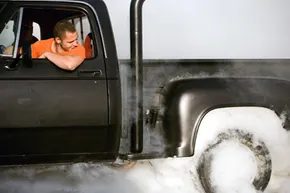
电影骗了你。 那些受控混乱的场景——橡胶冒烟、在拐角处漂移、无缘无故地猛踩刹车——都是电影虚构的。 事实上,它们只是在创纪录的时间内将一套轮胎变成光头橡胶板的有效方法。 但你不需要像动作英雄一样驾驶来磨损你的轮胎。 微妙的日常习惯同样重要,甚至更重要。
轮胎是独一无二的。 它们是汽车上唯一接触路面的部分,并且会磨损您。 它们充当诊断工具,尖叫着您的驾驶风格、路况,甚至悬架健康状况。 如果你的定位偏离了,轮胎就会知道。 如果你驾驶激进,他们会知道。
除了明显的滥用之外,还有十几个看不见的因素决定了您的轮胎能否持续一个赛季或十年。
The Variables That Eat Tread
It’s not just the way you drive. It’s about physics, chemistry and maintenance planning. The National Highway Traffic Safety Administration (NHTSA) emphasizes several proactive measures to extend the life of rubber on the road, but the root causes of premature wear are often overlooked.
- External temperature: Heat breaks down rubber compounds faster than cold. It becomes brittle in the cold. Both extremes accelerate aging.
- Inflation pressure: This is the big one. Under-inflation can cause wear in the shoulders, while over-inflation can cause erosion in the middle. Neither is sustainable.
- Rotating frequency: Failing to rotate tires evenly distributes wear. If you ignore this, you will have to replace the front while the rear is still new.
- Pairing Strategy: Mixing old and new tires on the same axle is a recipe for handling issues. New and new, old and old. Keep it simple.
- Carrying capacity of the vehicle: Hauling weight beyond the manufacturer’s rating can strain the side walls and increase rolling resistance.
- Tire rating: Not all rubber is created equal. Performance tires wear differently than all-season touring tire.
人为因素
汽车制造商进行严格的寿命测试。 他们模拟在受控环境中多年的驾驶。 但轮胎仍然是一个谜,因为人类的行为是不可预测的。 你是否在车库里坐了两年没有动过车? 那个平坦的地方永远不会完全恢复。 他们是否在夏天暴露在阳光直射下? 紫外线会使侧壁退化。 他们是否在坑坑洼洼的小路上被鞭打?
数据显示耐久性发生了巨大变化。 在 20 世纪 70 年代,典型的轮胎可持续行驶约 20,000 英里。 如今,一些高端复合材料的行驶里程已超过 80,000 英里。 但“你的里程可能会有所不同”是唯一真正的保证。 20k 和 80k 之间的区别不仅在于制造质量,还在于维护。
What Actually Works
NHTSA does not mince words. To get the most out of your investment, you need to be proactive.
- **Keep the tire pressure in order. ** In addition to the lights, check once a month.
- **Observe weight restrictions. ** Don’t think of a sedan as a moving van.
- **Avoid road hazards. ** Potholes and curbs kill tires. avoid.
- **Regular inspection. ** Look for cuts, dents and dings. Change is a ticking time bomb.
Tires are the only thing between you and the asphalt. Handle it with more care than when changing the oil. This way it can last longer than the engine.
想要在不掏钱包的情况下节省每年几百美元的汽车费用吗? 这比大多数人想象的要简单。 只需将轮胎充气至制造商建议的压力即可。
数学很简单。 适当的充气可将燃油效率提高约 3.3%。 根据您的驾驶习惯和当地汽油价格,每次加满油可节省大约 2 美元。 这听起来很小,直到你看到更大的图景。 您还可以延长橡胶本身的使用寿命。 磨损的轮胎要花钱。 被忽视的轮胎成本更高。
找到适合您车辆的正确 PSI
Tire pressure gauges are inexpensive. You can buy it at any auto parts store for less than a cup of coffee. It is also easy to use. If you drive a vehicle manufactured in the United States after September 1, 2007, your vehicle may have a tire pressure monitoring system (TPMS) built into the dashboard. That light is there for a reason. Don’t ignore it.
But the gauge won’t tell you the “correct” reading for your car. You have to find the specifications yourself. Look for a sticker or stamped metal on the vehicle. The government requires this information to be displayed so that vehicle owners and mechanics know exactly what specifications to use for adjustments or replacements.
您应该在哪里查看?
* 车门框: The edge of the driver’s side door frame or the door itself.
* 手套箱门: There may be markings on the inside of the lid.
* User manual: Always a reliable source of information.
* Tire Sidewall: This is tricky, as explained below.
不要依赖胎侧的最大压力
Quality tires are expensive. Extending the lifespan makes economic sense. However, you need the right number. Pressure is expressed in kilopascals (kPa) and pounds per square inch (psi).
Most people fail here. The maximum pressure indicated on the side of the tire is not the recommended operating pressure for your vehicle. This is the physical limit a tire can take before it breaks. If the door sticker or manual says 32 psi, but the tire says no more than 44 psi, don’t inflate to 44 psi.
Always follow the vehicle information (车门框 or manual), not the tires. Inflating to the maximum pressure indicated on the sidewall can 使行驶颠簸, reduce traction and cause dangerous overinflation if the tire heats up while driving.
冷时检查
时机很重要。 当轮胎“冷”时测量轮胎压力。 这意味着在您行驶任何距离之前。 行驶时的摩擦会加热轮胎内的空气,导致轮胎膨胀。 如果您在高速公路旅行后检查压力,读数会人为地偏高。 您可能会放气以匹配压力表,但一旦轮胎冷却过夜,就会发现压力下降得太低。
轮胎换位与维护
Changing your oil and antifreeze on time will help keep your engine clean. Clean fluids mean less friction, less wear and longer engine life. The same logic applies to tires. 建议每 5,000 to 8,000 miles (about 8,000 to 12,800 kilometers).
为什么要换位? Front tires wear differently than rear tires. Steering, braking and weight distribution can cause uneven tread wear. 换位可确保磨损均匀。 This means that even with wear and tear, you can get more mileage out of it before you need to replace it.
If you can safely use a jack and 千斤顶支架, this is a good DIY job. The National Highway Traffic Safety Administration (NHTSA) provides examples of front-wheel, rear-wheel, and four-wheel drive modes. Follow these diagrams.
何时更换
旋转有帮助。 适当的充气会有所帮助。 但最终,胎面会磨损。 接下来就是知道这个点“何时”出现。
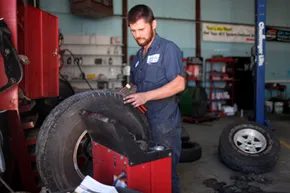
How the Penny Test Reveals Hidden Tire Danger
Some car parts give you a warning before they fail. Others just quit when you need them most. Tires fall into the latter category if you don’t look closely. You might not realize you are driving on bald rubber until hydroplaning catches you off guard. Regular visual inspection is the only way to know when tread depth drops below the safety threshold.
There is a simple trick for this. It is called the penny test. Grab a penny. Turn it upside down. Stick it into the tire’s tread groove with Lincoln’s head facing down. If you can see the very top of his head, your tread is too low. That specific measurement is 1/16 of an inch. Or 1.59 millimeters if you prefer metric precision. Anything less than that and you are gambling with traction.
Look for other trouble signs too. Deep cracks? Bubbles? These are not normal wear patterns. They are structural failures waiting to happen. If you spot them, do not wait. Take the wheel to a tire dealer or auto service center immediately. Professionals have access to databases that make selecting the right replacement much easier than guessing.
Why You Should Never Replace Just One Tire
When that worn-out tire finally gives up, resist the urge to buy just one replacement. You likely need two. Or maybe all four. Tires are rarely swapped singly. Mixing tread depths creates a traction imbalance. This disparity between corners can lead to a sudden loss of control. It is dangerous.
For optimal safety and handling, all four tires on your vehicle should match. Same size. Same speed rating. Same construction type, whether radial or non-radial. There are exceptions. Some sports cars run wider or larger diameter tires on the rear axle than the front. But for the average driver, uniformity is key.
What if you are on a budget and can only replace two? Here is the rule. Put the new tires on the rear axle. Even if your car is front-wheel drive. The deeper tread at the back helps maintain stability in wet or slippery conditions. It prevents the rear end from sliding out. Tire experts agree. Never replace just one tire.
If you absolutely must do it, pair the new tire with the existing one that has the least tread wear. Mismatched tires disrupt the vehicle’s dynamics. It affects braking distance and cornering grip. The goal is balanced contact with the road.
Extending Auto Part Longevity Through Routine Checks
Tires are just one example of a broader truth. Regular monitoring extends the life of your car parts. Schedule inspections. Check pressures. Look for wear. It saves money. It also keeps used materials out of the landfill longer.
“Well-worn” parts are predictable. You can replace them before they fail.
This proactive approach prevents catastrophic breakdowns. It keeps your vehicle safe. And it is smarter than waiting for a blowout on the highway.
For more details on tire care and other automotive components, explore the related resources below.
Lots More Information
Related HowStuffWorks Articles
-
Top 10 Everyday Car Technologies that Came from Racing
-
How Car Computers Work
-
How Driverless Cars Will Work
-
How Hypercars Work
-
How Auto Transport Works
-
How Automotive Production Lines Work
-
Can you assemble your own car?
-
What makes a digital car digital?
-
What’s new in synthetic oil technology?
-
Will car repairs in the future financially cripple you?
Sources
-
Allen, Mike. “Obama’s Call for Tire Inflation to Beat Gas Crunch: Reality Check.” Popular Mechanics. Aug. 7, 2008. (Oct. 1, 2009) http://www.popularmechanics.com/automotive/how_to/4276844.html
-
Consumer Reports. “Help keep your vehicle’s tires safe.” April 2009. (Sept. 25, 2009) http://www.consumerreports.org/cro/cars/tires-auto-parts/tires/tire-safety-11-05/overview/0411tir1.htm
-
National Highway Traffic Safety Administration. “Tire Safety – Everything Rides On It.” (Sept. 24, 2009) http://nhtsa.dot.gov/cars/rules/TireSafety/ridesonit/brochure.html
-
Rubber Manufacturers Association. “Replacement Guidelines for Passenger and Light Truck Tires Manual & Supplement.” Jan. 25, 2005. (Sept. 30, 2009) https://www.rma.org/publications/tire_service_professionals/index.cfm?PublicationID=11309
-
Tire Rack. “Tire Aging – Part 1: Nothing Lasts Forever…and Tires Are No Exception.” (Sept. 26, 2009) http://www.tirerack.com/tires/tiretech/techpage.jsp?techid=138