Five years is a long time in auto years. Mitsubishi Motors has returned to the UK, dragging its feet only slightly after a five-year hiatus. They aren’t coming back with a whimper, either.
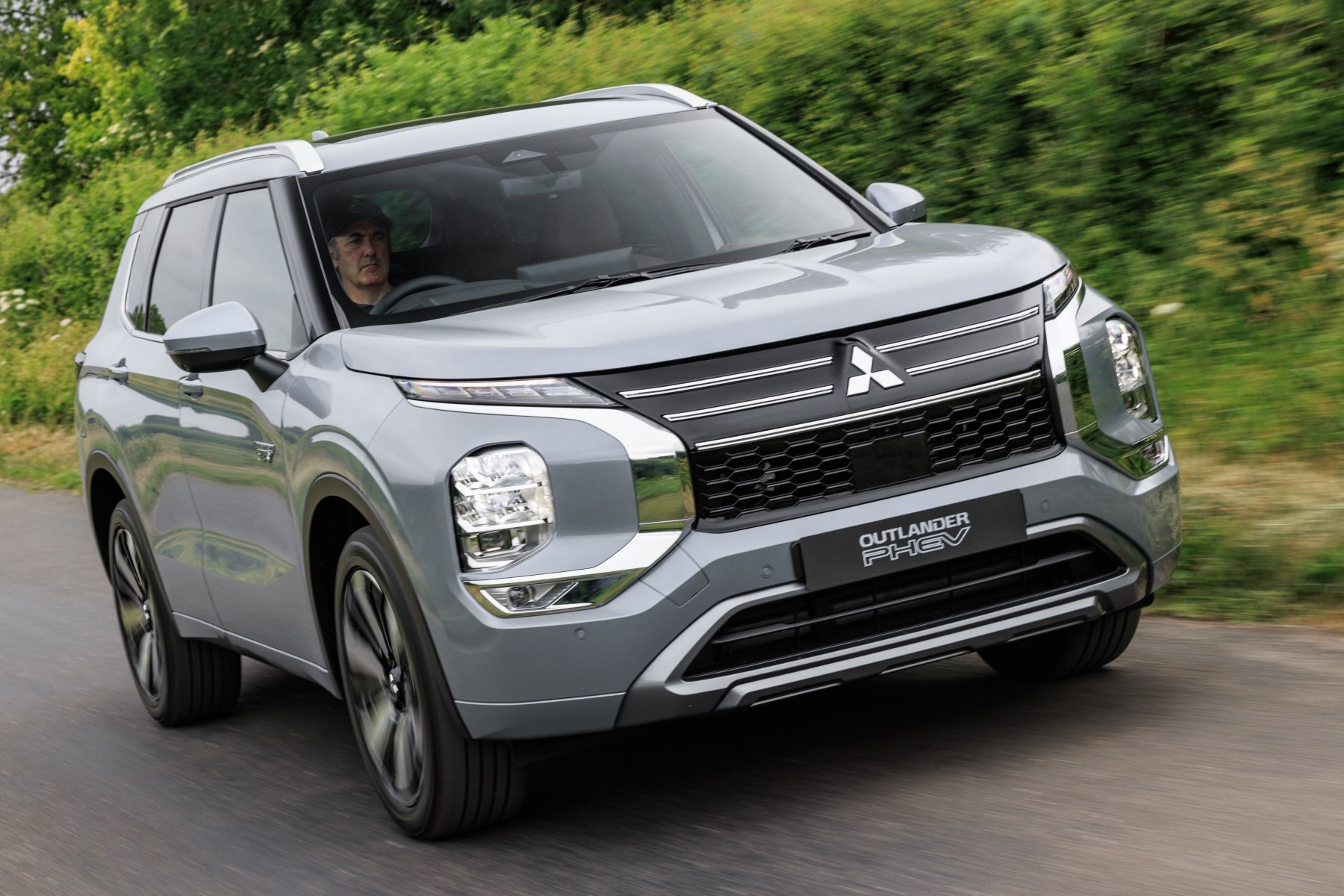
The first vehicle out of the gate is the new Outlander PHEV.
Remember when plug-in hybrids were just seen as the boring middle-child stepping stone before the “real” EVs arrived? Yeah, those days are over.
PHEVs are thriving. Drivers like having both worlds. You get electric range for the commute and zero range anxiety on a long road trip. Plus, they’re a tax write-off dream for company fleets due to low Benefit in Kind (BIK) rates. The market is healthy. Mitsubishi wants a piece of the pie.
Context helps. In March 2025, the Jaecoo 4 became the best-selling new car with 10,827 registrations, plug-ins dominating the scene.
More Room. More Range. More Stuff.
The 2025 Outlander starts at £46,995. That’s a premium price, sure, but look at the upgrades. It’s bigger. It looks bolder (love it or hate that ‘Dynamic Shield’ face, it’s unmistakable). And maybe most importantly for families: it has an optional seven-seat configuration.
Find seven seats in a PHEV. It’s nearly impossible.
Under the hood, the heart is familiar. A 2.4-litre petrol pairs with a bigger 27.7kWh battery. Two electric motors front and back give you 295bhp on tap.
The stats do the talking now:
– Electric range: 53 miles (useful, finally).
– 0-62 mph: 7.9 seconds (adept, not frantic).
– Max range: ~500 miles when full.
– CO2 emissions: 20g/km.
Step inside. It feels like a proper adult car now. The quality bump is noticeable. Soft touch surfaces where hard plastic used to be. Mitsubishi actually kept physical buttons for climate control—a rarity these days—and that earns respect.
Rear legroom? Generous. The third row? Fine for kids, short trips. Don’t expect adults to stretch their legs. But luggage space is clever. Fold the back two, get 872 litres. Fold the second row too? Nearly 2 cubic metres. That’s 1,831 litres of haul.
“Classy, smooth, and actually spacious.”
You get a choice between the seven-seat Nativa trim or the five-seat Diamond spec. Both pack a 12.3″ driver display and matching central touchscreen. Safety tech is standard across the board. Front seats? Surprisingly good support. You don’t feel like you’re perched on a shelf.
Driving It
EV mode is whisper-quiet. The switch to petrol power? Hardly noticeable.
Floor it or hit a low battery level and the engine kicks in. It doesn’t scream. It just works. There’s a dial for drive modes (Eco, Normal, Power), but the car mostly drives itself between the hybrid strategies. EV drive. Series hybrid where the engine generates juice. Parallel hybrid where they pull together at speed.
And yes, if you drain the battery on the highway, you can run the petrol engine specifically to charge it up again. Use that in a city. It’s clever engineering.
Handling feels solid. Not sporty, but connected. The ride absorbs potholes without feeling like you’re floating in a cloud. Steering is weighted right. Mitsubishi resisted the temptation of a jerky CVT transmission, sticking to a direct drive that actually sounds pleasant.
Off-road?
I took it into mud in Wiltshire at launch. Not serious terrain, just… messy ground. The S-AWC (all-wheel control) held together. It can handle snow, gravel, slip-and-slides. It won’t win Dakar, but it won’t break either.
Charging takes 30 minutes to full on rapid chargers. Home charge? Up to six and a half hours on slow connections. Regen braking adjusts via steering wheel paddles. Intuitive.
The Reality Check
Like any PHEV, it’s a victim of your driving habits.
Keep it plugged in, and it’s cheap as chips. Most UK journeys are under 50 miles, right? You might rarely buy petrol.
Go long-distance though—motorway hopping, battery flat—and economy drops to 35-45mpg. Acceptable? Maybe. Efficient compared to a full diesel SUV? Sure. But not earth-shattering.
Durability has always been a Mitsubishi trope. Is it still true? Hard to say. What is certain is the warranty.
Eight years or 100,000 miles.
For both car and battery. Five years of roadside assist too. That is an insane guarantee.
It tows 1,600kg, fully braked.
The Mitsubishi Outlander PHEV returns not just as a car, but as a proposition. Is £47k steep for a mid-sized family SUV? In today’s climate? Probably not. It does what it says. It does it smoothly.
Whether that makes it the best PHEV around remains a conversation.