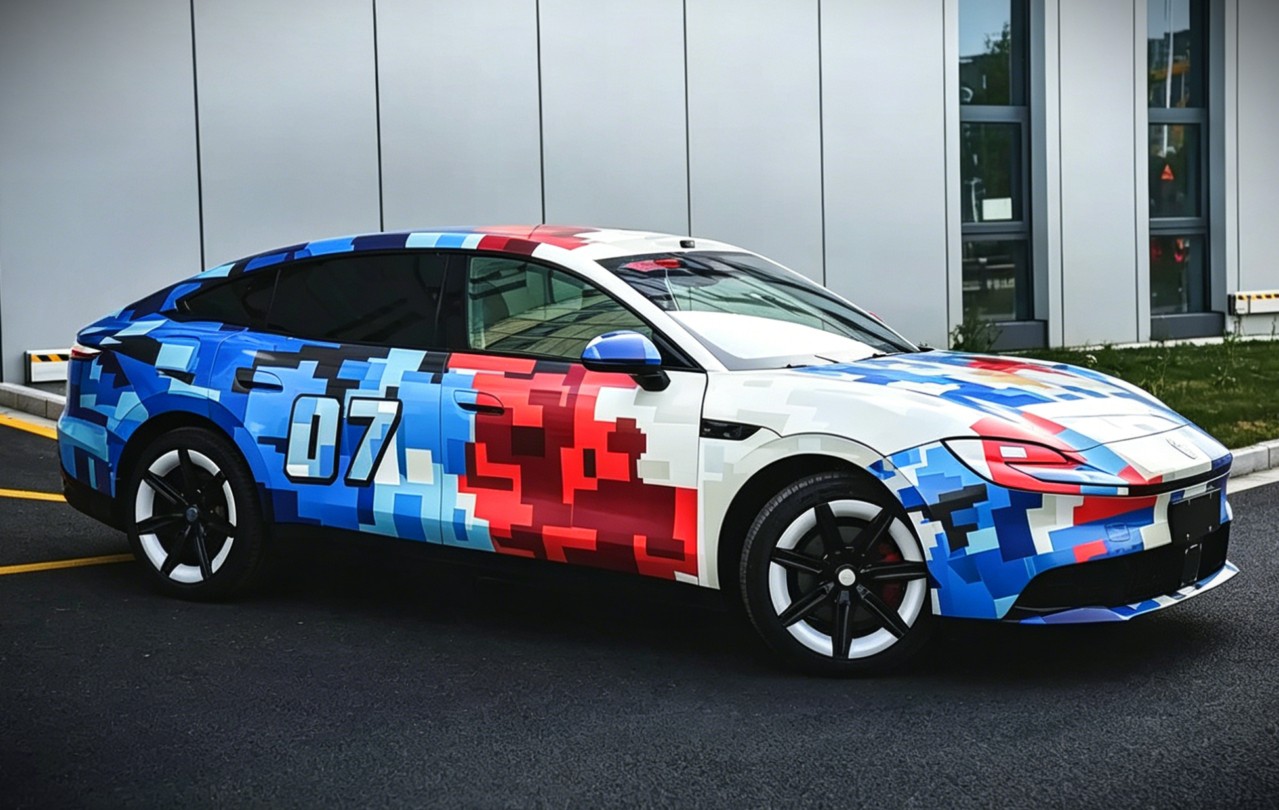
At the 2026 Beijing Auto Show, SAIC Motor’s MG brand announced a significant technological leap for its upcoming MG 07 model. The vehicle will be among the first to implement Momenta’s R7 autonomous driving system, a move that signals a shift in how advanced driver-assistance systems (ADAS) are being deployed in the mass market.
By combining a reinforcement learning-based “world model” with the dedicated Xheart X7 AI chip, MG aims to bring high-level autonomy to a more accessible price point.
Bridging the Gap Between Luxury and Mass Market
One of the most notable aspects of this announcement is the pricing strategy. Chen Cui, General Manager of the MG Brand Division, noted that while similar R7 systems are typically reserved for premium vehicles priced above 300,000 yuan (~$43,900 USD), the MG 07 will bring this technology to a lower market segment.
This strategy aims to deliver “above-category” performance, essentially offering luxury-grade intelligence to mainstream consumers. This move reflects a broader trend in the EV industry: as hardware costs decrease and AI efficiency increases, advanced autonomy is moving from niche luxury features to standard expectations in mid-range vehicles.
The Tech Battle: Momenta R7 vs. Tesla FSD V14
Momenta CEO Cao Xudong has positioned the R7 system as a direct competitor to Tesla’s Full Self-Driving (FSD) V14. The core of this competition lies in the “world model” approach.
Unlike traditional systems that rely on rigid rules, a world model uses reinforcement learning to understand and predict how the environment behaves. This allows the vehicle to navigate complex, unpredictable scenarios more naturally.
Key advantages cited by Momenta include:
– Data Scale: Momenta has accumulated over 100 million kilometers of driving data and 1 million “long-tail” scenarios (rare or complex edge cases).
– Rapid Iteration: The R7 model can complete post-training iterations in just two to three hours, allowing for weekly incremental software updates.
– Localized Complexity: Cao argued that Chinese driving environments—dense with pedestrians, delivery vehicles, and two-wheelers—present a higher level of complexity than those in the United States, requiring more robust AI training.
Scaling the Intelligence Engine
To sustain this level of autonomy, Momenta is aggressively scaling its infrastructure. The company plans to triple its compute capacity in 2026, aiming to reach 60–80% of the training compute scale used by Tesla in North America.
The data collection network is also expanding rapidly. Momenta’s equipped fleet is expected to grow from 80,000 units to 200,000 units by the end of 2026, with a long-term vision of powering over 10 million vehicles.
The MG 07: Design and Market Context
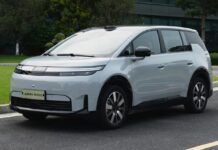
The MG 07 is positioned as a cornerstone of SAIC’s next-generation New Energy Vehicle (NEV) lineup. Beyond its intelligent driving capabilities, the vehicle features:
– A low-slung fastback design with a coupe-like silhouette and frameless doors.
– Integrated LiDAR hardware for enhanced environmental perception.
– A cockpit powered by a Large Language Model (LLM) developed within SAIC’s AI ecosystem.
The timing of this launch is critical for MG. While domestic sales have shown volatility—peaking at over 21,000 units in late 2025 before seeing a significant year-on-year boost in March 2026—the introduction of high-tech, affordable autonomy could be the lever needed to stabilize and grow its market share.
Conclusion
By integrating Momenta’s R7 system, MG is attempting to democratize high-end autonomous driving, challenging Tesla’s dominance by offering sophisticated AI capabilities at a more competitive price point for the mass market.