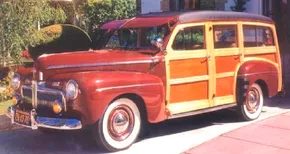
The 1942 Ford Super DeLuxe arrived on September 12, 1941, right as the world was holding its breath. It was a car that demanded more cash for less substance. Prices climbed by roughly $100 across the board, a hike that felt heavy even then. But the real story wasn’t the price tag. It was the empty shelves. Material shortages were bleeding into every factory floor, and Ford was no exception.
Chrome Becomes a Memory
Chrome was the king of 1940s American automotive styling. It caught the light. It screamed luxury. But nickel and copper were now restricted materials, pulled off the shelf for the war effort. Ford couldn’t just leave the car bare. They had to find a workaround.
The solution was ugly in the making but clever in execution. Instead of real chrome, Ford plated trim with zinc. Then they slapped a coat of varnish over it. It was a temporary fix for a permanent problem. Diecast zinc parts in the grille gave way to stamped steel. It was cheaper. It was lighter. It just didn’t look as good.
Hubcaps, however, saw a twist of fate. Ford switched to stainless steel. For once, the war forced an upgrade. Stainless steel didn’t tarnish. It held up better. It was a genuine quality improvement disguised as a cost-saving measure.
The Blackout Era
By December 31, the rules tightened further. Every piece of trim had to be painted or covered. This applied even if it was already chrome or stainless steel. The goal was uniformity. No manufacturer could flaunt shine if the rest of the industry was dark. Ford chose tan paint for its trim. It looked dull. It looked compromised.
These “blackout” models are often dismissed as sad examples of wartime austerity. They shouldn’t be. Rarity drives value, and these cars were produced in limited numbers before production shifted entirely to military contracts. Collectors hunt them down not for their beauty, but for their history. They are time capsules of a nation turning its machines toward survival rather than luxury.
Why the 1942 Model Matters Today
If you’re looking at restoring or buying a 1942 Ford Super DeLuxe, you’re looking at a paradox. It’s a car that lost its sparkle to save lives. The zinc plates under the varnish may peel over time. The tan paint may chip. But the stainless steel hubcaps remain. They’re a small, shiny testament to a larger shift.
The market for these vehicles has grown. Not because they’re pretty. But because they’re scarce. And because they represent a specific, sharp pivot in American industrial history. The war changed what cars could be. It changed what they looked like. It changed what they cost.
The 1942 Super DeLuxe sits in that gap. Less car for more money. But with a rarity that money can’t easily buy.
Change the metals and lowering the center of gravity
Aluminum was off the table for the 1942 Ford, forcing engineers to rethink. The pistons were changed to a cast iron alloy. It was a weight compromise, but it kept production moving. Molybdenum replaced nickel in valves, gears and shafts. This was not just an exchange for scarcity. It was a real improvement. The metal could withstand the stress better.
The chassis was lowered by an inch. That drop mattered. It wasn’t just about looks. The ride quality has improved considerably. Ford achieved this with longer, wider transverse springs. Twin lateral stabilizers added stability. Tire treads widened by two inches. More grip. More control.
Noise was the next enemy. Engineers added large rubber pads between the body and the frame. The motor mounts have also been refined. The goal was simple. Silence the cabin. It worked.
Bolder front
The front of the car was completely new. The hood looked bolder. fenders became one-piece units. They were more impressive. The grille lost its curve. It was flattened into a rectangle. A heavy decorative frame surrounds two sets of vertical ribs. A bright strip ran in the middle. It looked serious.
Parking lights moved. They used to sit atop the fenders. Now they slid inward, closer to the headlights. The change was subtle, but noticeable. It followed the lead of General Motors. Ford was playing catch-up in style. Chevrolet had already gone massive. Plymouth followed suit. The 1942 Ford did not invent this trend. It just joined it.
“Ford’s bigger look for 1942 simply followed an industry trend started by style leader General Motors.”
Why it was important
The change was not only about aesthetics. It was about survival. The lack of aluminum forced a change of materials. Molybdenum stepped in where nickel could not. The result was a stiffer and quieter car. The lower center of gravity made handling easier. Wider tires improved grip.
The design changes reflected a market that wanted a presence. GM set the bar. Ford couldn’t be left behind. One-piece fenders and a flattened grille gave the car a heavier and more secure stance. It seemed to be serious.
Technical improvements were less visible but just as important. Cast iron pistons were heavier, but reliable. Molybdenum components lasted longer. Rubber insulators reduce vibration. These were not flashy features. They were the kind of changes that kept the cars running.
Path to the future
The 1942 Ford was at a crossroads. Material shortages dictated many decisions. Design trends went in one direction. Engineering reality pulled in another. The result was a car that balanced compromises and improvements. It looked bigger. It rode smoother. It ran quieter.
But the world was changing. War was coming. Production would soon shift to military needs. The 1942 model was one of the last civilian Fords before the factories switched to tanks and trucks. The changes made this last run meaningful. They showed how Ford adapted. Improving. Surviving.
The lower stance didn’t just look good. It changed the feel of the car. The wider tires bit into
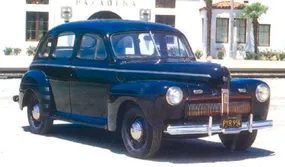
The frame is now wider and the doors open all the way to the top of the running boards. The rear fender has a rubber stone guard. The splash guard fills the gap between the wide bumper and the car body. The taillights change from a vertical rectangle to a horizontal oval. Chrome limited them with Super DeLuxes. The grill has blue stripes. The upper part of the bumper has a unique groove. There is even more chrome around the windows. This is part of the exterior of the “Stage Door Diner”. It’s based on hit songs like “That old Blackout Magic.”
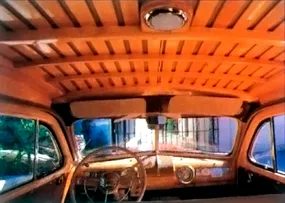
The dashboard has changed significantly. Plastic saws are used more often. The radio grill is made of plastic. The old horizontal line is gone. Instead, it gets a GM-style treatment. The large round speedometer and clock are placed symmetrically. It is located on the side of the speaker grill. Four meters are installed on the left side of the speedometer. The roots of the tree remain on the dashboard. The plastic interior creates a wartime atmosphere. Some may argue that this is not progress.
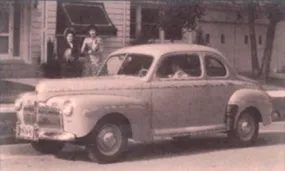
Production numbers collapsed. Model year 1942 was a ghost town compared to the busy places of earlier years. Total production for the year stopped at a meager 160,432 units. It is the lowest annual production volume for Ford since 1910. Generally speaking, this year’s share of the company’s total production between 1932 and 1948 was only two percent.
Prices rose, but demand weakened. The body models of 1941 remained in supply, but the purchase costs had risen. The Ford Special Coupe started at $780. The Ford V-8 Super DeLuxe Fordor broke the $900 mark, landing at $930. Six models have completely crossed the $1,000 threshold. These included the Ford DeLuxe and Super DeLuxe station wagon and the Super DeLuxe ragtop. Buyers can equip them with either an in-line six-cylinder or a V8 engine.
Bad design didn’t destroy the market. It has been broken by history. The United States was preparing for war. Factories changed gears. The steel was directed to the tanks, not the fenders. This war-related change explains the sharp decline in civilian vehicle production. The next chapter covers how Ford survived the war years.
For more information on the history of cars, see the following categories:
-
Old cars
-
Muscle Cars
-
Sports Cars
-
Search for a new car
-
Used Car Search