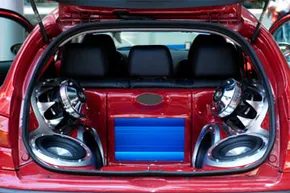
Forget the burnout contests and the quarter-mile drag races. If you want to see vehicles truly pitted against each other in a way that defies standard speed metrics, look closer. There are gatherings where the roar of engines is replaced by the thump of bass. These aren’t just car shows celebrating chrome and pristine paint jobs. They are battlegrounds for sound.
Car audio competitions are a massive subculture within automotive enthusiasm. In the United States, several organizations host events that push vehicles to their acoustic limits. The goal? To determine which rig produces the most impressive audio output. But “impressive” isn’t a single metric. The competitions are generally split into two distinct categories: sound pressure and sound quality.
Sound Pressure vs. Sound Quality
The distinction matters more than you might think. Sound pressure, often called SPL (Sound Pressure Level) competition, is about brute force. It’s a contest of decibels. Participants tune their systems to push as much air as possible. The winners are the ones who can make the ground shake the loudest.
Sound quality is a different beast entirely. Here, accuracy is king. It’s not about how loud you can get; it’s about how clean the signal remains at high volumes. Judges look for precise wave projection, minimal distortion, and a balanced frequency response. A system that hits hard but sounds muddy will lose to a quieter, but crystal clear, setup.
The Stock Stereotype Is Dead
So, is your daily driver’s factory head unit up to the task? No. Not even close.
Trying to compete with a stock dealership audio system is like bringing a knife to a gunfight. You need hardware. Specifically, you need a powerful amplifier, a booming subwoofer, and high-performance speakers. Without these components, you are not entering a competition. You are just listening to music.
The barrier to entry is high. The preparation is grueling. But if you have the budget and the patience to build a system from the ground up, you can step onto the stage. Here is how you start.
Upgrading Your Audio
Building a winning system requires more than just buying the biggest box. It requires understanding the chain of command in your vehicle’s audio circuit.
1. The Source Unit
Your head unit is the brain. While some modern factory radios have decent pre-outs, serious competitors often install aftermarket deck units. These allow for precise equalization and signal processing before the power even hits the amplifiers. Look for units with high-voltage pre-outs (usually 4V or 5V). This ensures a clean signal reaches your amp, reducing noise and interference.
2. The Amplifier
This is where the power comes from. Stock systems pull their juice directly from the car’s electrical system, which is unstable under load. Competitors install external amplifiers. These provide consistent voltage and current, allowing the speakers to move with authority. Class-D amps are popular for their efficiency, but Class-AB units are still prized for their warmth in sound quality categories. The key is matching the amp’s power output to the speakers’ RMS handling. Mismatch this, and you blow a driver.
3. Speakers and Subwoofers
This is the meat of the competition.
* For Sound Pressure: You
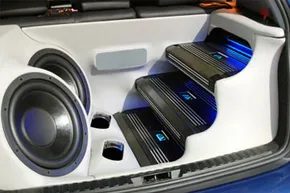

You aren’t getting rich building this gear. That’s the first hard truth. The second is that you need to actually understand what you’re installing. Before you drop hundreds on wire and cones, read up on the basics. A factory coaxial speaker—where the tweeter is glued to the woofer—is fine for listening to the radio. It’s not fine if you want to win.
You need component speakers. They split frequencies. This separation matters. It cuts the muddy mess factory systems create. But components alone don’t win contests. You need a subwoofer. You need an amplifier. You need an active crossover. That’s the box that sorts the signal before it hits the speakers. Without it, your amp fries itself or the tweeter blows.
DBD Drag Racing offers solid articles on this. They break down the engineering logic. It’s not just about noise. It’s about control.
Picking the Right Gear
Specs matter. Look at sensitivity for speakers. It tells you how loud a speaker gets per watt. Match that with your amp’s power handling. If your amp pushes more RMS than the speaker can take, you’re buying a new speaker next month. For subs, ignore peak power. Look at RMS. Higher RMS means consistent quality. It means the cone doesn’t slap around until it breaks.
Brand names help narrow the list. Alpine, Infinity, JL Audio, and Eclipse get consistent praise. They aren’t the only options, but they are reliable starting points.
Decide your path early. Sound Pressure (SP) and Sound Quality (SQ) are different sports. SP is decibels. It’s ear-busting. It’s about raw volume. SQ is about accuracy. It’s clean highs, deep bass, and zero distortion. You can’t maximize both with the same budget. Pick one. Read reviews for that specific goal. Don’t buy the loudest system if you want the best tone.
Where to Compete
The US is saturated with competitions. You won’t have to drive across the country to find a venue. Several national bodies run events year-round.
- IASCA (International Auto Sound Challenge Association)
- MECA (Mobile Electronics Competition Association)
- TermPro
- USACI (United States Autosound Competition International)
Membership is usually mandatory. It’s the entry fee for the circuit. IASCA runs the Sound Quality Challenge (SQC). It has seven classes. Rookie to expert solo. Judges look for tonal accuracy. They check the sound stage. They listen for imaging. They want linearity. They hate noise.
IASCA also runs Bass Boxing. This is pure SP. The judge measures average decibels. The subwoofers play music. The meter goes up. The higher the number, the better the score.
Rules vary by group. Read them. Find your local chapter. See who’s judging.
The Judges Aren’t Your Enemy
They’re enthusiasts. Just like you. IASCA trains its judges using rules written by members. The philosophy isn’t about tearing you down. It’s about helping you improve. During the run, they stay silent. They can’t talk. But after the event, ask them questions.
Don’t be shy. Ask why your mid-range was muddy. Ask why your bass was tight. Their input is free coaching.
Prizes are rare but real. Cash sometimes changes hands. But the real prize is the system itself. You spent hundreds. You spent hours. Now you have a car that plays music better than any showroom. That’s the win. Even if you don’t take the check.