


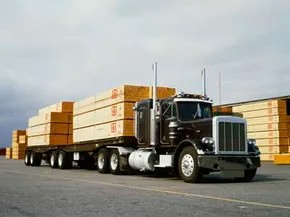
Standard towing gear falls apart under serious weight. A Class III hitch handles the everyday 5,000-pound load without breaking a sweat. That is fine for small boats or compact campers. But when you are moving 5 tons, you need Class V equipment. These hitches are rated for 10,000 pounds or more. This is where the physics get heavy and the regulations get strict.
You need to know your numbers before you even think about the gear. First, there is the Gross Vehicle Weight Rating (GVWR). This is the maximum safe weight your truck can hold, including itself, passengers, fuel, and cargo. Then there is the Gross Combined Weight Rating. This figure tells you the absolute limit for your truck plus the trailer. Most regular trucks max out well below the 10,000-pound mark for this combined rating.
The only vehicles that can safely handle a Class V hitch are heavy-duty trucks. Think Super Duty models or equivalent heavy haulers. Buying the truck is step one. Step two is realizing you probably cannot legally pull that load yet. In most US states, pulling a trailer over 5 tons requires a Class A Commercial Driver’s License. You might also need special permits depending on the width and length of your cargo.
We are looking at five items that routinely sit at or above the 10,000-pound threshold. Let’s start with the heaviest common towables on the road.
5. Recreational Vehicles
Recreational vehicles (RVs) dominate the heavy-tow category. Not all RVs weigh 10,000 pounds, but the large ones do. A typical fifth-wheel trailer or a large motorhome easily clears this mark.
These rigs are massive. They often exceed 30 feet in length. Weight-wise, they frequently sit between 12,000 and 18,000 pounds empty. Add water, propane, and personal belongings, and you are pushing 20,000 pounds or more. This is not a weekend car-topper job.
Towing an RV requires precision. The length creates blind spots that a standard pickup driver does not expect. The weight demands a Class V hitch to distribute the stress properly. You need a truck with a high GVWR to keep the suspension from bottoming out.
“Towing a heavy RV isn’t just about horsepower. It is about braking distance and steering inertia.”
If you are used to towing light trailers, an RV will feel different immediately. The stop distance doubles or triples. You cannot brake like you would in a sedan. You have to anticipate stops miles away.
The interior space is the trade-off. You get a home on wheels. But you lose the ability to navigate narrow roads or tight campgrounds easily. Many RV owners swear by the lifestyle. Others regret the hassle of heavy towing.
Does the convenience outweigh the requirement for a Class A license? For many, the answer is yes. They view the truck as part of the living space. For others, the legal and mechanical barriers are too high. You need to check your state laws carefully. Some states exempt certain RV weights
The credit crunch didn’t just make buying harder. It made renting the obvious pivot.
RV sales collapsed. From August 2007 to August 2008, the market shed 22.7 percent of its volume. People stopped buying. They couldn’t afford the debt.
But they didn’t stop traveling.
Instead, the rental sector exploded. RV rentals climbed 18 percent in that same window. The appetite for the open road remained. The wallet just closed up tight.
This divergence highlights a key distinction in how people engage with mobile home lifestyles versus traditional ownership. You can still get the taste of RV life without the long-term financial anchor.
Choosing Your Platform: Drive vs. Tow
Like picking a sedan or a pickup, the first decision is how you move your home.
Class A, B, and C motorhomes are self-contained. You drive them. The engine and living space are one unit.
Towables require a separate vehicle. You park the rig and unhitch.
Among towables, fifth-wheel RVs dominate the luxury segment. Enthusiasts call them fivers. They are the largest class of towable home. They anchor to a special hitch in the bed of a heavy-duty pickup.
This setup offers stability. The hitch point is over the rear axle of the tow vehicle. It reduces sway. It makes the rig feel lighter than it is.
The Full-Timer’s Choice
Fivers are the default for full-timers. These are people who live in their RVs permanently. They trade leases for parking spaces. They trade mortgages for hookups.
A fifth-wheel is a full house on wheels.
You get separate bedrooms. A dedicated dining room. A real living area. Not the cramped quarters of a travel trailer. The layout is designed for long-term habitation. It mimics a stationary home.
Weight Matters More Than Amenities
Every extra feature adds pounds.
A washer-dryer combo? Heavy. A massive entertainment center? Heavy. An extra bedroom suite? Very heavy.
The more amenities you add, the higher the gross vehicle weight rating (GVWR). This is a hard limit. It includes the rig plus everything in it.
If you are shopping for a high-end unit to serve as your primary residence, check the weight before you sign. Manufacturers must list weight ratings on every vehicle. This tells you exactly how much mass you are towing.
Exceed that rating. You risk brake failure. You risk suspension collapse. You risk a serious accident.
Don’t assume the truck you own can handle the rig you want. Check the tow capacity. Check the payload. Then check the RV’s weight again.
Item 4: Mobile Homes
The term “mobile home” often refers to factory-built housing units transported to a site. In the context of the 2008 shift, some buyers looking for affordable housing turned to these units as a cheaper alternative to traditional homes. However, the financial instability of the era affected these purchases too. Credit availability dried up for manufactured housing just as it did for RVs.
The line between an RV and a mobile home is blurring. Some luxury RVs offer the same square footage as small
Manufactured housing is in a strange spot right now. Production numbers are dropping across the US, including for those classic mobile homes. But the quality? It’s actually going up. These aren’t the flimsy shacks from decades past. They’re built in controlled factory environments, shipped to dealerships, and then towed to your final plot.
The delivery is no joke.
Even if your home arrives in sections, you’re still moving massive, multiton loads. You’ve seen them. A truck lumbering down the highway, covered in orange flags and “Oversize Load” signs. It’s impossible to miss. Because you’re dealing with something so bulky and heavy, you can’t just hook it up and go.
Navigating Permit Requirements
You need permits. Local and state authorities require them before you drag a mobile home onto public roads. The rules change depending on where you are. One county might allow a certain width; the next might shut you down. Check with your local Department of Motor Vehicles. Do not skip this step.
But wait.
What if you don’t want a mobile home? What if you’re breaking ground and building a house from scratch?
You still have to tow.
Construction equipment is just as much of a hassle. It’s heavy, awkward, and expensive to move. Before you rent that backhoe or buy that excavator, you need to know what you’re actually hauling.
Item 3: Construction Equipment
The weight matters.
Most people think of construction as dirt, dust, and dirt again. They see the massive Caterpillar loaders and the towering cranes dominating the skyline. They forget about the logistics of getting those monsters to the site. A single industrial loader doesn’t just move earth; it weighs more than 5,000 pounds (2,267 kilograms) on its own. That is not a vehicle you can simply drive to the job site and park. It is too heavy. It is too large. It needs a lift.
This is where heavy-duty towing becomes critical infrastructure.
You cannot send a fleet of bulldozers rolling down public highways. Traffic would grind to a halt. Insurance liabilities would skyrocket. Instead, the industry relies on specialized transport. Semi-trailers attached to tractor units do the heavy lifting. They move multiple tons of machinery across state lines. They deliver equipment to remote job sites where roads are narrow and fragile.
Without this logistical backbone, construction stops. Period.
The Weight Reality Check
Let’s look at the numbers again. 5,000 pounds. That is roughly the weight of a small SUV. Now imagine that SUV is made of steel, has an engine the size of a refrigerator, and is designed to scoop up entire trees.
When you add the fuel tank, the bucket, the stabilizers, and the operator, you are looking at a vehicle that exceeds standard bridge weight limits. These machines are built for durability. They are built to crush rock. They are not built for long-distance travel on asphalt.
So, how do they move?
Tow trucks. Specifically, the heavy-duty variety. These are not your average roadside assistance vehicles. They are specialized rigs with reinforced chassis, hydraulic flatbeds, and winch systems capable of pulling several tons. They transport the very machines that build our cities.
Why Specialized Transport Matters
You might wonder why regular trailers aren’t enough. The answer is simple: physics.
Construction equipment has high centers of gravity. It has protruding arms and buckets. It is unstable. A standard trailer cannot secure this load safely. A specialized heavy-duty tow truck or flatbed trailer has the capacity to distribute the weight evenly. It has the tie-down points to secure the machinery. It has the power to move it without breaking an axle.
Consider a project that requires multiple pieces of equipment. A bulldozer. A backhoe. A roller. That is several tons of steel. Moving them one by one is inefficient. Moving them together requires a coordinated effort. It requires a transport plan. It requires a tow truck that can handle the combined weight.
Item 2: Concrete
Wait. Concrete?
You might be expecting the next item to be another piece of machinery. Or perhaps a discussion on safety protocols. But concrete is just as heavy as any bulldozer. It just moves differently.
Concrete is poured. It is mixed. It is transported in rotating drums. It does not sit on a flatbed. It flows. But like the steel beasts, it requires specialized handling. It requires precision. It requires knowing exactly how much can be lifted, moved, and placed without causing a structural failure.
The same principles apply. Weight matters. Logistics matter. And the people moving these materials? They are the unsung heroes of construction
Concrete dominates the built environment. You see it everywhere. It is a simple slurry of water, cement, sand, and gravel. Most of it—roughly 75%—is ready-made. That means it is mixed at a central plant before being hauled to the job site.
The transport happens via trucks with those iconic rotating drums. The rotation prevents the mix from curing prematurely. Drivers adjust the drum speed based on the concrete’s intended use. But weight is the real story.
A fully loaded truck can hit 60,000 pounds (27,215 kg). That mass places it among the heaviest vehicles allowed on state highways.
Consider the physics. Heavier cargo means a heavier tow load. The same logic applies to the next entry on this list.
Item 1: Garbage
Apple cores, coffee grounds, and candy wrappers seem light individually. Put them together. Compact them down. The result is a back-breaking load.
Americans generate a staggering amount of waste. In 2006 alone, the Environmental Protection Agency (EPA) reported that the nation produced over 251 million tons of solid waste. That breaks down to roughly 4.6 pounds per person, per day. It adds up fast.
This trash ends up in garbage trucks. These vehicles haul everything from apple cores to coffee grounds to landfills. By the end of its route, a fully loaded garbage truck can weigh around 25 tons. That is a heavy payload.
There are ways to lighten the load. Recycling is one. Paper products make up more than a third of all trash thrown away. Diverting paper from the bin significantly reduces the weight a truck must carry.
But paper isn’t the only option. Glass, plastic, and aluminum belong in the recycling bin, not the trash. Food scraps and organic waste are another category. Composting handles these materials.
Composting turns waste into humus. This byproduct fertilizes gardens. It also keeps organic matter out of the trash. The result is a lighter garbage truck and a healthier garden.
The scale of waste production is tied to population growth. As the U.S. population increases, so does the volume of refuse. Handling that refuse requires efficient logistics. Lighter loads mean less fuel consumption. It also means less wear on municipal vehicles.
Recycling programs vary by location. Check local guidelines for accepted materials. Not all plastics are recyclable everywhere. Glass and aluminum are generally more widely accepted.
Food waste is another major contributor. Many households skip composting. This sends valuable nutrients to landfills where they decompose anaerobically. That process produces methane. Composting is an aerobic alternative. It yields useful soil amendment instead of greenhouse gases.
The math is simple. Less waste in the truck. Lower operational costs for municipalities. Reduced environmental footprint for residents.
Start with paper. Sort it out. Move on to glass and metal. Then tackle the food scraps. Each step reduces the burden on the collection system.
It is not just about weight. It is about resource management. Every pound removed from the stream is a pound that doesn’t need to be transported, buried, or burned.
The infrastructure for waste collection is massive. It runs on diesel and diesel prices. Reducing tonnage has economic implications beyond just the landfill gate.
Consider the next time you throw something away. Is it recyclable? Is it compostable? The choice affects the truck’s payload. And the truck’s payload affects the bottom line.
There are other factors at play. Towing capacity matters for the vehicles. Overloading is risky. But for the collection fleet, the goal is efficiency. Balancing volume and weight is key.
Local regulations dictate what gets recycled. Urban areas often have stricter rules. Rural areas might rely more on landfills. The distance to the disposal site varies. Longer hauls increase the cost per ton.
Composting systems range from backyard bins to industrial facilities. Home composting is feasible for many. Apartment dwellers might find community options. Food waste diversion is growing in popularity.
The EPA data from 2006 is old. Numbers have likely shifted. But the proportions remain similar. Paper is still a major component. Organics are significant.
Recycling programs evolve. New materials enter the market. Old ones phase out. Staying informed helps. Misplaced items can contaminate entire loads. That creates more waste, not less.
The garbage truck is a mobile processing unit in a sense. It gathers dispersed waste. Centralized disposal follows. The weight at the curb is the starting point. Every action before collection counts.
Reducing the load is a collective effort. It requires individual participation. It also requires municipal support. Infrastructure for sorting is essential.
The environmental benefits are clear. Resource conservation. Energy savings. Emission reductions. The physical weight reduction is just one metric.
Yet it is a tangible one. Drivers feel the difference. Engines work less hard. Brakes endure less stress. Maintenance costs drop.
It starts at the bin. Sort carefully. Recycle what you can. Compost the rest. The truck will thank you. The environment will too.


