


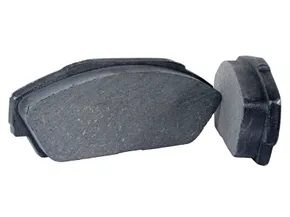
Braking isn’t just about panic-pressing the pedal when a squirrel commits suicide on your hood. It is a mechanical translation of force. You push. The system pushes back. The heart of that system is the brake pad.
Brake pads are the friction material. They clamp down on the rotors. Those rotors are the shiny discs you see spinning behind your spokes. Pressure creates friction. Friction kills momentum. The wheel stops. The car stops.
It sounds simple. The reality is brutal.
Wheels spin fast. Cars weigh tons. Every time you slow down, the pads take a beating. Imagine grabbing a hot, spinning metal disk. Now imagine squeezing it until the rotation dies. That is what your pads do. They endure extreme heat and stress for thousands of miles. They don’t complain. They just wear down.
Not all pads are created equal. Material matters.
Organic Brake Pads: The Non-Asbestos Organic (NAO) Standard
When people say “organic” brake pads, they don’t mean they are made of carrots. They are made of rubber, glass, Kevlar, and other materials bonded together with resin. These are often called Non-Asbestos Organic (NAO) pads.
They were the standard for decades. You will find them in many daily drivers. They are soft. They are quiet. They are cheap.
The trade-off is wear. Soft means they grab hard. Hard grabbing means good stopping power initially. But it also means they shred quickly. You will replace them more often.
Heat is their enemy. Organic pads fade under heavy load. If you tow a boat or drive in the mountains, these pads will get hot. They get hot fast. Once they exceed their thermal limit, they lose grip. That is brake fade. Not ideal.
So, which brake pads last longer? Organic ones? Or the ceramic and semi-metallic alternatives? The answer depends on your driving style. For city commuting, organic pads offer a smooth pedal feel. They are gentle on rotors. They rarely squeal.
But if you drive hard, they won’t last. The resin burns off. The friction material glazes over. You lose bite.
Organic brake pads provide a smooth, quiet ride but suffer from rapid wear and heat fade.
Where do they excel? Daily commuting. Low-speed city driving. Cars that don’t see heavy towing. If your car is a commuter and you want silence, organic pads are a valid choice. Just know that longevity is not one of their strengths.
The next step in the evolution is semi-metallic pads. They mix metal fibers with organic materials. More metal. More heat resistance. Less dust? Sometimes. More noise? Often. We will look at how that balance shifts the equation in the next section.
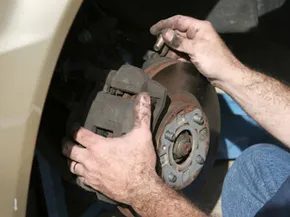

The Ceramic Compromise
If organic pads are the budget-friendly, quiet option, ceramic brake pads are the premium upgrade that asks for a premium price. You’re going to pay more upfront, but you’re buying longevity and cleanliness.
These pads use copper fibers instead of the steel or aluminum found in semi-metallic versions. The result is a friction material that is incredibly consistent. It doesn’t fade easily when the heat builds up, which is a big deal for drivers who want predictable stopping power. They produce very little dust, and what little they do create is light gray rather than the black sludge associated with semi-metallic pads. That means your wheels stay looking cleaner for longer.
There’s a catch, though. Ceramic pads can be noisy if they get cold in freezing temperatures. They need to warm up to perform at their best. If you’re driving in a climate with harsh winters, you might hear a slight squeal until the brakes reach operating temperature.
For most daily drivers who prioritize a quiet ride, low dust, and long pad life, ceramics are the sweet spot. They handle the heat of city driving and occasional highway speeds without breaking a sweat. But for track days or towing heavy loads? They might not have the bite you need.
Semi-Metallic Pads: The Workhorses
Then there’s the semi-metallic option. These are a mix of metal fibers (often copper, steel, or iron) mixed with graphite and other fillers. They’re tough. They handle extreme heat well, making them a favorite for performance cars, trucks, and vehicles that tow heavy loads.
The downside? Noise and dust. Semi-metallic pads can be noisy, especially when wet. They also generate a lot of dark, gritty dust that coats your wheels quickly. If you don’t mind cleaning your rims more often and tolerating some brake squeal, these pads offer serious stopping power and durability.
Which Brake Pad Material is Right for You?
Choosing the right brake pad material comes down to your driving habits, vehicle type, and budget. Here’s a quick breakdown to help you decide:
- Organic/Non-Asbestos Organic (NAO): Best for small cars, daily commuting, and drivers who prioritize quietness and low cost. They wear faster and create more dust, but they’re gentle on rotors.
- Ceramic: Ideal for daily drivers who want low dust, long pad life, and consistent performance. They’re expensive but worth it for the cleanliness and quiet ride. Avoid them for heavy towing or track use.
- Semi-Metallic: Perfect for performance cars, trucks, and towing vehicles. They handle heat and heavy braking well but can be noisy and dusty.
The Bottom Line
Brake pads are more than just a maintenance item. They’re a safety component that affects your car’s handling, noise, and even its appearance. Understanding the differences between organic, ceramic, and semi-metallic pads can help you make a choice that fits your needs and your wallet.
Don’t skimp on quality. Your safety depends on it. And if you’re ever in doubt, consult a mechanic or a parts specialist who knows your vehicle’s specific requirements. They can help you find the right balance between performance, comfort, and cost.

The allure is understandable. Ceramic brake pads deliver superior stopping power. They shed weight. They endure high-stress driving without fading. For the track day enthusiast, they are a dream component. So, what is the catch?
Price.
You are paying a premium for materials that simply aren’t necessary for daily commuting. If your goal is just to get to the office without skidding, ceramic pads are an expensive solution to a problem you don’t have.
The Composition and Heat Management
These pads are not just fancy clay. They are engineered composites. The formula includes ceramic fibers, filler materials, and strong bonding agents. Some manufacturers even weave in small amounts of copper fibers to enhance thermal conductivity.
This composition serves a specific purpose. Ceramic dissipates heat far more efficiently than organic or semi-metallic alternatives. When you slam on the brakes repeatedly—say, while navigating a hairpin turn on a mountain road—the pad stays cooler. Consistent temperature means consistent friction. You don’t lose stopping power to heat soak.
There is a secondary benefit that regular car owners appreciate. Dust.
Standard brake pads shred. They create that black, gritty residue that coats your alloy wheels and requires weekly scrubbing. Ceramic pads generate significantly less dust. The residue they do produce is light tan or gray. It is also less adhesive. It wipes off with far less effort than the carbon-heavy dust from semi-metallic setups.
When Do You Actually Need Them?
The question isn’t whether they work. It’s whether you need them.
For a daily driver, the answer is almost always no. The friction curve of a ceramic pad is often optimized for higher temperatures. A car that sits in traffic or cruises on the highway might never reach the thermal threshold where ceramic pads shine. You pay more upfront, and you might not notice the difference in your daily stop-and-go commute.
Who benefits?
- Track-day cars: Vehicles pushed to their limits in club racing events.
- High-performance sports cars: Machines with high-mass rotors that can absorb and manage the heat output.
- Enthusiasts with budget: People who prioritize wheel cleanliness and minimal dust over cost savings.
For the average driver, the extra cost rarely justifies the marginal gain in braking feel. You are paying for peak performance that your daily driving style never utilizes.
The Budget Alternative
If your wallet is tighter than your grip on the apex, or if your car isn’t built for racing, you have other options.
Metallic Brake Pads
Semi-metallic pads offer a different trade-off. They are generally cheaper than ceramics. They handle heat well, though they can be noisier and dust more. They are the workhorse choice for drivers who want reliability without the ceramic price tag.
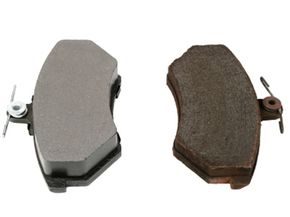
Motorcycle Brake Pads
You might assume swapping a car for a bike changes the physics of stopping, but the core challenge remains the same: dissipate heat, maintain friction, and not wear out your rotors in a week. Motorcycle brake pads, however, operate in a tighter box. Less mass means less thermal inertia, so these pads need to bite hard and fast.
The composition mirrors the automotive world but with distinct tuning. Most aftermarket and OEM motorcycle pads lean heavily toward semi-metallic blends. Why? Because bikes generate intense heat in a small surface area. A pure organic pad would glaze over quickly under hard braking. Semi-metallic compounds, rich in steel fibers and copper, handle that thermal load better. They’re durable. They resist fade.
But there’s a trade-off, always. Steel-based pads are abrasive. They eat rotors. If you ride a heavy cruiser or a sportbike that sees track days, you’ll notice your discs wearing down faster than you’d expect. The pad holds up, sure. The rotor doesn’t. It’s a classic durability vs. component cost debate.
Some riders opt for ceramic formulations, usually found in commuter or touring bikes. These are quieter. They produce less dust. The downside? They can feel spongy initially and require more heat to reach optimal stopping power. On a motorcycle, where you’re standing up and feeling every vibration, that initial lack of bite can be unsettling.
Then there’s the sintered metal option. Think of these as the high-performance extreme. Used mostly in racing or aggressive street riding, sintered pads are fused under high heat and pressure. They offer the highest coefficient of friction and heat tolerance. They’re expensive. They’re noisy. And they’ll chew through cheap rotors like butter. But when you’re leaning into a corner at 90 mph and need to stop without locking up, sintered pads give you the modulation you need.
Which one you choose depends on your ride. Heavy bike? Look for robust semi-metallic. Light commuter? Ceramic might save you from brake dust on your white t-shirt. Track day regular? Sintered is non-negotiable. There’s no universal answer, just a series of compromises.
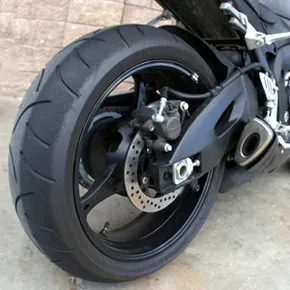

The physics haven’t changed much since the days of early automobiles. Brakes are just a transfer of human effort into friction, forcing wheels to slow down. In a standard car or truck, hitting the pedal engages all four wheels simultaneously. A motorcycle is different. It’s an exercise in separation. The front and rear brakes operate independently, governed by two distinct controls. You squeeze the left handlebar lever for the front brake. You step on the pedal at the bottom right for the rear.
This division isn’t arbitrary. The front brake does the heavy lifting, providing the majority of the stopping power. The rear brake stabilizes. Because of this disparity, motorcycle brake pads are arguably the most critical safety component on the bike. They take the brunt of the deceleration force.
Manufacturing processes mirror the automotive industry. The base materials are similar. However, the composition varies. Ceramic and organic compounds are the dominant choices for two-wheelers. Cars are heavy. Motorcycles are light. This weight difference matters. Organic brake pads, which might wear out rapidly on a half-ton sedan, last significantly longer on a 400-pound bike. The friction material doesn’t get shredded as quickly without the massive inertia dragging against it.
It’s a balance of material density and vehicle mass. Get it wrong, and you’re sliding across the asphalt. Get it right, and you stop with precision.
Understanding Brake Fade and Heat Dissipation
Why does the front brake matter more? It’s about weight transfer. When you brake hard, the bike’s center of gravity shifts forward. The front suspension compresses. The rear lifts slightly. This puts more load on the front tire, increasing its grip potential. That’s why the front brake provides most of the stopping power. If you lock up the rear wheel, you’re just spinning rubber. If you lock the front, you’re off the bike. The physics don’t care about your confidence. They care about traction limits.
This is where motorcycle brake pads play a decisive role. Not all pads are created equal. Sintered metals handle heat better. Organic compounds offer smoother engagement. Which one you choose depends on your riding style. Track days? You want high-temperature resistance. City commuting? You want quiet, low-dust performance. The material dictates the feel. It dictates the safety.
How to Choose the Right Pad for Your Bike
Selection isn’t just about fitting the caliper. It’s about matching the compound to the environment. Here are the key variables:
- Riding Conditions: Wet roads demand pads that don’t slide. Dry, hot tracks need pads that resist fade.
- Bike Weight: Heavier bikes, like adventure touring models, put more stress on the pads than a lightweight sportbike.
- Noise Tolerance: Organic pads are quiet. Sintered pads can be noisy but last longer.
- Heat Resistance: If you ride aggressively or tow a trailer, you need pads that won’t glaze over under pressure.
The choice affects how the bike behaves. It affects how you feel about stopping. It’s a tactile decision. You don’t just install pads. You install a feeling.
Maintenance and Inspection
Brake pads are consumables. They wear down. Inspect them regularly. Look for thinning material. Check
Choosing the Right Material for Heavy Duty Stopping
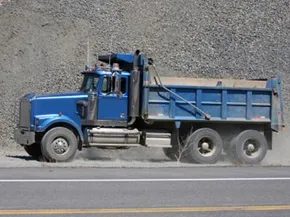
Trucks are massive. They are heavy. Stopping them requires serious physical force. An empty pickup moving at 5 mph still demands attention from the braking system. A fully loaded semi-truck doing 65 mph on the interstate? That requires an industrial-grade solution. The brake pads have to handle heat, friction, and repeated stress without fading or failing.
Organic brake pads are off the table. They are soft. They wear down too quickly under the strain of heavy vehicles. You cannot afford to replace them every few thousand miles on a work truck. So, what actually works?
Metallic vs Ceramic Truck Brake Pads
You generally have two solid options for heavy-duty applications: metallic and ceramic. Both offer significantly more stopping power than organic compounds, but they serve different needs and budgets.
Ceramic brake pads are the high-performance choice. They provide excellent stopping power, even when hauling tons of cargo. They are quiet. They produce less dust. But they come with a steep price tag. You are paying for materials that last longer and perform better under extreme heat.
Metallic brake pads are the budget-friendly alternative. They cost less upfront. However, they are harsher on the rotors. They wear down the rotors much faster than ceramic pads do. You might save money on the pads, but you could spend it later on rotor replacements.
Matching Pads to Purpose
Not every truck needs the same setup. A compact truck used for daily commuting to the office does not need high-performance pads capable of mountain descents. It needs reliability and low noise.
Conversely, a heavy-duty truck that tows heavy loads through mountainous terrain requires something robust. The decision on which truck brake pad material to install depends on three specific factors:
- The size and weight class of the truck
- The typical load it will haul
- The terrain it will traverse
If you are driving flat highways with light loads, standard metallic pads might suffice. If you are towing boat trailers up steep grades, ceramic pads justify their cost through better heat dissipation and consistent performance. The right choice isn’t about what is cheapest. It is about what matches your driving conditions.

You might assume that 0 to 60 mph times are the only metrics that define a performance car. Most professional drivers will tell you that stopping power is just as critical. After all, speed means nothing if you end up in a wall. In high-performance vehicles, brakes do more than halt motion. They shape handling through corners. Even when a car appears to be pushing hard on the track, the braking system is under significant stress. High-performance brake pads must withstand this abuse.
The Heat Problem and Brake Fade
The core challenge for any braking system is heat management. If brake pads overheat, stopping power vanishes. This phenomenon is known as brake fade. It happens when components get too hot, often causing hydraulic brake fluid to boil. Once that fluid boils, the pedal goes soft or sinks to the floor. You lose control.
Racing teams treat brake fade as a primary threat. To combat it, most performance cars use ceramic brake pads. Some ultra-high-end race cars are switching to carbon fiber composites. Both materials share two key traits: they are lightweight and they dissipate heat efficiently. Lighter wheels improve acceleration and handling. Better heat dissipation prevents fade during long stints on track.
The Cost of Performance
There is a catch. Ceramic and carbon fiber pads are expensive. The materials cost more to produce. The manufacturing process is more complex. For everyday drivers, this price tag is often hard to justify. But for track enthusiasts, the investment is non-negotiable. Standard organic pads simply cannot handle the thermal loads of repeated hard braking.
“In racing, brake fade is the enemy. Materials like ceramic and carbon fiber offer the thermal stability needed to maintain stopping power under extreme conditions.”
Exploring Brake Technology Further
If you want to dig deeper into how these systems work, there are several areas worth investigating. Understanding how brake upgrades work can help you choose the right components for your vehicle. You might also look into how brake shims work to reduce noise and vibration. The backing plate plays a crucial role in heat transfer and structural integrity as well.
For those who tow heavy loads, braking dynamics change entirely. Learning how to brake while towing is essential for safety. Many drivers ask what is the safest way to brake when towing a trailer or camper. The answer often involves adjusting your technique and ensuring your tow vehicle’s brakes are up to the task.
Recommended Resources
For practical advice on maintenance and upgrades, consider these sources:
- Edmunds.com : Offers detailed guides on how to change your brake pads.
- Brakes R Us : Provides insights into material science, such as their coverage of Kevlar brake pads.
- Consumer Reports : Published a relevant overview in May 2008 titled brake pads: what to look for.
The technology continues to evolve. New compounds are tested regularly. The goal remains the same: stop faster, stay cooler, and keep the car predictable. Whether you are tracking your car or just want peace of mind on mountain roads, the right brakes make the difference.


