


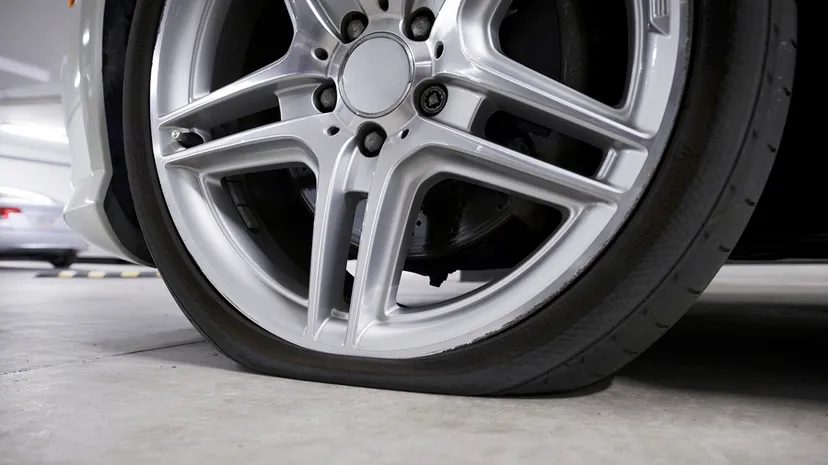
You bought the new car. You checked the trunk. Nothing there but a jack, a wrench, and maybe a bag of emergency goo. No spare tire.
It feels like a joke. A bad one. But it is standard practice now. According to AAA, nearly one-third of new 2017 model year vehicles shipped without a spare tire. The number actually dropped from 36 percent in 2015, so the trend is slowing down, but it is far from over. Drivers are shocked every time they get a flat. AAA took more than 450,000 calls from members in 2016 who were stranded and realized they had no backup tire.
Why are automakers doing this? It is not one reason. It is a mix of engineering, money, and space constraints.
The Run-Flat Tire Factor
If you drive a BMW, you know this one. BMWs have led the charge on run-flat tires for years. These tires have stiff sidewalls or internal reinforcement. They do not go flat immediately.
When you get a puncture, a run-flat allows you to drive up to 50 miles (80.4 kilometers). There is a speed limit. You must stay below 50 mph (80.47 kph) until you reach a safe location. Once damaged, they are disposable. You replace them.
Run-flats are expensive. They are harder to find. They are not cheap to buy. Yet, some cars still have standard tires and no spare. That is where the cost argument comes in.
Why Cost Matters Less Than You Think
People assume automakers drop spares to save a fortune. They do not.
A spare tire and the necessary jack and wrench cost roughly $100 to a consumer. Automakers buy these in bulk for less. The savings per vehicle are minimal. It is not a major line item on their balance sheet.
Hyundai is often blamed for leading this trend. They do it for weight, not cost. Many Hyundai models include a tire mobility kit instead of a spare. A representative named Michele Tinson confirmed this strategy via email.
“The main benefit of equipping a vehicle with a tire mending kit over a temporary spare tire is the nearly 25-pound weight savings; cost was never a significant decision factor for Hyundai,” Tinson says.
That 25-pound figure is the key.
How Weight Affects Fuel Economy
Less weight means better efficiency. It is basic physics. Tire Rack, a major tire retailer and testing firm, found that weight savings can improve fuel consumption by up to 1 percent.
One percent sounds small. It is not. Automakers market fuel economy aggressively. A slightly higher EPA rating helps sell cars. It helps the brand’s overall average fuel consumption numbers look better. Removing the spare helps get those numbers up.
This is why you see it in models where weight matters. It is why the spare is gone.
Where the Battery Goes
Space is the other big factor. Hybrids and electric vehicles (EVs) are eating up the trunk.
These cars need battery packs. The batteries are heavy and bulky. They usually go under the rear seat or in the trunk. That space used to hold the spare tire.
Tinson explained the design choice clearly.
“Our engineers made the decision to locate the hybrid/plug-in/electric battery systems in the spare tire well in order to maximize the passenger and cargo volume of our alternative powertrain vehicles,” Tinson says.
The battery takes the spot. The spare is gone. You get more cargo room, technically. You also get a flat tire situation that requires a roadside service call.
The trade-off is real. You save weight. You get better gas mileage. You get more trunk space for groceries or luggage. You lose the ability to fix a flat yourself.
That is the reality of modern car ownership. The spare tire is no longer standard equipment. It is an option. Or a memory.


Why your new car is missing a spare tire
Space is the enemy. Automakers want to maximize cargo capacity. In a compact plug-in hybrid sedan or hatchback, every inch counts. A full-size spare eats up trunk room that could otherwise hold groceries or luggage. So they cut the spare. They install a tire mending kit instead.
Hyundai learned this the hard way. Customer complaints forced a strategy shift. The Accent and Elantra, previously shipped with tire mending kits, now come with spares. It is a rare concession. Most manufacturers are not following suit.
If you are buying a car, check the trunk before you sign. Do not assume a spare exists. Ask the dealer specifically which models from that manufacturer skip the backup tire. This is a practical detail that affects your safety on a highway at night.
What happens when the tire kit fails?
Tire inflator kits are compact. They are easy to store. They are not universal solutions. The puncture must be small. No larger than 4 mm. And it must be in the tread.
If the nail or glass is in the sidewall, the kit does not work. You are stranded. That is a hard limitation. Run-flat tires offer a different approach. They have stiff sidewalls or internal reinforcement. They allow you to drive a short distance after a failure. Some brands include a mobility kit instead of a spare, relying on these tires to keep you moving until you reach a shop.
Spare tire basics and limitations
Buying your own spare costs about $100 at a tire shop or dealership. Add the cost of a proper jack and wrench, and the total rises. These parts are not universal. A spare tire fits the original car’s tire dimensions. It is designed for that specific vehicle.
“Toy tires” or compact spares are also vehicle-specific. Do not use a compact spare from another car. It will not fit unless it is the exact same make and model.
How long can you drive on a spare? Your owner’s manual has the exact limits. A general rule is 70 miles maximum. Keep speed under 50 miles per hour. Exceeding those limits risks damage to the spare and the vehicle. If you do not have a spare, check for run-flat tires or a mobility kit. If you have neither, you need a tow truck.


