



Studded tires are a love-hate relationship with the asphalt. The love is real. When the temperature drops and the roads turn to black ice, those tiny metal spikes bite into the pavement with a ferocity that standard rubber simply cannot match. You stay on the mountain road. You don’t end up in a ditch. The physics are undeniable.
The hate is just as visceral. Those same studs are road killers. They chip away at the tarmac with every rotation, turning smooth highways into cratered messes by July. You pay for the repairs in higher taxes and worse commutes. It feels like a broken contract: safety in winter, destruction in summer.
Enter the holy grail of winter driving: a tire that studds itself when it needs to. You want traction for the sleet, but you want silence and preservation for the dry autumn commute. The idea has haunted engineers for over a decade.
In 2009, Q Tires showed off a concept that looked like something from a spy movie. Pressurized air would shoot out little metal pins from within the tread blocks. It was efficient. It was clever. It was also vaporware. The project vanished faster than George Lazenby’s tenure as James Bond. Nobody built it. Nobody shipped it. The dream died in a boardroom.
But dreams have long memories.
In early 2014, Nokian Tyres in Finland decided to revisit the ghost. They released a video celebrating the 80th anniversary of the snow tire. And they showed off a prototype that actually worked. Not a concept car. Not a CGI render. A real tire.
Push-button Studs … Or Not
The Nokian version didn’t use air pressure. It used a mechanical trigger.
Inside the tire’s tread blocks, small steel studs are retracted, sitting flush with the surface. When conditions deteriorate, the driver engages a mechanism. The studs pop out. The tire transforms. It behaves exactly like a traditional studded tire, offering that critical grip on ice. When the roads clear up, you retract them. The tire becomes a high-performance non-studded winter tire.
It sounds too simple. It should be.
The engineering challenge wasn’t just the studs themselves. It was the housing. You need a chamber strong enough to withstand the immense centrifugal forces of a tire spinning at 100 km/h without blowing out. You need a deployment system that doesn’t jam. You need a way to retract them without leaving debris in the mechanism. And you need to do it all without adding so much weight that the tire becomes sluggish.
Nokian’s prototype proved the concept was viable. The studs deployed reliably. They stayed put under load. They retracted cleanly. The video showed a car driving on ice, the studs digging in, then driving on dry pavement with the studs hidden. It was quiet. It was safe. It was possible.
So why don’t we have them?
Manufacturing complexity. Cost. Reliability concerns over thousands of cycles. Consumer adoption. The market for winter tires is massive, but it’s also price-sensitive. Adding a mechanical system to every tire increases production costs significantly. Who pays for the convenience? The driver who occasionally hits black ice, or the fleet manager trying to keep operating costs down?
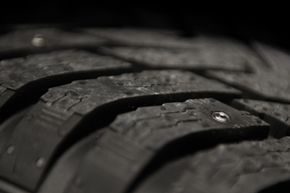

The video Nokian released showed tires that looked suspiciously like their Hakkapeliitta 8 SUV studded winter tires. But with a twist. The studs aren’t fixed. They sit flush with the rubber surface. You can’t see them until you need them.
Push a button when the sleet starts. The hard metal pins pop out. All four tires. Simultaneously.
It sounds like something out of a Bond movie. It’s not.
Nokian’s website is polite about it. They say the “unique stud concept may indeed become a reality one day.” That’s corporate speak for “no.” The company won’t show you the mechanism. There’s no schematic. No patent diagram. Just a button and a promise.
So what’s inside? You’re left to imagine. Maybe tiny mice on treadmills. Doped on Dramamine to handle the G-force. Triggered by a signal to push the pins. It’s a plausible explanation given the lack of technical disclosure.
If that image disturbs you—or if you actually need tires that work now —there are other options.
Chains: The Analog Alternative
Chains are the old standby. They still work. They bite. They grab.
But they aren’t automatic. You don’t push a button. You get out in the cold. You fumble with metal links. You hope you remembered how to do it since 2012.
No trained mice. No hidden mechanism. Just physics and friction.
Real-world Winter Tires
If you don’t want spy-tech that never leaves the lab, look at what’s on shelves.
Nokian sells the Hakkapeliitta 8. It’s a proven studded tire. The studs stay out. Always. They wear down. They need replacing. But they grip.
There are also studded alternatives from other manufacturers. And studless winter tires with advanced siping patterns. They don’t pop. They don’t deploy. They just work.
The button in the video is a gimmick. A demo. A distraction.
The tires you buy tomorrow won’t have that button. They’ll have rubber. And silica. And tread patterns designed to shed water and grab ice.
Is it less exciting? Yes.
Does it get you home? Also yes.
Sometimes the most advanced technology is the one that doesn’t require a mouse crew. Or a software update. Or a button that doesn’t exist.
Metal studded tires are a reality if you live in a snowy wonderland. But let’s be clear: they are heavily restricted. Several states ban them outright. This includes notoriously snow-bound places like Minnesota and Wisconsin. It also includes Florida. Um, okay.
Even in states where metal studs are legal, they have a limited window. You can only use them for certain months of the year. It’s not a free-for-all.
Studdable vs. Studless Winter Tires
Many winter tires are what’s known as “studdable.” This is a specific category. These tires feature a grippy tread pattern. The rubber compound is designed not to freeze up. It stays soft. It doesn’t get hard when the temperature plummets.
They don’t come with studs installed from the factory. You need a tire shop. They add the studs for a fee. It’s not a push-button solution. You don’t push a button on your way across a snow-covered mountain pass. Maybe the tire guy will let you push a button on the counter. Or something.
Comparisons show studless winter tires perform as well as studded tires. This is true in almost all winter driving conditions. They don’t tear up the road. That’s a significant advantage. No more broken asphalt. No more noise complaints from your neighbors.
When to Use Tire Chains
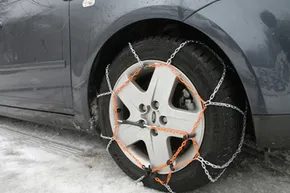
Then there’s the ultimate in real-world tire-conversion technology: tire chains. Cable chains and chain-chains offer better grip. They work on slippery surfaces where studs fail. You really, truly only use these rotten things when you need to.
No one drives around town on merely wet streets with chains on. That’s ridiculous. Chains are for the deep stuff. The ice. The packed snow.
Again, there’s no push-button solution. But if you live in California, you might find a chain monkey. These guys hang out at chain-up pull-off spots. They put chains on your car for about the price of dinner and drinks for two.
They sit in warm trailers. They wait. They watch for pathetic urban weaklings. These are the weekend warriors on their jaunt to the mountain. They pull over when they see “chains required” signs. They do pull over.
Then they quickly realize the truth. Putting on shiny new chains involves crawling around. In the slushy layer on top of the snow. It’s messy. It’s cold. It’s unglamorous.
Maybe, for a nice tip, the chain monkey will let you push a button. If that makes you feel cooler about it.


