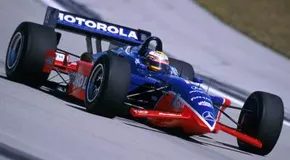
Champ Car racing isn’t just a sport. It’s a rolling physics experiment. These machines are among the most complex vehicles humans build outside of aerospace and military jets. Carbon fiber monocoques. Turbocharged engines. Aerodynamic wings that generate enough downforce to drive on the ceiling. Intelligent electronics that process data faster than a human eye can blink.
A driver hits 240 mph. The G-forces crush them into the seat. They manage tire wear, fuel mixture, and aerodynamic balance in real-time. It is one of the hardest jobs in sports.
You want to know how it works? How these cars are built? How drivers are trained? Who fixes them when a wing snaps? This is the story of the Motorola PacWest Racing Team. Specifically, we’re looking at the number 18 car. We’re going inside the garage.
The CART Rulebook and Track Diversity
Championship Auto Racing Teams (CART) runs the show. They set the technical regulations. They provide the race officials. Their rulebook is law. If you break the rules, you’re out.
Champ Car racing is unique because the tracks change every weekend. One week it’s a tight street circuit. The next, it’s a massive oval. Teams have to adapt their cars for four distinct track types:
- Short ovals : Under two miles long. High cornering speeds.
- Super speedways : Two miles or longer. Pure straight-line speed and draft.
- Street courses : City blocks. Bumpiness. Curbs. No room for error.
- Road courses : Closed tracks with tight turns and short straights.
This diversity is the challenge. A car set up for an oval is useless on a street course. Teams strip down the aerodynamic package. They change suspension geometry. They adjust gear ratios. Every race requires a new setup. Drivers must be adaptable. One minute they’re wrestling with a slippery street circuit. The next, they’re on a high-speed oval where a mistake means flying into a wall.
The Grid and The Team
A full season has 20 races. About 25 cars compete. Each car has a driver. Each team has a budget. Each team has a strategy.
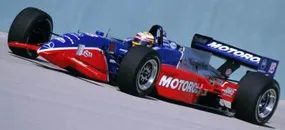
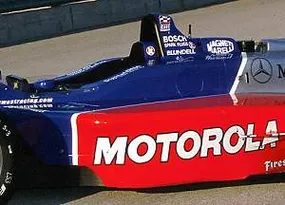
The Motorola PacWest Racing Team fields car number 18. The driver is Mark Blundell. He’s British. He’s fast. He’s driving a Mercedes-Benz engine. The chassis is a Reynard. The tires are Firestone. Motorola is the title sponsor.
This combination is critical. The Mercedes engine provides power. The Reynard chassis provides handling. The Firestone tires provide grip. If one component fails, the car fails.
Champ Car Chassis
The chassis is the skeleton. It’s made of carbon fiber. It’s light. It’s strong. It’s expensive.
Reynard built these chassis. They designed them to be stiff. Stiffness is key. A flexing chassis loses feedback. The driver needs to feel every bump. Every change in traction. Every shift in weight.
The chassis houses the engine. It houses the driver. It houses the fuel tank. It houses the electronics. Everything is packed tight. Weight distribution is precise. Center of gravity is low. Low center of gravity means better cornering.
The chassis also connects to the suspension. The suspension translates tire movement to the car. It keeps the tires on the ground. It absorbs bumps. It manages weight transfer.
Without a good chassis, the engine doesn’t matter. The tires don’t matter. The driver doesn’t matter. The chassis is the foundation. Everything else is built on top of it.
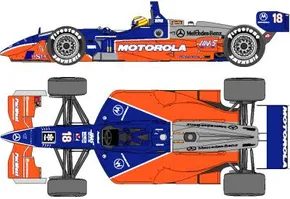
It starts with the bones. You can’t understand these machines without looking at the chassis. It’s the skeleton that holds everything together. Without it, you just have a collection of expensive parts.
Modern Champ Cars are defined by this structure. They share a rigid set of characteristics that separate them from every other form of open-wheel racing.
Single-seat. Only one person fits. No passenger side.
Open cockpit. The driver is exposed to the elements, heat, and vibration. You feel every bump.
Open wheels. There are no fenders. You see the tires. You see the brakes. It’s raw.
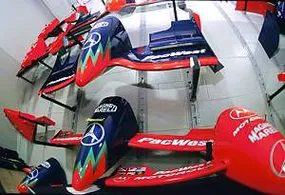
Wings. Front and rear. They generate downforce. Without them, the car would lift off the ground at speed. It wouldn’t stick to the asphalt.
Engine placement. Behind the driver. Mid-engine layout. This centers the mass. It improves handling.
Built Like a Tank, Weighs Like a Feather
The chassis itself is an engineering marvel. It’s formed almost entirely out of carbon fiber and aluminum honeycomb. That combination creates something extremely strong. And incredibly light.
Take the PacWest Motorola car. When that chassis arrives from the factory, it weighs about 1,000 pounds (455 Kilograms). That’s it. Just the frame. Before you add the engine. Before you add the electronics. Before you add the driver.
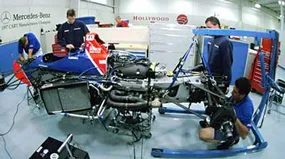
The team’s job begins the moment that 1,000-pound shell hits their garage floor. They start mounting the engine. They wire the electronics. They tune it to the driver’s style.
Who Makes the Skeleton?
Not everyone builds their own. The chassis for the Motorola PacWest car was made by Reynard in England. Reynard supplies the bones for a number of teams. It’s a standard supplier.
But not everyone uses Reynard. Other teams run Lola chassis. Different shapes. Different engineering philosophies. Different strengths.
Every year, the manufacturers release a new chassis. All teams start from scratch. They attend testing sessions. They try to find a competitive advantage. A fraction of a second here. A gram of weight there.
Why Change Every Year?
The rules evolve. Each season brings new constraints.
Look at 1999. The CART rules reduced allowable aerodynamic downforce by 500 pounds. That’s a massive change. It changes how air moves over the car. It changes how fast it can corner.
Chassis manufacturers had to account for that. They redesigned. They adjusted. They compromised. You can’t ignore the rulebook.
“Every year, the manufacturers release a new chassis and all of the teams start from scratch, attending testing sessions to try to gain a competitive advantage with their new chassis.”
The Rolling Chassis Concept
When the chassis arrives, it isn’t just a tub of carbon fiber. It’s called a rolling chassis.
It comes complete with:
* The body of the car.
* The suspension.
* The steering system.
* The transmission.
It’s ready to roll. Mostly.
The team adds the engine. The electronics. The driver. Then they tune it. They tweak
Stressed Members and Weight Distribution
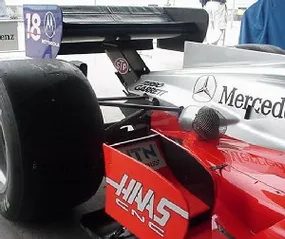
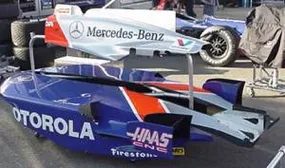
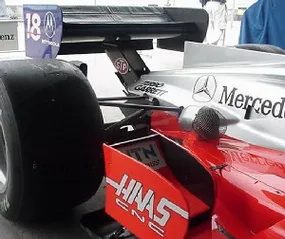
Every Champ Car shares a common mechanical DNA, even if the team branding differs. Motorola PacWest relied on Mercedes-Benz powerplants, while other squads turned to Ford, Honda, or Toyota. The chassis itself is a marvel of integration. The engine and transmission aren’t just bolted on; they are stressed members. They bear structural load. You can see this clearly: the only link between the tub and the rear axle is the powertrain itself. The rear wing bolts straight into the transmission case.
The numbers tell the rest of the story. The bare chassis tips the scales at roughly 1,110 pounds (500 kg). Add the engine, suspension, and other hardware, and you hit the official minimum operating weight of 1,550 pounds (700 kg). Once the driver climbs in and the fuel tanks are filled, the total mass jumps to between 1,900 and 2,000 pounds (860 to 910 kg). It’s a tight window. Every ounce counts.
The Aerodynamics Package
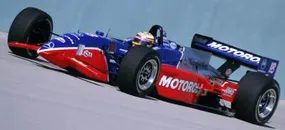
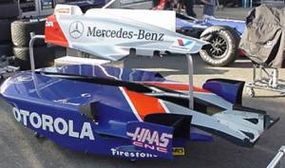
Aerodynamics define these cars. The front and rear wings are the most visible elements, but the package includes numerous smaller components designed to manage airflow. The car uses air in three distinct ways to generate grip.
The wings function inversely to airplane wings. Airplanes generate lift. Champ Car wings are mounted upside down to create downforce. This pressure keeps the car planted. The front and rear wings, plus the bodywork itself, push the car toward the tarmac. The effect is extreme. At 200 mph, the downforce is so potent the car could theoretically drive upside down on a tunnel ceiling. On street circuits, the suction is strong enough to lift manhole covers. Organizers weld them down before the green flag drops.
Cooling the Methanol Inferno
The engine in a Champ Car creates an incredible amount of heat. It is an absolute thermal monster. You are looking at a gallon of methanol fuel burning every thirty seconds or so. That process releases approximately 100,000 BTU of heat per minute. The car must dump that energy through its radiators immediately.
Think about that scale. One Champ Car produces enough heat in ten hours to heat a 2,000 square-foot house all winter. That is not a marginal excess. It is a massive thermal load.
The side pods are designed to move a huge amount of air past the radiators. This airflow is the only thing standing between the engine and meltdown. The geometry of those pods matters. They channel high-volume air directly into the cooling system. Without that precise management, the methanol fire would cook the block. It is a constant battle against thermodynamics. And the air? It just keeps coming.
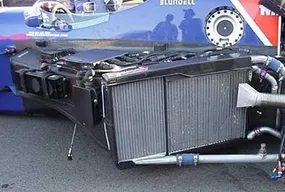
The Radiator and Air Tunnel Setup
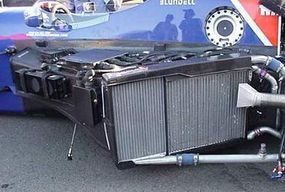
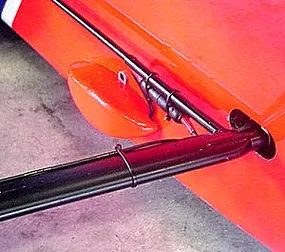
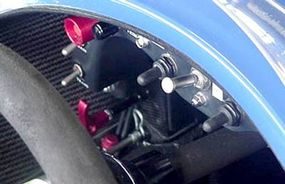
Look at the photo. You are seeing the radiator and its plumbing mount directly to the air tunnel beside the driver. This is not decorative. It is functional engineering designed for high-speed heat management. At race speeds, this tunnel pushes approximately 10,000 cubic feet of air past each radiator every single minute. That volume is massive. It is enough air to fill a 2,400 square foot house in sixty seconds.
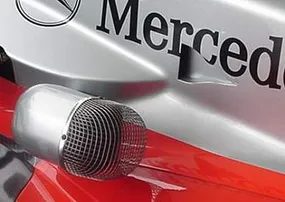
The engine also needs spot cooling. You can see small air scoops in the image below. They direct airflow exactly where it is needed most. On road and street courses, the brakes use special cooling ducts. These ducts bring more air over the rotors. Heat soak is a real killer for brake performance. This setup prevents it.
Rear Air Intake and Turbocharger Feeding
The engine needs air to breathe. A dedicated air intake sits at the rear of the car. It provides a stream of air directly to the turbocharger. The design ensures minimal turbulence before the charge enters the compression stage. A screen covers the intake. This screen keeps debris out. Debris can be a real problem at 240 mph. A rock or bug at that speed does damage. The screen stops it before it hits the compressor wheels.
The Hidden Suction and the Drag Problem
Look at a Champ Car from the side. It’s not pretty. It’s not sleek. It’s a box with wheels attached. You see the suspension arms jutting out. You see the massive rear wing slicing the air. You see the driver’s helmet, bobbing in the slipstream like a loose bolt. This design creates massive drag.
Drag is the enemy of speed. It’s the resistance you fight against. To push through that resistance, you need horsepower. Raw, brute-force horsepower. That’s why these cars run high-compression, high-RPM engines. They scream because they have to.
But the real magic isn’t on top. It’s underneath.
Covering the entire chassis is a single sheet of carbon fiber. It’s flat. It’s smooth. Air flows over it without getting caught. But look closer. There are two tunnels carved into this panel, right beneath the side pods. They’re not just empty space. They’re tapered.
This geometry is pure physics. As air speeds up through the narrowing tunnels, pressure drops. The Bernoulli effect kicks in. The air rushes out faster than it comes in. This creates a vacuum effect. Suction.
It pulls the car into the asphalt.
You have the wings on top pushing down. You have these tunnels on the bottom pulling down. The result is massive downforce. Enough to drive on the ceiling, theoretically. That’s how you corner at 200 mph without flying off the track.
Suspension and Tires
Now that you’re stuck to the ground, you need to control it. The suspension on a Champ Car is a double-wishbone affair. Front and rear. Pushrod activated. This setup allows for precise geometry control during hard cornering. It’s stiff. Unforgiving. The drivers feel every bump in the asphalt.
The tires are just as important. They’re slicks. No tread. Maximum contact patch. They’re wide. 18 inches in the rear, slightly narrower in the front. The compound is designed for heat. Cold tires don’t grip. You need them hot. The suspension keeps the tire flat on the track, maximizing that grip.
When you turn, the suspension compresses. The anti-roll bars fight the lean. The tires hold the line. It’s a delicate dance. One mistake in setup, and you’re sliding into the wall. The engineers tweak the preload, the damping, the camber. Every millimeter matters.
Why do they need such stiff suspension? Because the downforce is already doing most of the work. The car doesn’t need to lean. It needs to stay flat. If the car leans, it loses aerodynamic efficiency. The tunnels seal up. The suction drops. The grip vanishes.
So the suspension is a tool. A way to keep the aerodynamics working at peak efficiency. It’s not about comfort. It’s about precision.
The driver sits low in the cockpit. Headroom is minimal. You can’t turn your head much. The helmet is tight. The steering wheel is small. The pedals are close. You’re crammed in. But you’re fast.
The tires scream as they hit the apex. The suspension loads up. The car pivots. It’s violent. It’s controlled. It’s racing.
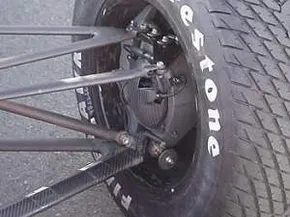
Why Double-Wishbone Dominates Champ Car Suspension
Champ Car engineers don’t mess around with compromise. The front and rear suspension setup is strictly double-wishbone. It’s not just tradition. It’s physics. You get light weight. You get serious strength. And you get a ride that stays controlled when the pavement tries to throw the car into orbit.
Racing surfaces aren’t smooth. They’re jagged puzzles. Take the Cleveland track for instance. The pavement changes texture multiple times around the circuit. Each transition hits like a bump. A sudden jolt. The goal of the suspension isn’t comfort. It’s adhesion. The job is simple but brutal: keep all four wheels glued to the asphalt despite those unpredictable surface aberrations.
Without a double-wishbone setup, the geometry would collapse under lateral load. The wheels would wander. Grip would vanish. The car would slide off the track before you could say “apex.”
“The purpose of a Champ Car’s suspension is to keep all four wheels glued to the track.”
It’s about mechanical grip. Pure and simple. The double-wishbone design allows for precise camber control through the suspension travel. That means the tire contact patch stays flat. Even when the track surface turns hostile.
Other setups exist. Multi-link. Pushrod. But double-wishbone offers the best balance of stiffness and adjustability for this specific type of high-speed, high-bump racing. It’s not just about surviving the bumps. It’s about using them.
When the car hits that transition zone at Cleveland, the upper and lower arms work in tandem. They absorb the vertical force while resisting the lateral shear. The result is stability. The car doesn’t bounce. It rolls. Controlled. Predictable.
This isn’t a luxury sedan. There’s no isolation from the road. The driver feels every crack. Every ripple. But the tires stay planted. That’s the point. If the wheels lift even an inch, the race is over.
So why stick with it? Because it works. When you’re pushing 200+ mph on a track that fights back at every corner, you need suspension that responds instantly. Double-wishbone delivers. It’s heavy? No. It’s strong. And it keeps the car on the road.
That’s all there is to it. The rest is driving.
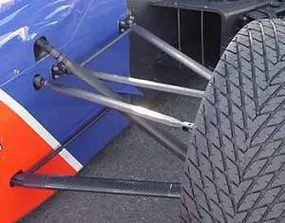
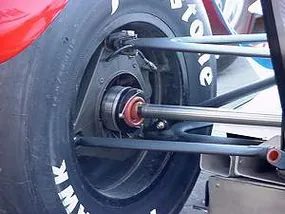
Front suspension isn’t just about holding wheels up. It has to be light. Compact. Tight. In a Champ Car, the front setup relies on triangular wishbones. These mount directly to the front hubs. Springs and shocks join the party here. So does an anti-roll bar equivalent. But they aren’t hidden away. They sit on top of the car. Just ahead of the driver. You can see them. You can almost touch them if you were leaning out.
Rear suspension follows the front’s lead but with tweaks. It’s similar. Not identical. The steering linkages disappear. No turning there. But the drive shaft adds complexity. And weight. The rear carries more load than the front. Springs and shocks handle the abuse. They are larger. Bigger than their front counterparts. They fold alongside the transmission. Packing space is tight. Every inch counts.
“The rear suspension is larger and folds alongside the transmission.”
Why the size difference? Weight distribution. The rear pushes the car. The front steers it. Power delivery changes everything. The drive shaft needs room. So does the differential. Hence the fold. It’s a puzzle of metal and motion.
The Hidden Geometry of Grip
Tuning isn’t just about dropping horsepower. It’s about how that power hits the tarmac. The suspension does the heavy lifting here. Teams dial in the toe-in and toe-out to manage how the tires point when the car is moving straight or turning. They tweak camber, positive or negative, to maximize the contact patch. Caster is adjusted for stability. These small angles dictate whether the car understeers out of a corner or oversteers and spins you out.
There is one wild card. Teams can actually shorten or lengthen the wheelbase. They do this by swapping out the wishbones. A shorter wheelbase makes the car twitchy. A longer one makes it stable. It is a physical change to the car’s footprint.
But you cannot just weld whatever scrap metal you have in the garage. CART rules are brutal about this. Reliability matters. If a component fails at 180 mph, the race is over. So the regulations dictate exactly what these parts must be made of.
Strict Material Rules
The rules are specific. Highly stressed steering and suspension components must be made from SAE 4130 steel. Or an alloy that the manufacturer claims has equivalent physical properties. It is not up to the team to decide if a cheaper metal will work. The manufacturer’s spec is the law.
Front and rear uprights have a bit more flexibility. They can be magnesium alloy or aluminum alloy. But there is a catch. All these parts, steel or aluminum, must be heat-treated.
This is not optional.
The process includes stress relieving, normalizing, annealing, and hardening. It must happen after forming and welding. And it must follow the manufacturer’s recommendations for that specific alloy. You cannot skip steps to save time.
Electroplating adds another layer of bureaucracy. If you plate the parts, they must be oven-baked. The temperature is strict. 375 degrees Fahrenheit, plus or minus 25 degrees. This baking must last for not less than three hours.
Why is this rule so specific? It is to prevent hydrogen embrittlement. Plating introduces hydrogen into the steel. If that hydrogen is not driven out by heat, the metal becomes brittle. It can crack under stress. The three-hour bake at 375°F removes that hydrogen.
If the plating is stripped off, the parts must be baked again. Unless they are reprocessed within three hours. Time is a factor.
Joining methods are also restricted. Brazing and soldering are banned. Dissimilar metals cannot be joined. You cannot weld aluminum to steel and hope for the best. Shot peening is recommended for highly stressed parts. It introduces compressive stress to the surface, which helps resist fatigue cracks.
These rules sound like paperwork. They are not. They are survival.
Center of Gravity and Ride Height
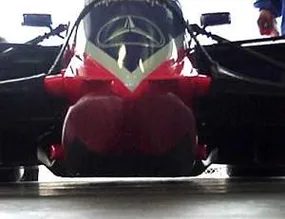
The car sits dangerously close to the ground. We are talking about a center of gravity just 2 to 3 centimeters off the pavement. That is barely enough clearance for a loose pebble, let alone a curb. Because the ride height is so low, the suspension system has almost no room to work. You get less than 1 inch of up/down travel. The result? The ride is brutally stiff. You feel every imperfection. There is no cushioning. The chassis is hard. The track is hard. The car translates every vibration directly into the driver’s spine.
Tire Adhesion and Control
Champ Car tires are not accessories. They are the only point of contact with reality. They keep the machine on the track. They translate your inputs from the steering wheel, brakes, and accelerator into actual motion. Without them, you have nothing but a heavy, expensive paperweight.
Street course events make this relationship visceral. Drivers constantly push the limits of tire adhesion. That is the technical term for how much grip the rubber has. The limit for accelerating, braking, or cornering is determined entirely by that grip. If the tires lose adhesion, the car slides. If they hold, you carry speed. It is a binary outcome.
Engineering for Extreme Force
Standard street tires cannot handle the forces generated here. A Champ Car tire is an engineering anomaly. It is built for incredible lateral and longitudinal loads. The compound is different. The construction is different. The shape is different. You cannot replace these with something from a local auto parts store. The forces applied are far beyond what a typical passenger vehicle experiences. The tires are the critical link between the driver’s intent and the car’s performance. They must be perfect. They must be precise. They must not fail.
What happens when they do? That is a problem for another day.
If you think your daily driver tires have some grip, you’re looking at the wrong machinery. The gap between a commuter sedan and a CART Champ Car isn’t just about horsepower. It’s about physics. Specifically, it’s about how much rubber touches the asphalt and how hard that rubber fights to stay there.
The Contact Patch Advantage
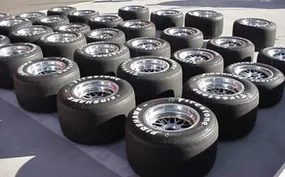
Let’s look at the dimensions first. A standard passenger car tire sits at roughly 8 inches wide. That’s it. A Champ Car front tire is 12 inches wide. The rear? A massive 16 inches.
That width isn’t cosmetic. It’s about the contact patch. The area of the tire actually touching the track is exponentially larger. But width alone doesn’t generate grip. You need friction.
Bare Rubber, No Grooves
Here is where things get strange for the uninitiated. These tires are slick. No tread. No grooves. No pattern.
Why? Because any groove removes rubber from the surface. In racing, every square inch of rubber that isn’t touching the track is rubber that isn’t generating adhesion. The goal is to maximize the surface area in direct contact with the asphalt. Smooth tires provide the maximum possible contact patch. It’s a simple equation.
The Eraser Factor
The compound is the real shock. Regular car tires are built for longevity. They use hard compounds that resist wear for 40,000 to 60,000 miles. You change them when the tread is gone, not when they wear out from heat.
Champ Car tires feel like a soft rubber eraser. They are incredibly soft. This softness allows the tire to conform to microscopic imperfections in the road surface. It increases adhesion. It creates a mechanical bond with the track that hard rubber simply cannot achieve.
But there is a cost.
A Sixty-Mile Lifespan
You might wonder how long these soft, wide, slick tires last. The answer is barely enough to complete a lap.
A Champ Car tire is engineered to last only 60 to 70 miles. That’s it. In a 500-mile race, CART rules permit a team to use up to 60 tires. Compare that to your daily driver, which might see 60,000 miles. The difference in philosophy is stark. One is built for miles. The other is built for minutes.
Heat Management and Thin Walls
The short lifespan isn’t just about the soft rubber wearing down. It’s about heat.
Rubber conducts heat well. It also retains it. If you have a thick tire wall, that heat builds up inside the rubber compound. Too much heat destroys the structural integrity of the tire and degrades the grip.
To mitigate this, the sidewalls and tread area are extremely thin. There is very little rubber material on these tires. Less mass means less heat retention. It’s a delicate balancing act between grip and thermal management.
The Flat Spot Nightmare
This thinness introduces a critical weakness. If a driver locks the brakes hard, even once, the tire stops spinning while the car is still moving at speed.
The result is a flat spot. You are literally burning a hole into the soft rubber. This exposes the internal cords
The Monopoly on Rubber
Firestone doesn’t just supply the tires. They supply all of them. Every team. Every race. Every single practice session. It is a total lock on the track.
The logistics are tight. Teams arrive at the paddock with their own rims. That’s it. The heavy lifting happens in the Firestone zone. Technicians handle the mounting. They handle the balancing.
“Firestone provides all of the tires for all of teams at every race and practice session.”
Why This Setup?
There is no guessing which compound works where. The supplier controls the inventory and the prep. Teams focus on setup. Firestone focuses on the rubber.
It removes a variable. You don’t have to worry about sourcing. You don’t have to worry about wheel compatibility. You bring your metal. They bring the grip.
The Paddock Workflow
The process is repetitive but precise.
– Teams drop off rims.
– Firestone techs mount the tires.
– Balancing ensures no vibration at 200 mph.
No shortcuts. No third-party vendors. Just Firestone and the teams. It’s a closed loop. Efficient. Predictable.
What This Means for the Driver
Consistency. Same supplier. Same prep style. Same expectations.
When you’re fighting for positions, you don’t want variables. You want to know exactly what the tire will do. Firestone’s monopoly guarantees that baseline.
The Bottom Line
It’s not a choice. It’s the rule. The system works because it’s simple. Bring your rims. Get your tires. Go fast.
That’s the deal. Nothing more. Nothing less.
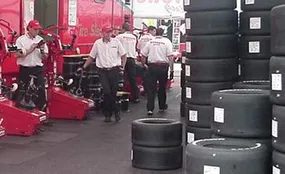
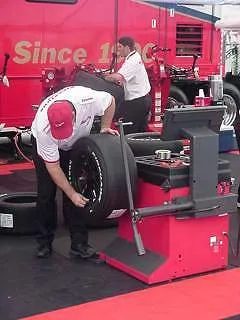
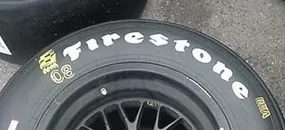
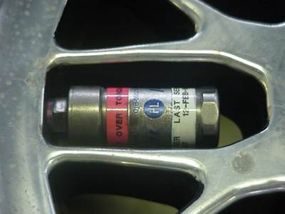
The math is staggering. With 25 cars on the grid and a roster limit of 60 tires per team per event, Firestone is mounting up to 1,500 tires for a single race weekend. That is a massive logistical operation. But the real engineering marvel isn’t the rubber. It’s the tiny hardware glued to the inside of each casing.
How tire pressure sensors work in NASCAR
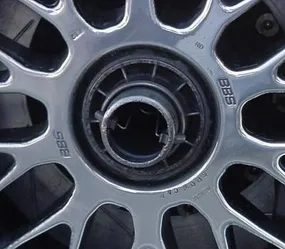
Look closely at the rim. Opposite the valve stem sits a small cylinder. This isn’t just a weight. It houses a 900-MHz radio transmitter and a centrifugal switch. The design is brutalist in its simplicity.
The centrifugal switch does the heavy lifting. When the car is stationary, the system sleeps. But the moment the tires start spinning, centrifugal force triggers the switch. The radio transmitter wakes up. It runs on a 0.25-watt signal. Low power, but enough to punch through the chassis.
Where the data goes
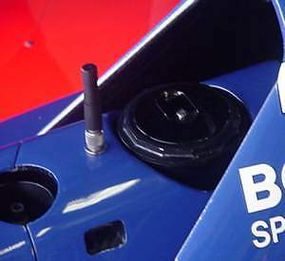
The signal doesn’t just vanish into the ether. It travels to an antenna positioned precisely behind the driver’s head. From there, the pressure data flows to the pit wall. Engineers watch the numbers. If pressure drops, they know it’s happening in real-time. No guesswork.
“Once a tire starts spinning, the radio is activated and begins transmitting the tire’s pressure.”
This setup eliminates the need for manual checks between green-flag runs. It gives crews actionable data. They can adjust air pressure mid-race without stopping. The wireless tire monitoring system turns a physical object into a data point.
Why stop at 25 cars? Because every tire matters. Every degree of heat counts. And every PSI of pressure tells a story about grip, wear, and strategy. The technology doesn’t just measure. It predicts.
The race is won in the pits as much as on the track. But only if you can read the numbers.
Every tire on the car sends data separately. It’s not a guess. If a driver hits debris from a wreck, they can call the pit wall immediately. The crew checks the live telemetry stream to see if any rubber is leaking. No guessing. No waiting for the next lap.
Teams spend serious money for this clarity. Each tire’s radio unit costs thousands of dollars. Since every car has 60 rims in its pit box, that’s a massive investment. It tells you exactly how much these cars rely on grip.
CART regulations dictate every millimeter of the contact patch. You can’t just bolt on any wheel. The specs are rigid.
The Numbers Don’t Lie
Here is what the rulebook demands for the metal and rubber:
- Rear rim diameter : 15 inches
- Rear rim width : 14 inches
- Rear rim minimum weight : 14.7 pounds
- Rear tire diameter : 27.0 inches
- Rear tire width : 16 inches
- Front rim diameter : 15 inches
- Front rim width : 10 inches
- Front rim minimum weight : 13.48 pounds
- Front tire diameter : 25.5 inches
- Front tire width : 12 inches
- Pressure : 35 PSI for oval courses, 20 PSI for road courses
The difference in pressure between oval and road courses is stark. Ovals demand higher pressure. Road courses need more flex. The rims themselves are not cheap. They undergo X-ray testing and dynamic stress tests before being allowed on the track. One crack, and the part is dead.
The Electronics
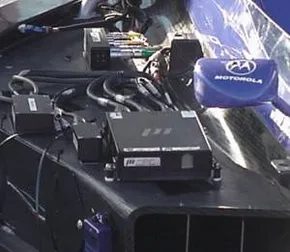
The Digital Cockpit: Inside the Radiator Tunnels
A Champ Car isn’t just metal and rubber. It’s a rolling server farm. You look at those air tunnels designed for the radiators and you don’t just see cooling ducts. You see a graveyard of electronics. Every inch of space in those tunnels is claimed by subsystems that keep the machine alive and fast.
Take the driver’s left side, for instance. That specific spot in the photo is crowded. It’s not empty space. It’s packed with hardware.
First, there is the data logging computer. It records everything. Speed. G-force. Tire pressure. Then there is the engine control unit or ECU. Yes, that is another computer. And another.
The alternator control electronics sit nearby. They manage the power generation. Power is needed for the sensors. Power is needed for the displays.
Then there is the battery. It’s not under the hood in the traditional sense. It’s a long box mounted along the side of the pod. It feeds all of that on-board electronics. Without it, the data logging computer is just a brick. The ECU stops talking. The alternator electronics do nothing.
A Champ Car is essentially a rolling computer where every component serves the digital nervous system.
This setup highlights how modern open-wheel racing has shifted. It’s no longer just about mechanical grip. It’s about data. The air tunnels provide cooling for the radiators. They also provide housing for the brains of the car. Each piece has a job. They all rely on that long battery box. If one fails, the whole system stumbles. That is why the placement matters. That is why the wiring is so complex. You are looking at the intersection of physics and code. And it sits right in the airflow, fighting for space and temperature.
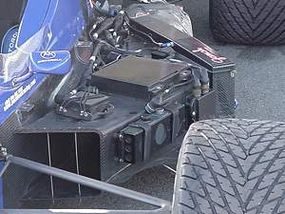
The car isn’t just mechanical anymore. It’s a rolling server.
In the last decade, the computer’s grip on the drivetrain has tightened. If the ECU dies, the engine doesn’t just stutter. It stops. Completely. The engine is now entirely subordinate to code.
The ECU manages the chaos of combustion. It controls ignition timing. It adjusts the fuel mixture millisecond by millisecond. It handles speed control, especially in the pits where a driver might need to crawl at 5 mph. It even manages SWOL. That stands for “Shift Without Lift.” It lets the driver upshift without taking their foot off the throttle. Saves time. Keeps momentum.
But controlling the car is only half the battle. The other half is watching what it does.
Every team installs a sophisticated data logging system. They also use telemetry to transmit data from the car to the pits in real-time. This isn’t optional. It’s mandatory for survival at the front.
Each team employs someone they call the DAG. The Data Analysis Geek.
The DAG’s job is specific. Pore over the reams of data a car produces during a practice run or a race. Find the edge. Use that data to maximize performance. They don’t just look at lap times. They look at tire temps. Suspension travel. Throttle position.
A typical data-logging computer measures 200 different parameters while the car is in motion.
That’s 200 distinct variables. All tracked simultaneously.
The system transmits 72 channels of data back to the pits in real-time. This allows engineers to see what’s happening now, not five seconds ago. But all 200 parameters are also stored onboard. They’re recorded for later downloading.
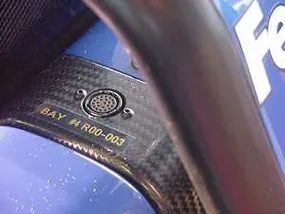
After the session, the team connects a laptop to a jack located under the rollbar. They download the car’s stored data. Then they start the real work.
The Data Deluge
The logging systems in these machines don’t just record speed. They capture a chaotic symphony of telemetry. Gear choice. Engine rpm. All four wheel speeds. Wind speed, measured by a pitot tube stuffed into the nose of the car, acting like a bird’s beak measuring the air resistance.
Throttle setting matters. Engine temperature matters. Oil temperature matters. Tire pressure on all four tires is tracked closely because pressure dictates grip. If you ignore that section on tires, you’re missing half the story.
Brake caliper pressure gets logged. So does brake caliper temperature. You’re watching for fade, for the moment the pads start to give up.
Temperature of different points in the exhaust system? Yes. That tells you about combustion efficiency and heat management.
The position of all shocks is recorded. Every bump is translated into a number. Steering load. Steering angle. Inline, vertical and lateral acceleration. G-force is just a number to the logger.
Track location. Where exactly on the asphalt are you? Height of the vehicle from the track at four points. Roll, pitch, yaw. It’s all there.
“The data doesn’t lie. It just screams in binary.”
Why This Matters
Why record all this? Because you can’t fix what you can’t measure. The driver feels the car. The engineer sees the graph.
The pitot tube data explains why the car feels unstable at high speeds. The exhaust temps explain why the engine is losing power in Sector 3. The shock positions explain why the car is pushing on exit.
It’s not just numbers. It’s the story of the lap.
The Hidden Details
Tire pressure isn’t static. It changes with temperature. With load. With slip angle. The logger captures that dance.
Brake pressure isn’t just about stopping. It’s about balance. If the rear brakes are too hard, the car spins. If they’re too soft, the front fades. The log shows you where you crossed the line.
Exhaust temperatures vary from bank to bank. Uneven burning? A tuned engine? Or a leak? The data points to the answer.
Shock positions reveal suspension travel. Are you bottoming out? Are you floating? The graph shows the rhythm of the chassis.
The Big Picture
This isn’t academic. It’s survival. In a race, milliseconds win. Seconds lose.
The logger is the black box. It’s the memory. Without it, you’re driving blind. With it, you’re flying with instruments.
The wind speed sensor on the nose? That’s aerodynamic load. Downforce. Lift. It changes the car’s behavior.
The four-point height measurement? That’s body roll. That’s weight transfer. That’s physics.
You don’t need to understand every decimal point. But you need to know what to look for.
The Human Element
The machine records. The human interprets.
A spike in brake temperature? Hard braking. A smooth line? Smooth inputs. A jagged shock position? Rough surface.
It’s a conversation. The car speaks in data. The driver listens. The engineer translates.
And then they talk.
“Data is only as good as the driver who knows how to read it.”
The Next Lap
The log fills up. Kiloby
Pinpointing Position Without GPS
Forget satellite triangulation. In this sport, location is a game of infrared and inertia.
At four specific points along the circuit, infrared beacons are mounted. They don’t broadcast; they wait. Each car carries a sensor tuned to their specific frequency. The moment the vehicle crosses the threshold, the beacon triggers a signal back to the pit. This isn’t just about knowing where you are. It’s about recording timing splits with surgical precision.
But what happens between those beacons? The track is dark. The sensors are blind.
That’s where the accelerometers step in. They act as an inertial navigation system. By measuring lateral and longitudinal G-forces, the car plots its own path relative to the last known beacon point. It’s dead reckoning at 150 mph. The data streams continuously, filling the gaps between the infrared checkpoints.
The result is a real-time position map that’s accurate enough to manage tire strategies and fuel windows. It’s not GPS. It’s not magic. It’s just physics and math, processed in milliseconds.
The Radio
The air above a Champ Car race track is thick with invisible chatter. It isn’t just the engines screaming overhead. It is a dense web of radio signals. Thousands of one-way and two-way transmissions flood the spectrum during a single event. This wireless infrastructure is the nervous system of the operation. It connects the car to the pits, the data to the engineers, and the tires to the onboard computer.
A single chassis carries up to eight active radios at any given moment. That is a lot of hardware for a vehicle designed to move at 200 mph.
The Driver’s Voice
First, there is the driver’s two-way radio. It is the most basic link. Simple. Direct. When the driver speaks, the crew hears. When the crew shouts instructions, the driver listens. It cuts through the noise of the engine. It is the primary method for real-time strategy adjustments. A pit stop strategy changes in seconds. The radio carries that weight.
Telemetry Data Streams
Then there is the telemetry system’s radio. This is where the data lives. It does not carry voice. It carries numbers. Engine temperature. Oil pressure. Gear selection. Throttle position. All of it streams continuously to the pit wall. Engineers watch this data on screens. They see trends before the driver feels them. If an engine temperature spikes, the radio alerts the team instantly. The driver might not notice the heat yet. The telemetry sees it first.
On-Board Camera Feeds
On-board television cameras also rely on dedicated radio links. These are high-bandwidth streams. They require stable connections to transmit video without lag. The cameras are mounted in dangerous spots. Near the front wing. Beside the cockpit. The radios must handle the signal from these vibrating, heat-soaked positions. Without them, viewers at home would miss the visceral experience of the cockpit. The live feed is critical for broadcast value.
Tire Pressure Monitoring
Perhaps the most specialized link is for the tires. Yes, the tires have radios. They transmit pressure data directly to the onboard computer. This is not a guess. It is real-time pressure monitoring. Teams need to know if a tire is losing pressure due to a slow puncture or overheating. The radio sends this data instantly. It allows the team to adjust strategies before a tire fails. A blown tire ends a race. The radio helps prevent that.
Antenna Placement
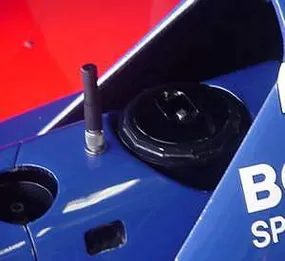
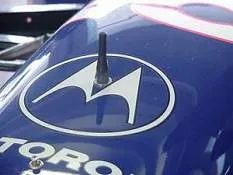
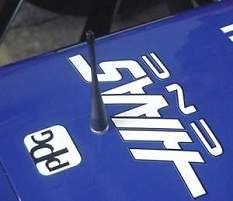
To handle all this wireless communication, the car sprouts antennas. They are not decorative. They are functional protrusions. They are placed to avoid interference. They are designed to survive the aerodynamic forces of the car. Each antenna serves a specific purpose. The driver’s radio needs a clear line to the pit wall. The telemetry antenna must be positioned for maximum data throughput. The camera antennas need stability. The tire pressure radios have their own dedicated links.
The complexity of this system is often overlooked. We see the speed. We hear the noise. We miss the silent data streams. But without these radios, the car is blind. It is deaf. It is disconnected from the team that built it. The radio system is as critical as the engine. It keeps the car in the loop. It keeps the data flowing. And it keeps the race running.
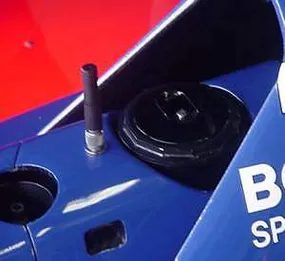
The Invisible Web of CART Communications
Racing Radios isn’t just a sponsor at CART events. They are the nervous system. Without them, the pit wall is deaf. The officials. The medical teams. The safety crews. Even the marketing staff rely on Motorola equipment exclusively. It’s not one simple system. It’s a chaotic, beautiful mess of interconnected frequencies.
The teams buy their own gear. Sure. Many hire Racing Radios to help pick it up. To keep it running. To manage the accessories. But the architecture is what matters.
Inside the Cockpit
Let’s look at the driver’s perspective. First. In the car, there is a compact 2-watt Motorola radio. It operates in the 800-MHz band. You can read up on how radio spectrum works if you’re curious, but here’s the practical bit.
This radio lets the driver talk to the pit crew. Racing Radios assigns a specific frequency in the 800-MHz band to each car. It’s simple. A push-to-talk button on the steering wheel. One channel. That’s it.
There is usually a second channel. A backup. But you only flip to it if the first one gets drowned out by static or interference.
The Antenna and The Repeater
How does a 2-watt signal reach the pit box 2 miles away? It doesn’t go directly.
The car transmits to a large antenna. This antenna sits on a tall mast on the crew’s transporter. The size of the antenna is the key. It captures the driver’s voice no matter where he is on the track. Even when he’s in a blind corner. Even with that low-power transmitter.
Inside the transporter, things get technical.
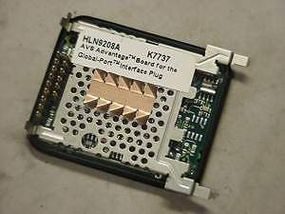
There is a Motorola cross band repeater. This is the bridge. It converts the signal between the 800-MHz band and the 450-MHz band. It contains an 800-MHz radio. An 450-MHz radio. And a converter in the middle.
The repeater rebroadcasts the conversation. At 15 watts. On the 450-MHz band. This is the signal the team actually hears. Racing Radios assigns each team a set of channels in this 450-MHz band.
The Pit Wall Protocol
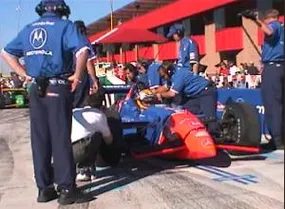
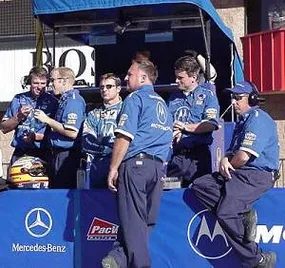
Picture the Motorola PacWest Racing Team. Every member wears a Motorola HT-1250. When a team member keys his mic. Everyone hears it. All radios in the pit are tuned to the same frequency.
They also hear the driver. Through the repeater.
But there are rules. Only one person talks back to the driver. It’s a controlled chaos.
- Mark Blundell (Driver) transmits on channel 1.
- Pit crew members transmit on channel 2.
- The designated spotter can transmit on either channel 1 or 2.
The radios scan both channels. So the crew hears each other. And they hear Mark. Mark only listens to channel 1.
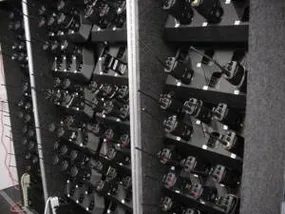
A typical team has 50 to 75 radios. They reserve frequencies for hospitality too. For the marketing group. For the guests.
The Scale of the Operation
This is just one team.
CART officials use approximately 250 radios. Race control uses them. Track workers use them. Medical crews. Fire safety. Wreck cleanup.
At any given race, there are upwards of 3,000 Motorola radios. Hundreds of allocated frequency bands. Racing Radios coordinates every single one. They ensure clear channels during the race. They handle the licensing with the FCC.
Telemetry and Beyond
It’s not just voice.
The car transmits telemetry data back to the team. Back to CART. The telemetry board needs that data. Real-time performance metrics.
Even the tires have radios. Each tire has its own small, 0.25-watt radio. They transmit pressure data to the car’s onboard data logging system. The tires and cars transmit in the 900-MHz band. They use spread spectrum techniques. This improves reliability. It reduces interference.
Some cars have in-car television cameras. One. Sometimes more. They transmit real-time images back to the television network. Broadcast to viewers. So they can see the driver’s perspective.
The Interference Battle
The big problem? Finding clear frequencies.
You need to keep everyone separated. You need to stay free from outside interference. It gets worse near cities. Police. Fire. Sanitation. Industrial users. The spectrum is crowded.
Racing Radios finds clear frequencies before the race. They assign them. They keep all the radios charged. There’s a tractor-trailer devoted to charging equipment. And distributing the radios.
It’s a logistical nightmare. Managed by people who know exactly which frequency plays nice with which.

You won’t see frantic scrambling in these races. It’s not allowed.
That sounds simple enough, but it changes everything about how the race unfolds. If riders can’t call their pit crews mid-stint to ask for advice or change their race plan on the fly, they have to figure it out themselves. They’re flying blind, mostly.
But there is a silver lining for the spectators. Because the “no scrambling” rule is in place, all radio chatter is public. Anyone with a radio scanner can listen in.
Many fans and reporters show up to every event specifically with scanners. They want the raw, unfiltered details. They want to hear the team principals arguing over strategy or the mechanic explaining why a part failed. It’s a layer of transparency that most other motorsports just don’t offer. You get the full picture.
The Role of Integral Jacks
Speaking of the garage end of things, let’s talk about the tools. You can’t just lift the bike up with a standard stand in the middle of a race. You need speed. You need precision.
Enter integral jacks.
These aren’t your average pit equipment. They’re built into the bike’s chassis or designed to interface directly with specific lift points that are part of the frame. Why? Because time is money. Literally. Every second the bike is on the ground is a second the rider isn’t lapping.
An integral jack system allows the crew to lift the entire bike off the ground in one smooth motion. No fumbling with straps. No awkward angles. Just up, and you’re ready to work.
This is critical for the engine work. When you’re changing oil, filtering, or replacing spark plugs under pressure, you need the bike stable and elevated. The integral jack provides that stability. It also keeps the center of gravity low and controlled, which matters if you’re dealing with heavy components or complex disassembly.
In endurance racing, where a bike might run for hours without stopping, mechanical integrity is everything. The engine is the heart of that operation. If the cooling system fails, or the oil pressure drops, you’re done.
The crew relies on these integrated systems to perform quick, efficient repairs. There’s no room for error. And with the radio chatter being public, you can actually hear the mechanics discussing these very procedures. They’ll talk about torque specs, oil temperatures, and which part of the engine is showing stress.
It’s a high-stakes game. You’re watching people fix a moving part in a stationary box. And you’re hearing every word they say.
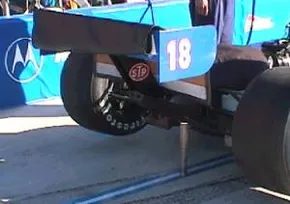
The Pneumatic Advantage
Most racing series rely on standard scissor jacks or specialized pit guns that require physical positioning and mechanical leverage. Champ Car solved that inefficiency by embedding three pneumatic jacks directly into the chassis structure. It is not a retrofit. It is a fundamental part of the car’s architecture.
There are two units mounted at the front and a single unit at the rear. This configuration allows the vehicle to lift cleanly without the awkward angles or ground clearance issues that often plague traditional pit stops. The system is not complicated. It is brutalist engineering at its finest.
Speed as a Metric
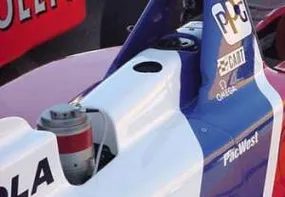
The operation is terrifyingly fast. A pit crew member connects a pressurized nitrogen hose to a port located right behind the driver. No tools. No waiting for a jack to slide under the pinch weld. Just a connection and a trigger. The car rises in less than a second.
This is not a marginal gain. It is a significant reduction in total pit time. In a series where hundredths of a second determine race winners, shaving a full second off the lift phase is massive. The nitrogen supply is on board or quickly connected via a dedicated line, ensuring consistency regardless of track conditions.
Crew Reduction and Logistics
Beyond the raw speed, the integrated design changes the crew dynamic. Traditional pit stops require a dedicated jack man. That is one person standing over the wall, waiting for the signal, positioning the equipment, and hoping for a clean lift. With the Champ Car’s system, that role disappears.
The crew is smaller. Fewer people crossing the wall means fewer variables. There is less clutter in the pit box. The crew does not have to carry a heavy, cumbersome jack over the barrier for every single stop. The equipment is already there. It is built into the car.
“The integral jacks speed up the pitting process, reduce the number of people who have to go over the wall for the pit stop, and eliminate a piece of equipment that the crew would have to carry over the wall.”
This is about more than just efficiency. It is about risk management. Fewer people means fewer things that can go wrong. A missing jack. A misplaced hose. A slip. These are eliminated. The system is self-contained. It is a testament to the idea that in professional racing, the simplest solution is often the fastest one. The driver sits there. The crew works. The car lifts. The tires change. The car drops. The race continues. There is no room for error. There is no room for hesitation. The pneumatic system demands precision. It delivers speed.
Consider the powerplant. It isn’t just an accessory. It is the beating heart of a winning Champ Car. The demands are brutal. High output. Low weight. Zero failure. During a race, the thermal and mechanical loads are unforgiving. So the rule is simple: replace the engine after every single race. Practice days count too. Qualifying runs do as well.
Motorola’s engineering team burns through dozens of engines in a single season. They don’t have the luxury of keeping one unit for more than a few hours of track time. The failure rate is a fact of life. The performance ceiling is another.
Structural Integrity and Stressed Members
Look at the chassis. Now look at where the engine sits. It is tucked behind the driver. Between the transmission and the tub that forms the cockpit. This placement is not arbitrary. The engine acts as a structural link. It connects the front suspension assembly to the rear differential housing.
In engineering terms, it is a stressed member. This means the engine block and casing carry significant loads. They are subject to torsion and compression. The car’s frame does not isolate these forces. The engine absorbs them.
The engine is mechanically the entire midsection of the car’s structure.
This integration raises the stakes. If the engine is not perfectly aligned, the entire car handling suffers. If it vibrates, the whole chassis resonates. The level of stress a Champ Car exerts on its frame is extreme. The engine must withstand it while delivering maximum horsepower. It is a paradox of design. The most fragile component is also the strongest load-bearing element.
Mass Distribution and Crash Safety
Weight matters. The engine and drive train assembly make up about one-third of the total car mass. That is a huge portion of the center of gravity. Getting it right affects cornering speed. It affects braking stability. It affects how the car responds to throttle inputs mid-corner.
Safety protocols are built around this heavy assembly. In a severe crash, the car is designed to break apart. Specifically, the engine and drive train separate from the front of the vehicle. The break point is just behind the driver.
This separation serves two purposes. It protects the driver from the intruding mass. It dissipates kinetic energy. If the engine stayed attached, the inertia would likely crush the cockpit. By allowing it to detach, the front end absorbs the impact. The driver remains isolated in the tub.
It is a delicate balance. One-third of the car’s weight is hanging by a thread, literally holding the two halves of the chassis together. When it breaks, it breaks cleanly. When it holds, it performs. There is no middle ground.
Why do teams obsess over gram weight in an engine that gets discarded every weekend? Because the difference between 0.1 seconds and 0.5 seconds is often in the millimeters of the block. Or the material of the crankshaft.
The stress doesn’t stop when the engine leaves the car. It stops when the driver walks away. But for the engineers, the cycle begins again. Dozens of engines. One winner. The rest are just numbers in a spreadsheet.
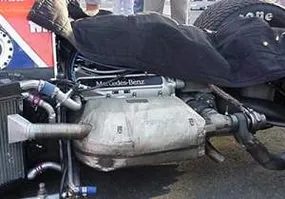
Inside the Motorola Team’s 2.64L Turbo V8
The heart of the Motorola team’s Champ Car machine is a beast that defies standard automotive logic. It’s not just a faster car engine. It’s a different animal entirely.
The specs are precise and aggressive. Displacement sits at 161 cubic inches, or 2.64 liters. It’s a V-8 configuration, but don’t expect to hear one in your driveway. The entire powerplant weighs only 325 pounds (148 kilograms). That lightness is critical.
Power output? Approximately 900 horsepower.
To make that happen, the engine screams to a maximum of 15,000 rpm. It uses a turbocharger for aspiration. Each cylinder has four valves. Dual camshafts control each bank of cylinders. Fuel delivery is direct injection.
This setup creates a Mercedes-Benz engine variant that operates on physics most street drivers never experience. Here is why it doesn’t behave like a normal car.
How the 900 HP Engine Achieves 15,000 RPM
Standard high-performance cars, like Corvettes or Vipers, might push out 350 to 400 horsepower. The Champ Car engine doubles or triples that figure.
The secret lies in the stroke. A normal engine has a longer piston travel. The Champ Car engine features a very short stroke. The pistons are large, but they move a shorter distance up and down per cycle.
Shorter stroke means less reciprocating mass moving back and forth. Combine that with extremely lightweight pistons and connecting rods. This lowers inertia. The engine can spin faster without tearing itself apart.
That is how it hits 15,000 rpm. Twice the redline of a typical performance car.
“At 15,000 rpm, it runs about twice the rpm of a normal automotive engine. What makes this possible is a very short stroke.”
Acceleration and Real-World Performance
The result isn’t just about top speed. It’s about brutal acceleration.
A Champ Car goes from zero to 100 mph in roughly five seconds. It is still in second gear when it hits that mark. Consider the comparison. A Corvette or Viper takes five seconds just to reach 65 mph.
The torque curve is flat and immediate. The turbocharger forces air into the cylinders. This pressurization allows the engine to burn more fuel per stroke. More fuel means more power per stroke.
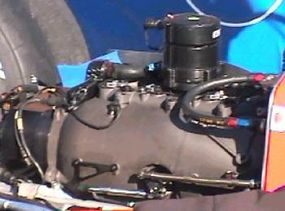
The turbo boost sits at 40 inches of water, which translates to about 19 PSI. That is significant pressure for a small displacement engine.
If the pressure gets too high, a pop-off valve releases the excess. It protects the internals from over-pressurization. The system is simple. It is effective. It is loud.
You don’t drive these cars. You pilot them. The vibration at 15,000 rpm is likely deafening. The heat management must be complex. The fuel consumption would be astronomical.
But on track, it works.
The gap between street performance and open-wheel engineering isn’t just wide. It’s a canyon. Understanding how these engines work helps explain why Formula 1 and Champ Car cars lap faster than their street-legal
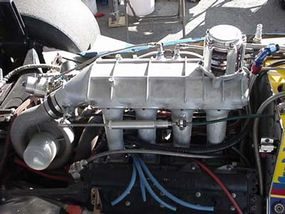
The Sound of Control
Listen for the pop. It is not a mechanical glitch. It is a signal.
Modern pop-off valves are electronic now. When they vent, the noise is loud enough to penetrate the helmet. The driver hears it. The driver knows exactly what is happening.
CART’s Tight Grip
One of CART’s most interesting functions is certifying and distributing these valves. The goal is simple. Keep the playing field even. Keep manifold pressures within the rules.
Here is how the series describes the process:
To keep the playing field even (and the manifold pressures within the rules), CART provides each team with a manifold pressure relief, or pop-off valve, to put on top of their intake manifold.
They call it a pop-off valve because of the sound. It makes a loud pop when it releases excess pressure. The result is sudden horsepower loss.
CART jealously guards these valves. They go to great lengths to ensure accuracy and consistency. Officials distribute them each day of practice, qualifying, and racing. They collect them every evening.
The Lease Model
Any CART team has an odd relationship with its engine manufacturer. They do not buy the engines.
The team signs a contract. They lease a season’s worth of powerplants. The manufacturer supplies a set of complete engines. The number varies by contract, but a typical allocation is six engines. The team rotates through them.
After each race, the team sends the used engine back. The manufacturer rebuilds it.
Transmission, Fuel and Tuning
That’s the extent of the engine bay involvement. The crew bolts it down, tops off the oil, drops in the plugs, and fires it up. If the thing coughs or seizes, they don’t fix it. They swap in a fresh unit and send the broken one back to be rebuilt. It’s a rotation, not a repair shop.
This hands-off approach extends to how the car actually moves. The transmission isn’t a variable we tweak with every lap. It’s a sealed, robust unit designed to handle the torque pulse of the V8 without breaking a sweat. The gears are pre-set by the manufacturer’s engineering team, optimized for the specific track layout. There’s no shifting software to tune. You put it in gear, you go.
Fuel Strategy and Burn Rate
Then there’s the fuel. Or rather, the lack of strategy.
In many series, teams calculate precise fuel loads based on tire wear, traffic, and brake temperatures. Here? You fill it up. The rulebook mandates a minimum fuel weight, and the teams typically carry more than enough to finish the race with a tank nearly full. Why bother weighing down the car with unnecessary fuel if you’re not going to use it? You don’t.
The burn rate is consistent. The engine doesn’t run rich or lean based on driver input in a way that significantly alters consumption. You start with a full tank. You drive. You pit if you have to, but usually, you just cruise. The fuel is high-octane race gas, pumped in at the track by designated suppliers. No blending. No testing. Just pure, standardized energy delivery.
The Tuning Void
This brings us to the most counterintuitive part of the series for an enthusiast: tuning.
In typical motorsports, the engine manager and driver are constantly communicating. Data streams flow like crazy. Boost pressure. Air-fuel ratios. Ignition timing. All adjustable.
Here, it’s static.
The ECU is locked. The maps are fixed by the manufacturer. Once the engine is built and dyno-tested, those settings are etched in stone. There is no “pulling a file.” You cannot adjust the timing to save a valve on a hot lap. You cannot richen the mixture to cool down an overheating cylinder head.
“It’s not about adapting the car to the conditions. It’s about surviving the conditions with a car that never changes.”
This might sound limiting. It is. But it’s also the point. It removes the human element from the mechanical equation. Two cars, same engine, same tune, same transmission, same fuel. The only variables left are the driver, the tires, and the suspension geometry.
Suspension: The Only Real Tuning Ground
Since the drivetrain is a black box, the suspension becomes the primary arena for setup. This is where the “race engineering” actually happens.
Teams spend weeks in wind tunnels and on test tracks dialing in dampers, springs, and anti-roll bars. They’re looking for bite. They’re looking for stability under braking. They’re trying to keep the heavy, powerful car planted on circuits that often feature sudden direction changes and long straights.
The goal isn’t necessarily cornering speed in the traditional sense. It’s consistency. Keeping the tires in their power band. Keeping the engine
The Xtrac Six-Speed and the Art of No-Lift Shifting
The engine might be the heart of a Champ Car, but the transmission is where the team’s intimate knowledge shines. Unlike the powerplant, which is largely a spec part, the gearbox is a canvas for engineering. Teams rebuild it constantly. They tweak gear ratios for every specific track layout. It is not a one-size-fits-all solution. It is tailored.
The Motorola team’s chassis and transmission come from Reynard. But Reynard doesn’t build the box. Xtrac does. Xtrac is a heavyweight in racing transmission design. They are respected everywhere. In F1. In WEC. In Champ Car.
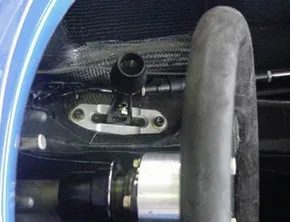
This isn’t a standard H-pattern gearbox. It is a six-speed sequential transmission. Think motorcycle. Think race car. It is not like your daily driver. Shifting happens via a small lever to the right of the steering wheel. Quick. Precise. No H-pattern confusion. Just up or down.
Then there is Shift Without Lift, or SWOL.
The engine control unit (ECU) handles the magic here. The driver can upshift without lifting off the accelerator. No clutch. No gas lift. Just a tap on the lever. This maximizes acceleration because the engine never drops in rpm. The power stays on.
Downshifting is different. You still have to match engine rpm to the gear. You can’t just dump it into a lower gear and hope for the best. If you do, you break the car. Or worse, the driver.
Why Methanol? The Invisible Danger
Champ Cars burn methanol fuel. It’s alcohol. It behaves differently than gasoline. And not just a little differently. A lot differently.
There are reasons for this choice. Real reasons. Not just tradition.
- Compression Ratios. Methanol can handle much higher compression ratios. More compression means more power on each piston stroke. It is efficient. Brutally so.
- Cooling. Methanol evaporates in the cylinder. This process absorbs heat. It cools the engine. High-revving, high-compression engines get hot. Fast. Methanol keeps them from melting down.
- Fire Safety. Methanol can be extinguished with water. Gasoline? You need foam. You need specialized agents. Water makes methanol fires worse? No. Water puts them out.
- Ignition Temperature. Methanol has a higher auto-ignition temperature than gasoline. It is harder to set on fire accidentally. Lower risk of spontaneous combustion.
But there is a catch. A big one.
Methanol burns with an invisible flame.
You cannot see it. You only feel the heat.
This is terrifying for anyone near a crash. The driver included. If methanol spills on the driver’s suit, they might not know immediately. They might not know until their skin is burning. That is why drivers move flagrant once they detect a fire. Big movements. Loud noises. They need to let everyone else know. Because you can’t see the enemy.
It is a trade-off. More power. Better cooling. Safer extinguishing. But blind fire.
The Human Element
So you have a gearbox that shifts on the fly. An engine that drinks alcohol. And a fire that you can’t see.
How does a driver manage that?
They don’t. They trust the car. They trust the Xtrac transmission. They trust the ECU to handle the SWOL logic. And they trust that if the invisible flame appears, they will react fast enough to survive it.
The
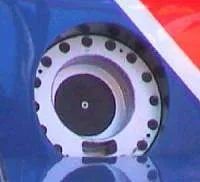
The fuel cell lives behind the driver’s seat. It holds 35 gallons (142 liters). It is not a rigid metal tank. It is a flexible bag made of Kevlar and polymer. A sponge-like substance sits inside the bag. It gives the bag structure. The design prioritizes safety. In a crash, the cell does not rupture. It flexes. It changes shape.
Why the sponge? To keep the fuel contained. If the bag simply ripped, methanol would spray over the driver, other cars, and the track. This flexible containment prevents that spray.
Methanol Consumption and Refueling
The engine consumes methanol aggressively. It gets about 2 miles per gallon. The car burns through its 35-gallon tank in roughly 70 miles. Pit stops happen every 70 miles or so.
Refueling is fast. A large filler sits just behind the driver. The entire 35 gallons flows in a few seconds.
CART rules limit fuel efficiency. Teams can only account for 1.8 miles per gallon. That is the number they must hit. They cannot burn more than that in their calculations. Fuel management is part of the race strategy. You have to stretch the fuel. You cannot just drive flat out until the tank is empty.
Assembling and Tuning the Car
Teams receive the chassis from Reynard. They get the engines from Mercedes. Then they build the car. Tuning begins immediately. It lasts all season.
The team controls everything. They adjust tire toe-in and toe-out. They set camber and caster. Air pressure in the tires is critical. Ride height matters too. Each of the four wheels can be adjusted independently.
Suspension stiffness is another variable. Aerodynamic wings are adjustable. Downforce levels change based on the track. The driver’s position in the cockpit shifts the balance. Gear ratios in the transmission are swapped. Brake bias changes the relationship between front and rear braking.
Weight distribution, or balance, affects handling. Anti-roll bar settings control roll stiffness. Engine settings are tweaked for power or reliability. The wheelbase length changes by swapping wishbones. You can make it longer. Shorter.
These variables interact. Change one thing, and another breaks. The goal is a perfect setup. It is impossible to get it perfect every time. Keeping the car in a state of perfection is hard work. It is one of the most important tasks.
Telemetry data drives these changes. Sensors gather performance data. The team adjusts a setting. They look at the data. They see the result. This loop continues.
Driving a Champ Car
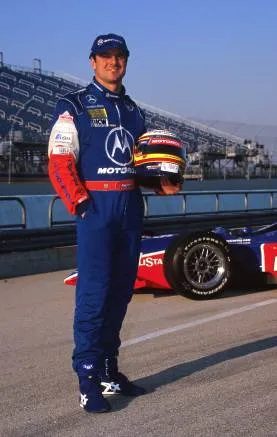
In Champ Car racing, the machine and the man are inseparable. You don’t just drive the car. You become it. Both have to operate at peak performance if you want to stand on the top step of the podium.
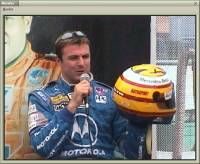
For Motorola PacWest Racing Team, that driver is Mark Blundell.
Blundell’s path to the cockpit wasn’t linear. It was forged in dirt and dust long before he ever touched an asphalt circuit in North America. Born in England in 1966, his racing credentials started small. At age 14, he picked up a motocross bike. He didn’t just ride. He dominated.
He finished in the Top 36 nationally. He won regional championships. He collected 196 trophies by his own count. That’s not a hobby. That’s an obsession.
By 1984, he had moved to four wheels. He won the British Formula Ford 1600 Junior Championship. The stats from that season are staggering.
- 25 victories
- 24 poles
- 21 lap records
He wasn’t just competitive. He was untouchable.
The transition to professional driving came in 1985. He climbed the ladder quickly. By 1991, he was behind the wheel of Formula 1 cars in Europe. He made 14 Grand Prix starts. It wasn’t a long stint in F1, but the experience mattered. It taught him precision under extreme pressure.
Then came Le Mans.
In 1992, Blundell won the 24 Hours of Le Mans with the Peugeot-Sports Team. Endurance racing changes your perspective. You learn patience. You learn to manage tires, fuel, and fear in equal measure.
He arrived in the United States for the 1996 season. It was his rookie year in Champ Car. He didn’t win the championship. He finished third in Rookie of the Year points.
But he made his mark.
He has been driving for Motorola ever since. The connection between driver and team is deep. When you spend years in the same seat, with the same sponsor on your helmet and the same team in your ear, you stop being a guest. You become part of the foundation.
Is there any other driver who could jump from motocross trophies to the Le Mans podium and then dominate American open-wheel racing? Probably not. The skill set required is too different. The mental shift is too drastic.
Blundell made the shift. He’s still here. And he’s still fast.
The Cockpit: A Custom-Fitted Survival Capsule
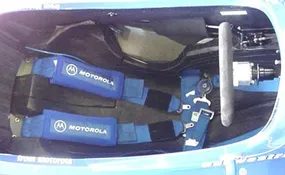
Getting into a Champ Car isn’t like sliding into a luxury sedan. It’s an ordeal. The driver’s interface is the cockpit, and while every chassis shares the same aggressive DNA, the interior is strictly tailored to the individual behind the wheel.
The first thing that hits you is the confinement. It’s tight. Intimately tight. You aren’t just sitting in the car; you are wearing it. The carbon fiber tub wraps around your torso, locking you in place before you’ve even turned the key. The fit is so precise that entry and exit require a bit of theater: you have to unbolt and remove the steering wheel entirely to squeeze in.
Once inside, the geometry changes how you feel about G-force. The seat is custom-molded to your spine and hips. You’re not upright. You’re reclined, nearly flat on your back, staring up at the roof. This position isn’t just for comfort; it’s for survival. It distributes the crushing weight of acceleration and braking across your body, reducing the strain on your neck and spine.
Strapped in with a wide, five-point harness, you’re ready for the violence of the track.
Steering Wheel Controls
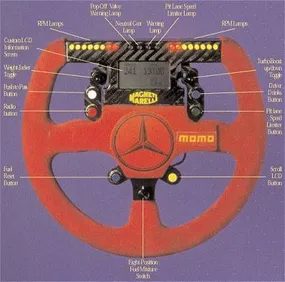
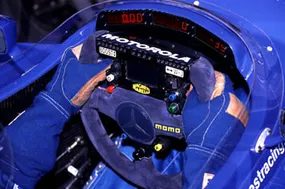
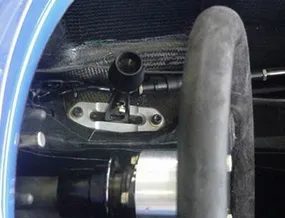
The steering wheel is not just a wheel. It is a command center. The buttons placed there give the driver direct access to critical race functions.
First, there is the Weight-jacker. This isn’t about lifting the car. It jacks up the spring on one wheel. That shifts weight onto that specific tire. Why does this matter? Fuel burns off during a race. The car’s weight distribution changes. Tires wear down unevenly. The driver needs to compensate. The weight-jacker does that. It keeps the balance right when the car gets lighter or the rubber gets slick.
Then there is the button teams simply call “the button.”
It provides extra horsepower. Just enough for passing. You hit it when you need to pass another car. It is not for straight-line speed. It is for momentum.
Other buttons handle the mundane but necessary. Push-to-talk lets the driver speak to the pit crew over the radio. Fuel reset clears the consumption timer. Fuel mixture adjusts the air-fuel ratio for efficiency or power. LCD scrolling cycles through data. The Pit area speed limiter prevents speeding in the pits. And yes, there is a Driver drink button. Hydration is part of the job.
Turbo and Data
There is also a Turbo boost adjuster. This lets the driver tweak the forced induction. If the track conditions change, the driver can adjust the boost on the fly. It is not an automatic system. The human is in the loop.
Warning Lights
The LEDs on the rim of the wheel are for quick glances. No need to look at the dash. Just a glance.
- Engine rpm shows the current revs.
- A Pop-off valve warning lights up if the turbo pressure relief valve opens unexpectedly. That means lost power.
- Neutral gear indicates the transmission is in neutral.
- Speed limiter active warns the driver the pit lane speed limit is engaged.
The Data Stream
These controls feed into the LCD display. It sits on the steering wheel. It mirrors the data on the main dash LCD. But it is closer. Easier to read.
Champ Cars have sensors everywhere. The car is a data mine. The displays feed the driver information from the engine and chassis sensors.
So much data. So much noise.
The driver has to filter it. The lights tell them what is wrong. The buttons let them fix it. The weight-jacker keeps them balanced. The turbo adjuster keeps them fast.
It is a lot to manage. But the driver is used to it.
The Interface: Pedals and Steering
Your feet sit on the standard trio: accelerator, brake, clutch. But the rest of the interaction? That is where the illusion of normal driving shatters.
Steering input is razor-sharp. In a street car, you might turn the wheel two or three full rotations to hit full lock. In a Champ Car, your total usable range is roughly 180 degrees. The slightest twitch sends the nose swinging. It feels hyper-sensitive. Jittery, even. To an untrained hand, it is terrifying.
Then there is the throttle. Pushing it down doesn’t just move the car; it launches it. The acceleration feels less like automotive propulsion and more like rocket ignition. The stats don’t lie: zero to 100 mph in five seconds. That is not a spec sheet detail. That is a visceral punch to the gut.
Braking is equally violent. Hitting the brakes from 100 mph brings the car to a dead stop in about 55 feet. Compare that to a typical passenger vehicle, which needs three times that distance. One-third the stopping distance. Physics gets bent here.
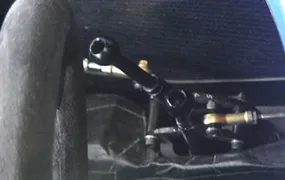
The shifter itself is linear, not the traditional H-pattern. You push and pull. It is direct. Mechanical. There is no shifting through gears in the cognitive sense; it is just movement.
The G-Force and Visual Overload
Speed changes everything. At 230 mph around an oval, corners generate about 5 Gs. Your head weighs five times its normal weight. Vision narrows. The world tilts.
But the physical toll is secondary to the mental load. Visual data is overwhelming. The gap between cars is inches, not yards. Everything happens in milliseconds. You are not driving; you are reacting to a stream of information that arrives faster than conscious thought.
A driver’s brain splits into two distinct processes. One half manages the immediate reality: maintaining spacing, adjusting speed, holding the line. This part is reactive. It is survival.
The other half is predictive. It looks ahead to the next sector of the track. It plans the maneuver before it happens. Then, at the apex, it executes. And immediately, the brain jumps to the next section. It is a continuous loop of planning and acting.
You are also playing chess with the driver ahead and the pack behind. You are always trying to pass. You are always defending your position. The mental bandwidth required is immense.
The Gear: Protection Against Speed
You do not wear jeans. You do not wear sneakers.
The suit is Nomex, designed to withstand fire. Underneath, Nomex undergarments add another layer of defense. A fire-resistant face mask, or balaclava, protects the skin from heat and abrasion. Gloves shield the hands from vibration and heat. Driving shoes provide precise pedal feel and fire resistance.
And the helmet. It is the only thing between your skull and the track.
This equipment is not optional. It is mandatory. At 230 mph, with 5 Gs pulling your body sideways, and engines screaming at redline, the margin for error is zero. The gear is the only thing that guarantees you survive the exit.
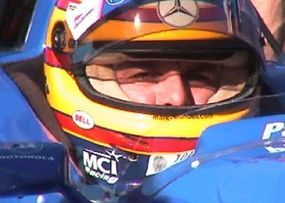
The Helmet as an Aero Component
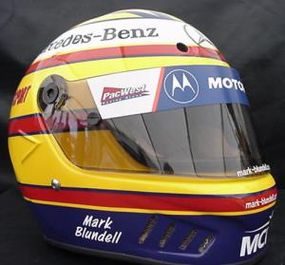
Your helmet isn’t just safety gear. It is part of the car’s exterior. In an open-cockpit Champ Car, you are sitting in the 230-mph slipstream. The air rushing past you is violent. Look at the vents and indentations on any modern helmet. They aren’t for style. They are there to cool the driver. More importantly, they manage airflow.
Smooth flow lines are non-negotiable. Turbulence? That shakes your head. When your head shakes, your vision blurs. Your stamina drains. You lose time.
The Physical Toll of G Forces
Champ Car racing demands precision. Reflexes must be razor-sharp. Endurance is everything. A driver’s heart rate averages 160 beats per minute. That is consistent. For three hours. No breaks.
Then there are the G forces. A driver goes through a 5-G turn. Their arm weighs about 20 pounds normally. In that turn, it weighs 100 pounds. Try lifting a small child with one hand. Now do it for 100 consecutive laps.
This requires constant weight room training. Neck muscles. Shoulders. Arms. Torso. You need strength to fight the Gs. Stamina is equally vital. You cannot afford to fade out in the final laps.
Wiring the Brain for Speed
What separates the pros? Their reflexes. Reaction times are lightning fast compared to the norm. But it’s not just speed. It’s concentration. Long attention spans.
Can you focus for three hours while your body is being crushed by 5 Gs? Most people can’t. Drivers train for this. On track. Off track. They drill their minds to stay locked in.
The Team and the Race
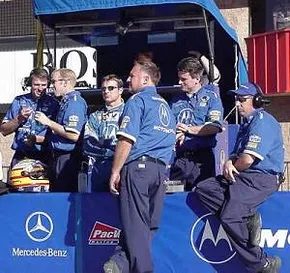
Motorola signed a deal with the PacWest Racing Group to handle everything. The crew. The chassis. The driver. It was a full-service package for the sponsor. But PacWest wasn’t just running one entry. The group managed two complete machines for different backers at the same time.
This was a big deal. In 1999, the FedEx Championship Series had only 17 teams total. Being one of them meant you were operating at a high level.
A History Built on Wins and Margins
Bruce R. McCaw started the team in 1993. He didn’t come from racing. He came from business.
He built an aviation insurance firm. He launched a regional airline. He co-founded a cellular carrier that AT&T eventually bought, turning it into AT&T Wireless. That’s the resume of the man who gave us PacWest.
The team hit its stride in 1997. That was their best CART campaign so far. Mark Blundell and his teammate took four race wins. They secured three pole positions. They finished sixth and fourth in the championship standings.
Blundell holds a record that might never be broken. He won the closest race in CART history at Portland. The margin was 27 thousandths of a second. You could blink and miss it.
Behind the Scenes in Indianapolis
The operation is based in Indianapolis. You can actually take a tour of the shop if you know where to look.
There are 72 people on the payroll. It’s a complete business entity. You have vice presidents. Directors. Managers. Engineers. Technicians. Mechanics. And the marketing staff that handles the sponsors.
PacWest covers every angle. They design the aerodynamics. They also decide what the guests eat on race day. It’s a full spectrum of logistics.
The People in the Pits
The garage crew is where the magic happens. These are specially trained professionals. They know the car inside and out. They work directly with the driver.
Their goal is simple. Create a winning combination. Every bolt. Every setting. Every strategy is fine-tuned for speed. The driver trusts them. They trust each other. That’s the only way to compete.
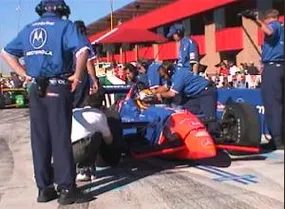
The cycle begins in November. It is quiet then, focused entirely on the arrival and assembly of chassis and engines for the upcoming season. There is no racing yet. Just metal, carbon fiber, and cold air in the shop.
Testing follows in January and February. This is where the rubber meets the road, or rather, the asphalt. It is not just about speed. It is about reliability. Tuning. Testing systems. Getting every bolt torqued to spec.
Then, March. The racing starts.
It runs on a bi-weekly schedule. Roughly every fourteen days. The season stretches through late October. Most Champ Car races stay within the United States. But the international legs change the game. Australia. Canada. Japan. Brazil. These are not just races. They are logistical nightmares wrapped in sporting events.
The Mobile Workshop
All that work. All that training. All that preparation. It leads to one thing: race day.
On race day, the team hopes for perfection. Perfect car. Perfect driver. Perfect result. Ideally, a win.
Races normally occur on Sunday. There are 20 races in a season. Approximately every two weeks. You can check the CART page for a complete calendar if you want the exact dates, but the pattern is consistent.
How does a team move across continents?
They pack up.
The team typically arrives at the track on Wednesday evening or Thursday morning. That is early. Very early. To get to a race, the team packs the cars and a complete mobile shop into tractor trailers. Everything you need to fix, tune, and prepare a race car fits into those trailers.
For international races, they fly. For domestic ones, they drive. Or they fly. It depends on the logistics.
The team packs up the cars and a complete mobile shop into tractor trailers and drives (or flies, in the case of international races) to the event.
It is not glamorous. It is heavy. It is complex. But it is necessary.
Why is it so complex? Because you cannot afford to break down. Not on Sunday. Not when millions are watching.
The team arrives. They unpack. They set up. They work.
Wednesday night. Thursday morning.
The clock starts ticking.
How long do they have?
Not long.
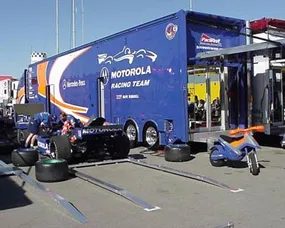
The rig isn’t just a transport box. It’s a rolling garage. Inside, you’ve got two complete cars. Spare engines. Every bolt, tool, and part required to fix a catastrophic failure on the fly. If something breaks, the rig has the answer.
Thursday: Setup and Scrutineering
Unpacking is the first hurdle. The team hauls gear into the track’s garage bay. Mechanics start the heavy lifting Thursday morning. They’re building the car from scratch for the specific track.
Thursday evening brings the technical inspection. This is where the rubber meets the road. Officials check weight. They verify measurements. They scrutinize safety features. If the car doesn’t meet specs, it doesn’t race. No exceptions.
Friday and Saturday: Pace and Position
Friday is for seat time. Morning practice. Afternoon practice. If the race is on a road course, they also run provisional qualifying. This sets the grid for the start of practice or the next session. It’s about finding grip and dialing in the setup.
Saturday is sharper. Morning practice helps fine-tune the setup for the track conditions. Afternoon is qualifying. This determines the starting order. It’s a high-pressure window. One mistake, and you’re stuck at the back.
Sunday: The Race
The main event. Sunday. All the setup work converges here.
Pit Stops: The Critical Variable
A big part of the race is the pit stops. It’s not just changing tires. It’s a choreographed dance. Timing matters. Efficiency matters.
Each team is assigned a specific slot on pit row. The position dictates who can box when. It affects strategy. It affects traffic management.
“Pit strategy can win races before the green flag drops.”
The row assignment is fixed. You don’t get to choose your spot. You work with what you’re given. Some teams get easier access. Some get bottlenecked. It’s a variable you can’t control.
Why Pit Slot Position Matters
Being on the inside of the pit lane might save seconds. Being on the outside might cause delays. The pit stops become a strategic puzzle. Teams calculate every millisecond.
If you’re in a tight spot, you can’t box when you need to. You’re stuck waiting. This changes tire strategy. It changes fuel load. It changes everything.
The Human Element
Mechanics work under pressure. They don’t have time to think. They rely on muscle memory. Years of practice.
The cars are heavy. The engines are loud. The stakes are high.
One bad stop, and the race is over. Or at least, the win is gone.
Final Thoughts
The rig prepares you. The inspection validates you. The practice sessions refine you. The qualifying determines your starting line.
But the pit stops? They determine if you finish well.
It’s a fragile ecosystem. One broken link. One missed signal. And the whole weekend collapses.
Who gets the best slot? Usually, the team that qualified fastest. Or the one with the deepest strategy. It varies.
The race is a marathon of seconds. And every second counts.
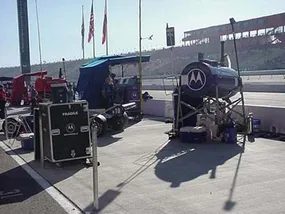
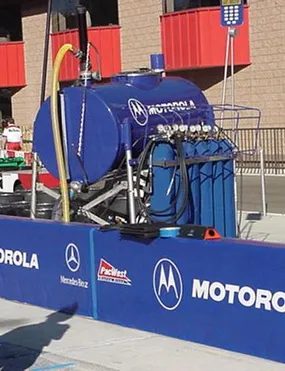
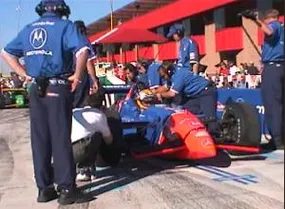
The Precision of the Pit Stop
A pit stop is not just a pause. It is a choreographed, high-speed event designed to service the car as quickly as possible. Every second counts. During a typical stop, the crew loads 35 gallons of methanol into the tank. They replace all four tires. They adjust the angle of the front wing. The team trains for months for this. Some time is spent in the weight room. Other time is spent in the car. They need this level of performance.
Motorola’s Four-Part Role
Motorola is an interesting case study. Its role in Champ Car racing has four distinct parts. First, the company sponsors a specific car. Second, Motorola is a title sponsor for certain races. Third, the company builds the chips and components inside the machine. This includes manufacturing the ECU (Engine Control Unit) for the Honda engines. They also supply semiconductors, microprocessors, and microcontrollers for the Magneti Marelli/Mercedes-Benz ECU and those of other manufacturers.
Finally, Motorola provides all the radios used during the race.
“Motorola wireless communications equipment helps keep safety workers, medical personnel, teams, drivers and the CART operations staff in constant communication.”
Motorola holds the title of “Official Communications Hardware of CART.” The wireless equipment used by the teams is the same hardware consumers buy worldwide for individual use. It is a perfect proving ground for the products.
The Communication Infrastructure
Working with organizations like Racing Radios, Motorola provides communications to most Champ Car teams. They support the Pace Car Program and individual tracks. Racing Radios experience combined with Motorola products forms the backbone of the communication infrastructure on the track. There literally could not be a race without it.
Sponsorship: The Business of Speed
Sponsors are vital to all major forms of automobile racing. They provide the capital. This money supports the teams and allows them to race. Without sponsors, there are no teams. Without teams, there is no racing.
Sponsoring a Champ Car is expensive. There are many different levels of sponsorship. Teams work in different quality brackets. At the low end, a sponsor can form a syndicate. They might pay $250,000 or $500,000 to be one of the sponsors of a multi-sponsor car. At the high end, an exclusive sponsorship can exceed $10 million per year.
The goal is exposure. The car. The banners on pit row. Other signs. These let millions of TV viewers and fans at the track see the sponsor as part of Champ Car racing.
Beyond the Track
Beyond exposure, motorsports helps Motorola develop business relations. They find customers and consumers. They create business-to-business opportunities and partnerships. The series increases brand awareness for a global audience. This audience has proven to be brand loyal to sponsors supporting motorsports as a whole.
With CART being a global series, Motorola participates with all global customers. They develop programs and promotions worldwide. Sponsorship of a Champ Car works well for the company. The exposure associates the brand with a high-tech, exciting sport. It makes extensive use of two of Motorola’s major products: radios and microprocessors. The connection is clear.
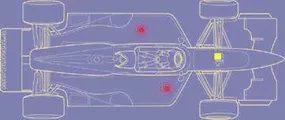
The financial upside is undeniable. The organization believes the return on its investment is substantial. That’s the bottom line. If you are digging into the mechanics of open-wheel racing or just curious about where the money goes, the data supports the enthusiasm.
Deeper Dives into Automotive Mechanics
To truly appreciate the engineering, you need to understand the components. Start with the basics of forced induction. A turbocharger compresses intake air, forcing more oxygen into the combustion chamber. This increases power without necessarily increasing engine displacement. It’s efficient. It’s hot. It’s loud.
Then there is horsepower, the unit of measurement for engine power. It’s not just a number on a spec sheet. It dictates acceleration, top speed, and how a car handles corner exit. Understanding how an internal combustion engine works reveals why these numbers matter. The four-stroke cycle—intake, compression, power, exhaust—is a rhythmic explosion that drives wheels.
Safety and Hybrid Systems
Racing isn’t just speed. It’s survival. NASCAR race car safety has evolved significantly. HANS devices, impact-absorbing materials, and roll cage structures protect drivers from high-G forces. The engineering behind these safety features is as complex as the engines themselves.
Hybrid technology isn’t exclusive to street cars. The Aptera hybrid demonstrates efficiency in a different form. It uses solar energy and electric motors to reduce fuel consumption. While Champ Cars run on pure combustion, the push for efficiency in motorsport parallels advancements in hybrid systems.
Key Industry Players and Resources
For accurate schedules, rules, and historical data, the official CART website is essential. It includes a comprehensive glossary that helps decode racing jargon. If you are interested in team dynamics, PacWest Racing Group offers insights into their operations, including driver lineups and a shop tour that reveals the intricacies of race car maintenance.
Reynard Motorsport built many of the chassis used in these competitions. Their designs influenced how open-wheel cars handled. Mercedes-Benz Performance showcases the luxury and engineering prowess that spills over into motorsport. Firestone provides the tires, which are critical for grip and speed. FedEx Racing and Motorola have been key sponsors, linking logistics and communication giants to the track.
For a personal perspective, Mark Blundell’s official site offers commentary from a former driver. He experienced the chaos firsthand. His insights provide context that stats alone cannot convey.
The industry continues to evolve. Rules change. Technology advances. The financial stakes remain high. Where does it all lead? That’s for the next season to decide.