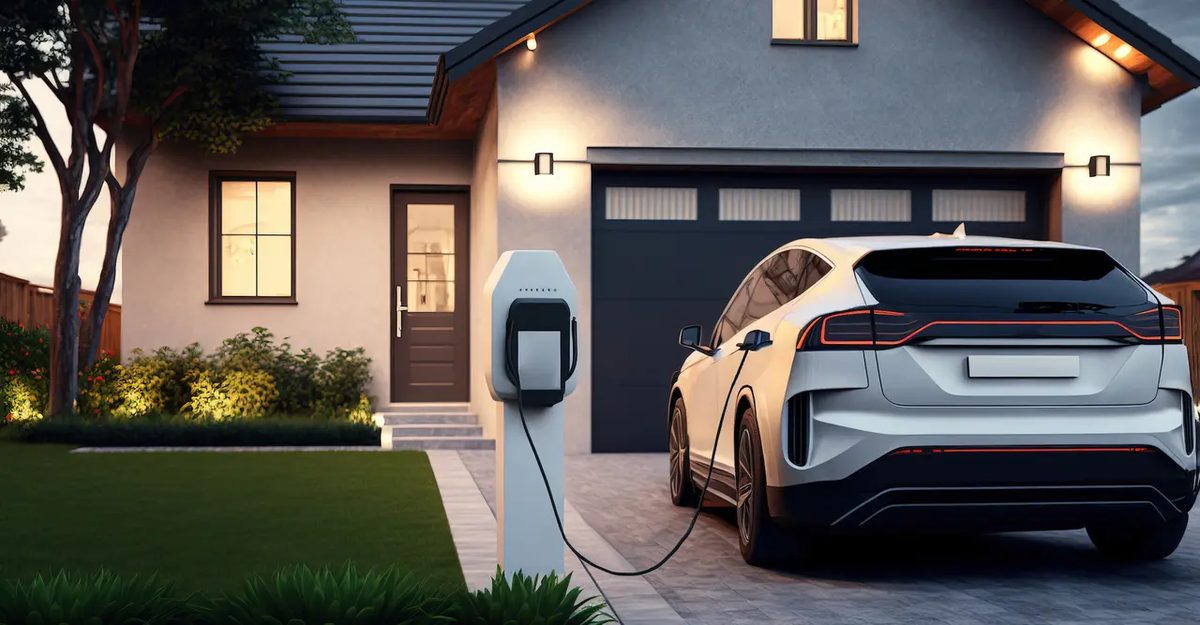
The shift to electric vehicles in France is no longer a forecast; it is happening right now. Market share for EVs has jumped from 7% in 2020 to 15% over the first five months of 2023. Public charging infrastructure is scaling rapidly, with the country surpassing 100,000 public charging points by May 2023, a 62% increase in a single year. Yet, the data tells a different story about where the charging actually happens. The overwhelming majority of EV owners plug in at home. This reality drove EDF Pulse & You, a co-ideation platform, to analyze the optimal home charging setup. With over 500 user experiences shared and 14,000 registered participants ranging from EDF project managers to private individuals, the platform has gathered concrete answers on cost, installation, and functionality.
Can you charge an EV on a standard domestic socket?
Technically, yes. Most manufacturers include a standard cable in the box. However, safety and speed are significant concerns. While most home electrical systems can handle the load, you should have a professional verify your installation to avoid damage. The main drawback is time. For batteries under 50 kWh, charging to 80% takes between 10 and 20 hours. For larger batteries of 70 kWh or more, expect over 30 hours. If you drive only short distances daily, this might suffice. For most others, it is impractical.
Why choose a reinforced socket or a dedicated Wallbox?
A reinforced socket is a middle ground. An electrician can upgrade your home connection to support faster charging. This reduces overnight recharge times for sub-50 kWh batteries, though 70 kWh batteries still require 20 to 30 hours. It is a cost-effective step up from a standard socket but not the ultimate solution.
The gold standard is a Wallbox (home charging point). Even basic models halve charging times. High-power units can charge a sub-50 kWh battery in under 2 hours and a 70 kWh+ battery in under 5 hours.
Installation often requires a three-phase electrical subscription and a new meter. You need a certified electrician, specifically one accredited for IRVE (Infrastructures de recharge pour véhicules électriques).
Consider an accelerated charging point (over 11 kW) only if you use your EV intensively or own a high-power vehicle.
What are the advanced features of a home Wallbox?
Modern Wallboxes offer smart management that protects your home electrical system.
- Off-peak charging: Programmable to run only during low-tariff hours.
- Load management: The system can automatically stop charging or reduce power if you run heavy appliances like an oven or washing machine simultaneously, preventing overload.
- Security: Some units require a badge to unlock, preventing unauthorized energy theft.
How does Vehicle-to-Grid (V2G) technology work?
V2G (Vehicle-to-Grid) technology treats your EV battery as a home energy reserve. This intelligent setup allows you to:
- Charge when renewable energy production (solar, wind) is high.
- Return electricity to the grid during peak demand.
- Use your battery to power your home at reduced rates.
If you only used 20% of your overnight off-peak charge during the day, you can plug in in the evening and draw the remaining 80% to power your house. Furthermore, if your EV is compatible, grid operators may pay you for making your battery available to the network.
The choice between a simple socket, a reinforced plug, or a V2G-capable Wallbox depends entirely on your battery size, daily mileage, and home electrical capacity. The infrastructure is ready. The decision is yours.