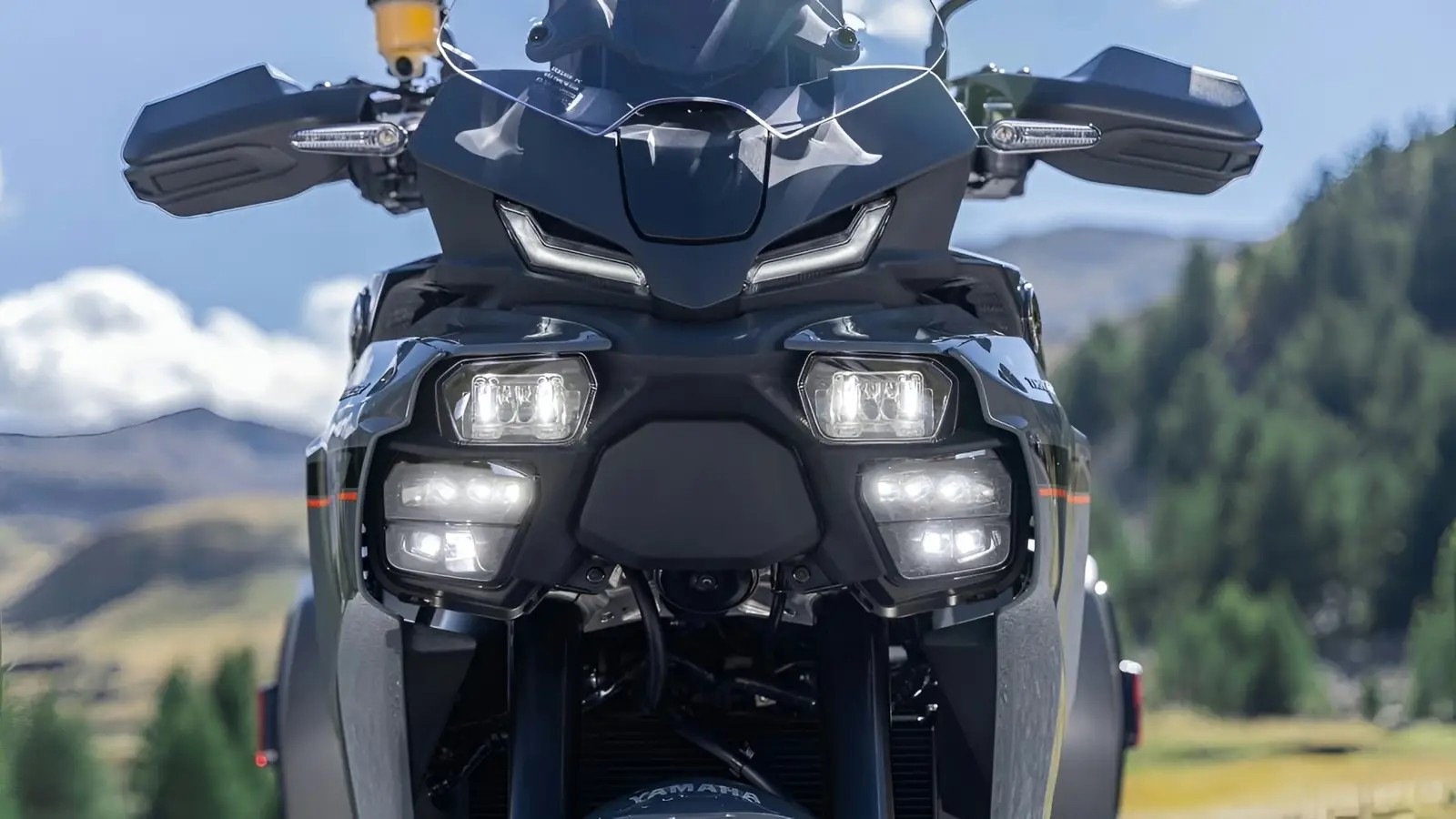
The landscape of sport-touring motorcycles is shifting. While premium European brands dominate the headlines with high-end, feature-laden machines, a distinct category is emerging: the mid-weight crossover. In this space, traditional full-size tourers are giving way to agile, versatile bikes that balance performance with practicality.
Amidst this transition, Yamaha’s Tracer 9 has emerged as a standout contender. It is not the flashiest bike in the showroom, nor does it carry the prestige badge of a luxury European manufacturer. Yet, by leveraging a proven platform and offering exceptional value, the Tracer 9 quietly outperforms expectations, proving that you don’t need a six-figure budget to get a premium riding experience.
A Lean Lineup, One Clear Winner
Yamaha’s current sport-touring presence in the US market is surprisingly sparse. The range is anchored by two primary models:
- The FJR1300ES: A classic, large-displacement inline-four sport-tourer. It offers smooth power delivery and shaft drive reliability but is limited to 2024 stock, making it a buy-it-while-you-can proposition.
- The Tracer 9: The modern, mid-weight alternative. This is the only actively supported, contemporary sport-tourer in Yamaha’s US lineup, built on the highly regarded MT-09 platform.
While Yamaha offers the smaller Tracer 7 in Europe and other regions, the Tracer 9 remains the flagship for riders seeking a blend of sporty handling and touring capability in the US.
Engine Excellence: The CP3 Crossplane Three
At the heart of the Tracer 9 is Yamaha’s legendary CP3 (Crossplane Three) engine. This 890cc inline-three has been in production for over a decade, powering the MT-09, YZF-R9, and XSR900. Its longevity is a testament to its reliability and tuning perfection.
- Power Output: 117 horsepower at 10,000 RPM.
- Torque: 68.6 lb-ft at 7,000 RPM.
- Character: Unlike modern engines that rely heavily on variable valve timing or turbocharging, the CP3 relies on a crossplane crankshaft firing order. This creates a unique, punchy torque curve and a distinctive exhaust note that feels organic and engaging.
The engine is paired with a six-speed manual transmission featuring an assist-and-slipper clutch. While a quickshifter is optional, the base setup is robust, simple, and mechanically straightforward. In markets outside the US, a Y-AMT (automatic transmission) variant is available, but the US spec sticks to the traditional manual drive.
Chassis and Handling: Nimble Yet Stable
The Tracer 9 is designed to be agile despite its touring credentials. It features a twin-spar aluminum frame (referred to by Yamaha as a “diamond frame”) that provides a rigid yet compliant foundation.
- Suspension: 41mm inverted KYB front forks and a rear monoshock. Both ends offer preload and rebound damping adjustments. While it lacks the semi-active suspension of top-tier competitors, the mechanical adjustability is sufficient for most riding conditions.
- Braking: 298mm front discs with radially mounted four-piston calipers provide strong stopping power, complemented by a 267mm rear disc.
- Weight and Dimensions: With a wet weight of 483 lbs, the Tracer 9 is lighter than many full-size tourers. Its dimensions (85.6 inches long, 59.1-inch wheelbase) ensure it remains nimble in corners while offering enough stability for highway cruising.
The ground clearance of 5.3 inches and a five-gallon fuel tank make it suitable for both urban commuting and longer inter-state trips, provided riders plan their stops wisely.
Comfort and Practicality: Ready to Ride
One of the Tracer 9’s strongest selling points is its out-of-the-box touring readiness. Unlike many competitors that require aftermarket accessories to become practical, the Tracer 9 comes equipped with:
- Standard Hard Saddlebags: Color-matched, waterproof cases that hold full-face helmets. They are mounted on a floating carrier system that isolates vibration and maintains handling neutrality.
- Adjustable Windscreen: A tall, manually adjustable screen with four settings to minimize wind buffeting on long rides.
- Ergonomics: The riding position is neutral, offering a balance between sporty engagement and upright comfort. The seat height is adjustable between 33.3 and 33.9 inches, which may be tall for shorter riders but is manageable with practice.
Technology and Electronics: Premium Features at a Mid-Range Price
For an MSRP of $12,599, the Tracer 9 offers a feature set that rivals much more expensive motorcycles. It includes:
- 6-Axis IMU (Inertial Measurement Unit): Enables advanced safety features that work in corners, not just in a straight line.
- Ride Modes: Five selectable modes, including two customizable profiles.
- Safety Electronics: Cornering traction control, cornering ABS, anti-wheelie control, lift mitigation, and slide control.
- Brake Control: A unique Yamaha feature that adjusts ABS intervention levels based on riding style.
- Connectivity: A 7-inch TFT display, USB charging port, and smartphone storage box.
Note on Variants: The top-spec Tracer 9, sold in other markets, includes semi-active suspension, radar-based adaptive cruise control, blind-spot detection, and a unified braking system. Yamaha discontinued this variant in the US in 2024 to avoid direct price competition with premium European brands, positioning the standard Tracer 9 as a high-value alternative in the mid-weight segment.
Competitive Landscape: How Does It Stack Up?
The mid-weight sport-touring segment is crowded, but the Tracer 9 holds its own against key rivals:
- MV Agusta Turismo Veloce: A premium option with exotic features like a counter-rotating crankshaft and semi-automatic gearbox. However, it commands a price tag comparable to full-size luxury tourers, making it less accessible.
- BMW F 900 XR: A strong competitor with a similar price point. However, BMW’s optional package system can quickly drive up the cost. Adding a quickshifter and other essentials often pushes the price closer to the Tracer 9’s all-inclusive value.
- Honda NT1100 DCT: Offers a larger frame, a dual-clutch automatic transmission, and a proven Africa Twin engine. It is slightly more affordable but lacks standard saddlebags (an $800+ extra) and feels less agile than the Tracer 9.
- Triumph Tiger Sport 800: Priced similarly to the Tracer 9, it offers a standard quickshifter and Showa suspension with remote preload adjustment. It is a direct rival, but the Tracer 9’s crossplane engine and integrated luggage give it a distinct character.
Why the Tracer 9 Matters
The Yamaha Tracer 9 represents a smart compromise in a fragmented market. It bridges the gap between the agility of a naked sportbike and the comfort of a dedicated tourer. By leveraging a mature, reliable engine and including essential touring features like saddlebags and advanced electronics as standard, Yamaha has created a bike that delivers premium performance without the premium price tag.
For riders who want to explore open roads, commute daily, and enjoy spirited cornering without breaking the bank, the Tracer 9 is not just a viable option—it is arguably the best value proposition in its class. It proves that you don’t need the latest gimmicks or a European badge to have an exceptional riding experience.