In a market saturated with sport-tourers, adventure bikes, and lightweight crossovers, the traditional “full-dresser” touring motorcycle often seems like a relic of a slower era. Yet, riders continue to flock to these massive machines for one undeniable reason: unmatched long-distance comfort. Among them, the Honda Gold Wing has held a crown for decades, blending bulletproof reliability with modern luxury.
For 2026, the Honda Gold Wing Tour remains the benchmark for cross-country travel. It is not just a motorcycle; it is a statement that engineering refinement, rather than radical innovation, is often the key to enduring appeal. With a starting price of $29,500, it demands a premium investment, but for those seeking a machine built to last and built to travel, few alternatives offer the same balance of stability, technology, and proven durability.
The Enduring Appeal of the Traditional Tourer
Why do riders still choose heavy, wind-cheating giants over lighter, more agile options? The answer lies in fatigue reduction.
Touring is not just about reaching a destination; it is about arriving rested. Traditional tourers achieve this through:
* Superior Wind Protection: Large, adjustable fairings and windscreens shield riders from gusting winds, significantly reducing physical strain on long highway stretches.
* Ergonomic Comfort: Low-slung designs with wide, well-padded seats offer a relaxed riding position that minimizes strain on the back and wrists.
* Integrated Storage: Unlike sport-tourers that often require aftermarket luggage, full-dressers come with ample, weatherproof storage as standard.
* High-Speed Stability: A low center of gravity and substantial weight provide a planted feel at high speeds, inspiring confidence in crosswinds or on uneven surfaces.
While the market has fragmented into niche categories, the traditional tourer remains the default choice for serious mileage-munchers. In 2026, nearly every major manufacturer offers a full-dresser, but few execute the balance of comfort, utility, and reliability as effectively as Honda’s flagship.
Engineered for Longevity: The Flat-Six Heart
The core of the Gold Wing’s reputation is its 1,833 cc horizontally opposed six-cylinder engine. This powerplant is not new; its fundamental layout has been in use since 1988. However, it is a testament to Honda’s engineering philosophy that this “old-school” architecture remains highly relevant.
Over the decades, the engine has evolved significantly:
* Refinement: The current iteration features four valves per cylinder (up from two) and a six-speed manual transmission (or seven-speed DCT), offering a linear, punchy performance curve.
* Output: It produces 125 horsepower at 5,500 RPM and 125 lb-ft of torque at 4,500 RPM. This spread-out power delivery is ideal for relaxed highway cruising rather than aggressive acceleration.
* Reliability: The engine’s overbuilt components and continuous refinements have led to legendary longevity. It is not uncommon for older Gold Wings to exceed 100,000–150,000 miles with routine maintenance. In fact, one verified 2015 model has surpassed 700,000 miles on its original engine.
Key Insight: The Gold Wing’s engine is designed for durability and smoothness, not peak performance. This focus makes it an “easy 1,000-mile motorcycle,” capable of sustained highway speeds without overheating or mechanical stress.
Transmission Options: Manual Simplicity vs. DCT Convenience
The 2026 Gold Wing offers two distinct transmission experiences, catering to different rider preferences:
- Six-Speed Manual: The standard option includes a clever integrated starter generator that provides reverse gear, a feature that simplifies maneuvering the heavy bike in tight spaces.
- Seven-Speed Dual-Clutch Transmission (DCT): Available for an additional $1,000, the DCT is the only automatic transmission of its kind in the motorcycle world. It adjusts shift points based on riding style and can be controlled manually via handlebar paddles. For urban commuting or stop-and-go traffic, the DCT significantly reduces rider fatigue.
Chassis and Suspension: Stability Meets Agility
Despite its size, the current generation Gold Wing has shed approximately 90 pounds compared to its predecessor, thanks to lightweight engine internals and a diecast aluminum frame. This weight reduction, combined with advanced suspension, enhances handling without sacrificing stability.
- Front Suspension: A double-wishbone setup separates steering and suspension functions, reducing brake dive and improving front-end stability.
- Rear Suspension: A Pro-Link monoshock mounted to a single-sided swingarm ensures consistent damping and easier maintenance.
- Low Seat Height: At 29.3 inches, the seat is accessible for most riders, allowing them to plant both feet confidently when stopped.
Technology and Comfort: The Luxury Experience
The Gold Wing Tour is as much about technology as it is about mechanics. Honda has equipped the bike with a suite of features designed to elevate the riding experience:
- Cockpit: A crisp 7-inch TFT display supports wireless Android Auto, Apple CarPlay, and HomeLink. A unique gyrocompass ensures navigation accuracy even in tunnels where GPS signals may fail.
- Comfort Features: Heated grips, keyless ride, cruise control, and standard 55W speakers turn the bike into a mobile lounge.
- Safety Suite: Four ride modes (Tour, Sport, Rain, Econ), Hill Start Assist, Honda Selectable Torque Control (HSTC), and a Tire Pressure Monitoring System (TPMS) provide comprehensive safety.
- Walking Mode (DCT Only): Exclusive to DCT models, this feature allows the bike to creep forward or backward at walking pace, making tight parking maneuvers effortless.
Storage and Practicality
For long-distance travelers, luggage capacity is critical. The Gold Wing Tour excels here:
* Total Capacity: The Tour model includes standard weatherproof saddlebags and a top case, offering 32 gallons of storage—enough to hold two full-size helmets and ample gear for a week-long trip.
* Accessibility: Storage compartments can be locked or unlocked remotely, adding convenience and security.
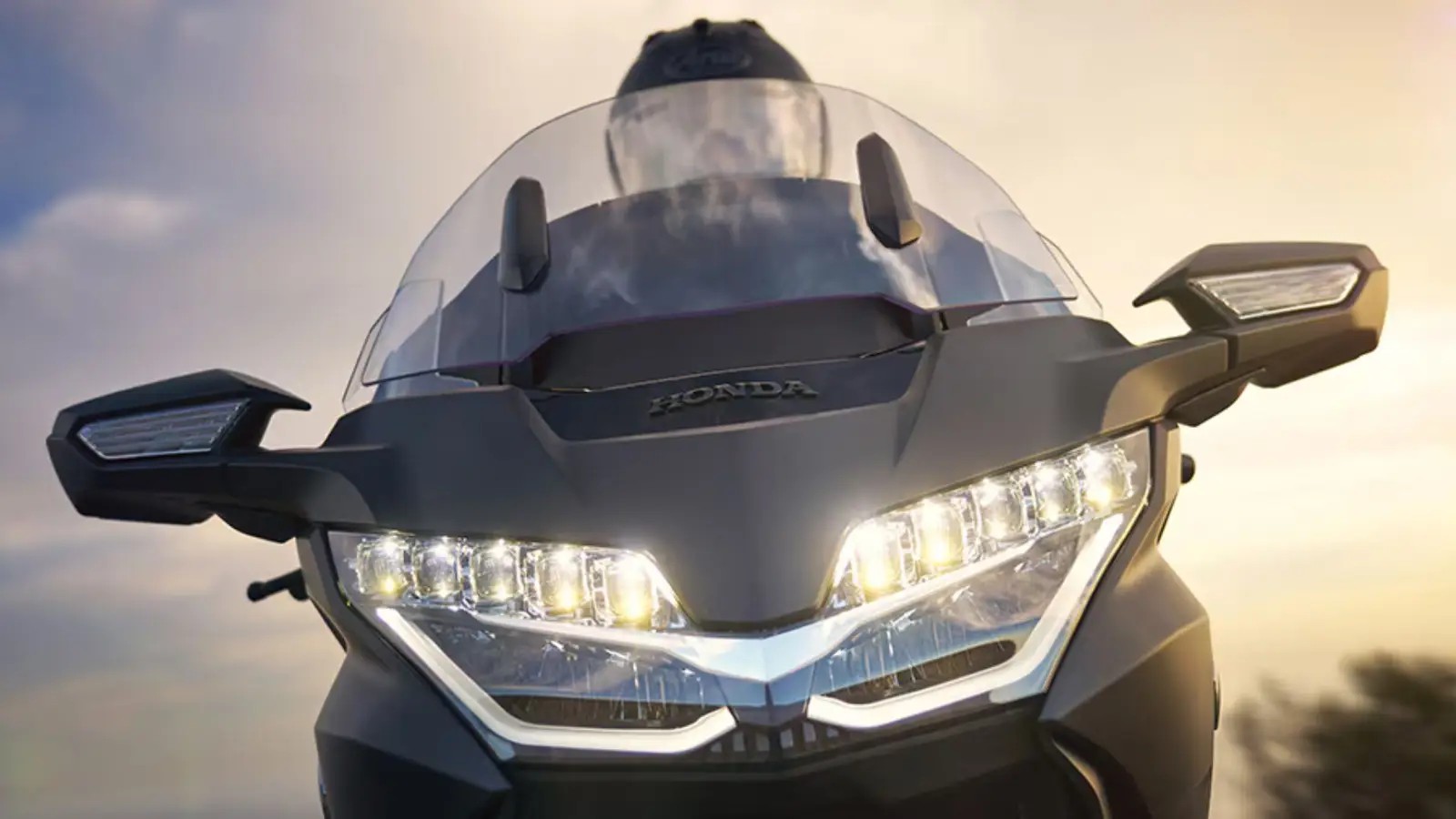
* All-Weather Design: The sharp front fascia integrates a large, electrically adjustable windscreen (with a 4.9-inch range), while sculpted side fairings divert wind away from the rider’s legs and provide cooling ventilation.
Pricing and Value Proposition
The 2026 Honda Gold Wing Tour starts at $29,500. Adding the DCT transmission brings the price to $30,500, while the top-tier model with an airbag system reaches $33,800. While this places it in the premium segment, the value is justified by:
* Unmatched Reliability: Decades of proven durability reduce long-term ownership anxiety.
* Comprehensive Feature Set: Most competitors require expensive options to match the Gold Wing’s standard comfort and tech features.
* Resale Value: The Gold Wing’s reputation for longevity often translates to stronger resale values compared to lesser-known touring brands.
Conclusion
The 2026 Honda Gold Wing Tour is not for everyone. Its size, weight, and price point demand a specific type of rider—one who prioritizes comfort, reliability, and luxury over agility and affordability. However, for those who view motorcycling as a lifestyle of exploration and endurance, the Gold Wing remains the undisputed champion. It is a machine that respects the past while embracing the future, offering a touring experience that is as comfortable as it is dependable.