You are behind the wheel. Step on the pedal. It sank to the floor like a marshmallow.
There is no resistance. There are no fixed stops. It’s just a soft and scary downhill.
Or maybe you just saw it. There is a small yellowish puddle under the fender on the driver’s side. The smell is very pungent. Chemicals. It’s not motor oil. It’s not coolant. This is brake fluid.
Brake fluid leakage is not a small problem. This is a serious fault in the hydraulic chain and that stops your vehicle. As the pressure decreases, the braking distance increases exponentially. Air enters the system. The brakes have failed.
Let’s see why this happens. Follow leaks. Discuss how to solve it. Yes, we’ll explain why you should leave your ABS module repair to the professionals.
Hydro chain reaction
Brake fluid is the lifeblood of your brake system. It transfers the force from your foot to the brake caliper and the wheel cylinder. It is incompressible. This is the key. When you press the pedal, the force is immediately transferred to the pad.
If a leak occurs, air will enter. Air is compressible. So when you pedal, you’re squeezing the bubbles instead of moving the piston. The pedal feels spongy. The car didn’t stop.
This can also cause impurities. rust particles. Dust. moisture. These can degrade of the brake caliper and wheel cylinder seals. If you ignore it, the system will rot from within.
Regular inspection of the engine bay is mandatory. Check the tank. Check the lines. Ignorance here is deadly.
What is the cause of the leak?
High pressure is applied to the brake system. Parts are age. Metal corrosion. The rubber hardens.
Common places where fluid leaks include:
- Brake hoses: Steel lines are prone to holes from road salt and debris.
- Brake hoses: Rubber hoses crack due to heat and aging.
- Wheel cylinder: The drum brake seal is dry.
- Master cylinder: Internal seal failure. It often leaks inside the booster or outside the base.
- ABS module: Corrosion of fittings or defective internal seals.
ABS modules are a common point of failure in older cars. If the seal weakens, fluid can leak out. It feels like a light drip. it is not.
Signs of a problem
There is not always liquid in the ground. Sometimes the leak is internal. However, the signs are usually obvious.
- Spongy Pedal: This is the most obvious symptom. pedal travels further than normal.
- Low Reservoir: Open the hood. The brake fluid level is below the MIN line.
- Warning light: ABS light or red brake warning light on the dashboard.
- Discoloration of the fluid: The brake fluid becomes clear or starts to turn slightly yellow. It turns brown when it absorbs moisture and impurities.
If you see yellow or brown liquid under your car, stop driving. Do not drive if the pedals become soft. Tow it.
Find the source
Locating leaks can be difficult. Fluid travels. It drips down the line and ends up on the frame or suspension parts far away from the actual opening.
One effective method is to place newspaper under the suspected area. Apply the brake gently several times. Observe where the new liquid touches the paper.
Let’s start with the master cylinder. Follow the lines. Check the brake caliper. Check the wheel cylinders.
Inspect Lines and hoses
The Steel lines runs along the frame. They are sensitive to road debris. rock. salt.
Look for pitting. a small hole. There will be rust. A leak occurs when the lines corrode.
Connect the Steel lines, brake caliper and wheel cylinder with a rubber hose. they bend. they move. Over time, the rubber may crack. Check for bulges or cracks near the fittings. These are weaknesses.
If damage is found, replace the component. Do not patch a brake line. it fails.
Check the brake caliper and wheel cylinder
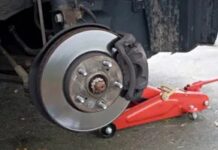
The caliper pistons press the brake pads against the rotor. The wheel cylinder pushes the shoe towards the drum.
Check the piston. Look for corrosion. Check the piston surface for scratches. If the seal is damaged, fluid may leak from the piston.
Start by cleaning the area. Dirt hides leaks. Use brake cleaner. By spraying. Wipe it off. Look again.
If the brake caliper leaks, it can usually be rebuilt. You need a seal kit. Replace the rubber seal. Check the piston. Replace the caliper if it is pitteded or scratched. Do not try to smooth out pitteds with sandpaper. It won’t hold a seal.
Master cylinder and ABS module
The master cylinder is the pump. It creates pressure.
Leaks usually occur in the base where the brake booster is installed. Or it could be leaking internally. If the pedal sinks to the floor even when the engine is running, the Master Cylinder may be dead inside.
It is also possible to rebuild the master cylinder. You can buy a rebuild kit. Remove the unit. disassemble it. Replace the seal. Accurate and clean parts are needed.
ABS modules are even more complicated. contains valves and pump. A leak usually requires module replacement. Do not touch the ABS module if you are not familiar with hydraulic systems or electronics. It’s not worth the risk.
Fix leaks
It’s easy to fix once you know the cause, but it can be dangerous if not done correctly.
Brake fluid is dangerous. It eats paint. May irritate the skin. Toxic if swallowed. Wear gloves. Prepare the rag.
Replace the wires and hoses
Raise the car. Use jack stands. Never rely on a crane alone.
Remove the old line. If possible, use a flange nut wrench. The Standard wrenches will round off the fittings. Round fittings tend to leak more.
Install new wires. Tighten the metal connectors. Do not over tighten. You can crack the fitting.
Repair the brake caliper and cylinder
Clean the components carefully.
Install new seals from the kit. Lubricate with new brake fluid. Do not use grease. Grease can weaken the brake fluid.
Reassemble. Put it back in the car and install.
Solving Master and ABS problems
When replacing the master cylinder, bench bleed it first. Connect the hose back to the tank. Pump the piston. Remove air bubbles. This will save time later.
Install the master cylinder. Connect the lines.
Bleed the system
This step cannot be skipped.
Air enters the system every time you open the brake hose or change a component. Air is compressible. Air can destroy the brakes.
You need to bleed air from the brakes. Start with the wheel farthest from the master cylinder. Usually on the back passenger side. Next is the driver behind. Next is the passenger in the front seat. Next up is the front driver.
Use the correct method for your vehicle. The two-person method. One man method with one way valve kit. Power bleeder.
Fill the reservoir often. Do not let it run dry. This allows for more air.
Bleed until clear liquid comes out. No air bubbles.
Final thoughts
Brake fluid leakage is a warning. It is telling you that your system has been compromised.
Fixing it requires attention to detail. Clean the components. the right parts. Adequate bleeding.
If in doubt, seek professional help. Brakes are your last line of defense. Don’t play with them.
Check your fluid. Check the lines. Drive with confidence.
Or don’t. The choice is yours. However, the puddle continues to grow. And the pedal continues to sink.
Monitor the master cylinder storage tank
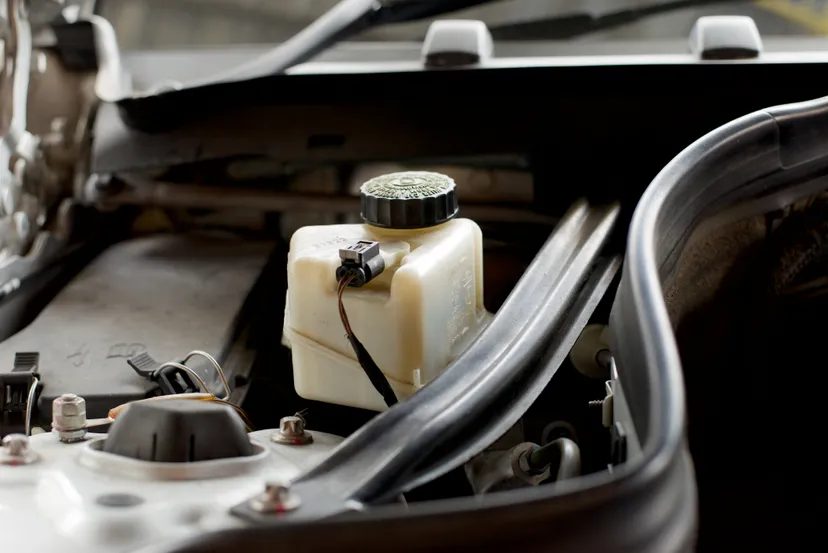
Let’s start with the basics. Open the hood. Locate the brake fluid reservoir at the top of the master cylinder. It is usually a clear plastic container located near the firewall. Look inside. The liquid should be between the “min” and “max” lines. Clear or slightly brown.
If it’s low, top it off. Use the technical data suitable for your car. DOT3, DOT4 or DOT5.1. Do not mix. Don’t guess. If you keep adding fluid, you have a leak. The system is not sealed. Stop driving. Call a professional.
Annual inspection of parts
Don’t wait until the brakes squeal. Inspect the entire system annually or every 10,000 miles. Look at the line. Look at the brake caliper. Check the wheel cylinders.
Search:
– Cracked rubber hoses.
– Weeping seals at the caliper pistons
– Corrosion on metal lines
– Wet spots around the master cylinder boot.
If liquid drips, the integrity is compromised. Replace the part immediately. Do not patch a cracked line. Do not wrap it with tape. Swap it. Use OEM or high-quality aftermarket parts. Cheap rubber fails. It just does.
2-year flushing rule
Brake fluid is hygroscopic. Absorbs moisture from the air. This happens in a closed system. over time. Water lowers the boiling point. Boiling can cause vapor lock. Vapor lock means a spongy pedal. A spongy pedal means you do not stop.
Flush and change the fluid every two years or 20,000 miles. Whichever comes first. This will remove any contaminated fluids. It restores the boiling point. Prevents internal corrosion of ABS modules and brake calipers.
Expert services include:
1. Check all brake components
2. Replace worn pads or rotors if necessary.
3. Flush the old fluid out of each pipe.
Why this matters
Brake fluid leaks are no small problem. They are a safety hazard. Leaks can affect brake performance. It can lead to total brake failure. You need to understand the causes. You need to know the signs.
Locate the source. Fix it. Maintain the system. If you are not confident in your ability to diagnose the leak, take it to a shop. Don’t risk your life with a DIY repair if you don’t have the tools or knowledge.
Keep your car in top condition. Your safety depends on it.
*This article was created with artificial intelligence technology. *