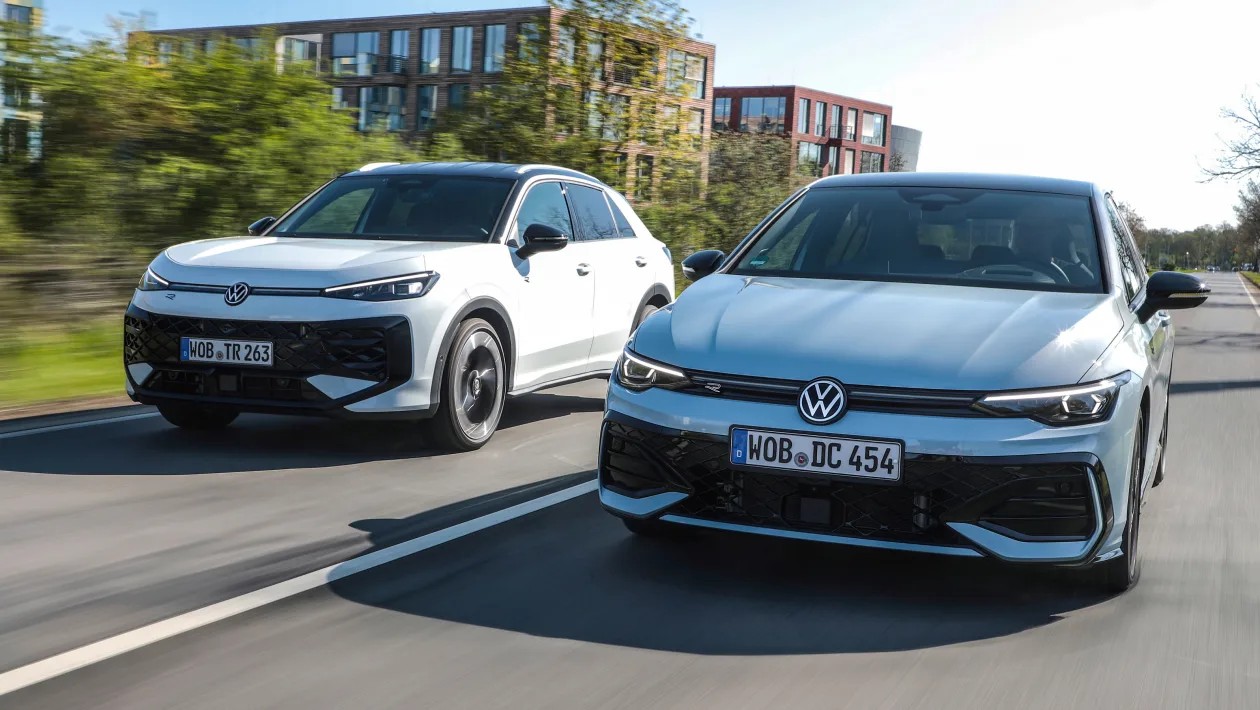
Volkswagen is set to expand its electrified lineup later this year by introducing its first full-hybrid (HEV) powertrains. This new technology will be rolled out across two of its most popular models: the iconic Golf hatchback and the T-Roc compact SUV.
Unlike plug-in hybrids (PHEVs), these vehicles do not require a charging cable. Instead, they manage energy through internal processes, allowing for much higher fuel efficiency and the ability to drive on pure electric power during specific driving conditions.
How the New Hybrid System Works
The new powertrain is a sophisticated combination of internal combustion and electrical assistance. The core components include:
- Engine: A 1.5-litre turbocharged four-cylinder petrol engine.
- Dual Electric Motors: One motor provides driving force to the wheels, while a second acts as a generator to recharge the system.
- Battery: A small 1.6kWh battery tucked discreetly under the boot floor.
- Transmission: A seven-speed dual-clutch automatic gearbox delivering power to the front wheels.
The system is designed to be versatile depending on the driving environment. On city streets or in slow-moving traffic, the electric motor can take over entirely. On motorways or country roads, the petrol engine becomes the primary driver, while the electric motor provides a “boost” during acceleration to improve performance and efficiency.
Performance and Efficiency Gains
While Volkswagen has not yet released specific fuel consumption or CO2 emission figures, the company confirms that these full hybrids will outperform the existing “eTSI” mild-hybrid models.
The primary advantage of this new system over mild-hybrids is the ability to drive in EV mode. Mild-hybrids can only use electricity to assist the engine, whereas full hybrids can decouple the engine entirely. Furthermore, VW has noted that there is no speed limit for the electric motor, meaning electric driving could potentially extend even to motorway speeds.
The powertrain will be available in two distinct power outputs:
1. 134 bhp
2. 167 bhp
Drivers can customize the vehicle’s behavior through three distinct modes: Eco, Comfort, and Sport, which adjust how the hybrid system prioritizes either battery power or engine performance.
Market Positioning: Filling the Gap
The introduction of the “Hybrid” model represents a strategic move to bridge the gap in Volkswagen’s current electrified portfolio.
Currently, the Golf offers a choice between standard petrol engines, mild-hybrids (eTSI), and plug-in hybrids (eHybrid). By adding a full hybrid, VW provides a middle ground for consumers who want significantly better efficiency than a mild-hybrid but do not want the complexity or “range anxiety” associated with plugging in a vehicle.
For the T-Roc, which currently only offers mild-hybrid petrol engines, this represents a significant upgrade in technology that will likely appeal to commuters looking to reduce fuel costs without changing their driving habits.
Summary: Volkswagen’s new full-hybrid technology offers a “best of both worlds” solution—providing the efficiency of electric driving without the need for external charging, filling a vital gap between mild-hybrid and plug-in hybrid models.