Ford is undergoing a significant identity shift. For decades, the “Blue Oval” was synonymous with practical, European-engineered staples like the Fiesta, Focus, and Transit. However, as the automotive industry pivots toward SUVs and electric vehicles (EVs), Ford is increasingly leaning into its American heritage to distinguish itself from its European competitors.
This strategy isn’t about importing massive American pickups that would be impractical for narrow European streets; rather, it is about transplanting iconic American branding and DNA into models specifically designed for the European market.
The Rise of the Bronco Brand
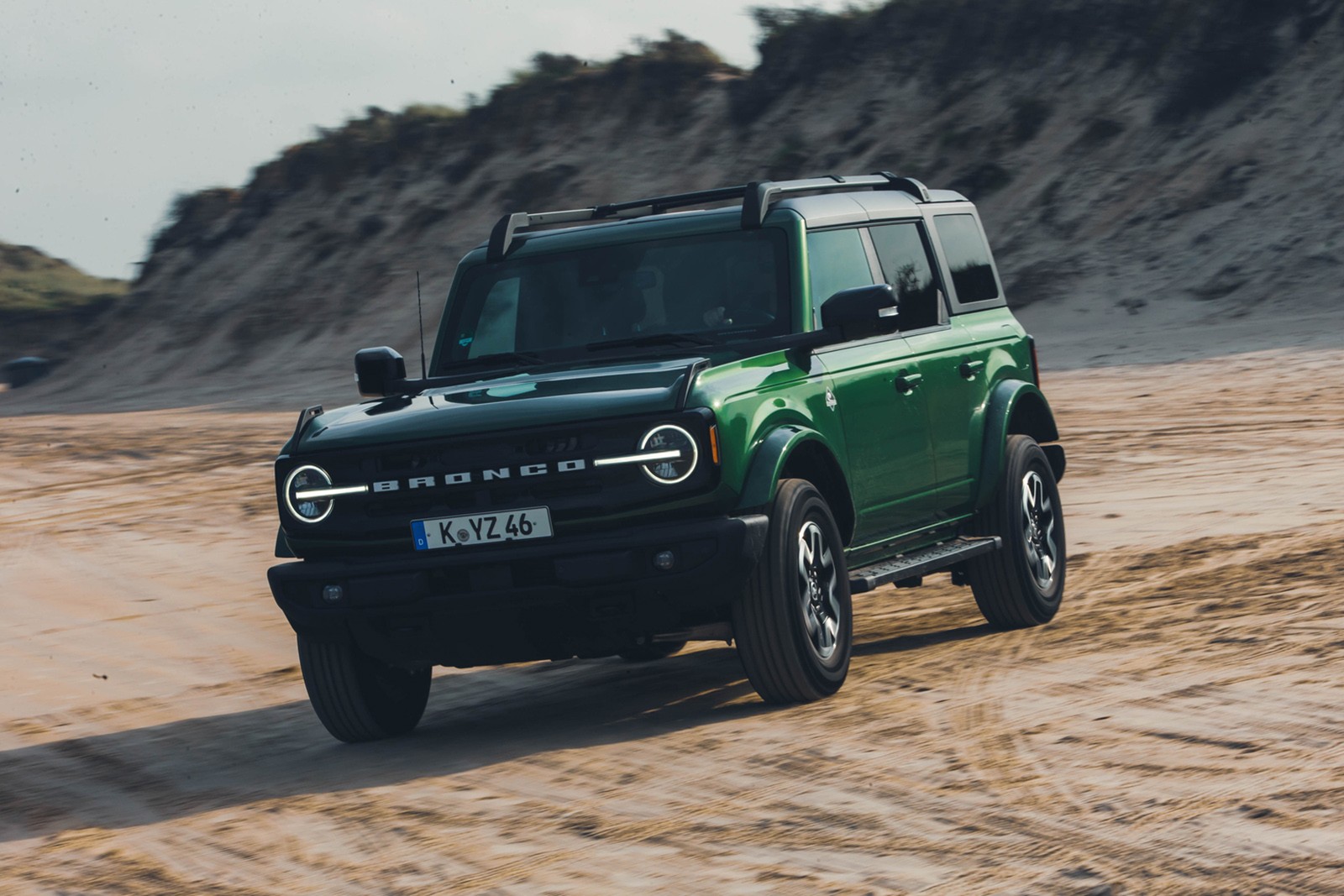
The most significant move in this rebranding effort involves the Bronco. After a 25-year hiatus, Ford revived the name in 2021, and it has since become a cornerstone of the company’s global strategy.
The Bronco is no longer just a single vehicle; it has evolved into a diverse family of models:
– The Classic Bronco: A rugged, body-on-frame off-roader designed to rival the Jeep Wrangler.
– The Bronco Sport: A more road-focused, all-wheel-drive SUV built on a platform similar to the Ford Kuga.
– The Bronco New Energy: A range-extender/EV variant tailored for the Chinese market.
With nearly 150,000 units sold last year, the Bronco is central to CEO Jim Farley’s ambitious vision for the brand: to become “the Porsche of off-road.”
A New European Chapter
While the Bronco’s soul is rooted in the deserts of California and the engineering hubs of Dearborn, Michigan, its future is heading toward Europe. Reports suggest that Ford is developing a new combustion-engined SUV specifically for the European market.
Key details of the proposed plan include:
- Manufacturing: The vehicle is expected to be built in Spain, alongside the current Ford Kuga.
- Branding: The model will likely carry the Bronco name, leveraging the prestige of the American icon.
- Market Fit: Unlike the heavy-duty American models, this version aims to balance off-road DNA with the practical requirements of European drivers.
Why This Matters: The Branding Play
This move highlights a broader trend in the automotive industry: the commodification of heritage. As traditional segments like hatchbacks disappear, manufacturers are finding that “names” carry more emotional weight than “specs.”
By applying the Bronco badge to a European-sized SUV, Ford is attempting to bridge two worlds. They are offering the feeling of American adventure and ruggedness while providing the utility of a vehicle that actually fits in a European garage or navigates a narrow village lane.
Ford is attempting to decouple its American identity from its American scale—offering the spirit of the frontier without the logistical headache of oversized vehicles.
Conclusion
Ford is moving away from being a “local” European manufacturer toward becoming a global brand that uses its American legacy to sell specialized lifestyle vehicles. If the Bronco can successfully transition from a niche American icon to a mainstream European SUV, it could redefine Ford’s market position in the region.