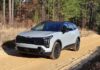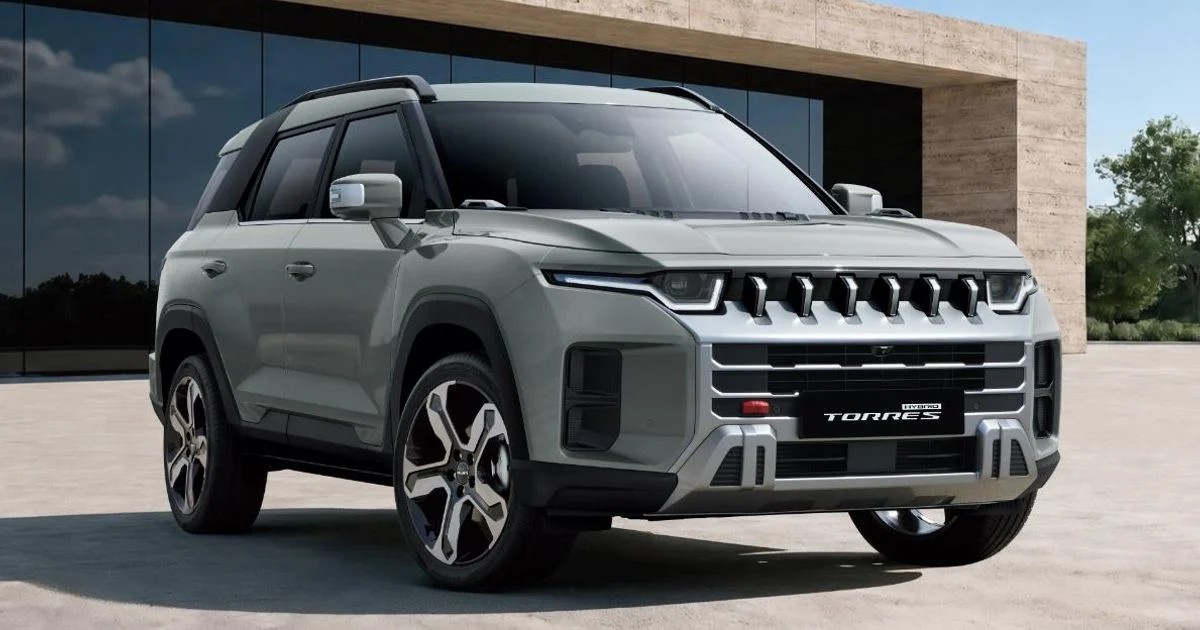
Touchscreens take over. Then everyone regrets it. Volkswagen figured that out. So did KGM. The refreshed Torres, revealed last week in South Korea, has physical climate controls back. No more digging through menus just to feel less cold.
Exterior tweaks? Barely there.
The front bumper’s central section changed slightly. The lower grille now sports horizontal slats, closing up the gap that used to swallow air. Side air intake inserts got a minor update. That “Torres” badge under the main grille? Gone. New bash plates flank both ends. If you like the dark side, KGM offers a blacked-out styling pack for the hybrid and petrol models in their home market. Some trims also sport new turbine-style alloys.
Inside is where it actually matters.
Ditch the floating console island. KGM swapped it for a conventional, two-layer layout. It feels less like a spaceship bridge and more like a car. A traditional shifter replaced the weird toggle switch. There’s room for two wireless charging pads now, which is nice. But the headline news sits below the air vents: a new climate pod.
Yes. Actual rubberized knobs for temperature and fan speed.
Touching a knob to get warm is better than touching glass.
Don’t expect a return to 1990s simplicity, though. Many other buttons—seat heating, ventilation, recirculation, demisters—are still capacitive. They look like buttons. They don’t feel like clicks. They’re just flat plastic you have to press until the screen registers it.
A classier two-spoke wheel arrived, complete with knobs under the spokes. The infotainment system runs KGM’s new Athena 2 interface. It looks sharper.
Under the hood? Same heart, different nerves.
The 1.5-liter turbocharged petrol engine hasn’t changed. It still pushes 125kW and 300Nm of torque. But the old six-speed automatic is dead. Buried. KGM installed an eight-speed Aisin unit instead. All-wheel-drive versions now have a terrain selector with choices for snow/gravel, sand, or mud. Because maybe you’ll drive in the mud.
The hybrid remains untouched. It’s a front-wheel-drive only affair anyway. That same 1.5-liter turbo pairs with a 130 kW electric motor, aided by a 1.8 kWh battery pack, delivering a combined 150 kW.
Is this coming to Australia? Nobody knows yet. They’re probably testing if we like the knobs before shipping the cars over. Or maybe they just forgot.