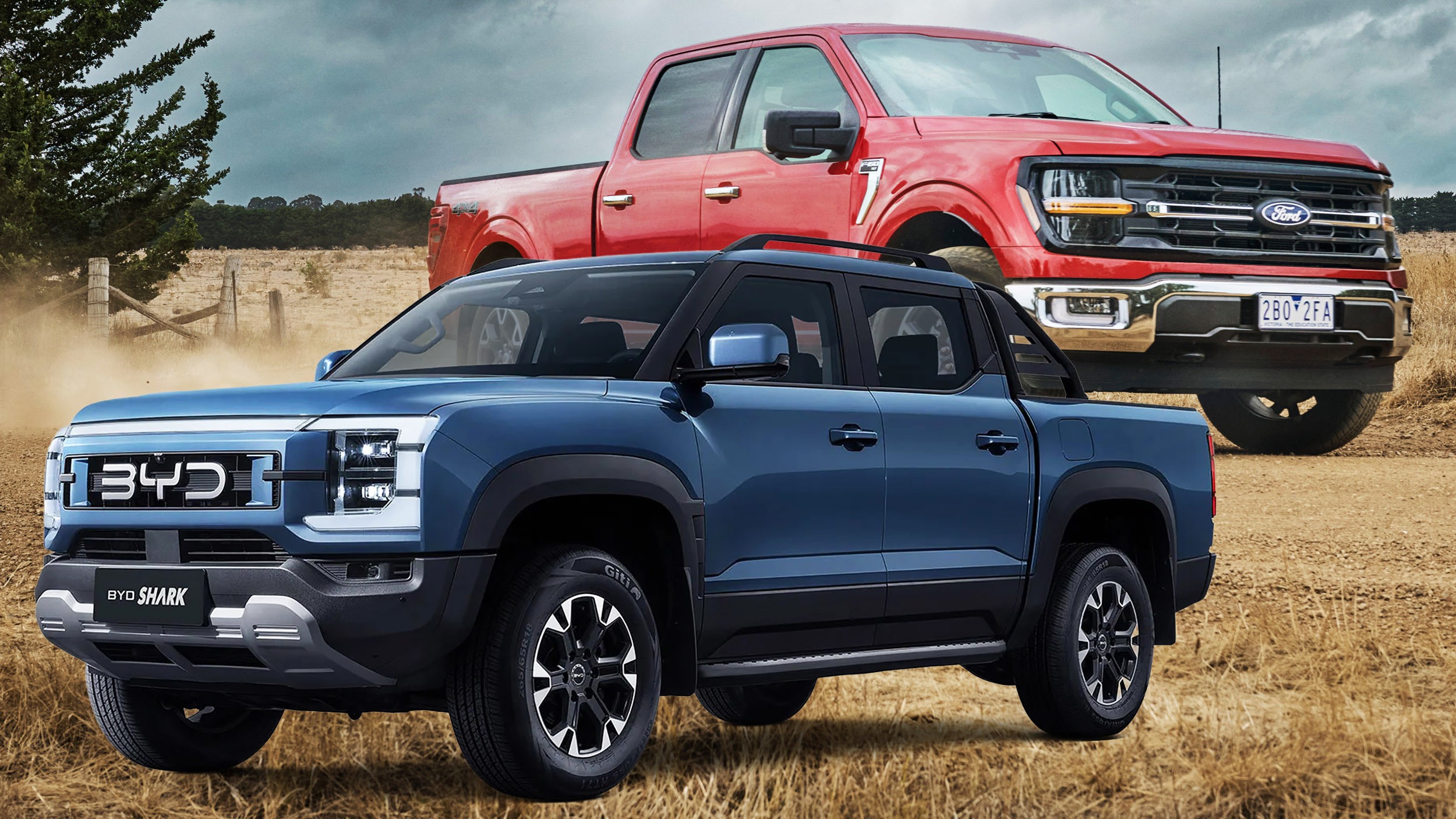
China’s leading electric vehicle manufacturer, BYD, is preparing to move beyond the midsize pickup market. Following the rapid success of its Shark 6, the automaker is now developing a full-size pickup truck specifically designed to compete with heavyweights like the Ford F-150 in the Australian market.
From Midsize Success to Full-Size Ambitions
BYD’s entry into the Australian pickup market has already proven highly effective. The Shark 6, a plug-in hybrid (PHEV) model, became Australia’s best-selling PHEV truck in 2025 with over 18,000 deliveries. Its success has provided BYD with the momentum to expand its lineup.
While the Shark 6 has been a hit, consumer demand is shifting. BYD Asia Pacific Managing Director, Liu Xueliang, confirmed that customers are requesting a vehicle with the dimensions and presence of a full-size truck. Consequently, BYD is working on a larger model to fill this gap, with an expected arrival around 2027.
Identifying the Market Opportunity
The decision to move into the full-size segment is driven by more than just consumer preference; it is a strategic play aimed at high-margin sectors.
- The Fleet and Mining Sector: Unlike private buyers who dominate the midsize segment, heavy industries—particularly mining companies —are driving the demand for larger, more capable vehicles. These operators are increasingly looking for “electrification-first” solutions to meet decarbonization goals.
- High Profit Margins: While midsize trucks like the Ford Ranger dominate sales volume in Australia, full-size trucks (such as the Ford F-150, Ram 1500, and Chevrolet Silverado) offer significantly higher profit margins per unit.
- The “Conversion Cost” Advantage: Currently, many full-size trucks in Australia are converted to right-hand drive (RHD) after production, a process that adds massive costs. This can push vehicle prices well above AU$150,000. BYD intends to bypass this by designing and manufacturing RHD models from the ground up, allowing for more competitive pricing and advanced technology integration.
The Future of Electrified Workhorses
BYD’s strategy extends beyond just size; it is also about the type of power under the hood. The company is reportedly developing a fully electric version of the Shark 6.
This move positions BYD to compete directly in the industrial sector, challenging emerging electric workhorses from established brands like the Toyota Hilux BEV and the Isuzu D-Max BEV. By offering a vehicle that is both large enough for heavy-duty tasks and fully electric, BYD aims to capture a market segment that is moving away from traditional diesel engines.
BYD is leveraging its expertise in electrification to solve a specific regional problem: the high cost and inefficiency of importing converted full-size diesel trucks into right-hand-drive markets.
Conclusion
By targeting the high-margin, heavy-duty segment with purpose-built, right-hand-drive electric and hybrid trucks, BYD is attempting to disrupt the traditional dominance of American and Japanese heavyweights in Australia.