


There’s a fine line between a nice technical demo and a legitimate design test. Roborace has just crossed.
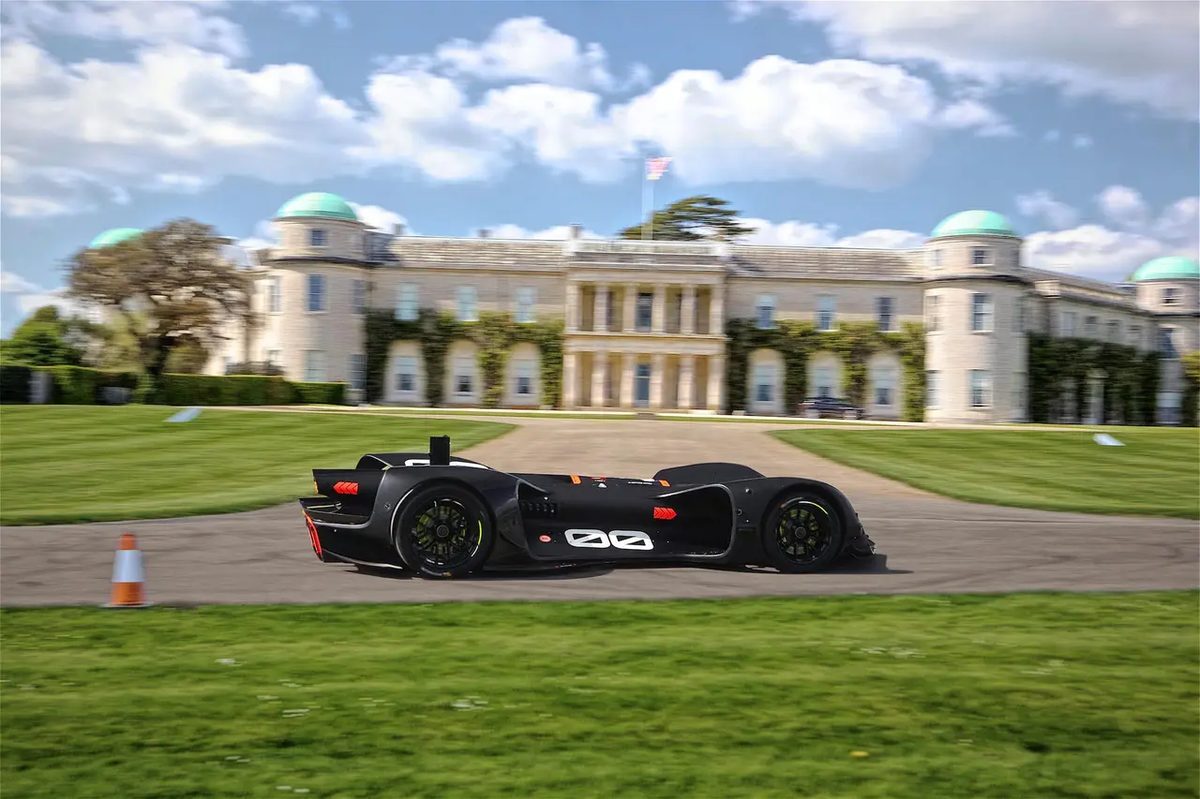
The team is raising the stakes after human drivers face off against self-driving prototypes called DevBots during Formula E race weekends. They took the final version of the Robocar to the Goodwood Festival of Speed in Great Britain. The dates are 12.-15. July.
This is more than just a parked display. Cars compete.
The Goodwood Hill Climb is 1.8 kilometers long. Although it is short, it is a legendary. This year marks the 25th anniversary of the festival. Here, the icons of today meet the historical machines. Last year, Roborace introduced its robocar to the public, but it stayed put. This year there is actually an electric prototype running on the track.
Navigation problems in Goodwood
The challenges here are real. The traces are very narrow. it’s complicated. There is a long section covered with trees.
A regular GPS will not solve this problem. Under these conditions, the signal is weakened or drifted too much to achieve high accuracy. Roborace has to rely on something else.
Lidars. Cameras. Embedded sensors.
These systems feed the data directly into the algorithms that control the car. No human in the loop. There is no remote control. Just code and sensors could be all that’s needed to get an electric car up to high speeds on Britain’s narrow roads. This is a first for Goodwood.
Spectators will have a unique view on this experiment. A VR headset has been installed in the Roborace booth. You can observe the drive as if you were in the cockpit. It removes the audience perspective and puts you inside the machine’s decision-making process.
Why is this important? Because proving autonomy on a street track is more difficult than on a closed track. There is less room for error. Variables are more complicated.
If the sensors can react to shadows and tight turns, they can provide a glimpse of where passenger cars might go next. If they fail, we know exactly where the current technology fails.
The results tell us a lot about the difference between lab tests and real driving. Let’s see if the algorithm can parse a 25-year-old racing circuit without intuition.
The clock starts on July 12th.


